
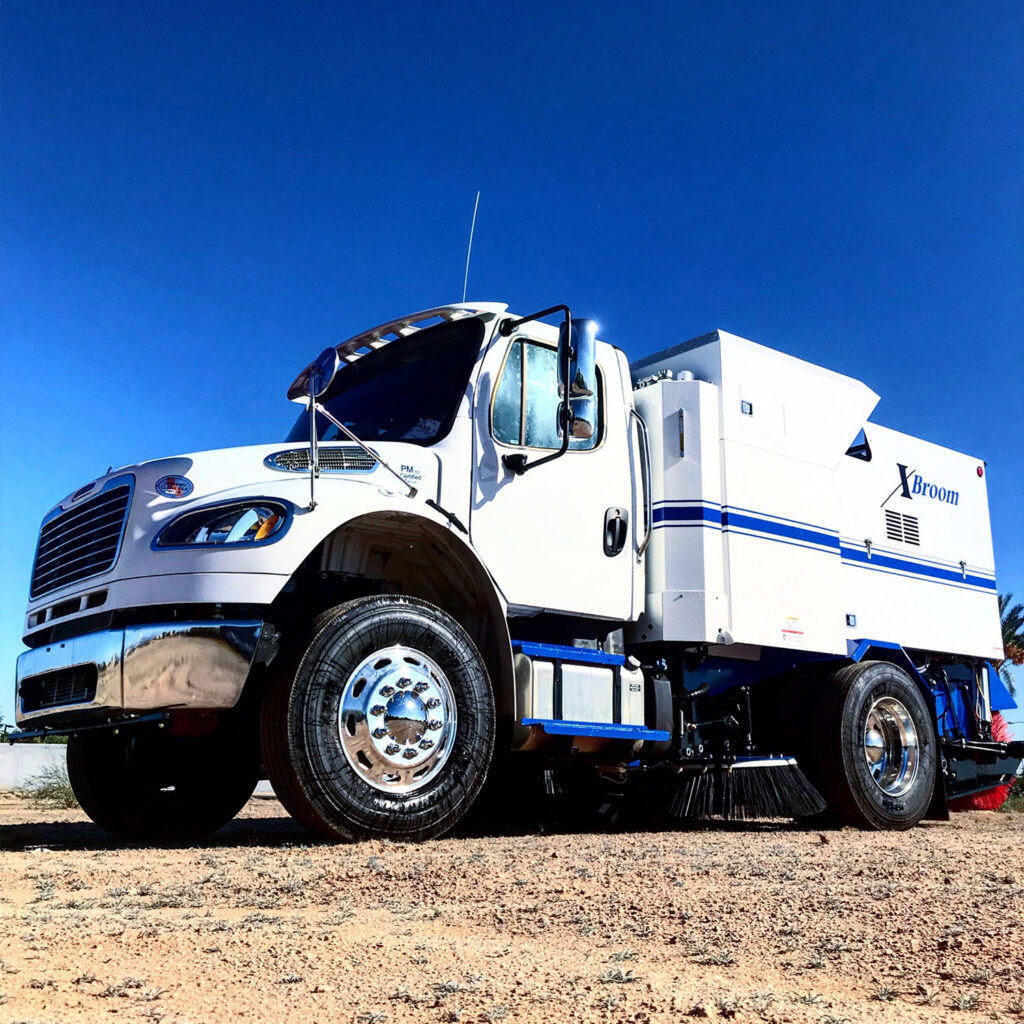
When every hour of sweep time counts on milling, chip seal, or airport runway jobs, the right machine specs separate productive fleets from costly delays. You need equipment that handles heavy scalings, long sweep cycles, and minimal maintenance downtime.
Here’s a practical, decision-focused look at mechanical street sweeper specifications to help fleet managers, procurement officers, and operations leaders evaluate machines that deliver uptime, large hopper capacity, and jobsite durability.
Key Mechanical Street Sweeper Specifications Explained
Understanding a sweeper’s spec sheet helps you compare real-world production, not just marketing claims. Focus on components and measurements that directly affect sweep time, maintenance, and throughput.
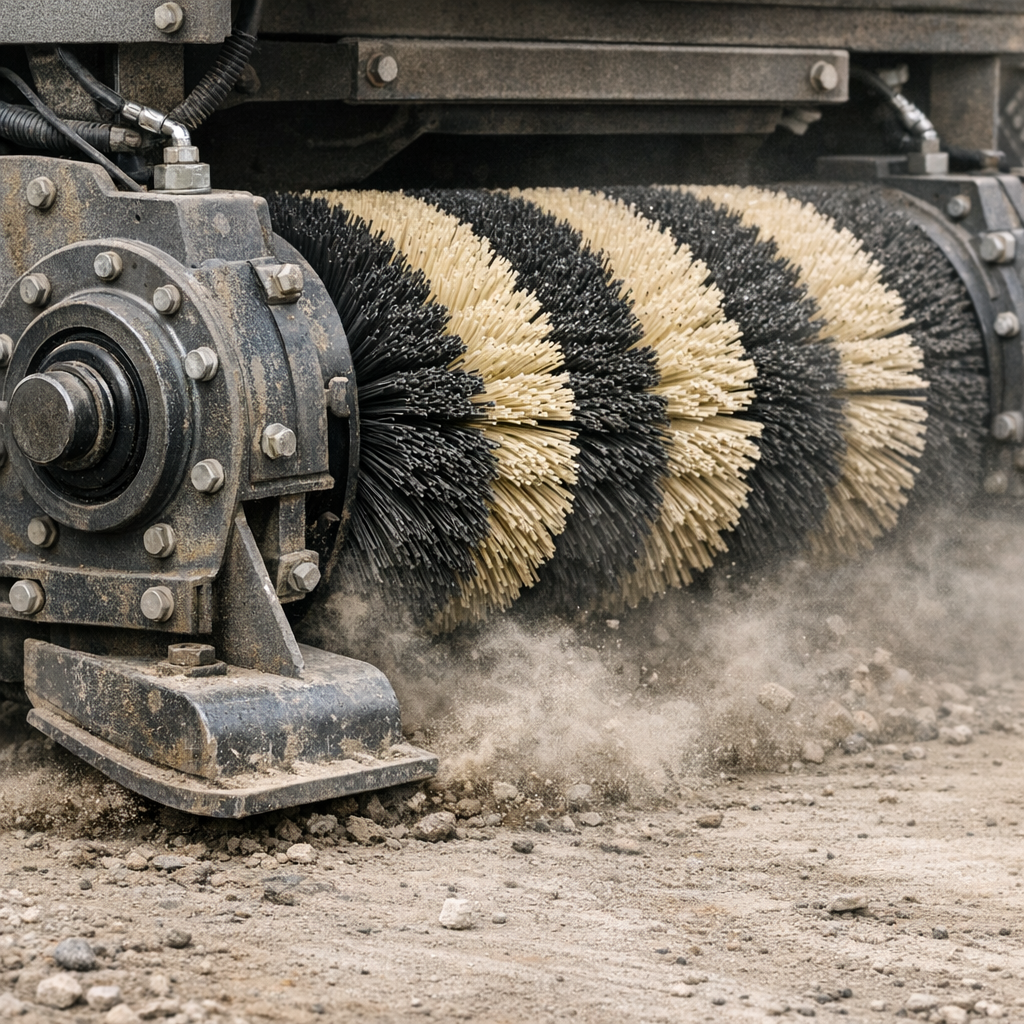
Main broom diameter, width, and drive
- Why it matters: Main broom size and drive type determine sweep footprint and torque for large debris. A 60″ main broom with a direct-drive hydraulic motor provides consistent torque at idle and fewer service points than chain drives.
- What to look for: Direct drive or rigid-coupled hydraulic motors, variable speed control, replaceable wafer options (poly, wire, tube core), and pneumatic suspension or auto-balance systems for consistent pressure across the sweep width.
Gutter brooms and tilt/reach features
- Why it matters: Durable, adjustable gutter brooms capture edge material and minimize rework. Hydraulic tilt and multi-position reach let operators adapt to curbs, ditches, and variable lane widths.
- What to look for: Independent hydraulic tilt, on-cab controls, quick-change bristle segments, and durable mounting points.
Hopper capacity and dump system
- Why it matters: Hopper volume determines sweep time before a dump. Larger usable hopper capacity reduces trips to disposal and keeps crews productive on long milling or chip seal runs.
- What to look for: Usable cubic yard ratings, full-width discharge doors, high-dump reach, and lift systems that open the truck center for maintenance.
Hydraulic system architecture
- Why it matters: Multiple dedicated pumps reduce horsepower waste and let the engine run at idle while powering brooms, elevator, and fans, lowering fuel use and stress on engine systems.
- What to look for: Separate pump circuits for gutter brooms, main broom, and elevator; load-sensing variable displacement pumps; and reliable brands for serviceability.
Elevator and conveyor durability
- Why it matters: Elevator robustness controls abrasive life and throughput. Heavy-duty elevators with replaceable flights and long-life bearings extend rebuild intervals and reduce downtime on aggregate-heavy jobs.
- What to look for: High-cycle life before rebuild, replaceable wear pieces, and accessible inspection points.
Water spray and dust control
- Why it matters: Effective water systems suppress dust to meet jobsite and regulatory requirements. Redundant pumps and nozzle layouts tuned for both gutter brooms and main broom area are preferred.
- What to look for: Tank capacity (300 gallons or more for long sweeps), dual pumps for redundancy, automatic PLC control, and cleanable filters with convenient fill options.
Controls, automation, and operator ergonomics
- Why it matters: An industrial PLC with touchscreen and automated sequences reduces operator workload and guesswork, improving sweep consistency and safety.
- What to look for: PLC automation that sequences broom and elevator deployment, joystick control, diagnostics, temperature and hydraulic monitoring, and simple operator feedback.
Electrical, lighting, and safety packages
- Why it matters: DOT-compliant lighting, arrow boards, and camera systems increase on-road safety and reduce incident risk on high-speed or low-visibility projects.
- What to look for: Multi-pattern arrow boards, LED work lights, integrated camera options, and industry-grade alternator capacity.
Real-world spec priorities for target applications
- Asphalt milling cleanup: Prioritize high hopper capacity, full-width elevator, heavy-duty main broom options, and abrasion-resistant elevator flights.
- Chip seal and aggregate sweeping: Look for replaceable broom wafers, aggressive down pressure settings, and reinforced main broom cores.
- Municipal street maintenance: Focus on noise control, water spray efficiency, and operator comfort for long shifts.
- Airports and industrial sites: Durable electrical systems, multi-camera visibility packages, and proven PLC controls for automated, repeatable cycles.
How to read spec trade-offs
Higher hopper capacity and heavy-duty components increase upfront cost but reduce operating hours spent dumping and repairing, improving cost per square yard swept. Ask for uptime metrics, rebuild intervals, and examples of production rates on comparable projects.
Options that matter more than accessories
- Sealed bearings and easy-access lubrication points
- Modular wear parts for quick replacement on-site
- Replaceable broom wafer segments and spare kits
- Integrated PLC diagnostics to prevent catastrophic failures
Requesting specs from manufacturers: a short checklist
- Usable hopper capacity and full-volume rating.
- Main broom width, diameter, and drive type.
- Hydraulic pump configuration and rated pressures.
- Elevator rebuild life, materials, and replacement part availability.
- Water tank size, pump redundancy, and fill method.
- Control system type (PLC model) and display size.
- Warranty scope and service intervals.
People Also Ask: Common buyer concerns
How much hopper capacity do I actually need?
Plan around sweep time targets. For long runs behind mills or chip seal operations, larger usable hopper volume reduces dump frequency and increases net productivity.
Is direct drive better than chain drive for the main broom?
Direct hydraulic drives typically offer higher reliability and lower maintenance in abrasive conditions, eliminating chains and sprockets that wear or stretch.
Should I require a PLC control system?
Yes, automated PLC control improves repeatability, reduces operator error, and centralizes diagnostics. Look for a proven industrial controller with a touchscreen.
What maintenance items should fleet techs prioritize?
Daily checks of broom wear segments, hydraulic fluid levels and temperatures, elevator wear components, and quick greasing of sealed points keep uptime high.
Do bigger engines improve sweep performance?
Engine torque at idle, paired with efficient hydraulic design, matters more than peak horsepower. Efficient pump staging often lets machines sweep at idle with full power.
Frequently Asked Questions
What is the difference between total hopper volume and usable hopper capacity?
Total hopper volume is the gross internal space. Usable capacity is the amount you can reliably load without overflow or compromising the elevator. Always compare usable capacity for practical planning.
How often should the elevator be inspected on milling jobs?
Inspect daily for wear and debris build-up. Schedule detailed inspections at manufacturer-recommended intervals, and monitor hours to anticipate flight replacement.
Can mechanical sweepers handle fine dust as well as aggregates?
Mechanical sweepers excel at large debris and heavy scalings. For very fine dust, combine aggressive sweeping with a well-designed water spray system or consider vacuum-assisted hybrid options.
What warranties are typical for mechanical sweepers?
Standard warranties vary. Manufacturers often offer 1 year or a specific hours-based warranty on workmanship, with chassis warranties separate through the chassis OEM.
Which specs reduce total cost of ownership the most?
Long-life wear components, large usable hopper capacity, efficient hydraulic systems, and a design that minimizes service time and part replacements.
Request Pricing and Demos
Ready to compare real spec sheets and production numbers? For manufacturer-direct pricing, configuration options, and to schedule a demo, contact the factory using the form or call now. Configure your XBroom and review detailed component specs at XBroom Street Sweeper.
Explore XBroom street sweeper products | Why Choose XBroom | Contact Nescon
Conclusion
Spec decisions should be driven by production targets, maintenance capacity, and the types of debris encountered on your projects. Prioritize hopper capacity, durable main broom drive systems, dedicated hydraulic circuits, and PLC automation to maximize uptime and productivity. When you evaluate sweepers by these measurable specifications, you buy performance that pays back in fewer dumps, reduced service hours, and faster project completion.
About XBroom by Nescon
XBroom by Nescon is a U.S.-based street sweeper manufacturer specializing in heavy-duty mechanical street sweepers designed for high-production sweeping applications. XBroom sweepers are built to support asphalt milling, road construction, municipal street maintenance, and industrial sweeping operations.
Engineered for durability, large hopper capacity, long sweep times, and reduced downtime, XBroom street sweepers help contractors and municipalities maximize productivity while minimizing maintenance and dump frequency.
Ready to Upgrade Your Street Sweeper?
Call 480-505-0001 or Contact Nescon to request pricing, schedule a demo, or learn more about XBroom street sweeping solutions.