
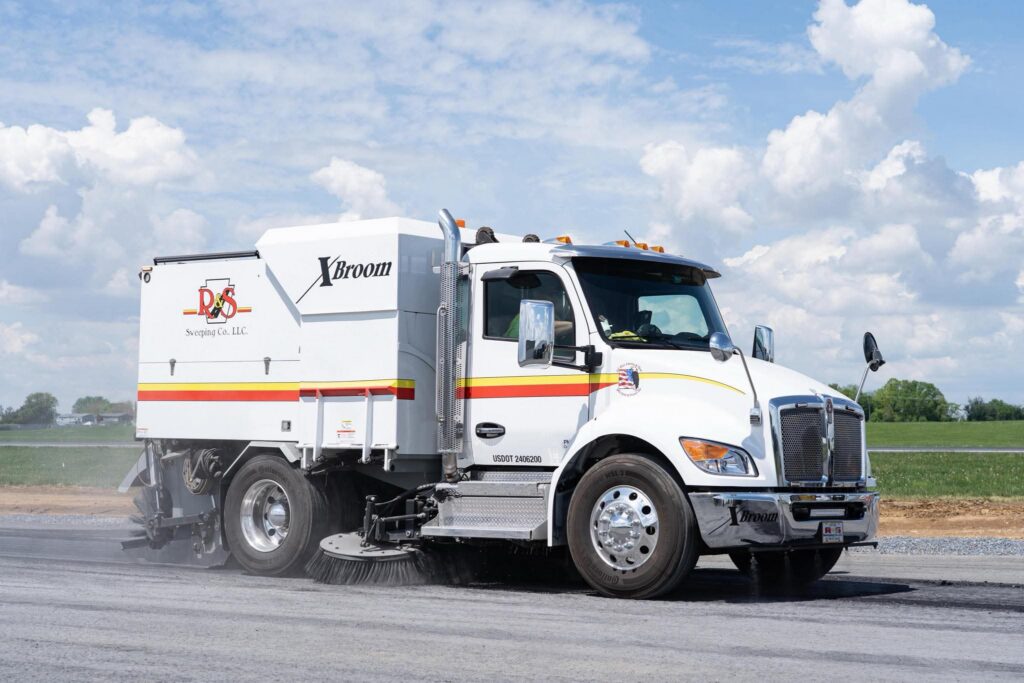
Cleaning up after asphalt milling is a race against the clock, especially on high-traffic corridors and time-sensitive projects. Faster cleanup reduces lane closures, lowers traffic control costs, and keeps crews on schedule. To get there, you need the right machine, a clear workflow, and a plan that minimizes dump cycles and downtime.
Early on, making small operational changes can produce big gains. Using the right sweeper, optimizing sweep paths, staging debris pickup, and coordinating with milling crews all lift productive capacity. In this guide you will learn practical tactics for improving asphalt milling cleanup speed, real-world tradeoffs, and equipment features that matter for contractors and public works departments.
Why asphalt milling cleanup speed matters
Speed matters because time equals cost on every road project. Faster cleanup:
- Shortens lane closure windows and reduces traffic management expenses
- Cuts idle time for milling equipment and paving crews
- Lowers labor hours and equipment rental days
- Reduces public complaints and disruption on urban projects
For airports, DOT projects, and municipal resurfacing jobs, minutes saved per lane can translate to thousands in project-level savings. The right sweeper lets you maintain sweeping productivity for long durations without frequent hopper dumps, which is often the biggest limiter on milling cleanup cycles.
How asphalt milling cleanup speed impacts project timelines
Sweep production vs dump frequency
A high-capacity sweeper that holds more material and resists plugging will run longer between dumps. That reduces the non-productive time when the sweeper stops, travels to a disposal point, and returns. Plan routes to minimize travel distance to disposal and prioritize machines with larger hoppers and quick-emptying hydraulics.
Coordination with milling and paving crews
Stagger milling passes so the sweeper follows closely but safely, keeping milled material from piling up. When milling and sweeping are synchronized, crews avoid rework and allow paving to begin sooner.
Road type and debris character
Coarse millings, loose aggregate, and heavy edge build-up require more aggressive brushes and higher suction capacity. Urban jobs with catch basins add complexity; make a pre-sweep plan to protect drainage and minimize rework.
Equipment features that increase cleanup speed
Mechanical broom design and durability
Look for heavy-duty, replaceable broom segments, robust brush drives, and hardened wear surfaces. Durable components reduce on-site adjustments and maintenance stops.
Large-capacity hopper and efficient eject
A large hopper extends sweep time between dumps. Fast, reliable hopper ejection systems keep the dump cycle short and safe.
Debris containment and dust control
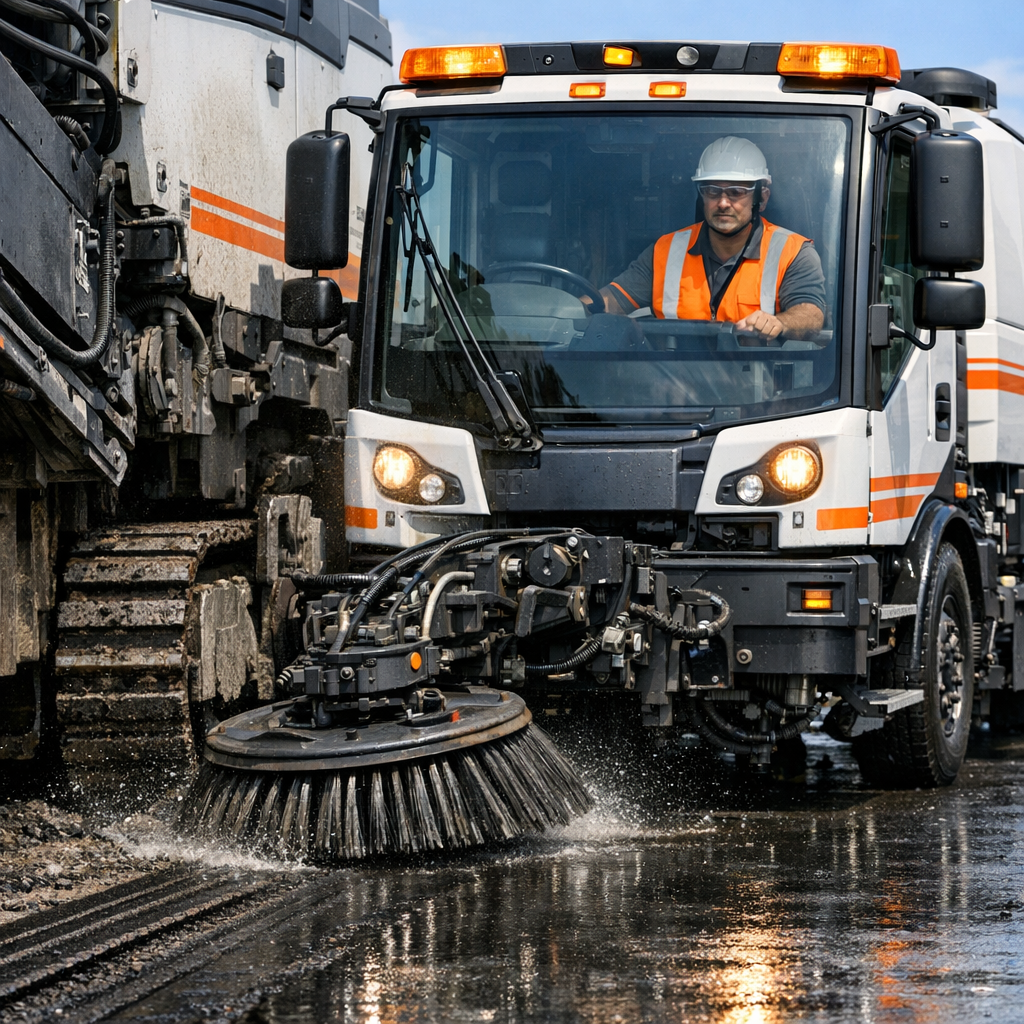
Integrated water spray, dust suppression, and good containment reduce material loss and the need for follow-up passes. This matters on tight urban jobs and airport aprons.
Low-maintenance hydraulics and easy access
Quick-access service points and simple hydraulic layouts keep downtime low. Extended uptime equals more hours sweeping each shift.
Best-practice workflow to speed milling cleanup
- Pre-job planning: inspect the site, identify disposal points, and choose sweep routes that minimize travel. Decide whether to stage a second sweeper for continuous removal on long runs.
- Timing: run sweepers immediately following milling passes, not at the end of a whole day. Short, frequent sweeps can prevent large accumulations.
- Equipment staging: place dump points and follow trucks strategically, and ensure operators have radio contact with mill crew leads.
- Operator training: teach brush angle adjustments, vehicle speed control, and hopper management to maximize pickup on the first pass.
- Preventative maintenance: check brushes, belts, and seals daily to avoid mid-shift failures.
Case example: reducing dump frequency on a county resurfacing project
A county crew replaced a small, frequent-dump sweeper with a high-capacity mechanical broom built for long sweep times. By optimizing sweep paths and staging a single disposal point 1.2 miles from the work area, they cut total cleanup time by nearly 40 percent and reduced traffic control hours by one shift.
Cost vs speed tradeoffs: what to consider
Upgrading to a higher-capacity sweeper usually raises acquisition cost, but the lifecycle ROI often shows savings through fewer downtime events, reduced labor hours, and faster project turnover. For contractors chasing tight schedules and higher hourly production, the extra upfront investment can pay off in reduced mobilization days and improved bid competitiveness.
People-Also-Ask: Quick answers
What sweep speed should operators use after milling?
Target sweep speeds that balance brush contact and pickup efficiency, typically slower than standard highway sweeping, but optimized by brush angle and hopper loading rates.
Can a single sweeper handle large-scale milling on its own?
Large jobs often need multiple sweepers or a follow truck strategy. One high-capacity machine can handle long stretches if disposal is nearby and workflow is tight.
How does weather affect milling cleanup speed?
Wet conditions can compact millings and make pickup harder; dust control becomes easier. Dry, windy conditions increase loss and may require more passes.
Equipment selection checklist for faster cleanup
- Heavy-duty mechanical broom with replaceable segments
- Large-capacity hopper and fast-eject system
- Effective dust suppression and containment
- Simple maintenance access and reliable hydraulics
- Operator ergonomics and visibility for precise work
Request Pricing and Demo
If you manage municipal or contractor sweeping operations and need equipment that withstands aggressive millings and long continuous runs, XBroom offers purpose-built mechanical broom sweepers. Compare model features, capacity, and uptime advantages at XBroom street sweeper products, or review specific configurations on the XBroom Street Sweeper product page. Customize capacities at Build a Truck, and learn why fleets choose us on the Why Choose XBroom page.
Need immediate answers or a demo? Call Phone: 480-505-0001 or Contact Nescon to request pricing, demo scheduling, or technical specs.
FAQ
How much faster is cleanup with a high-capacity mechanical broom?
Speed gains vary by site, but expect 20 to 50 percent fewer dump cycles and measurable reductions in overall cleanup time when matching sweeper capacity to the job scope.
What maintenance matters most to avoid mid-shift delays?
Daily broom inspection, hydraulic checks, and hopper seals are the top items. Easy-access service points cut repair time significantly.
Should I stage a follow sweeper or a dump truck?
For long runs, a follow sweeper or a local dump truck reduces travel time. The choice depends on site access, disposal rules, and crew size.
Is dust suppression required for milling cleanup?
Yes, to comply with local air quality rules and to keep visibility and pickup rates high. Integrated water systems and targeted spray nozzles work best.
How do XBroom sweepers support long sweep times?
XBroom sweepers are engineered for large hoppers, durable broom systems, and efficient hydraulics to minimize dump frequency and maintenance downtime.
Conclusion
Faster asphalt milling cleanup is achievable through better machines, smarter workflows, and crew coordination. Focus on hopper capacity, broom design, dust control, and route planning to cut dump cycles and keep paving crews moving. Small operational changes add up to big savings on every resurfacing project.
About XBroom by Nescon
XBroom by Nescon is a U.S.-based street sweeper manufacturer specializing in heavy-duty mechanical street sweepers designed for high-production sweeping applications. XBroom sweepers are built to support asphalt milling, road construction, municipal street maintenance, and industrial sweeping operations.
Engineered for durability, large hopper capacity, long sweep times, and reduced downtime, XBroom street sweepers help contractors and municipalities maximize productivity while minimizing maintenance and dump frequency.
Ready to Upgrade Your Street Sweeper?
Call 480-505-0001 or Contact Nescon to request pricing, schedule a demo, or learn more about XBroom street sweeping solutions.