
Airport operations teams know that keeping runways clear of debris and contaminants is non negotiable for safety and regulatory compliance. For Nevada airports, the right equipment and specification decisions reduce risk, minimize FOD events, and keep flights on schedule. In the paragraphs below you will find practical guidance tailored to airport and airfield maintenance pros charged with specifying, procuring, and operating runway cleaning equipment.
Bold planning, proven machines, and repeatable processes are how airports stay safe. When evaluating options, start by comparing performance metrics that matter to airports: sweeping width, hopper capacity, brush life, dust control, maneuverability on airfield pavement, and low maintenance design. These are the foundations of solid runway cleaning programs, and they are the areas where mechanical broom sweepers deliver predictable, durable results.
Overview: Why Equipment Choice Matters for Nevada Airports
Nevada airports face unique challenges, from aggressive debris generated by nearby construction and asphalt milling, to dust and sand in arid regions. Choosing equipment built for continuous, high-production sweeping reduces manual labor, cut downtime, and lowers the frequency of hopper dumps. For airport facilities managers, operations supervisors, and procurement officers, prioritizing reliability and uptime is essential.
Key benefits of purpose-built runway sweepers:
- Faster FOD removal across full runway shoulders and taxiways.
- Large hopper capacity to reduce dump frequency during long shifts.
- Rugged components designed for abrasive pavement and masonry debris.
- Simple service access, lowering maintenance downtime.
Key Airport Runway Cleaning Equipment Requirements for Nevada Airports
Performance and Productivity
- Sweeping width and dual-broom options to clear large channels in fewer passes.
- High-capacity hopper, sized to match typical debris loads found after asphalt milling or pavement maintenance.
- Robust brush designs, with replaceable segments to extend life under abrasive conditions.
Dust Control and Environmental Considerations
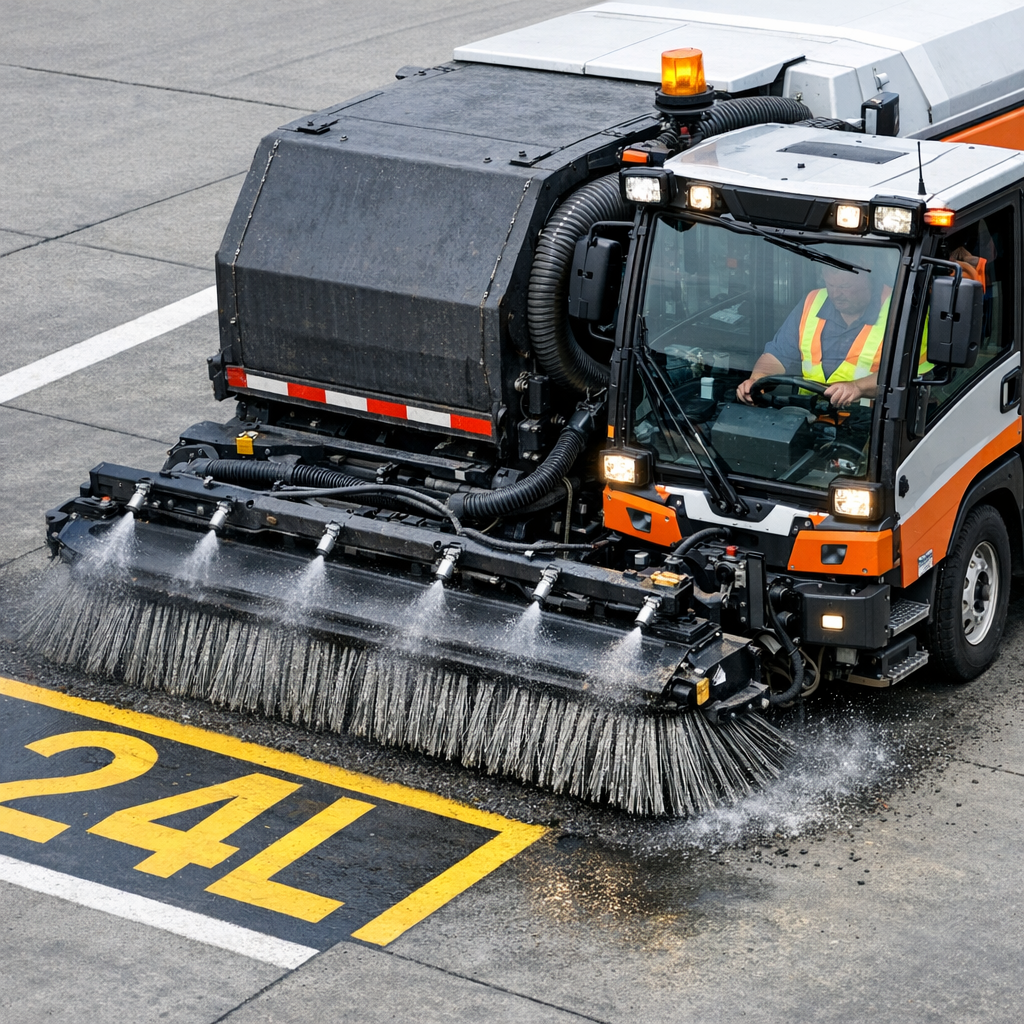
- Integrated water suppression systems or wet sweeping options to limit airborne dust during operation.
- Containment measures to prevent runoff into storm drains, especially important near terminal and apron areas.
Durability and Low Maintenance
- Heavy-duty drivetrain and sealed bearings suited to abrasive materials.
- Easy access to wear parts, hydraulic filters, and broom motors for rapid field service.
- Long-life hydraulic hoses and protective routing to prevent damage from runway debris.
Maneuverability and Safety Features
- Tight turning radius for taxiway and apron work, with stable, predictable handling at sweep speeds.
- High-visibility lighting, amber beacons, and reflective markings for airfield operations.
- Operator ergonomics and climate-controlled cabs for long shifts in Nevada heat.
Regulatory and Operational Fit
- Compatibility with established airport FOD programs and rapid deployment for runway inspections.
- Ability to integrate with airport operations schedules, including night and shoulder-hour sweeping windows.
Selecting the Right Sweeper Type for Runway FOD and Construction Cleanup
Mechanical broom sweepers are ideal for loose debris, aggregate, and construction detritus that airports encounter during nearby road or runway projects. For rubber removal from aircraft tires, specialized high-pressure systems are required. A mixed fleet strategy is common: mechanical broom sweepers for routine FOD and construction cleanup, plus specialty equipment for rubber and contaminant removal.
Here is how to prioritize when specifying:
- For regular FOD rounds, choose high-production mechanical broom sweepers with large hoppers. 2. For post-milling or chip seal sites, ensure the sweeper has reinforced brush assemblies and heavy-duty suction where needed. 3. For terminals and aprons, smaller, highly maneuverable units may be required to work around equipment and parked aircraft.
Maintenance, Parts, and Service Expectations
Prioritize machines with modular wear parts and an established aftermarket supply. Reduced downtime comes from easy-to-replace brooms, quick-lift hoppers, and on-board diagnostic access. When specifying equipment, include spare parts kits and local service support in procurement contracts to avoid lengthy AOG windows.
Procurement Considerations for Airport Decision Makers in Nevada
- Total cost of ownership, not just purchase price, including consumable wear, service intervals, and expected uptime.
- Warranty coverage and service network footprint within Nevada.
- Training packages and operator familiarization, especially for airfield safety procedures.
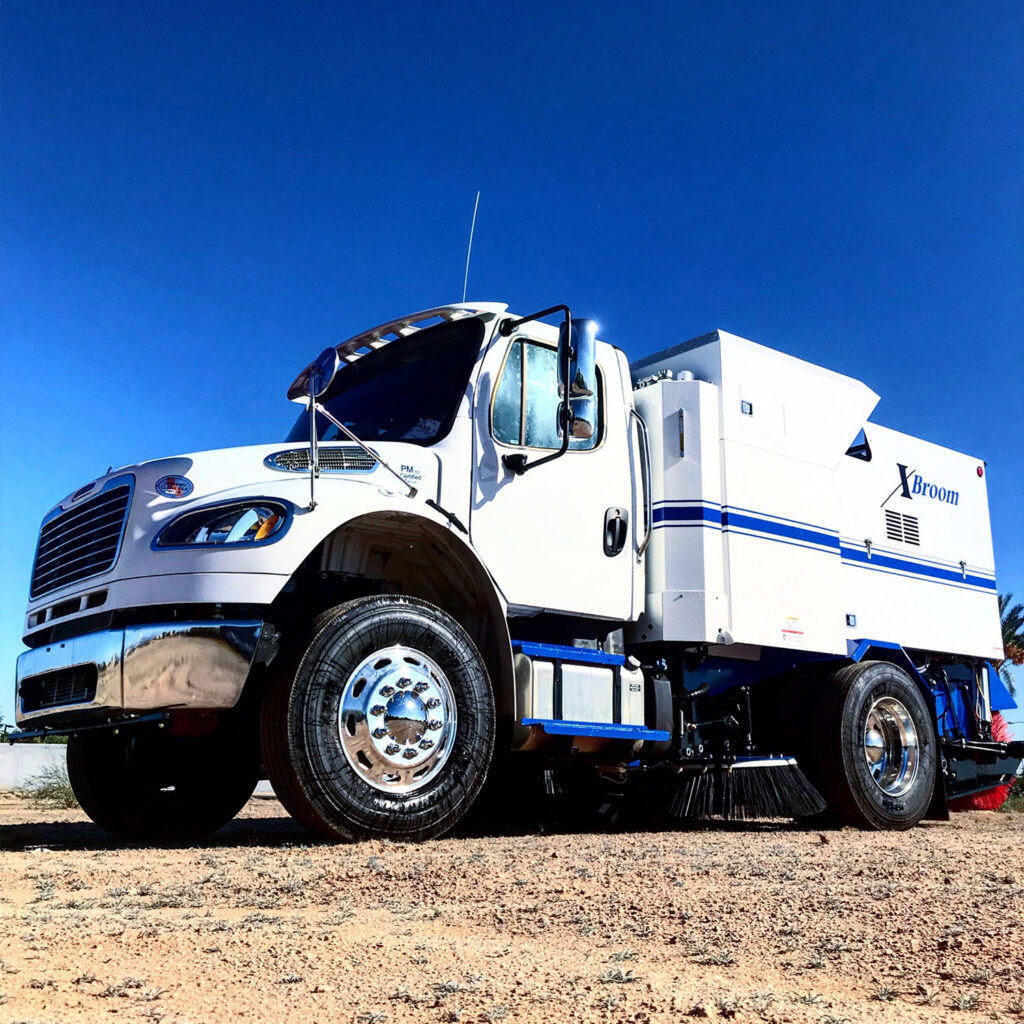
Explore manufacturer options and configuration tools at XBroom street sweeper products and learn how to Build a Truck to match your airport needs.
Frequently Asked Questions
What are the minimum sweeping width and hopper size recommended for commercial runways?
Choose sweepers with wide working paths and large hoppers sized to the airport s throughput and expected debris types. For larger airports, high-capacity hoppers reduce dump frequency and improve operational efficiency.
Can mechanical broom sweepers handle asphalt milling debris?
Yes, heavy-duty mechanical broom sweepers built for construction cleanup handle milling grit and aggregate. Specify reinforced bristle systems and abrasion-resistant surfaces.
How often should runway sweeping be scheduled?
Frequency depends on traffic, nearby construction, and seasonal conditions. Many airports perform daily FOD checks with scheduled sweeping during peak construction or after paving operations.
Do sweepers need water systems to control dust on Nevada runways?
Water suppression reduces airborne dust and improves particle capture. For arid Nevada conditions, integrated water systems are recommended when dust is a concern.
What training is required for airfield sweeper operators?
Operators should be trained on FOD awareness, airfield driving rules, vehicle lights and communications protocols, and proper machine maintenance checks before shifts.
How do I ensure quick service and parts support in Nevada?
Specify vendors with local or regional service partners, include spare parts packages at purchase, and verify repair turn times prior to procurement.
Are XBroom sweepers suited for airport use?
XBroom sweepers are engineered for high-production, low-maintenance sweeping tasks commonly found in road construction and industrial cleanup, and they can be specified for airfield FOD programs. Visit XBroom Street Sweeper to review specifications.
Request Pricing and Demos
If you manage airport operations in Nevada and need reliable runway cleaning solutions, request a demo to evaluate machine performance on your surfaces. For configuration options, spare parts, and pricing, visit Contact Nescon or call Phone: 480-505-0001 to schedule an on-site evaluation.
Conclusion
Airport runway cleaning equipment requirements combine safety, productivity, and low life-cycle cost. For Nevada airports, focus on robust mechanical broom sweepers with large hoppers, dust suppression, and easy serviceability. Pair equipment that is designed for heavy-duty construction debris with a clear maintenance plan and operator training, and you will reduce FOD risk while maximizing uptime.
About XBroom by Nescon
XBroom by Nescon is a U.S.-based street sweeper manufacturer specializing in heavy-duty mechanical street sweepers designed for high-production sweeping applications. XBroom sweepers are built to support asphalt milling, road construction, municipal street maintenance, and industrial sweeping operations.
Engineered for durability, large hopper capacity, long sweep times, and reduced downtime, XBroom street sweepers help contractors and municipalities maximize productivity while minimizing maintenance and dump frequency.
Ready to Upgrade Your Street Sweeper?
Call 480-505-0001 or Contact Nescon to request pricing, schedule a demo, or learn more about XBroom street sweeping solutions.