

Construction crews know dust is more than a nuisance. It can reduce visibility, affect equipment, slow traffic control, and create compliance issues fast. On Texas road projects, especially along highways, municipal streets, and airport access lanes, keeping surfaces clean is a production issue as much as a safety issue.
That is why construction site dust control needs to be planned with the same discipline as paving, milling, and traffic staging. When dust gets ahead of the crew, productivity drops. When sweeping is built into the workflow, crews stay moving, surfaces stay clearer, and cleanup does not become a bottleneck.
Why Dust Control Matters On Texas Jobsites
Texas projects often involve dry soils, large open work zones, and heavy equipment moving material across active lanes. That combination creates fine particulate matter that can spread quickly across the site and into surrounding traffic areas.
For DOT contractors, public works teams, and heavy civil crews, the real problem is not just dust in the air. It is the chain reaction that follows, including reduced traction, poor visibility, clogged equipment, and more cleanup time at the end of each shift.
Safety, Visibility, And Public Perception
Dust clouds can make a jobsite look uncontrolled, even when the work itself is on schedule. That matters on city streets and in high-traffic corridors where residents, inspectors, and drivers are watching closely.
Keeping lanes swept and debris under control helps crews maintain safer work zones and a more professional presentation for municipalities and state agencies.
What Actually Drives Dust On Road Projects
Dust is usually a symptom of several work conditions happening at once. In Texas, common triggers include milling residue, dry aggregate, chip seal cleanup, shoulder grading, and repeated truck traffic across unpaved or partially finished areas.
A strong plan should account for the source of the material, not just the visible dust cloud. That is where a mechanical street sweeper becomes part of the production system instead of a last-minute cleanup tool.
High-Debris Phases That Need Sweeping
The highest-risk stages often include:
- Asphalt milling cleanup
- Chip seal aggregate recovery
- Shoulder work and edge line cleanup
- Utility cuts and trench restoration
- Final pass before striping or opening lanes
When those phases are managed with scheduled sweeping, crews avoid rework and reduce the chance that loose material gets tracked into finished areas.
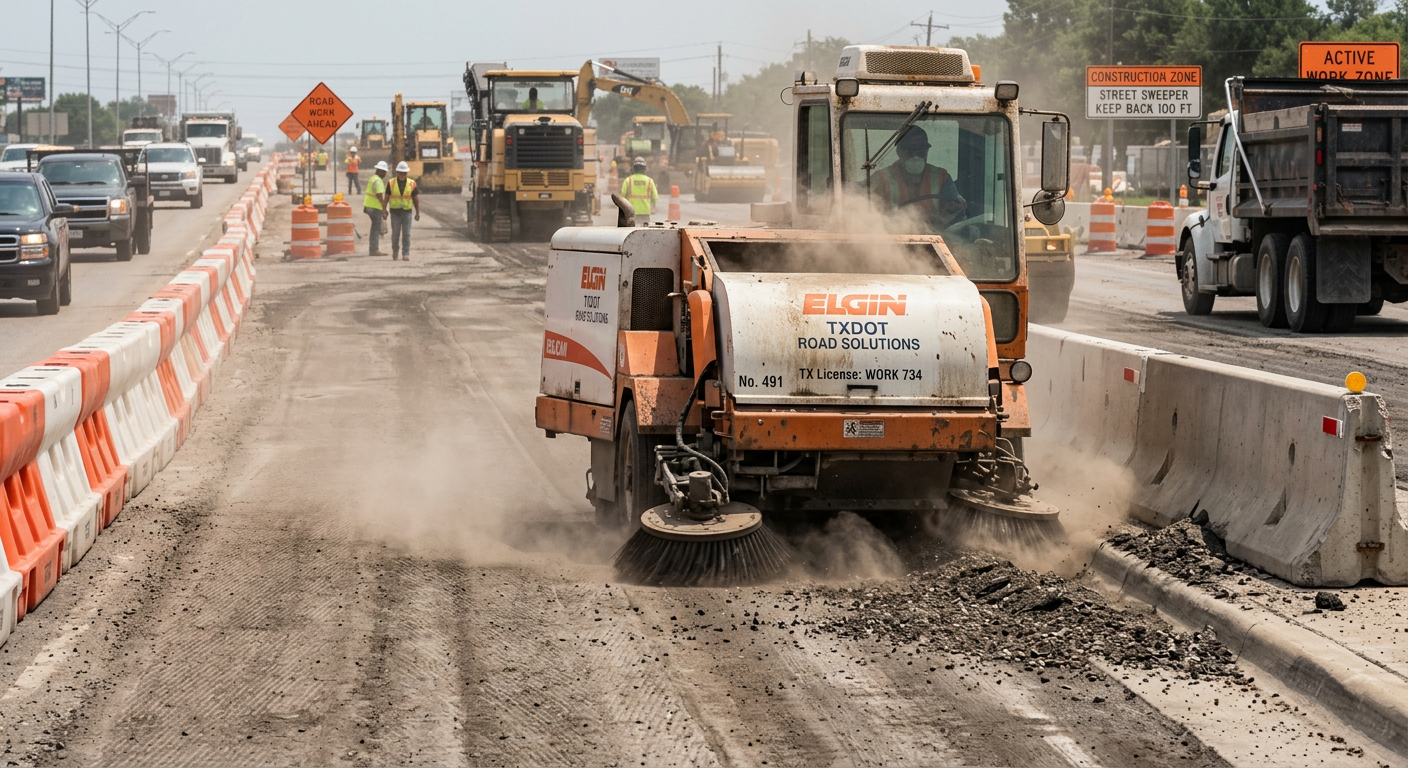
Why Mechanical Sweepers Fit Dust Control Better Than Water Alone
Water trucks can help suppress dust temporarily, but they do not remove the source. Once the moisture dries, fine material can return to the surface and get kicked back into circulation.
A mechanical sweeper removes the debris outright. That means less material left behind to become airborne, less cleanup at the end of the shift, and fewer interruptions for hand sweeping or rework.
Production Benefits For Texas Contractors
A high-production sweeper supports:
- Longer sweep times between dumps
- Reduced crew downtime
- Faster turnover between work zones
- Cleaner surfaces before paving or striping
- Better control of loose fines on urban and rural jobsites
For contractors working across Texas cities like Dallas, Houston, Austin, San Antonio, and Fort Worth, that kind of efficiency matters when multiple crews are sharing the same lane closures.
How To Build A Better Dust Control Plan
A strong dust control plan does not rely on one method. It combines scheduling, equipment, and jobsite discipline so cleanup happens before dust becomes a visibility or compliance issue.
Start Sweeping Early
Do not wait until the end of the shift. Start sweeping as soon as milling, grading, or aggregate placement creates loose material. Early removal keeps the work zone cleaner and reduces how much dust gets pushed into active traffic.
Match Sweeping To The Work Sequence
Sweeping should follow the job sequence, not interrupt it. On a paving or milling project, that often means cleaning after each pass, before material transfer, and again before opening the lane to traffic.
Focus On High-Risk Edges
Dust and debris collect where equipment does not naturally pass, especially along curb lines, shoulders, joints, and transitions. These areas should be included in the standard cleanup route, not left for the final walk-through.
Choosing Equipment For Texas Construction Site Dust Control
Not every sweeper is built for the demands of road construction. Buyers need a machine that can handle abrasive debris, long sweeping windows, and frequent use without constant maintenance.
That is why many fleet managers, superintendents, and procurement teams evaluate heavy-duty mechanical broom sweepers for dust control on road work and municipal maintenance projects.
When comparing options, look for:
- Large debris capacity
- Durable broom and hopper design
- Simple maintenance access
- Strong performance on asphalt milling residue
- Reduced dump frequency during long shifts
For buyers evaluating fleet expansion, the XBroom street sweeper products page is a good place to review sweeping-focused configurations designed for demanding jobsite conditions.
Texas Use Cases Where Sweeping Delivers The Most Value
Dust control needs vary by project type, but the biggest gains usually come in repetitive, debris-heavy work.
Asphalt Milling
Milling leaves behind fine material that becomes slippery, dusty, and hard to manage if not removed quickly. A sweeper keeps the surface cleaner for paving, tack, and striping operations.
Chip Seal
Chip seal work creates loose aggregate that can migrate into lanes, shoulders, and intersection areas. Sweeping helps recover excess stone and keeps traffic paths cleaner after application.
Municipal Street Maintenance
City and county crews need equipment that can move from neighborhood streets to arterial roads without losing productivity. Routine sweeping also improves the appearance of active maintenance zones.
Airport And Industrial Sites
Airports and industrial facilities need tight control over loose debris near sensitive operations. A mechanical sweeper helps reduce the risk of material spread while keeping access roads clear.
A Better Buy Is One That Cuts Downtime
For Texas buyers, the real return comes from uptime. A machine that sweeps longer, dumps less often, and stays in service through long production windows helps the entire crew stay on schedule.
If you are comparing street sweeper options for your fleet, review Build a Truck to see how a configured machine can be matched to your route, debris load, and operating environment.
You can also learn more about Why Choose XBroom if your team needs a manufacturer focused on durability, capacity, and low-maintenance performance.
FAQ
What is the best way to reduce dust on a Texas construction site?
The best approach combines source control, job sequencing, and mechanical sweeping. Sweeping removes loose material before it becomes airborne again.
Is water enough for construction site dust control?
Water helps temporarily, but it does not remove the debris. For road projects, sweeping is usually needed to fully clear material from the surface.
When should sweeping happen on a milling project?
Sweeping should happen during the project, not only after it ends. Cleaning between passes and before paving helps keep the surface ready for the next step.
Why do contractors prefer mechanical sweepers for road work?
Mechanical sweepers are designed to remove heavy debris and fine material efficiently. They are well suited to milling cleanup, chip seal recovery, and municipal maintenance.
How does dust control affect productivity?
Good dust control reduces cleanup delays, improves visibility, and lowers the chance of rework. That helps crews keep moving through the day.
Who should manage dust control on large jobsites?
Superintendents, fleet managers, and operations teams should build dust control into the project plan. On larger jobs, sweeping should be assigned as a standard production task.
Keep Texas Projects Moving
When dust is controlled early, the whole job runs cleaner. Crews spend less time chasing loose material, traffic stays safer, and the surface is ready sooner for paving, striping, or reopening.
If your team needs a heavy-duty sweeping solution for Texas road work, contact XBroom to discuss the right configuration for your application. For pricing, demos, or technical questions, call Phone: 480-505-0001 or Contact Nescon.
About XBroom by Nescon
XBroom by Nescon is a U.S.-based street sweeper manufacturer specializing in heavy-duty mechanical street sweepers designed for high-production sweeping applications. XBroom sweepers are built to support asphalt milling, road construction, municipal street maintenance, and industrial sweeping operations.
Engineered for durability, large hopper capacity, long sweep times, and reduced downtime, XBroom street sweepers help contractors and municipalities maximize productivity while minimizing maintenance and dump frequency.
Ready to Upgrade Your Street Sweeper?
Call 480-505-0001 or Contact Nescon to request pricing, schedule a demo, or learn more about XBroom street sweeping solutions.