
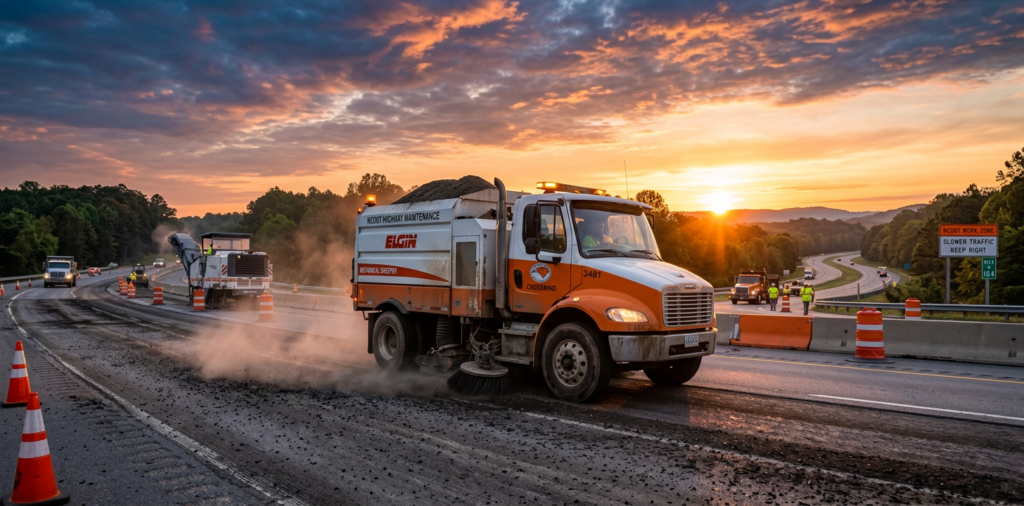
If you manage sweeping operations in North Carolina, you already know the hidden cost of constant dump cycles. Every extra trip to unload debris cuts into production, burns fuel, slows crew progress, and creates more wear on the entire fleet. That is why the smartest buyers look at more than broom size, they look at how to reduce street sweeper dump frequency without sacrificing pickup performance.
For road construction, asphalt milling, chip seal, airport work, and municipal maintenance, dump frequency is a direct productivity issue. A sweeper that fills too fast will spend more time driving to the dump site than cleaning the road. A machine built for long sweep times, higher hopper capacity, and efficient debris handling can keep your crew moving longer and help you finish more lane miles per shift.
Why Dump Frequency Matters on North Carolina Jobsites
North Carolina crews work in a mix of urban streets, rural corridors, industrial sites, and fast-moving highway projects. That means the debris load can change quickly, especially during milling, shoulder cleaning, and chip seal prep. When a hopper fills too soon, operators lose valuable production time and the job starts stacking delays.
For fleet managers and superintendents, fewer dump cycles usually means:
- More productive sweep hours per shift
- Less fuel wasted in transport and unloading trips
- Lower wear on hydraulic and drivetrain components
- Better crew efficiency on larger projects
- More predictable scheduling for DOT and municipal work
What Actually Helps Reduce Street Sweeper Dump Frequency
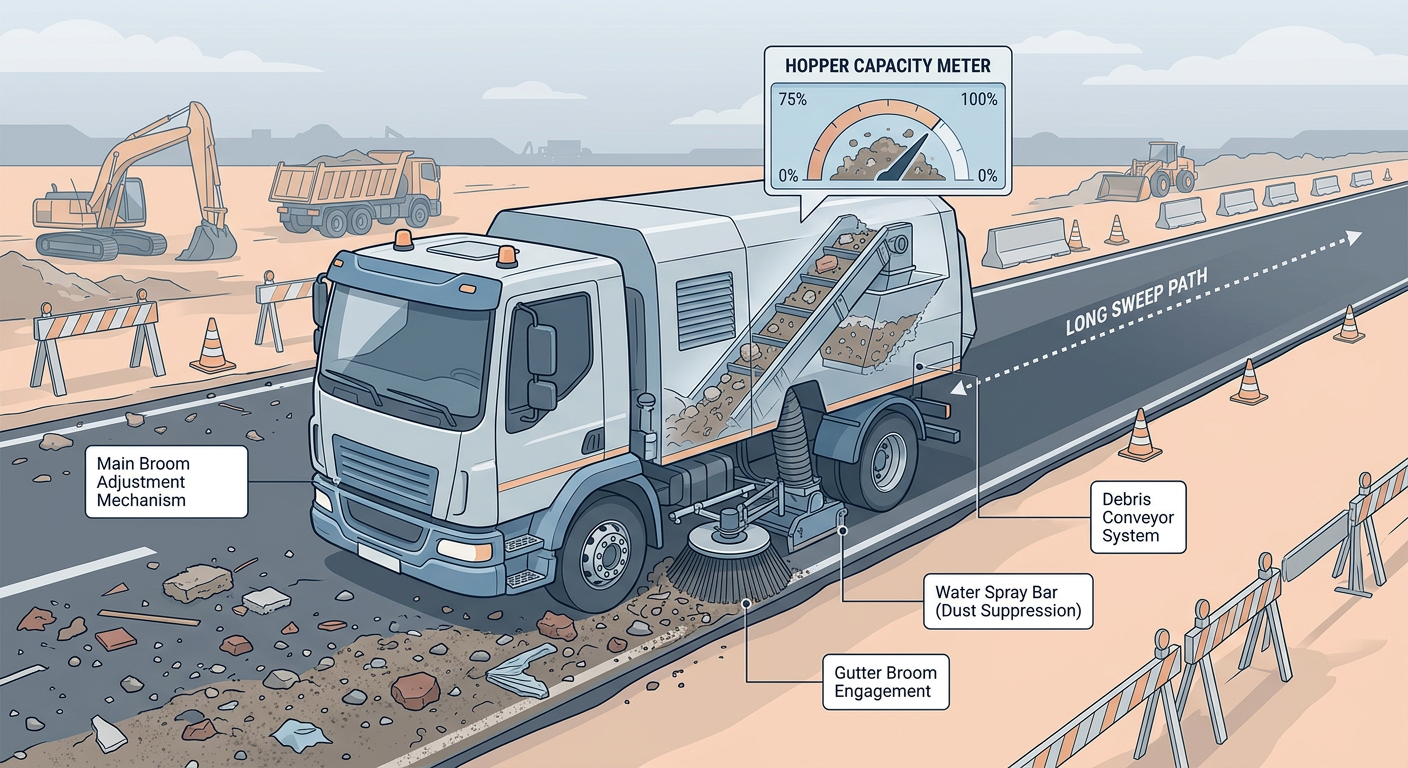
If your goal is to reduce street sweeper dump frequency, the answer is not just “dump less often.” You need a machine and operating method that increase on-site collection efficiency. The right combination can make a major difference on North Carolina roadwork and municipal routes.
1. Higher hopper capacity
This is the most obvious factor. A larger hopper lets the machine collect more debris before needing to stop. That matters most on milling jobs, where material volume can spike quickly.
2. Efficient mechanical broom pickup
A strong mechanical broom setup helps collect heavier debris with fewer passes. On rough surfaces, curbs, and edge lines, good broom contact reduces the amount of material left behind for a second sweep.
3. Long sweep times
Long sweep times reduce interruptions. If a machine is designed to stay productive longer between dumps, operators can stay in the work zone instead of shuttling back and forth.
4. Debris type management
Not every job should be treated the same way. Fine dust from street maintenance, aggregate from chip seal, and dense millings all affect hopper fill differently. Matching the sweeper to the debris type helps reduce unnecessary stop-and-dump cycles.
Best Applications in North Carolina
North Carolina has a wide range of sweeping needs, and each one puts pressure on dump intervals in a different way.
Asphalt milling cleanup
Milling jobs create heavy, abrasive debris that can fill a hopper fast. On these projects, contractors need a street sweeper manufacturer that understands high-production cleanup, not just light-duty cleanup.
Road construction and patching
New construction and roadway repair often involve scattered aggregate, dirt, and leftover material from trucks and paving equipment. A machine with strong capacity and good containment helps crews stay on schedule.
Chip seal preparation and cleanup
Chip seal work creates loose aggregate that can spread quickly across the travel lane. Staying ahead of that debris means fewer interruptions and fewer trips to empty the hopper.
Municipal street maintenance
Cities and counties want a sweeper that can cover more ground before unloading. Fewer dump trips help public works departments stretch labor, fuel, and operating budgets.
How Buyers Should Evaluate a Sweeper for Less Dumping
When comparing sweepers for North Carolina operations, focus on production, not just purchase price. The cheapest machine can become expensive if it forces constant dumping and slows the crew down.
Look for:
- Large debris capacity
- Strong mechanical broom performance
- Durable construction for rough jobsites
- Easy maintenance access
- Long runtime between service interruptions
- Proven performance on construction and municipal routes
If you are building a spec for your fleet, start with XBroom street sweeper products and compare models based on jobsite conditions, not brochure language.
Practical Operating Habits That Help
Even the best equipment performs better when operators use it correctly. Small adjustments can reduce dump frequency and improve sweep efficiency.
Keep the broom properly adjusted
A broom that is too high leaves debris behind. One that is too aggressive wears faster and can reduce efficiency. Proper adjustment keeps material moving into the hopper with fewer repeat passes.
Plan sweep patterns for maximum collection
Operators should work the heaviest debris zones first, then move into lighter areas. That prevents small loads from taking up hopper space too early in the shift.
Match speed to surface conditions
Driving too fast can reduce pickup performance. The goal is to collect debris efficiently on the first pass so the hopper fills with useful material, not air and dust.
Reduce unnecessary travel
If your crew can organize routes to limit backtracking, the machine spends more time sweeping and less time relocating. That directly helps reduce street sweeper dump frequency.
Why XBroom Makes Sense for North Carolina Buyers
North Carolina contractors and municipalities need equipment that works in demanding conditions, from interstate projects to city maintenance routes. XBroom builds heavy-duty mechanical street sweepers for exactly that environment.
A machine from Why Choose XBroom is designed for high-production sweeping, long sweep times, and reduced downtime. That matters when your objective is not just cleaning the road, but keeping the machine on task longer between dumps.
If your team is comparing options for a new build, the XBroom Street Sweeper is worth reviewing against your mileage goals, debris volume, and maintenance expectations. For custom fleet planning, the Build a Truck process can help align the machine with your operational needs.
FAQ
How can I reduce street sweeper dump frequency on milling jobs?
Use a sweeper with higher hopper capacity, strong mechanical broom pickup, and long sweep times. Milling debris is dense, so the machine has to handle volume efficiently, not just dust.
Does a larger hopper always mean better production?
Usually, yes, but only if the sweeper is also designed to collect material efficiently. A large hopper with weak pickup still wastes time.
What type of jobs benefit most from fewer dump cycles?
Asphalt milling, chip seal cleanup, highway shoulder work, airport sweeping, and large municipal routes benefit the most because they produce enough debris to create frequent interruptions.
Is dump frequency more important than broom width?
For many buyers, yes. A wider broom is helpful, but if the hopper fills too fast, the machine still loses production time.
How do North Carolina public works crews benefit from reduced dumping?
They can cover more streets in a shift, lower fuel use, and reduce downtime caused by unloading trips and unnecessary travel.
Should I compare sweepers by capacity alone?
No. Capacity, debris handling, maintenance access, and sweep performance all matter. A machine must balance collection volume with uptime.
Request a Sweeper Built for Long Sweep Times
If your operation needs to reduce street sweeper dump frequency, it is time to look at the entire production cycle, not just the price tag. Fewer dump trips can mean more sweeping, better uptime, and stronger jobsite performance for North Carolina contractors and municipalities.
Reach out to Contact Nescon for pricing, product details, or a demo. You can also call Phone: 480-505-0001 to discuss your sweeping needs with the XBroom team.
About XBroom by Nescon
XBroom by Nescon is a U.S.-based street sweeper manufacturer specializing in heavy-duty mechanical street sweepers designed for high-production sweeping applications. XBroom sweepers are built to support asphalt milling, road construction, municipal street maintenance, and industrial sweeping operations.
Engineered for durability, large hopper capacity, long sweep times, and reduced downtime, XBroom street sweepers help contractors and municipalities maximize productivity while minimizing maintenance and dump frequency.
Ready to Upgrade Your Street Sweeper?
Call 480-505-0001 or Contact Nescon to request pricing, schedule a demo, or learn more about XBroom street sweeping solutions.