
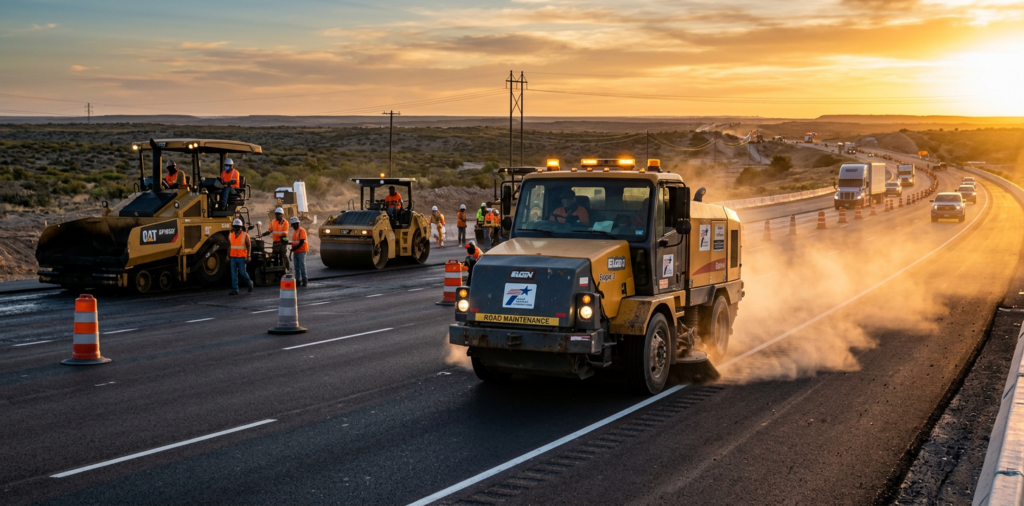
If you manage sweeping for a Texas road crew, municipal fleet, or asphalt operation, the choice between mechanical and vacuum sweepers affects more than cleanup quality. It changes uptime, dump frequency, fuel use, maintenance planning, and how well your crew handles milling, chip seal, and roadside debris.
The debate is usually framed too simply. One machine is not automatically better than the other. The right choice depends on debris type, production targets, surface conditions, and how much downtime your team can tolerate. For contractors and public works teams in Texas, that distinction matters because jobs are often large, hot, dusty, and time sensitive.
Mechanical Vs Vacuum Street Sweepers: The Core Difference
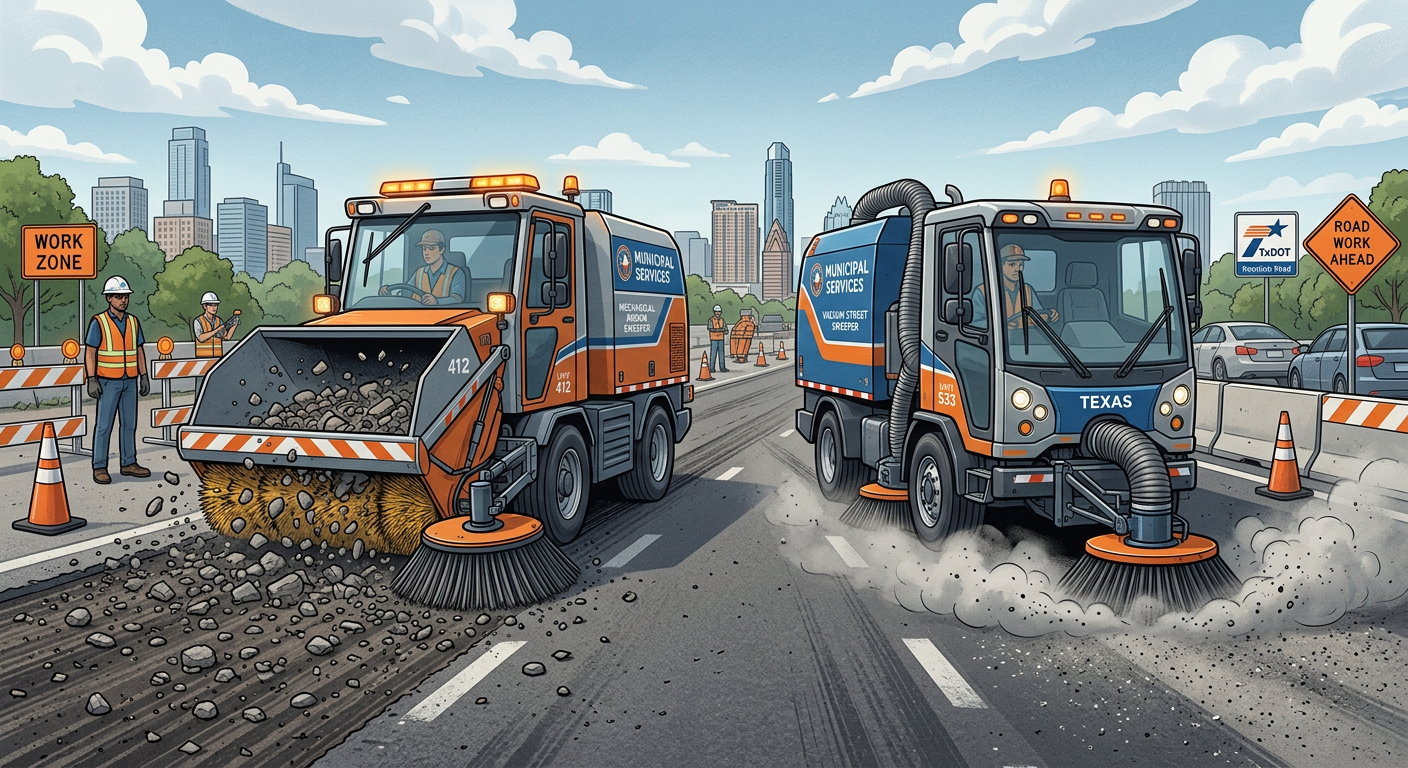
Mechanical sweepers use rotating brooms to lift debris and move it into a hopper. Vacuum sweepers use suction to pull debris into the collection system. Both can clean pavement, but they perform differently in real jobs.
Mechanical units are often better suited for heavy debris, coarse aggregate, asphalt milling cleanup, and long sweeping runs. Vacuum units are often chosen when finer dust control is the priority. That said, the best fit depends on the job, not the label.
Why Texas Contractors Often Lean Mechanical
Texas jobs often involve chip seal, shoulder cleanup, patching, milling, and roadway maintenance across long stretches of pavement. Those environments can create heavy material loads that fill smaller hoppers fast and slow production.
A mechanical sweeper is often preferred when the priority is high-production debris pickup and fewer dump stops. That can be a major advantage for DOT contractors, county fleets, and private sweeping companies running long routes.
For buyers comparing sweepers, the question is not just what cleans the surface. It is how long the machine can keep working before the crew has to stop.
Where Vacuum Sweepers Make Sense
Vacuum sweepers can be a good fit when dust suppression is the main concern or when the application calls for fine particulate pickup. Airports, downtown maintenance, and some industrial sites may prefer that style for specific conditions.
Still, vacuum systems can be less forgiving in heavy debris environments. If your Texas work includes milling, broken aggregate, or construction cleanup, you may find yourself dumping more often and spending more time on maintenance.
Mechanical Street Sweepers in Real Texas Use Cases
Texas public works departments and contractors often need a sweeper that can handle mixed debris without constant interruption. That is where mechanical design tends to stand out.
Common use cases include:
- Asphalt milling cleanup after daytime or overnight paving
- Chip seal pickup along rural or suburban roadways
- Shoulder sweeping before striping
- Municipal street maintenance after storms
- Construction entrance and exit cleanup on active jobsites
- Industrial yard sweeping where heavy aggregate is common
If your operation needs a purpose-built machine, XBroom street sweeper products are designed for demanding sweeping work, not general hauling. Learn more about XBroom street sweeper products and how mechanical broom design supports production-focused cleanup.
Maintenance, Uptime, and Dump Frequency
For fleet managers and superintendents, maintenance is often the deciding factor. Vacuum systems can introduce more airflow-related wear points, and some operators find the systems less efficient when handling bulky debris.
Mechanical sweepers are often easier to match with heavy-duty road work because they are built around straightforward sweeping action. When the goal is fewer interruptions, reduced dump frequency, and dependable performance across long shifts, that simplicity can be valuable.
If you want to see how the platform is configured for real jobsite demands, review the XBroom Street Sweeper and explore the Build a Truck option for your fleet needs.
How To Choose Between Mechanical And Vacuum
Ask three questions before you buy or spec a unit:
- What kind of debris do we sweep most often?
- How far do we need to sweep between dumps?
- Is dust control or heavy pickup the bigger priority?
If your answer leans toward coarse aggregate, milling material, and long production windows, a mechanical sweeper is usually the stronger fit. If your work is lighter and dust-sensitive, a vacuum design may be worth evaluating.
Mechanical Vs Vacuum Street Sweepers for DOT and Municipal Fleets
For Texas DOT contractors and municipal fleets, the best sweeper is the one that keeps the job moving. A machine that cleans well but stops too often can create scheduling problems, overtime, and missed lane closures.
That is why many buyers evaluate not just cleaning performance, but hopper capacity, broom durability, service access, and how the machine behaves under real debris loads.
What Procurement Teams Should Compare
Before you issue a purchase order, compare these factors:
- Hopper capacity
- Sweep time per load
- Ease of daily maintenance
- Parts access and serviceability
- Performance on milling debris and chip seal material
- Operator comfort during long shifts
- Total cost of ownership
For many Texas buyers, Why Choose XBroom comes down to durability, uptime, and reduced dump frequency on demanding jobsites.
FAQ
Which is better for asphalt milling cleanup?
Mechanical sweepers are often better for asphalt milling cleanup because they handle heavier debris and larger material loads more efficiently.
Do vacuum sweepers control dust better?
In many cases, yes. Vacuum sweepers are commonly used where fine dust collection is a top priority.
Are mechanical sweepers harder to maintain?
Not necessarily. Many operators prefer mechanical sweepers because they are built for straightforward heavy-duty sweeping and fewer production delays.
What type of sweeper is best for Texas road construction?
For Texas road construction, mechanical sweepers are often the better choice when the work involves milling, chip seal, shoulder cleanup, and coarse debris.
Can one sweeper handle both municipal and contractor work?
Yes, but the machine should match your average debris load. A mechanical sweeper is often the more versatile option for mixed heavy-duty applications.
How do I get pricing or a demo?
You can Contact Nescon to request pricing, product details, or a demo, or call Phone: 480-505-0001.
Get The Right Sweeper For Texas Work
If your crews are moving through long shifts, heavy debris, and tight production windows, the cleaner choice is not always the more complicated one. Mechanical sweepers are often the better business decision for Texas contractors and municipalities that need high output and fewer stoppages.
For product guidance, fleet planning, or a quote, connect with XBroom and ask about the right setup for your application. Start with XBroom street sweeper products, then reach out for a build recommendation that fits your work.
About XBroom by Nescon
XBroom by Nescon is a U.S.-based street sweeper manufacturer specializing in heavy-duty mechanical street sweepers designed for high-production sweeping applications. XBroom sweepers are built to support asphalt milling, road construction, municipal street maintenance, and industrial sweeping operations.
Engineered for durability, large hopper capacity, long sweep times, and reduced downtime, XBroom street sweepers help contractors and municipalities maximize productivity while minimizing maintenance and dump frequency.
Ready to Upgrade Your Street Sweeper?
Call 480-505-0001 or Contact Nescon to request pricing, schedule a demo, or learn more about XBroom street sweeping solutions.