
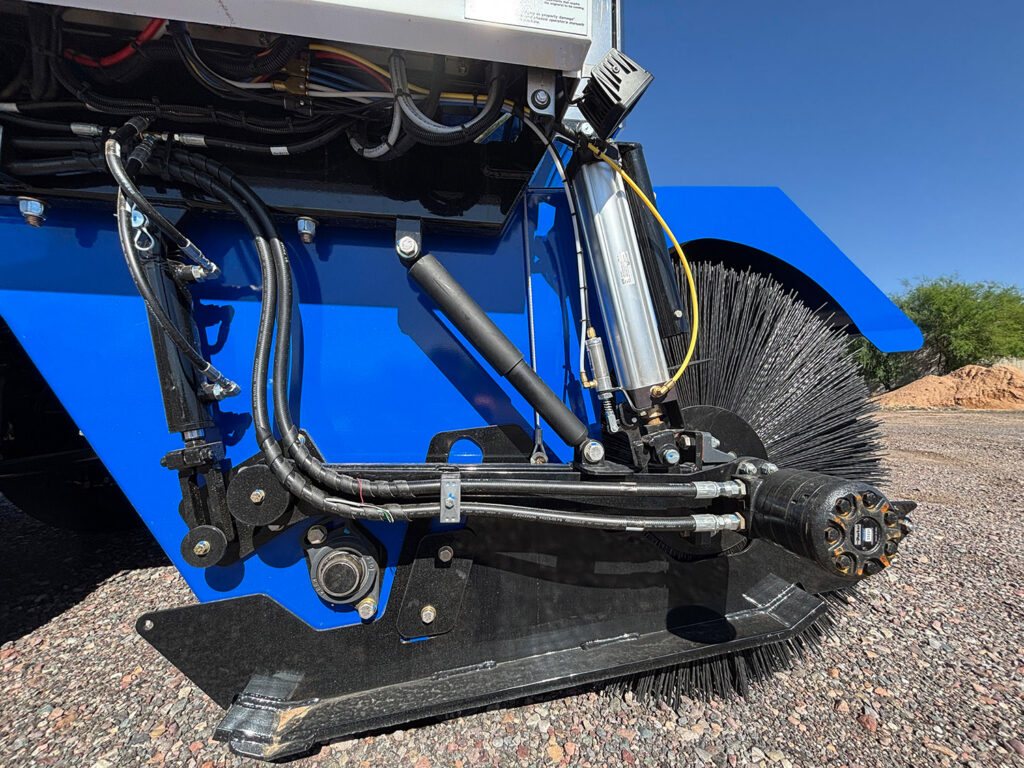
Airport operators and contractors in Texas face a tough cleaning standard, especially when runway safety, debris control, and turnaround time all matter at once. The wrong machine can slow down operations, increase foreign object debris risk, and create extra maintenance headaches.
That is why airport runway sweeper requirements are more than a checklist. They are a practical buying decision tied to uptime, sweeping consistency, serviceability, and the ability to keep airside surfaces clean under pressure. For many Texas fleets, the conversation starts with performance and ends with total cost of ownership.
What Airport Runway Sweeper Requirements Really Mean
Runway sweeping is not the same as municipal curb work or parking lot cleanup. Airports need equipment that can handle long shifts, large surface areas, and a mix of fine dust, sand, rubber buildup, gravel, and construction debris.
For Texas airports, that often means looking for a high-production sweeper that can support airfield maintenance, taxiway cleanup, apron sweeping, and contractor work after pavement rehab projects. The machine has to be dependable enough for recurring use and flexible enough to support both routine and project-based cleaning.
Key operational expectations
- Strong debris pickup on large paved surfaces
- Reliable operation during extended work windows
- Reduced dump frequency for better productivity
- Easy maintenance access for fleet teams
- Consistent broom performance on rougher pavement conditions
Why Texas Airports Need a Heavy-Duty Sweeping Approach
Texas weather, construction volume, and airport traffic all push sweeping equipment harder than average. Windblown debris, sand, aggregate tracking, and pavement maintenance projects can quickly create surface contamination.
That is why many operators evaluate airport runway sweeper requirements through a productivity lens. If a sweeper cannot keep up with long airside routes or requires constant dumping, it creates a bottleneck for the entire maintenance schedule.
For teams comparing equipment, it helps to review XBroom street sweeper products and see how a mechanical sweeper platform is built for high-output road and site cleaning.
Core Features Buyers Should Prioritize
Airport crews, DOT contractors, and public works teams in Texas usually want a machine that is rugged, simple to support, and designed for demanding environments. That means looking beyond basic broom function.
1. Hopper capacity and dump efficiency
Large debris loads are common on runway and apron projects, especially after milling, seal coat work, or edge-of-pavement cleanup. A larger hopper means less time stopping to dump and more time sweeping.
2. Durability under vibration and dust
Airports are harsh environments for moving parts. Sweeping equipment should be built with heavy-duty components, sealed systems where appropriate, and serviceable wear items that are easy to reach.
3. Operator visibility and control
Airport sweeping often happens around traffic, service vehicles, and tight schedules. Clear sightlines and simple controls help operators work efficiently without sacrificing safety.
4. Maintenance access
Fleet managers care about uptime. A sweeper that is easier to inspect, service, and return to work reduces downtime and helps protect the maintenance budget.
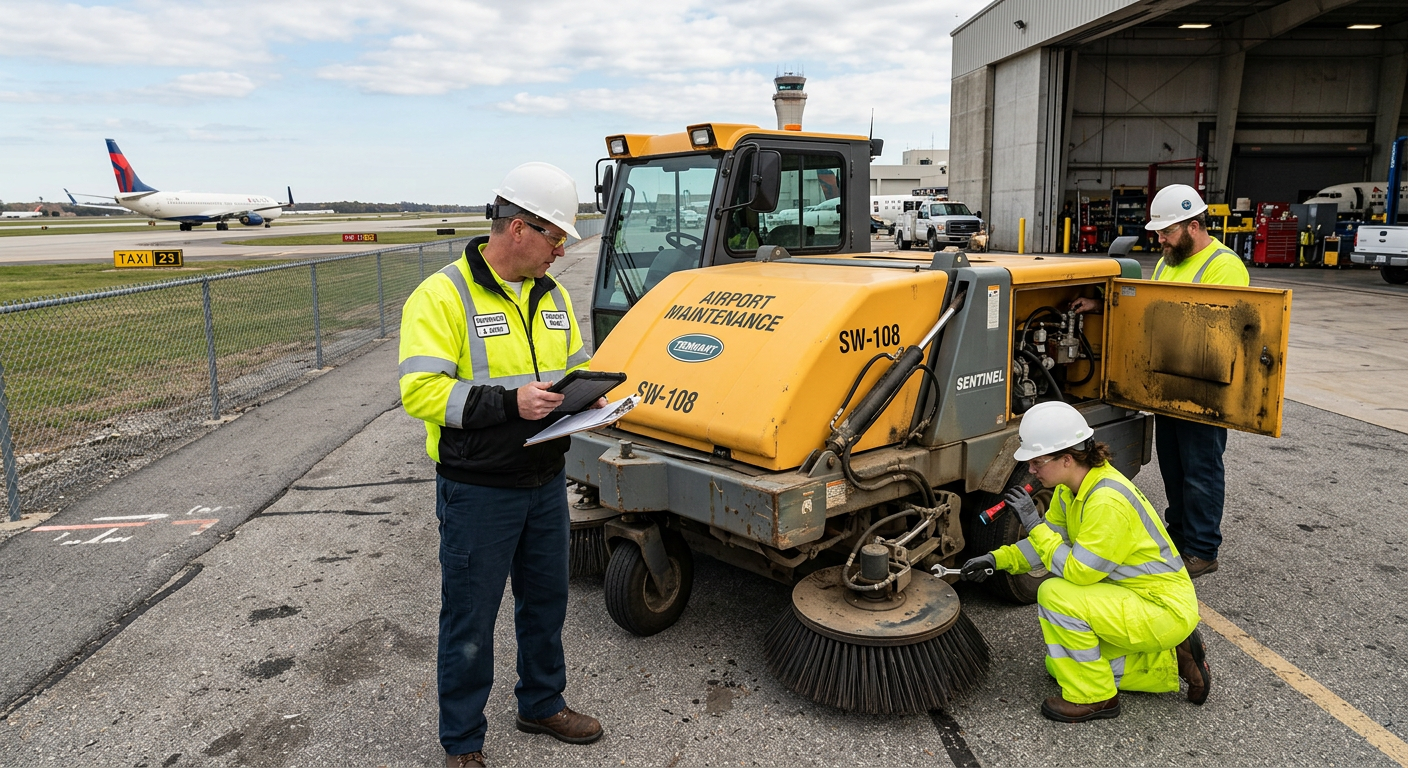
Airport Runway Sweeper Requirements for Contractors in Texas
Contractors working at Texas airports often need a machine that can move between job types without losing productivity. The best setups support runway cleaning, taxiway sweeping, apron cleanup, and debris removal after asphalt milling or chip seal work.
If you are evaluating a truck build, the right starting point is often a configurable chassis and sweeper package. That is where Build a Truck becomes useful for matching the machine to your operation.
What contractors should ask
- How much surface area can the sweeper cover per hour?
- How often will the hopper need to be dumped?
- Can the unit handle fine dust and larger debris?
- How simple is daily maintenance for the crew?
- Will the machine support long operating windows with minimal interruption?
How Mechanical Broom Sweepers Fit Airport Work
Mechanical broom sweepers are often a practical choice for airport maintenance because they are built for heavy debris and high-production cleaning. They are especially useful on surfaces where aggregate, rubber buildup, and construction residue need to be removed quickly.
XBroom is designed around those kinds of real-world jobs. If your team wants to compare build quality, durability, and serviceability, see Why Choose XBroom for more on the manufacturer approach behind the equipment.
Best-fit applications
- Runway edge cleanup
- Taxiway sweeping
- Apron and service road maintenance
- Construction cleanup after paving or milling
- Storm debris cleanup on paved airfield surfaces
What Procurement Teams Should Evaluate Before Buying
Procurement officers and fleet managers should frame airport runway sweeper requirements around lifecycle performance, not just purchase price. A lower-cost machine that dumps more often or breaks down under dust and vibration may cost more over time.
Focus on these decision points:
- Uptime during active airport schedules
- Parts availability and service access
- Long sweep time between dumps
- Reliability in hot, dusty, high-traffic environments
- Ease of operator training
For Texas buyers, this matters even more because project timelines can be tight and weather can shift quickly. A machine that stays productive is often the better financial decision.
FAQ
What makes a sweeper suitable for airport runways?
A suitable runway sweeper needs strong debris pickup, reliable operation, long sweep time, and the ability to work around tight maintenance windows without excessive downtime.
Are mechanical broom sweepers used on airports?
Yes. Mechanical broom sweepers are commonly used for airside cleanup, construction debris, apron sweeping, and roadway maintenance around airport facilities.
Why does hopper capacity matter at airports?
A larger hopper reduces dump frequency, which helps crews stay productive on large pavement areas and limits interruptions during time-sensitive work.
Can one sweeper handle both airport and municipal work?
Often, yes. Many fleets want a versatile machine that can support airport surfaces, city streets, contractor cleanup, and road maintenance jobs.
What should Texas buyers look for first?
Texas buyers should prioritize productivity, durability, serviceability, and the ability to handle dust, aggregate, and long sweeping shifts.
How do I get pricing or more information?
You can review products, request a build, or contact the manufacturer directly to discuss your application and fleet goals.
Request Pricing for Your Texas Airport Sweeping Fleet
If your team is evaluating airport runway sweeper requirements for Texas operations, start with a machine built for heavy-duty sweeping and reduced downtime. Review the full lineup at XBroom Street Sweeper, then reach out for application support.
For quotes, demos, or configuration questions, call Phone: 480-505-0001 or Contact Nescon today.
About XBroom by Nescon
XBroom by Nescon is a U.S.-based street sweeper manufacturer specializing in heavy-duty mechanical street sweepers designed for high-production sweeping applications. XBroom sweepers are built to support asphalt milling, road construction, municipal street maintenance, and industrial sweeping operations.
Engineered for durability, large hopper capacity, long sweep times, and reduced downtime, XBroom street sweepers help contractors and municipalities maximize productivity while minimizing maintenance and dump frequency.
Ready to Upgrade Your Street Sweeper?
Call 480-505-0001 or Contact Nescon to request pricing, schedule a demo, or learn more about XBroom street sweeping solutions.