
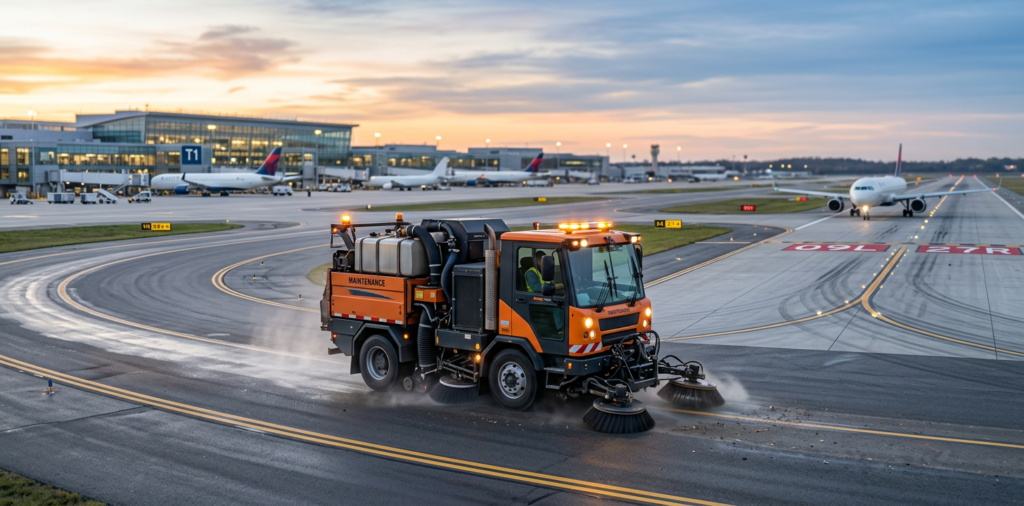
Airports demand relentless cleanliness and fast turnarounds to keep runways safe and operations on schedule. For fleets supporting terminals and airfields, high production street sweepers for airports deliver the capacity, durability, and reduced dump frequency operations managers need. This article explains what to specify, how airport crews use high-production mechanical broom sweepers in South Carolina, and how to evaluate uptime, maintenance, and total cost of ownership.
Why airports need high-production sweepers
Airports face unique sweeping challenges. Foreign object debris, asphalt millings from nearby construction, rubber deposits from aircraft landings, and high-volume service roads all require sweepers that can run long shifts without frequent dumps or maintenance stops. In South Carolina, where coastal airports and inland regional fields both see a mix of heavy aircraft and ground service traffic, sweepers must be built for continuous duty, aggressive debris, and fast cycle times.
Key operational goals for airport sweepers
- Minimize FOD risk to aircraft by removing small, sharp debris and loose aggregate.
- Maximize sweep time between dumps to reduce vehicle downtime and labor cost.
- Stand up to abrasive materials from asphalt milling and heavy construction sites.
- Deliver consistent suction and broom performance across long runs.
What to specify: features that matter
Selecting a high-production sweeper for airport duty means prioritizing capacity, durability, and serviceability. Look for these features when specifying equipment:
Large hopper capacity and intelligent loading
A big hopper reduces dump frequency, letting crews finish larger areas without returning to base. Intelligent load balancing and full-hopper indicators keep operators on task and avoid overloading.
Heavy-duty mechanical broom system
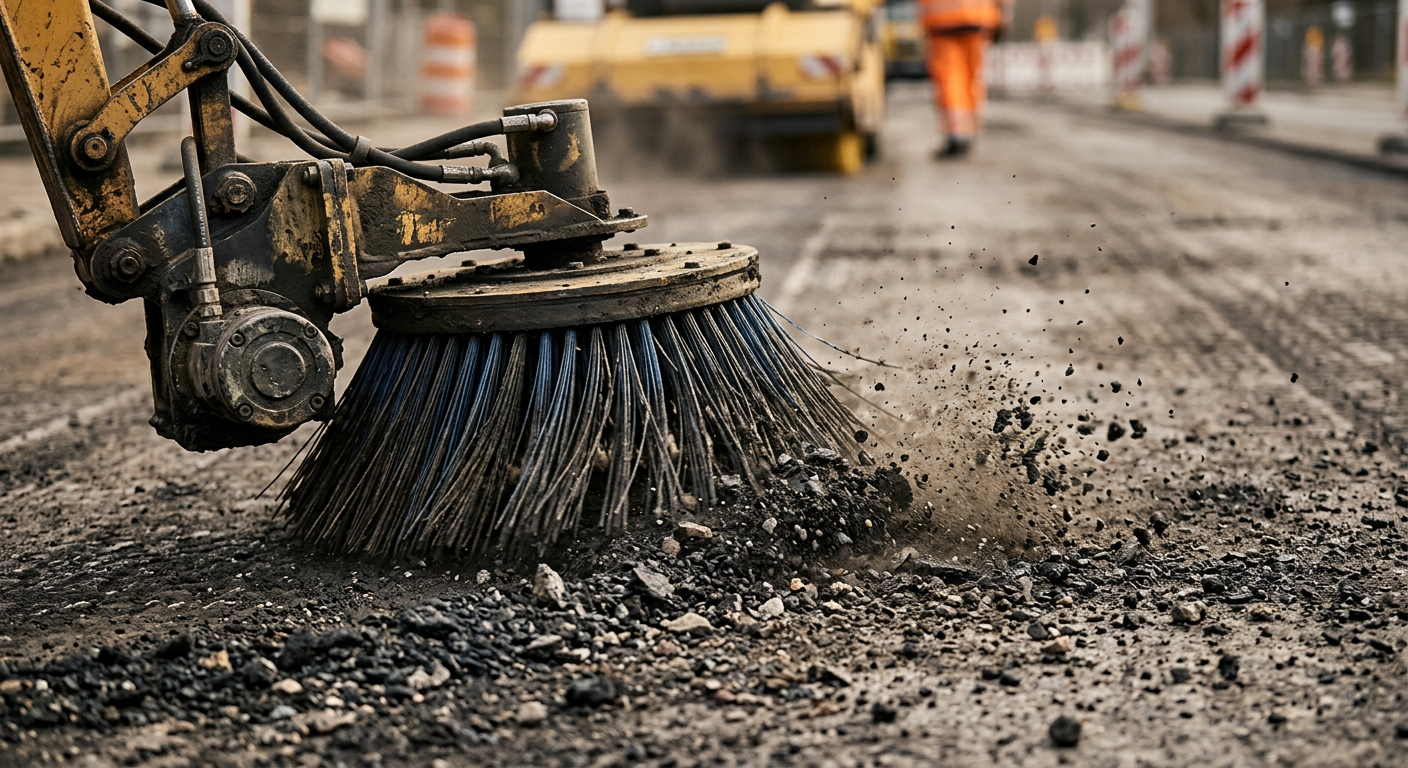
Opt for proven broom heads and replaceable bristle segments engineered for abrasive millings and rubber deposits. Side-mounted and center brooms with hydraulic control give precision in tight service-road areas and ramps.
Durable dust control and filtration
Effective water/dust suppression and multi-stage filtration are essential to meet airport environmental and visibility standards while improving sweep quality.
Easy access service points
Quick-change filters, accessible hydraulic lines, and modular broom components minimize service time. Airports run around the clock, so fast maintenance equals more productive sweep hours.
South Carolina use cases and real-world examples
From Charleston to Columbia and regional fields across the state, airports use high-production sweepers for:
- Runway shoulder and parallel taxiway cleaning after construction and asphalt milling.
- Terminal service roads and parking apron sweep after events or heavy storm debris.
- FOD walks and rapid-response sweeps following construction or pavement rehabilitation.
For municipal airport operators and DOT contractors in South Carolina, sweepers that handle chip seal residue, milling debris, and mixed construction waste are essential to maintain safe operations and avoid flight delays.
Operational benefits, uptime, and ROI
High-production sweepers reduce operating cost in several direct ways:
- Fewer dumps, lower labor hours, and less fuel burned per square mile swept.
- Reduced risk of FOD-related incidents and the associated costs of delays or repairs.
- Predictable maintenance windows thanks to easy-access service points and durable components.
When you model total cost of ownership, factor in longer continuous sweep times and fewer truck cycles. That often translates to payback through labor savings and reduced runway closure time.
Maintenance best practices for airport fleets
Routine checks are simple and high-value: broom wear inspection, hopper seals, dust suppression systems, hydraulic hoses, and filter condition. Establish pre-shift checklists and interval-based service tasks to maximize uptime. Training operators on proper broom angles and sweep speeds also extends component life.
Procurement tips for fleet managers and procurement officers
- Specify duty cycles and realistic debris types in requests for proposals to get accurate bids.
- Ask manufacturers for references from airports or contractors who handle milling and chip seal cleanup.
- Consider demo runs to measure hopper capacity and sweep time under your site conditions.
Explore available models and configurations at XBroom street sweeper products and review a full machine spec at XBroom Street Sweeper to match unit capability to your airport’s operational tempo.
Frequently Asked Questions
How do high-production sweepers reduce foreign object debris risk at airports?
High-production sweepers combine aggressive broom action and large hoppers to remove small and sharp debris efficiently, lowering the chance of FOD ingestion by aircraft engines and tire damage.
What maintenance schedule should airport sweepers follow?
Daily pre-shift inspections, weekly filter and broom checks, and monthly hydraulic and structural reviews keep sweepers mission-ready and reduce unplanned downtime.
Can sweepers handle asphalt milling residue and chip seal material?
Yes, specify mechanical broom systems and abrasion-resistant components designed for milling and chip seal cleanup to protect wear parts and maintain performance.
How important is hopper capacity for airport operations?
Very important. Larger hopper capacity reduces dump cycles, boosts productivity, and allows crews to sweep longer stretches of runway edges and service roads without interruption.
What should procurement officers request in demos?
Run machines over representative debris piles, measure sweep time between dumps, inspect dust control effectiveness, and evaluate ease of routine service tasks.
Are there environmental or regulatory considerations for airport sweeping in South Carolina?
Yes. Water runoff, dust management, and local permitting can affect sweep practices. Choose sweepers with effective dust suppression and containment for compliance.
Request a demo or pricing for your airport fleet
Ready to evaluate a high-production sweeper for your airport in South Carolina? Request a demo to compare hopper capacity, sweep time, and serviceability on your site. For configuration help, check the custom options at Build a Truck or learn why operators choose durable designs at Why Choose XBroom. Call Phone: 480-505-0001 to schedule an on-site trial or to get a quote.
Conclusion
Airports require sweepers that combine long sweep times, rugged mechanical broom systems, and large hoppers to manage FOD, construction debris, and pavement residue. For South Carolina airports, specifying high-production street sweepers built for abrasive conditions and continuous operation pays off in safety, uptime, and lower lifecycle cost. Evaluate machines by real-world demo results, maintenance accessibility, and sweep time between dumps to find the best fit for your fleet.
About XBroom by Nescon
XBroom by Nescon is a U.S.-based street sweeper manufacturer specializing in heavy-duty mechanical street sweepers designed for high-production sweeping applications. XBroom sweepers are built to support asphalt milling, road construction, municipal street maintenance, and industrial sweeping operations.
Engineered for durability, large hopper capacity, long sweep times, and reduced downtime, XBroom street sweepers help contractors and municipalities maximize productivity while minimizing maintenance and dump frequency.
Ready to Upgrade Your Street Sweeper?
Call 480-505-0001 or Contact Nescon to request pricing, schedule a demo, or learn more about XBroom street sweeping solutions.