
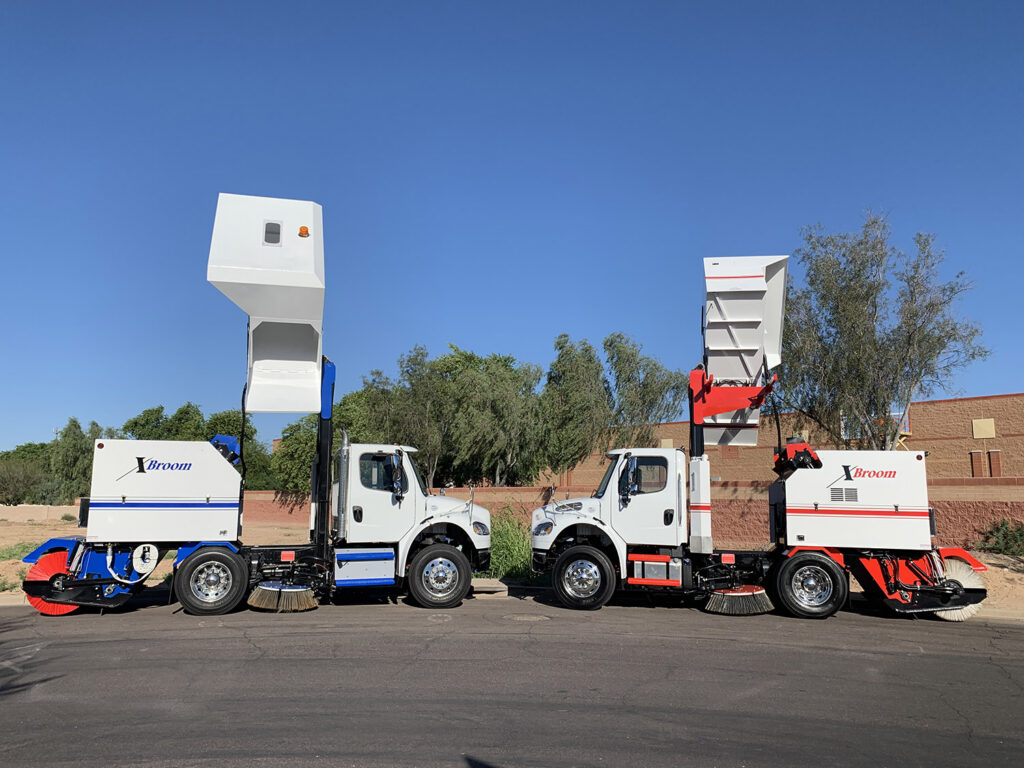
When a city or contractor starts evaluating a new sweeper, the first mistake is usually the same, focusing on price before production. The right municipal sweeper procurement guide should help you compare uptime, hopper capacity, dump frequency, maintenance access, and how the machine performs on the kind of debris your crews actually face.
That matters even more in Texas, where municipal street maintenance, road construction, asphalt milling, and chip seal work can push equipment hard across long routes and hot operating conditions. If the machine cannot stay productive, the low bid quickly becomes the expensive choice.
For public works departments, DOT contractors, heavy civil crews, airports, and private sweeping companies, procurement is not just about buying a sweeper. It is about buying fewer breakdowns, fewer dump runs, and a cleaner, faster job with less labor wasted.
What Municipal Buyers Should Define First
Before you compare models, define the job. A procurement process works best when you know where the sweeper will run, what it will collect, and how long it needs to stay on the pavement before dumping.
Start With the Application
A machine used for downtown municipal sweeping has different requirements than one supporting milling cleanup or chip seal recovery. In Texas, many buyers also need a sweeper that can move between urban streets, arterial roads, construction zones, and industrial lots without changing equipment.
If your team handles a mix of municipal and contractor work, the XBroom Street Sweeper is worth reviewing as a purpose-built mechanical broom solution for demanding road and site conditions.
Match Capacity to Route Length
Dump frequency affects labor, fuel use, and productivity. A hopper that fills too quickly creates more interruptions, especially on longer Texas routes or during milling operations where debris volume spikes fast.
Look closely at:
- Hopper capacity
- Brush wear life
- Debris type and density
- Route length between dump points
- Shift length and crew availability

Core Evaluation Criteria for a Texas Sweeper Purchase
A strong procurement guide should make the comparison process measurable. That means you are not just asking what the sweeper costs, you are asking what it produces per hour and what it costs to keep running.
1. Production Rate
For road construction and milling support, production is often the deciding factor. A high-production machine clears more material before stopping, which can reduce labor overlap and keep paving or striping crews moving.
2. Maintenance Simplicity
Mechanical systems are often valued because they are straightforward to service. Buyers should ask how easy it is to inspect wear components, perform daily checks, and return the sweeper to service after a shift.
3. Durability in Harsh Conditions
Texas heat, dust, aggregate, and jobsite debris can shorten equipment life if the design is not robust. Procurement teams should ask how the machine handles abrasive materials, extended sweep cycles, and repeated loading.
4. Fleet Compatibility
If you are standardizing municipal equipment, fit matters. Review truck compatibility, operator training needs, and whether the sweeper can support your existing upfit strategy through Build a Truck options.
5. Vendor Support and Service Access
The best machine is still a poor purchase if support is slow. Ask how parts, service, and application guidance are handled, especially if your crews work across multiple Texas regions.
Procurement Questions Buyers Should Ask
A practical municipal sweeper procurement guide should help you cut through sales language and get to the real operating questions.
How many productive hours will the sweeper deliver per shift?
This is more important than peak specs. A machine that sweeps efficiently for longer periods often creates better value than a unit that looks cheaper on paper.
How often will crews need to dump debris?
Reduced dump frequency can improve route efficiency and lower labor costs. That is especially important for large municipal districts and contractor support work where every interruption slows the entire operation.
What maintenance tasks will operators handle daily?
Simple service routines help reduce downtime. Ask whether the design supports quick inspections and easy access to wear items.
Can the sweeper handle both municipal and contractor work?
Many Texas buyers need one platform that can do more than a single niche. If your work includes street sweeping, asphalt milling cleanup, and construction site cleanup, versatility is a major advantage.
How to Compare Vendors the Right Way
Not every supplier is a manufacturer, and that difference matters. When you buy from a manufacturer, you are usually getting deeper product knowledge, more direct support, and clearer answers about durability and application fit.
For buyers comparing options, Why Choose XBroom is a useful starting point for understanding how a manufacturer-led approach supports long-term fleet performance.
Also review the full range of XBroom street sweeper products if you are planning for different route profiles or future fleet expansion.
Compare Total Cost of Ownership
Do not stop at the purchase price. Include:
- Maintenance labor
- Parts replacement
- Downtime risk
- Fuel and operating efficiency
- Dump cycle frequency
- Crew productivity
Compare Support, Not Just Specs
A procurement decision should include who answers technical questions, how fast service is available, and whether the manufacturer understands municipal and contractor use cases.
Texas Use Cases That Drive Better Procurement Decisions
Texas buyers often manage a broad mix of sweeping needs, which makes procurement more complex and more important.
Municipal Street Maintenance
Cities need equipment that can stay productive across neighborhoods, arterial roads, and public facilities. A reliable mechanical broom sweeper helps crews keep routes moving without constant interruption.
Asphalt Milling Cleanup
Milling work creates heavy, abrasive material that can overload weak equipment. Buyers should prioritize machines built for aggressive debris and long sweep times.
Chip Seal and Road Construction
Chip seal and construction jobs demand a machine that can keep up with changing site conditions. In these applications, productivity and durability matter as much as maneuverability.
Airports and Industrial Facilities
Airports, logistics centers, and industrial sites often need consistent sweeping performance with reduced downtime. Procurement teams should focus on repeatability and ease of maintenance.
FAQ
What is the most important factor in municipal sweeper procurement?
For most buyers, it is total productivity over the life of the machine. That includes sweep time, hopper capacity, maintenance demands, and how often crews must stop to dump debris.
Should Texas municipalities prioritize mechanical or regenerative designs?
It depends on the work. For heavy debris, road construction, and milling cleanup, many buyers favor mechanical broom systems because they are built for straightforward, high-production sweeping.
How do I reduce downtime after purchase?
Choose a sweeper with simple maintenance access, proven durability, and a support team that understands your application. Training operators well also helps reduce unnecessary wear.
Why does dump frequency matter so much?
Every dump run takes time away from sweeping. Fewer interruptions usually mean better route completion, lower labor waste, and stronger overall jobsite efficiency.
Can one sweeper handle both municipal and contractor work?
Yes, if the machine is designed for demanding road and site conditions. Many buyers want one platform that can handle streets, millings, and construction debris without sacrificing uptime.
How should procurement officers evaluate the purchase price?
Treat price as one part of the equation. The real question is whether the machine delivers enough uptime, capacity, and serviceability to lower operating cost over time.
Request a Sweeper Quote for Texas Operations
If your team is comparing municipal sweeper options in Texas, focus on performance that protects uptime and reduces dump frequency. The right machine should support your routes, your crews, and your production goals without adding maintenance headaches.
To review options or discuss your fleet needs, visit Contact Nescon or call Phone: 480-505-0001 for pricing, demos, and application guidance.
About XBroom by Nescon
XBroom by Nescon is a U.S.-based street sweeper manufacturer specializing in heavy-duty mechanical street sweepers designed for high-production sweeping applications. XBroom sweepers are built to support asphalt milling, road construction, municipal street maintenance, and industrial sweeping operations.
Engineered for durability, large hopper capacity, long sweep times, and reduced downtime, XBroom street sweepers help contractors and municipalities maximize productivity while minimizing maintenance and dump frequency.
Ready to Upgrade Your Street Sweeper?
Call 480-505-0001 or Contact Nescon to request pricing, schedule a demo, or learn more about XBroom street sweeping solutions.