
Low Maintenance Street Sweeper Fleet For South Carolina Roads
Keeping busy job sites moving and minimizing downtime is a nonstop challenge in South Carolina, from coastal highway maintenance to airport apron cleanup. When procurement teams and fleet managers evaluate sweeping options, the top priorities are durability, uptime, and predictable, low-cost service intervals. In this context, low maintenance street sweeper fleet strategies deliver measurable savings, longer sweep times, and fewer unexpected repairs.
Why South Carolina Fleets Should Prioritize Low Maintenance Sweepers
South Carolina contractors and municipal public works teams face heavy seasonal workloads, salt and sand in winter months in some inland areas, and abrasive millings from road resurfacing projects. A low-maintenance sweeper fleet reduces total cost of ownership by lowering service hours, simplifying scheduled maintenance, and increasing time on the job. That means fewer trips back to the yard, and more productive sweep hours per day.
Key benefits for South Carolina operations:
- Longer sweep times, fewer hopper dumps on mill and chip seal jobs.
- Robust components designed for abrasive debris common in milling and road construction.
- Simplified maintenance routines for municipal crews and contracted sweeping companies.
Selecting Sweepers Built For Low Maintenance
When evaluating equipment, decision-makers should focus on features that directly reduce downtime and service frequency.
Heavy-Duty Mechanical Brooms and Proven Drive Systems
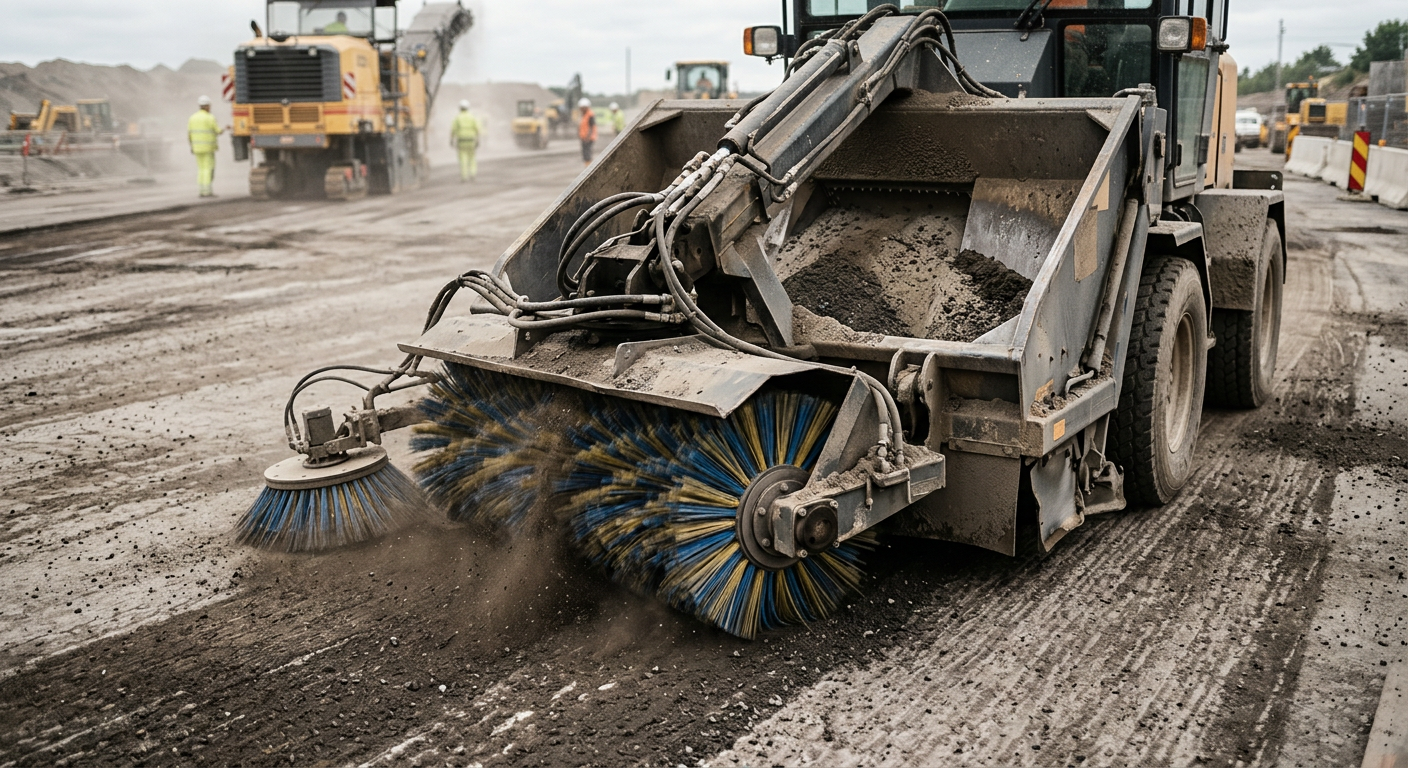
Mechanical broom sweepers with durable gearbox designs, sealed bearings, and serviceable wear points will outlast lighter units in harsh milling cleanup. Those design choices reduce unscheduled repairs, and simplify routine inspections.
Large Hopper Capacity and Efficient Dumping
Hoppers sized for long sweep cycles reduce dump frequency on large South Carolina projects like highway resurfacing. Less time spent traveling to and from dump sites equals more productive sweep time.
Accessible Service Points and Modular Components
Designs that allow fast access to filters, hydraulic valves, and broom drive assemblies cut labor costs. Modular components enable rapid swaps in the field, returning machines to service quickly.
Operational Practices That Lower Maintenance Costs
A durable machine is only as good as the maintenance program that supports it. These best practices keep a fleet running with minimal downtime.
- Implement daily walk-around checklists focused on wear items, hydraulic leaks, and broom condition.
- Schedule preventative service by hours, not just calendar days, to match high-production workloads.
- Train operators on best practices for handling heavy debris, like milled asphalt, to avoid premature wear.
- Keep common spare parts on hand, such as broom bristles, belts, and hydraulic filters, to speed repairs.
Real-World Use Cases in South Carolina
- DOT resurfacing: Contractors sweeping after asphalt milling need sweepers with high hopper capacity and abrasion-resistant brooms.
- Municipal street maintenance: Cities need machines that are economical to maintain and easy for public works crews to service.
- Airport operators: Runways and aprons require sweepers with reliable debris containment and long operational cycles.
Cost Forecast: Maintenance vs Productivity
Low-maintenance sweepers often cost more upfront, but the return comes through extended uptime, fewer vendor service calls, and lower labor hours for repairs. For procurement officers, a simple ROI model compares hours on the job per month against scheduled service hours and expected parts replacement costs. Prioritizing uptime delivers faster payback on a high-production sweeper.
Integrating a Low Maintenance Fleet Into Procurement
Procurement teams should write specifications that require:
- Serviceability metrics, including mean time to repair estimates.
- Guaranteed access to replacement parts and technical support.
- Clear warranty terms for drivetrain and broom components.
When specifying equipment, include real-world scenarios like prolonged milling cleanup shifts and long-distance sweep routes common in South Carolina counties.
Frequently Asked Questions
What maintenance intervals should I expect for mechanical broom sweepers?
Expect routine checks daily, basic service every 250 to 500 operational hours, and major inspections at 1,000 hours. Adjust intervals based on the abrasiveness of jobsite materials.
How do I reduce hopper dump frequency on large projects?
Choose sweepers with larger hopper capacity, optimize route planning, and consider combining mechanical sweeping with preliminary debris consolidation to minimize dumps.
Are mechanical broom sweepers better than vacuum sweepers for asphalt milling cleanup?
For heavy, coarse millings and large volumes of debris, mechanical broom sweepers are typically more robust, easier to service in the field, and have lower consumable costs.
What training reduces operator-caused maintenance issues?
Train operators on proper broom speeds, avoiding heavy impacts, and basic daily inspections. Correct operation lowers wear and extends service intervals.
What spare parts should every South Carolina fleet keep in stock?
Common items: broom bristles and drives, hydraulic filters, belts, grease fittings, and spare hopper seals. These parts minimize downtime during peak seasons.
How do I justify the higher upfront cost of a low-maintenance sweeper?
Calculate uptime improvements, reduced service hours, and lower parts consumption. Present a 3- to 5-year total cost of ownership comparison to stakeholders.
Request A Demo Or Quote
Ready to see how a low-maintenance street sweeper fleet performs on South Carolina jobs? Request a demo to evaluate uptime, hopper capacity, and service accessibility in person. Call to schedule a demo or request pricing, and get solutions matched to asphalt milling, chip seal, or municipal sweeping needs.
Learn more about products and configuration options here: XBroom street sweeper products, or explore the XBroom Street Sweeper for high-production needs. Build a spec with our configurator at Build a Truck, and read why many contractors trust our design at Why Choose XBroom. Ready to talk? Contact Nescon to set up a demo or request a quote.
Conclusion
For South Carolina fleet managers and procurement officers, focusing on a low maintenance street sweeper fleet reduces total cost of ownership while boosting on-job productivity. Durable mechanical broom designs, large hoppers, and service-friendly layouts reduce downtime, and proven operational practices extend component life. When uptime and predictable performance matter, prioritize sweepers built for heavy milling cleanup and long sweep cycles.
About XBroom by Nescon
XBroom by Nescon is a U.S.-based street sweeper manufacturer specializing in heavy-duty mechanical street sweepers designed for high-production sweeping applications. XBroom sweepers are built to support asphalt milling, road construction, municipal street maintenance, and industrial sweeping operations.
Engineered for durability, large hopper capacity, long sweep times, and reduced downtime, XBroom street sweepers help contractors and municipalities maximize productivity while minimizing maintenance and dump frequency.
Ready to Upgrade Your Street Sweeper?
Call 480-505-0001 or Contact Nescon to request pricing, schedule a demo, or learn more about XBroom street sweeping solutions.