
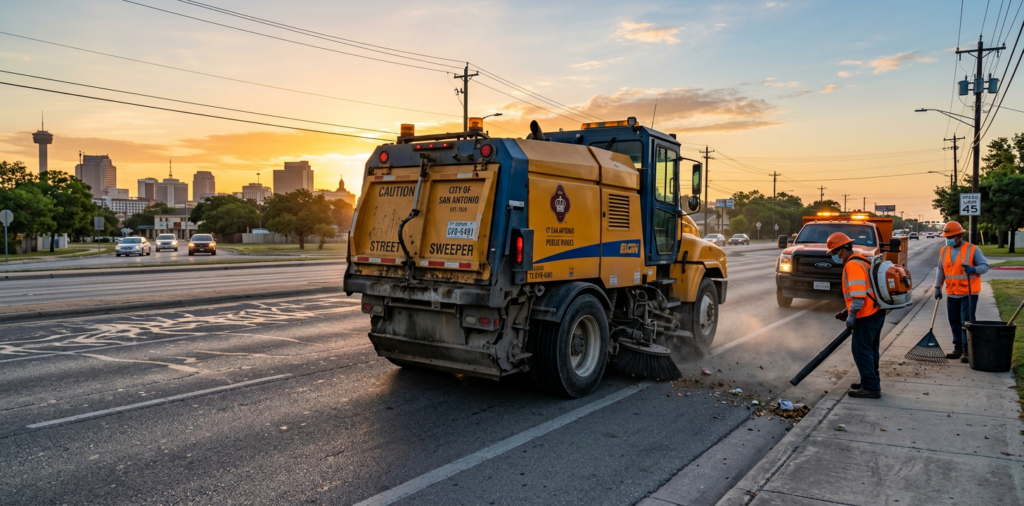
When a city or contractor starts evaluating sweeping equipment, the pressure is rarely about price alone. The real issue is uptime, production rate, dump frequency, and whether the machine can stay effective through long shifts on streets, millings, and construction debris.
For Texas municipalities, that decision gets even more demanding. Hot weather, long route miles, highway work zones, and aggressive debris loads mean a weak procurement choice can create maintenance problems fast. A strong municipal street sweeper procurement guide helps buyers compare performance, lifecycle cost, and fit for the work, not just the purchase order.
What Texas Buyers Should Define First
Before comparing models, procurement teams should define the actual sweeping mission. A machine used for downtown curb lines has different needs than one assigned to asphalt milling cleanup or chip seal recovery.
For Texas fleets, the biggest questions usually are:
- What debris type is most common, fine dust, gravel, millings, or heavier construction material?
- How many hours per day will the sweeper run?
- Is the machine expected to sweep city streets, county roads, airports, or contractor work zones?
- How often can the operator realistically dump the hopper?
The clearer the use case, the easier it is to choose capacity, broom system, and maintenance features that actually reduce downtime.
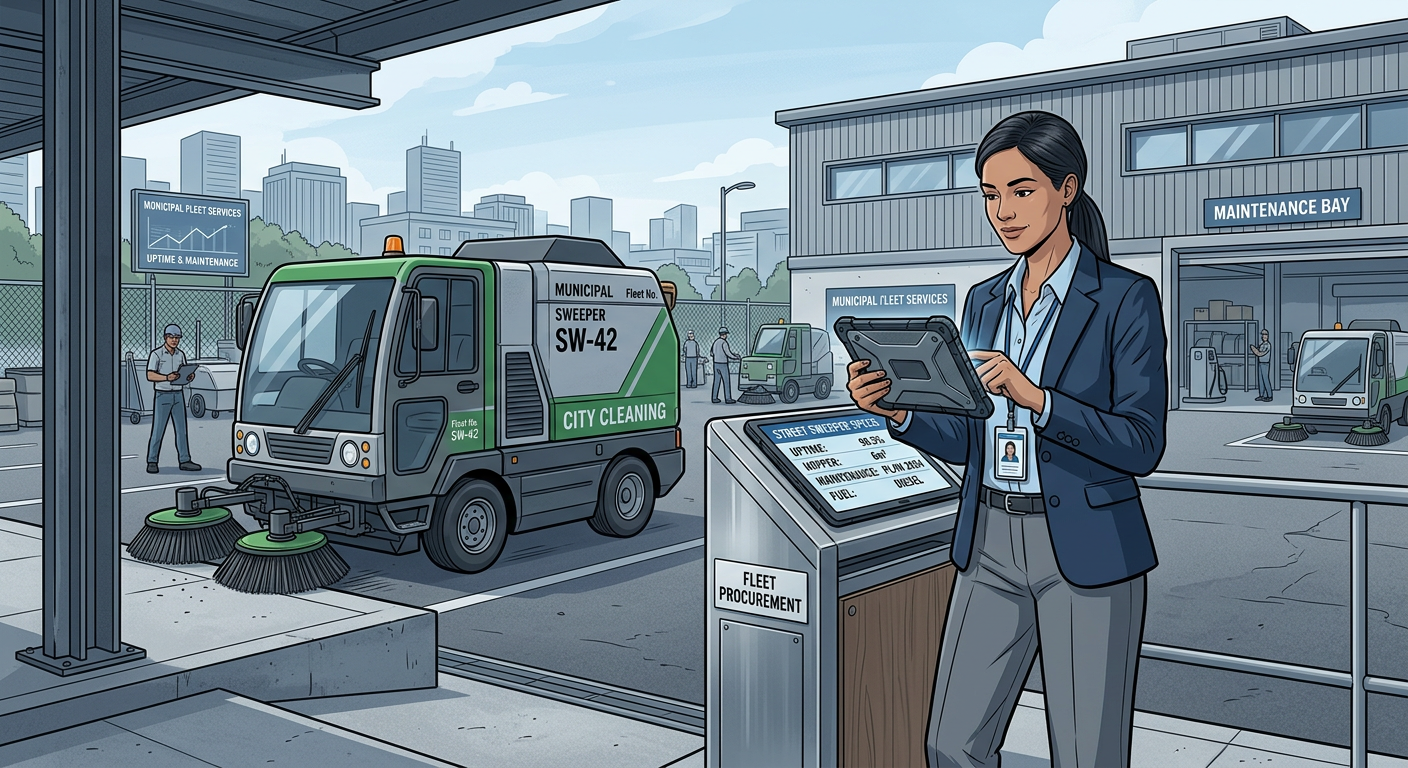
How to Evaluate Performance, Not Just Price
A low upfront bid can become expensive if the sweeper spends too much time in the shop or returning to dump too often. In public works and contractor operations, production per shift often matters more than sticker price.
Look at hopper capacity and sweep time
Bigger hopper capacity can mean fewer interruptions, fewer dump runs, and more productive sweeping on long routes. That matters for municipal street maintenance in Texas cities where crews may cover large service areas in a single shift.
Check maintenance access
A sweeper that is hard to service can slow down the whole fleet. Procurement teams should ask how quickly wear items can be inspected, replaced, and returned to service.
Match the machine to demanding jobs
If your routes include milling cleanup, shoulder work, or construction debris, the machine needs the durability to keep working in harsh conditions. XBroom designs heavy-duty mechanical street sweepers for exactly these high-production applications, including road sweeping and asphalt milling cleanup. You can review available XBroom street sweeper products to compare equipment built for demanding work.
Procurement Criteria That Matter in Texas
Texas buyers often face mixed-use demands, from urban maintenance to highway contractor support. That makes the evaluation process more strategic than a standard fleet replacement.
1. Durability under heat and dust
Texas heat, dust, and abrasive debris can accelerate wear. Choose equipment built for long service life and less frequent component replacement.
2. Dump frequency and productivity
Every dump cycle reduces sweeping output. A machine with strong carrying capacity can keep operators on task longer, which is critical for municipal road maintenance and contractor productivity.
3. Roadside safety and visibility
Sweepers operating in live traffic need clear sightlines, dependable controls, and predictable handling. This is especially important on Texas arterials, county roads, and airport access routes.
4. Support for multiple applications
The best procurement decisions usually account for more than one use. A sweeper may need to handle downtown curb lines one day and asphalt milling cleanup the next. To compare a purpose-built platform, review the XBroom Street Sweeper.
Why Municipal Fleets in Texas Need a Lifecycle View
Public works departments do not buy sweepers for a single season. They buy for years of route coverage, labor efficiency, and reliable output.
That is why lifecycle cost should include:
- Fuel and operating efficiency
- Maintenance labor
- Wear part consumption
- Downtime and missed routes
- Replacement timing
When you look at the full picture, a more durable sweeper often delivers a better return than a cheaper unit that struggles with frequent repairs.
Build Specifications Around the Job, Not the Catalog
One of the most common procurement mistakes is selecting equipment from a generic spec sheet instead of the actual route and debris profile. Texas contractors doing chip seal or milling cleanup need different sweeping priorities than a city sanitation or parks department.
If you are working with mixed truck chassis or looking to configure a machine for your fleet, the Build a Truck process can help align equipment to the truck and application. That kind of planning matters when fleet managers want fewer surprises after delivery.
Questions Texas Buyers Should Ask Before Awarding a Bid
How much debris can the sweeper carry before dumping?
This determines how productive the unit will be on larger routes and construction cleanup jobs.
How easy is the machine to maintain in the field?
If the answer is complicated, your uptime will probably suffer.
Can the sweeper handle both municipal and contractor work?
Many Texas fleets need one machine to do more than one job. Flexibility adds value.
What kind of support is available after purchase?
A responsive manufacturer can make a major difference in fleet availability and long-term confidence.
Why XBroom Fits Procurement Priorities
Buyers in Texas usually want three things: production, durability, and low maintenance. XBroom by Nescon focuses on heavy-duty mechanical street sweepers designed for high-production sweeping, asphalt milling cleanup, road construction support, and municipal street maintenance.
If you want to understand the manufacturer’s approach to durability and support, see Why Choose XBroom. For next-step questions, you can also Contact Nescon directly.
FAQ
What is the most important factor in municipal street sweeper procurement?
The most important factor is fit for the job. A sweeper should match route length, debris type, shift length, and maintenance expectations.
Should Texas cities prioritize hopper capacity?
Yes, especially if routes are long or debris loads are heavy. More capacity usually means fewer dump trips and better productivity.
Is a mechanical street sweeper a good choice for milling cleanup?
For many milling and construction applications, yes. Mechanical broom systems are well suited to aggressive debris and heavy-duty roadwork cleanup.
How do procurement teams reduce lifecycle cost?
Focus on durability, serviceability, dump frequency, and manufacturer support. The cheapest machine is not always the least expensive to own.
Can one sweeper serve both municipal and contractor work?
Often it can, as long as the platform is selected for the heaviest expected job rather than the lightest one.
Ready to Put the Right Sweeper in Service
If your Texas fleet needs a machine built for long sweep times, reduced dump frequency, and demanding field conditions, now is the time to compare options carefully. Start with the actual route demands, then select a sweeper that can keep up day after day.
For pricing, demos, or application guidance, call Phone: 480-505-0001 or visit Contact Nescon. You can also review XBroom street sweeper products to begin matching equipment to your fleet needs.
About XBroom by Nescon
XBroom by Nescon is a U.S.-based street sweeper manufacturer specializing in heavy-duty mechanical street sweepers designed for high-production sweeping applications. XBroom sweepers are built to support asphalt milling, road construction, municipal street maintenance, and industrial sweeping operations.
Engineered for durability, large hopper capacity, long sweep times, and reduced downtime, XBroom street sweepers help contractors and municipalities maximize productivity while minimizing maintenance and dump frequency.
Ready to Upgrade Your Street Sweeper?
Call 480-505-0001 or Contact Nescon to request pricing, schedule a demo, or learn more about XBroom street sweeping solutions.