
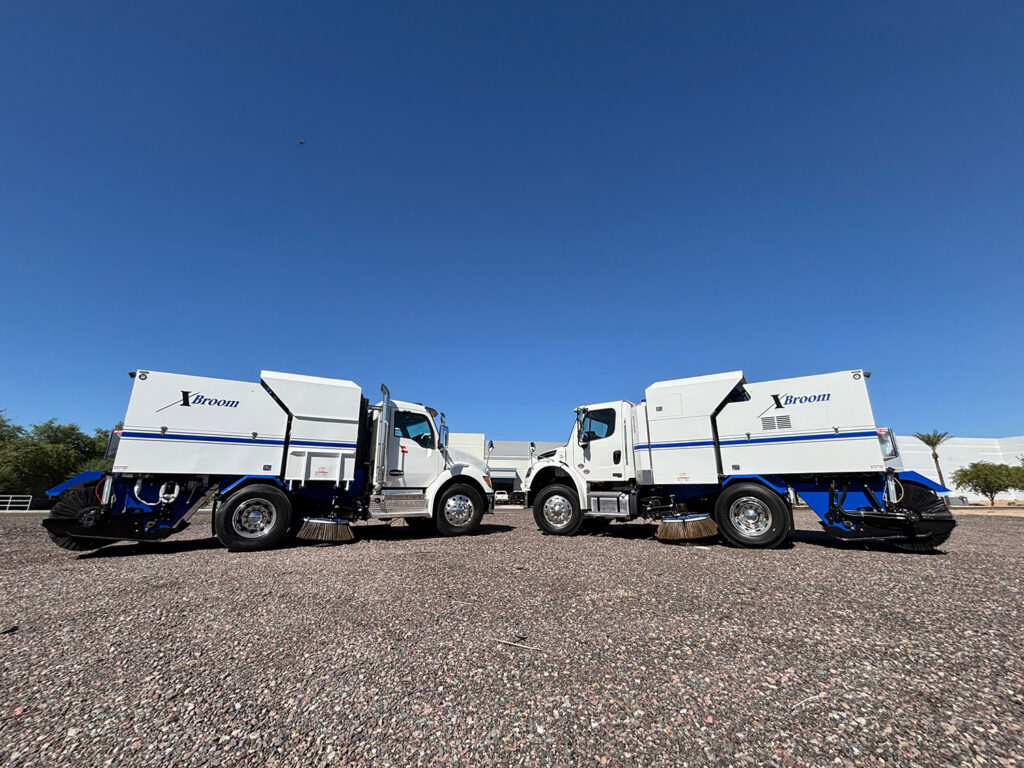
Road projects and municipal budgets in South Carolina demand clear numbers, not guesses. Fleet managers and procurement officers need a repeatable method to compare sweepers side by side, forecast lifecycle expense, and justify purchase or rental decisions to city councils and stakeholders. In the paragraphs below you will find a practical, line-item approach to how to calculate sweeper cost of ownership that focuses on real-world variables for asphalt milling, chip seal, and high-production road sweeping.
Why total cost of ownership matters for South Carolina operations
South Carolina contractors and public works crews face long sweep windows, frequent dust control requirements, and abrasive milling debris. Upfront price is only part of the decision. Total cost of ownership, or TCO, accounts for purchase price, operating costs, maintenance, downtime, and resale. Calculating TCO helps you choose sweepers that reduce dump frequency, extend uptime, and lower per-hour or per-mile clearing costs on long corridors or airport aprons.Core components of sweeper cost of ownership
To calculate TCO, break costs into these line items. Use your fleet’s actual numbers when possible or conservative industry averages if not.1) Acquisition cost
- Purchase price or lease payments, including taxes, registration, and upfits. Include options such as high-capacity hoppers, enhanced water systems, or heavy-duty brooms for milling cleanup.
- Example: base machine + milling package = one-time capital outlay.
2) Depreciation and resale value
- Estimate straight-line depreciation over useful life (commonly 7–12 years for mechanical sweepers). Forecast residual value, which impacts annual ownership cost.
- Note: machines designed for durability keep higher resale values, lowering TCO for fleet buyers.
3) Fuel and consumables
- Fuel: calculate annual fuel use = (average fuel consumption per hour) x (annual sweep hours) x (fuel price).
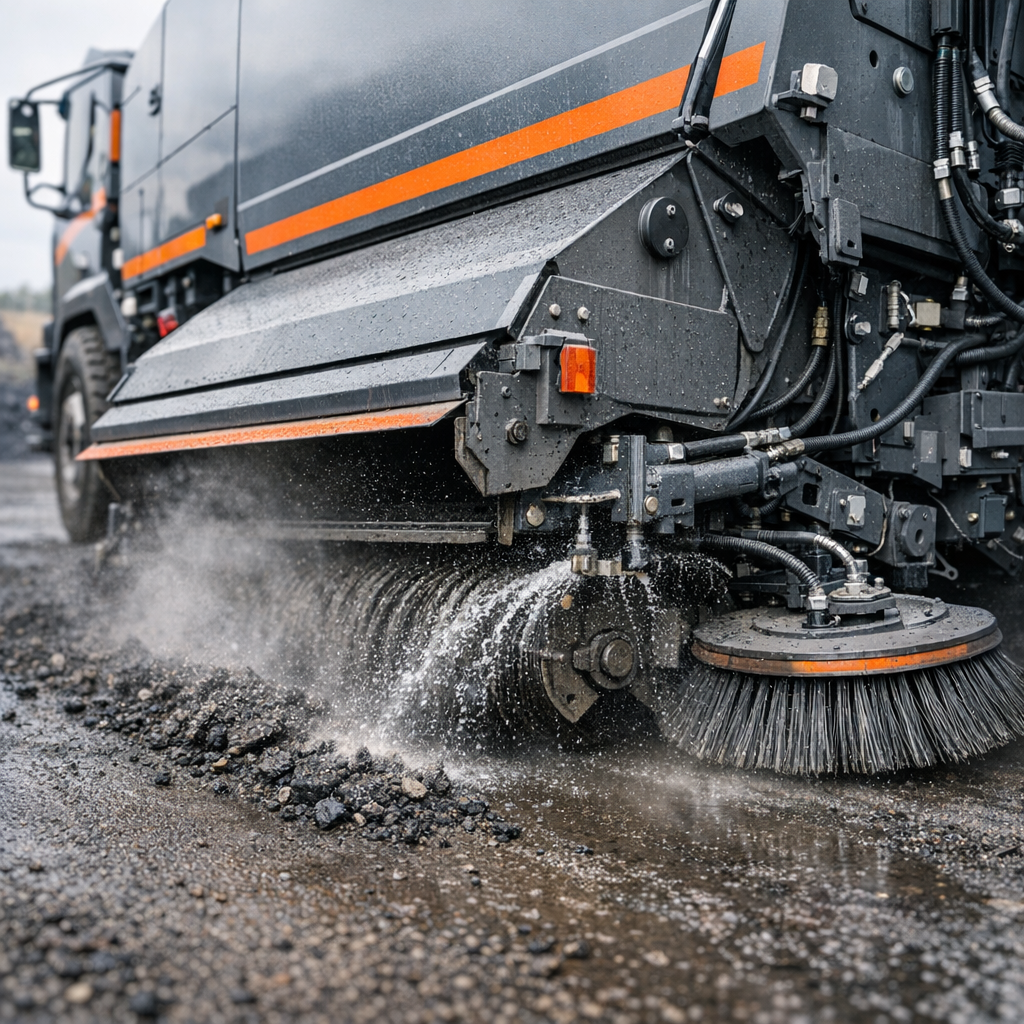
- Consumables: broom cores, broom segments, spray nozzles, hydraulic oil, filters, and water usage. Milling jobs accelerate wear, raise consumable costs.
4) Maintenance and repair
- Planned maintenance: scheduled services, belts, bearings, hydraulic checks. Use historical maintenance logs or manufacturer recommendations.
- Unplanned repairs: include a contingency percentage (e.g., 10–20% of planned maintenance) to cover unexpected breakdowns on tough Nevada projects.
5) Labor and operator cost
- Operator hourly wage + benefits = true hourly labor cost. Multiply by annual sweep hours to capture direct labor costs.
- Include training and certification time where applicable.
6) Downtime and productivity loss
- Estimate lost productive hours per year due to maintenance and breakdowns. Translate that to cost using revenue-per-hour or fleet utilization metrics.
- Choose sweepers engineered for long sweep times and reduced dump frequency to minimize this expense.
7) Transport, storage, and insurance
- Moving sweepers between sites, trailer or lowboy needs, storage costs, and insurance premiums belong in TCO.
8) Financing, taxes, and fees
- Interest on financed purchases, lease terms, and local fees for municipal buyers affect annual ownership cost.
Step-by-step TCO calculation (practical example)
- Gather base numbers: purchase price, expected life (years), annual hours, operator hourly rate, fuel rate, consumable spend, planned maintenance, and expected downtime.
- Annualize capital cost: (Purchase price – expected resale) / useful life.
- Add annual fuel, consumables, maintenance, labor, transport, insurance, and financing costs.
- Add an annual downtime cost: (annual lost hours) x (revenue or labor replacement cost per hour).
- Total annual cost = sum of above. Divide by annual productive hours to get cost per operational hour, or divide by annual swept lane-miles for cost per mile.
- Annualized capital: $30,000
- Fuel and consumables: $18,000
- Maintenance and repair: $12,000
- Labor: $60,000
- Downtime cost: $6,000
- Insurance/transport/fees: $4,000 Total annual cost: $130,000. If annual productive hours = 2,000, cost per hour = $65.
Practical tips to lower sweeper TCO in South Carolina
- Prioritize large hopper capacity and efficient conveyance systems to reduce dump frequency on long highway or mill cleanup runs. Less dumping saves hours and fuel.
- Select robust broom systems and sealed bearings for abrasive milling debris to lower consumable replacement rates.
- Standardize parts across your fleet to reduce stock and repair time.
- Track telematics and capture actual fuel, idle time, and sweep time to refine TCO projections.
- Evaluate service networks and OEM support, because quick parts and field service reduce downtime costs.
Comparing models: apples to apples
When comparing sweepers, normalize for: expected sweep speed, hopper capacity, brush life, water system efficiency, and manufacturer uptime guarantees. Use cost-per-hour and cost-per-lane-mile as your comparison metrics instead of purchase price alone.South Carolina-specific considerations
- Dust control rules, especially near urban corridors and airport environments, can increase water usage and legal compliance needs.
- High summer temperatures affect hydraulic systems and tires; factor increased maintenance for cooling systems and more frequent hydraulic fluid checks.
- Long haul distances between job sites in rural Nevada increase transport and fuel costs, making hopper capacity and sweep duration critical.