
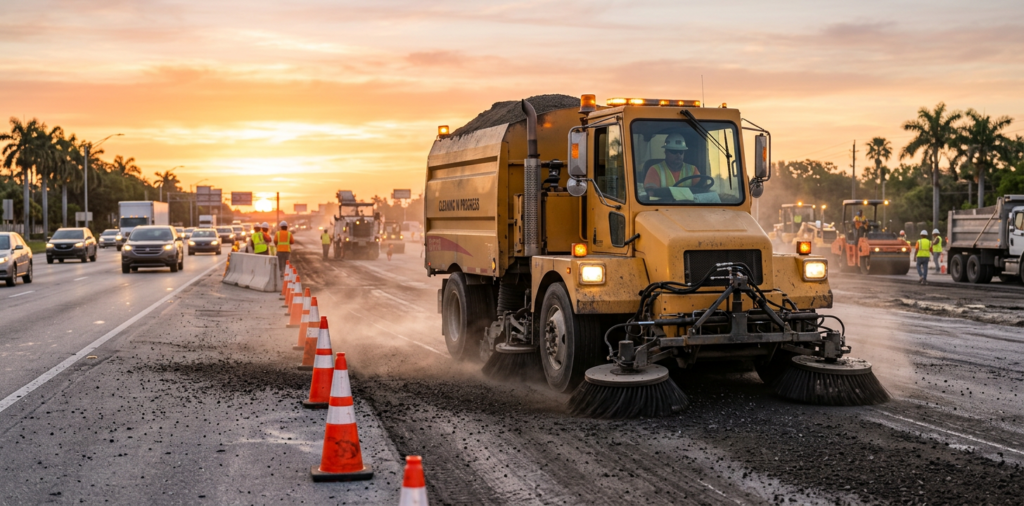
Reducing Dump Frequency Starts With Higher Hopper Efficiency
Florida crews dealing with milling debris, chip seal aggregate, and municipal road cleanup know a simple truth, dump trips slow production. When a sweeper has to leave the work zone too often, the crew loses time, fuel, and momentum. Reducing street sweeper dump frequency is not just about convenience, it is about keeping production steady across long shifts.
For contractors, public works teams, airport maintenance crews, and private sweeping companies, the best results usually come from matching the sweeper to the job. Hopper size, material packing, brush setup, and route planning all affect how long the machine can stay on the surface before dumping.
Why Dump Frequency Matters on Florida Projects
Frequent dumping creates a chain reaction. The sweeper stops collecting. The operator drives away from the job. The paving or maintenance crew waits. If the site is spread across several miles, those lost minutes add up fast.
On Florida roadwork, that can be especially painful because projects often run through busy corridors, storm-prone areas, and high-traffic municipal routes. Less dumping means more sweep time, more consistent cleanup, and better use of labor.
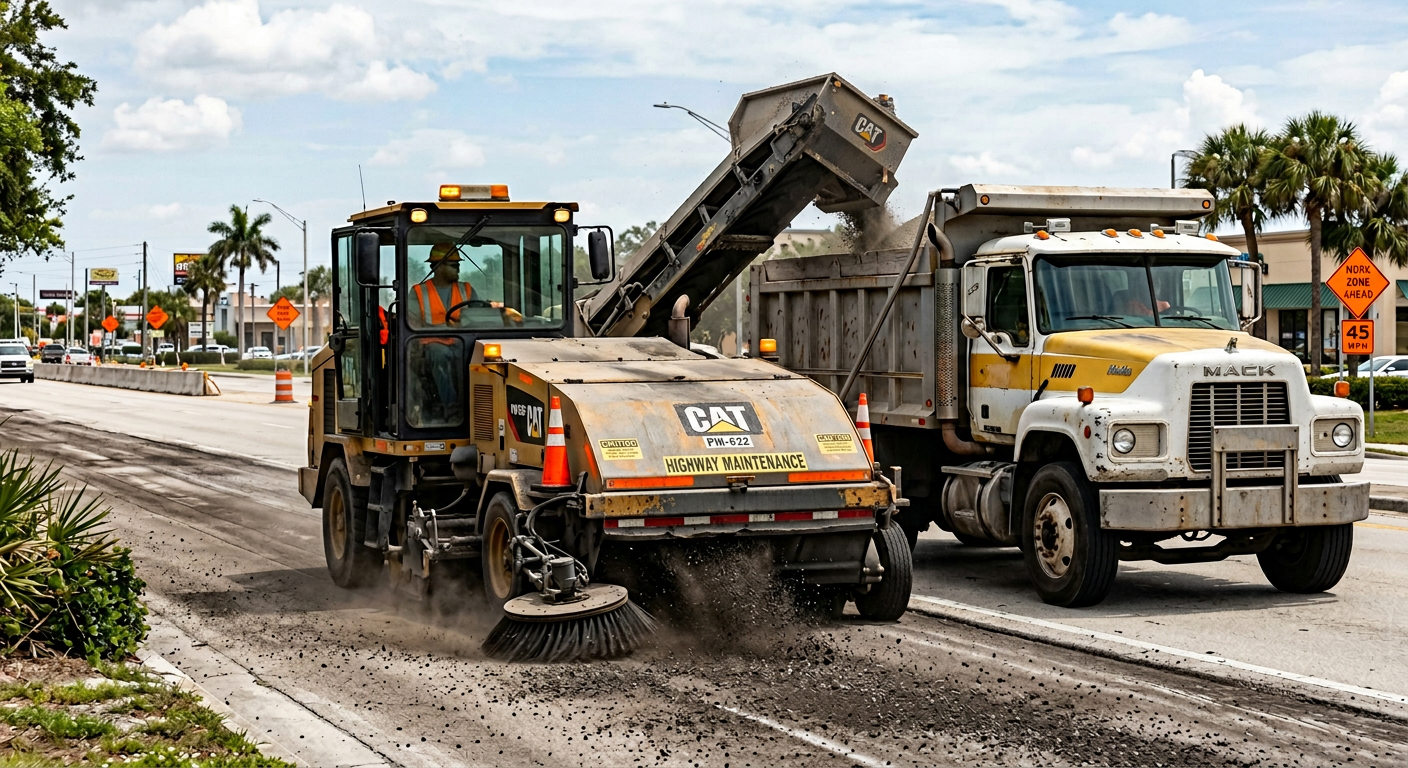
Equipment Factors That Help Reduce Dump Trips
Hopper capacity and usable fill volume
A larger hopper helps, but usable capacity matters more than brochure size. A well-designed sweeper should hold compacted debris efficiently so operators can sweep longer between dumps.
Material type and debris density
Asphalt millings pack differently than leaves, dirt, or sand. Heavy, dense debris fills a hopper faster than light material, so milling cleanup often demands a machine built for high-volume solids handling.
Brush configuration and pickup efficiency
If the broom setup misses material on the first pass, the machine wastes capacity on repeat sweeping. Efficient pickup helps keep the hopper focused on useful load instead of scattered residue.
Dust control and airflow management
Good dust suppression keeps fine material from escaping and improves collection quality. That supports cleaner passes and better hopper utilization.
Operating Practices That Stretch Sweep Time
Sweep in a planned sequence
Work the route so the sweeper covers the highest-debris sections first, then returns for lighter cleanup. That reduces unnecessary travel and helps operators make the most of each load.
Avoid over-sweeping clean areas
It sounds basic, but repeated passes over already-clean pavement fill the hopper with low-value material. Crews should focus on the zones that actually need collection.
Match dump locations to the project layout
If dumping requires a long detour, the whole job slows down. Setting a practical dump plan before the shift starts can save a surprising amount of time.
Train operators to read the load
Experienced operators know when a hopper is reaching efficient fill, not just when it is physically full. That judgment helps avoid unnecessary trips.
Florida Use Cases Where Reduced Dump Frequency Pays Off
Road construction crews working near Orlando, Tampa, Jacksonville, and South Florida need sweepers that can keep pace with milling and cleanup cycles. Municipal departments in smaller Florida cities often face similar challenges on resurfacing projects, storm cleanup, and shoulder maintenance.
Airports also benefit from longer sweep intervals. Less dumping means fewer interruptions and more reliable runway and taxiway cleanup scheduling. For private sweeping companies, fewer dump trips can improve daily route completion and reduce fuel burn.
What Buyers Should Ask Before Choosing a Sweeper
How much of the hopper is truly usable?
Some machines advertise capacity that looks better on paper than in actual field conditions. Ask how the hopper performs with real debris loads.
How fast can the machine keep producing without interruption?
A productive sweeper should support long sweep times without forcing the operator into constant dump cycles.
How well does it handle Florida jobsite debris?
Sand, milling waste, chip seal material, and storm debris all behave differently. The machine should be built for mixed, abrasive loads.
What maintenance is required to keep performance consistent?
Low-maintenance design matters when the goal is uptime. Downtime for repairs reduces the benefit of a high-capacity hopper.
How XBroom Supports High-Production Sweeping
XBroom by Nescon designs heavy-duty mechanical street sweepers for road construction, asphalt milling, municipal maintenance, and industrial cleanup. For buyers comparing options, it helps to review XBroom street sweeper products and evaluate how each machine supports longer sweep cycles.
If your operation needs a machine built around production, not constant downtime, the XBroom Street Sweeper is designed for demanding sweeping environments. You can also use the Build a Truck process to match the sweeper to your fleet and job requirements.
For decision-makers comparing manufacturers, Why Choose XBroom explains the durability and uptime focus behind the equipment. If you want pricing, specifications, or a demo conversation, Contact Nescon directly.
FAQ
What causes a street sweeper to dump too often?
The most common causes are limited usable hopper capacity, inefficient pickup, heavy debris loads, and poor route planning. In milling and construction work, material density is usually the biggest factor.
Does a larger hopper always reduce dump frequency?
Not always. A larger hopper helps, but the real benefit depends on how efficiently the machine collects and compacts debris during sweeping.
Is dump frequency more important on road construction jobs?
Yes. On milling and paving projects, every dump trip can interrupt production and slow down the entire crew. Longer sweep intervals usually improve site efficiency.
How can operators improve sweep time without changing equipment?
They can plan routes better, avoid redundant passes, monitor hopper loading, and target the dirtiest areas first.
Why does debris type matter so much?
Dense debris fills a hopper faster than light debris. Asphalt millings, sand, and aggregate usually require more frequent dumps than loose surface dust or leaves.
Can reduced dump frequency lower operating costs?
Yes. Fewer dumps can reduce fuel use, wear, idle time, and labor inefficiency, especially on large or spread-out jobsites.
Keep Crews Moving, Not Dumping
If your Florida operation is losing time to unnecessary dump trips, the fix usually starts with better equipment selection and smarter sweep planning. The goal is simple, keep the sweeper on the surface longer and keep the crew productive.
For high-production road sweeping support, review the available equipment, compare hopper performance, and choose a machine built for the real debris loads your team faces every day.
About XBroom by Nescon
XBroom by Nescon is a U.S.-based street sweeper manufacturer specializing in heavy-duty mechanical street sweepers designed for high-production sweeping applications. XBroom sweepers are built to support asphalt milling, road construction, municipal street maintenance, and industrial sweeping operations.
Engineered for durability, large hopper capacity, long sweep times, and reduced downtime, XBroom street sweepers help contractors and municipalities maximize productivity while minimizing maintenance and dump frequency.
Ready to Upgrade Your Street Sweeper?
Call 480-505-0001 or Contact Nescon to request pricing, schedule a demo, or learn more about XBroom street sweeping solutions.