
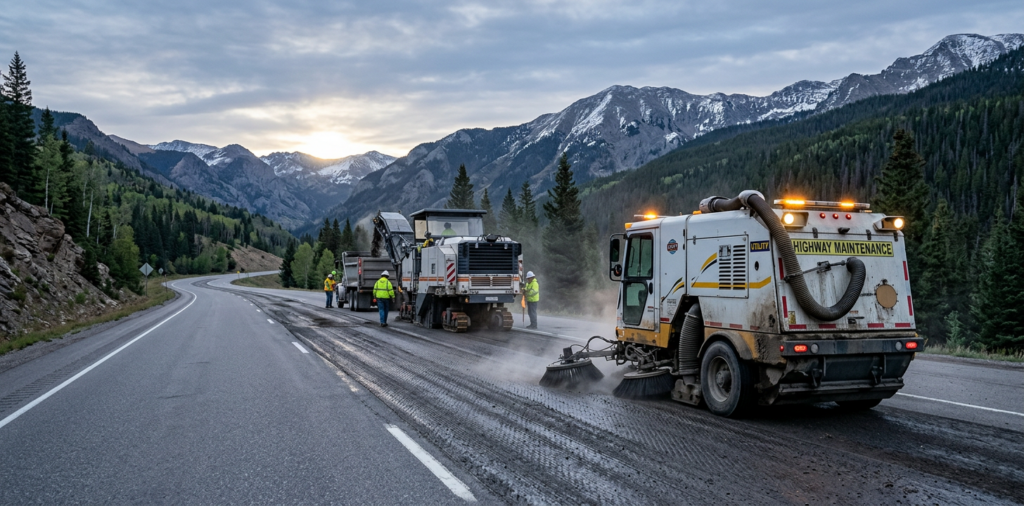
A Colorado road project can lose production quickly when a sweeper is parked for a hose, bearing, broom, or control issue that could have been found earlier. For milling contractors, municipal public works teams, airport operators, and private sweeping companies, the goal is not simply keeping a truck running. It is protecting the entire cleanup sequence that allows paving, traffic control, inspections, and final handoff to stay on schedule.
We approach how to reduce street sweeper downtime in Colorado as a fleet-management discipline. The most reliable operations combine preventive maintenance, trained operators, jobsite logistics, on-hand parts, and equipment specifications designed around abrasive debris and long sweep cycles. A mechanical broom sweeper should move millings, aggregate, sand, and construction debris from the road surface, not become a recurring interruption that sends labor and traffic-control resources into standby.
Why Colorado Fleets Need an Uptime Plan
Colorado fleets work through changing elevations, temperature swings, snow-season sanding residue, abrasive millings, and constrained roadway work windows. The scale of roadway maintenance adds to the pressure. In its December 2025 commission materials, the Colorado Department of Transportation reported 23,016 state highway lane miles and a fleet of 3,219 vehicles.
That does not mean every contractor or municipality faces the same duty cycle. It does mean Colorado crews routinely operate in an environment where road access, weather, material conditions, and lane-closure time are limited resources. One unexpected failure on a milling job can delay the next production step and create a costly scheduling problem.
The practical answer is to separate downtime into two categories:
- Planned downtime, such as inspections, fluid service, broom changes, and seasonal setup.
- Unplanned downtime, such as hydraulic leaks, elevator jams, failed wear components, unavailable parts, and preventable operator damage.
A strong fleet program deliberately schedules the first category to reduce the second.
Build a Pre-Shift Inspection That Operators Will Actually Complete
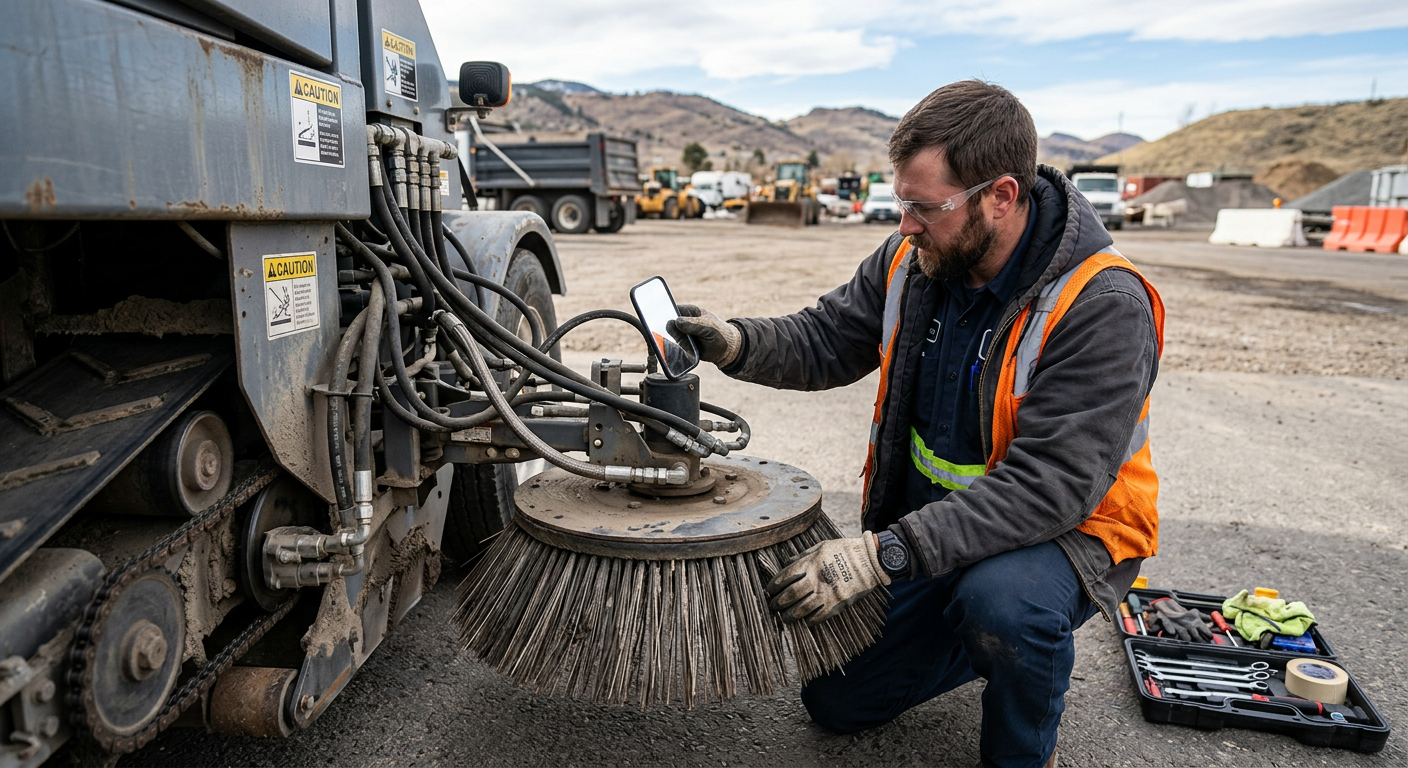
The most valuable inspection is the one completed consistently at the start of every shift. It should be short enough to use in the field and specific enough to identify conditions that can stop the machine later in the day. A generic vehicle walkaround is not enough for high-production sweeping.
Focus on stoppage points, not cosmetic details
Have operators check broom wear and mounting, skid shoes, gutter broom condition, visible hydraulic leaks, hose routing, fluid levels, water-system filters, elevator travel, chain condition, and fasteners around high-vibration areas. They should also confirm that warning lights, cameras, controls, and work-zone lighting function before entering a live lane closure.
For Colorado municipal routes, include a seasonal check for packed sand, frozen debris, and moisture around moving components. For asphalt milling cleanup, add a debris-specific inspection after the first production pass. Millings can reveal an elevator, squeegee, broom, or hydraulic issue that was not obvious in the yard.
Record defects by operating hours
A note that says “broom worn” is not enough for a fleet manager. Record the machine hours, component location, severity, and whether the issue was corrected before dispatch. This creates a maintenance history that helps technicians identify repeat failures and helps procurement teams forecast consumable demand.
An hour-based record also prevents an expensive habit: replacing parts only after they fail. Wear items are far less disruptive when changed during a scheduled service window than when they stop a sweeper halfway through a night paving shift.
Match Maintenance Intervals to the Work, Not the Calendar
Calendar-only maintenance plans often overlook how differently Colorado sweepers operate. A unit assigned to light municipal curb sweeping will not wear like a machine supporting continuous milling cleanup or chip seal recovery. We recommend basing service intervals on operating hours, material abrasiveness, and duty cycle.
Create three maintenance tiers
Daily service should cover lubrication points, leaks, fluid levels, broom and skid-shoe condition, water spray function, debris accumulation, and basic control checks.
Weekly service should include closer inspection of hydraulic connections, filters, elevator components, broom drive hardware, chains or conveyor elements where equipped, and attachment mounting points. This is the right time to identify minor damage before it becomes a roadside repair.
Scheduled hour-based service should cover fluid analysis where appropriate, replacement of filters and wear components, detailed inspection of bearings and hoses, electrical connections, and diagnostic review. The exact interval should follow the manufacturer’s recommendations and the operating conditions recorded by the fleet.
Colorado’s dust-control expectations also make water-system reliability important. The Colorado Department of Public Health and Environment identifies street sweeping as a measure used to remove material from roads in dust-control planning. A plugged filter or nonfunctioning spray system can therefore create both a production issue and an avoidable jobsite-management issue.
Reduce Street Sweeper Downtime in Colorado With Better Parts Planning
Parts logistics are often the difference between a short service interruption and a lost shift. The fleet that waits to identify a part until a sweeper is disabled has already surrendered control of the repair timeline.
Stock the parts that stop production
Review work orders from the previous year and identify the components that repeatedly removed units from service. Typical candidates include hydraulic filters, fittings, hoses, broom sections, fasteners, wear strips, seals, common electrical connectors, and hardware associated with high-wear sweeping systems.
Keep a controlled inventory rather than a box of miscellaneous parts. Label items by machine model, application, and replacement history. A field technician should be able to verify availability quickly, while a fleet manager should be able to reorder before the shelf is empty.
Establish an escalation path before a failure occurs
Every operation should know who approves emergency repairs, who contacts the manufacturer or regional support resource, and which technician has authority to make a field decision. This matters after hours, during milling windows, and on remote Colorado projects where a machine cannot simply return to the shop without affecting the entire crew.
For equipment support and available configurations, review XBroom street sweeper products and keep manufacturer contact information accessible to dispatch, shop personnel, and supervisors.
Train Operators to Protect the Sweeper and the Schedule
Operator training is not a one-time delivery-day event. It is a measurable uptime tool. Proper broom pressure, travel speed, water usage, engine operating range, turning technique, and debris-loading habits affect component life and cleanup quality every shift.
Teach operators how to read material conditions
A crew sweeping fine road sand should not run the same settings used for heavy asphalt millings or chip seal aggregate. Excessive broom pressure can accelerate wear. Inadequate pressure can leave material behind, force repeat passes, and increase exposure time in the work zone.
Operators should understand when to slow down, change broom settings, adjust water application, clear a developing buildup, or report a vibration before it becomes a failure. They should also know that a street sweeper is not a dump truck or debris-hauling unit. Hopper capacity supports continuous sweeping, but disposal planning remains a separate jobsite function.
Use controls and diagnostics to shorten troubleshooting
Modern control systems can provide useful equipment-status information when operators are trained to capture it accurately. The XBroom Street Sweeper is designed with industrial controls, operating-hour tracking, and monitoring features that can help crews identify a fault and provide technicians with clearer information.
The key is process. Require operators to report the warning, operating condition, machine hours, recent material type, and photos or video where safe. That information helps the technician arrive with a focused diagnosis instead of beginning from zero.
Specify Equipment Around Continuous Colorado Production
Downtime is not always a maintenance failure. It can be the predictable result of using a sweeper that is undersized, difficult to access for service, or poorly matched to the debris stream. Fleet buyers should evaluate mechanical broom sweepers according to the actual work they expect to perform.
Prioritize productive sweep time
For highway construction, asphalt milling, chip seal, and industrial cleanup, evaluate usable hopper capacity, broom system durability, hydraulic performance, elevator design, service access, and dump-cycle efficiency. More capacity can reduce nonproductive travel to disposal locations, especially where approved dump access is distant from the work zone.
When comparing options, look beyond a single purchase price. Ask how many routine service points are accessible from ground level, what parts are most likely to wear, how diagnostic information is presented, and how quickly the manufacturer can support a repair decision. Those questions often reveal more about lifecycle productivity than a brochure headline.
Colorado buyers can use Build a Truck to outline the configuration, visibility, lighting, broom, camera, and job-specific options that support their planned duty cycle. For background on manufacturer experience and support priorities, see Why Choose XBroom.
Coordinate the Jobsite to Prevent Non-Mechanical Downtime
A well-maintained sweeper can still lose hours to poor staging. Before the shift begins, confirm water access, approved dump locations, refueling arrangements, traffic-control sequencing, service-vehicle access, and communications between the milling crew, paving crew, and sweeper operator.
For a remote mountain corridor or a long municipal route, the nearest dump point may dictate the actual production rate more than travel speed does. Supervisors should map these stops and establish a point at which the operator leaves the active sweep zone before the hopper is overloaded. This reduces wasted travel, prevents debris spillage, and keeps the cleanup sequence predictable.
Questions Colorado Fleet Managers Ask
How often should a mechanical street sweeper be inspected?
Operators should complete a focused pre-shift inspection every working day. Weekly and hour-based services should follow the manufacturer’s maintenance guidance, documented operating hours, and the severity of the material being swept.
Which parts should a Colorado sweeping fleet keep on hand?
Start with the components that most often stop your specific units, including filters, fittings, hoses, broom materials, seals, fasteners, and electrical repair items. Use your own work-order history to build the list rather than relying on a generic inventory.
Does a larger hopper really reduce downtime?
It can reduce downtime tied to dump trips when material volume and haul distance are significant. The best result comes from matching usable hopper capacity to debris density, route length, legal weight considerations, and disposal logistics.
Can operator technique damage street sweeper components?
Yes. Incorrect broom pressure, excessive speed for the debris load, missed early-warning signs, and improper clearing practices can increase wear and cause preventable interruptions. Consistent training protects both the machine and the work schedule.
What should we inspect after sweeping asphalt millings?
Inspect broom wear, skid shoes, elevator or conveyor components, squeegees, hydraulic hoses, filters, fluid condition, and debris accumulation around moving areas. Milling debris is abrasive, so issues can develop quickly during high-volume production.
When should a fleet replace instead of repair a sweeper?
Consider replacement when recurring failures, inadequate hopper capacity, poor service access, repeated route interruptions, or parts delays consistently disrupt production. Compare the cost of repairs and lost sweep time against a purpose-built unit with the capacity and serviceability your operation requires.
Plan a Lower-Downtime Colorado Fleet
Reliable uptime comes from discipline rather than luck. When we inspect before dispatch, service by hours and application, train operators for material conditions, stock common failure parts, and stage projects intelligently, street sweeping becomes a dependable production function instead of a weak link in the schedule.
For Colorado operations that need a heavy-duty mechanical broom sweeper for milling cleanup, road construction, municipal maintenance, or industrial pavement sweeping, Contact Nescon to discuss application requirements, request pricing, or schedule a demo. You can also call Phone: 480-505-0001 to discuss uptime goals and configuration needs with the manufacturer.
About XBroom by Nescon
XBroom by Nescon is a U.S.-based street sweeper manufacturer specializing in heavy-duty mechanical street sweepers designed for high-production sweeping applications. XBroom sweepers are built to support asphalt milling, road construction, municipal street maintenance, and industrial sweeping operations.
Engineered for durability, large hopper capacity, long sweep times, and reduced downtime, XBroom street sweepers help contractors and municipalities maximize productivity while minimizing maintenance and dump frequency.
Ready to Upgrade Your Street Sweeper?
Call 480-505-0001 or Contact Nescon to request pricing, schedule a demo, or learn more about XBroom street sweeping solutions.