
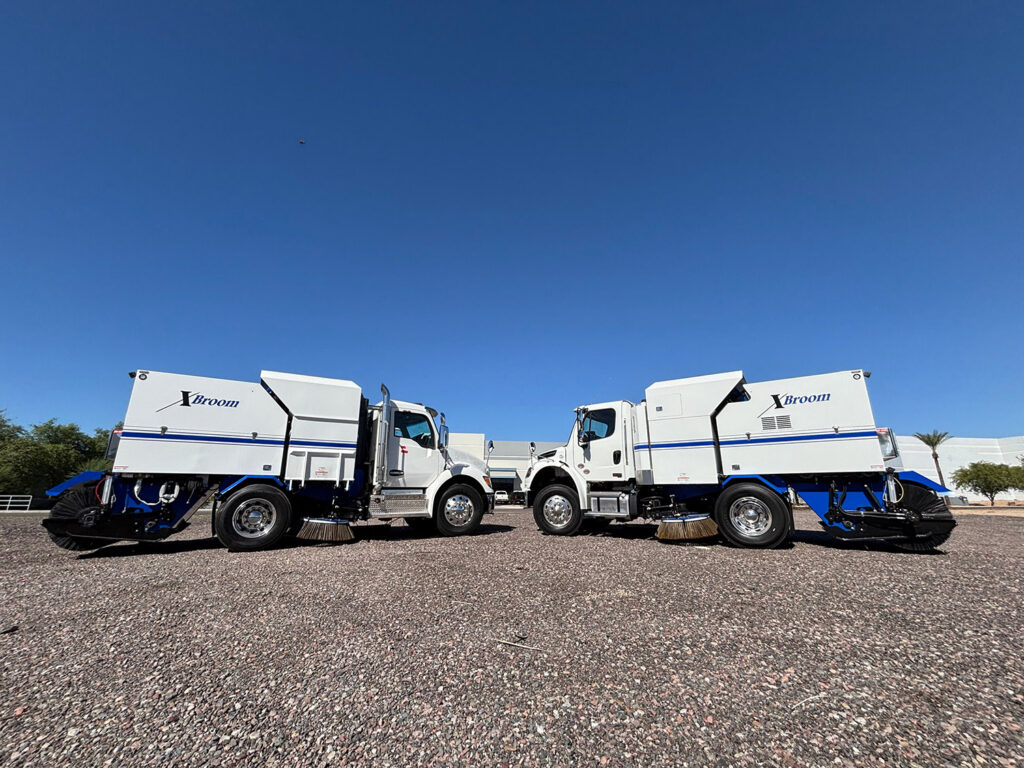
Highway crews do not lose time only when equipment breaks down. They also lose it each time a sweeper leaves the work zone, travels to dump, returns through traffic control, and waits to resume the pass. For North Carolina contractors, that is why a high capacity street sweeper for highway construction should be evaluated as a production asset, not a cleanup afterthought.
Milling, resurfacing, shoulder reconstruction, bridge approaches, and chip seal work all create abrasive material that must be cleared promptly. When the sweeper cannot stay with the milling or paving train, the bottleneck affects the entire operation. A properly matched mechanical broom sweeper keeps the surface cleaner, helps crews maintain their workflow, and reduces avoidable nonproductive time.
What North Carolina Highway Crews Need Most
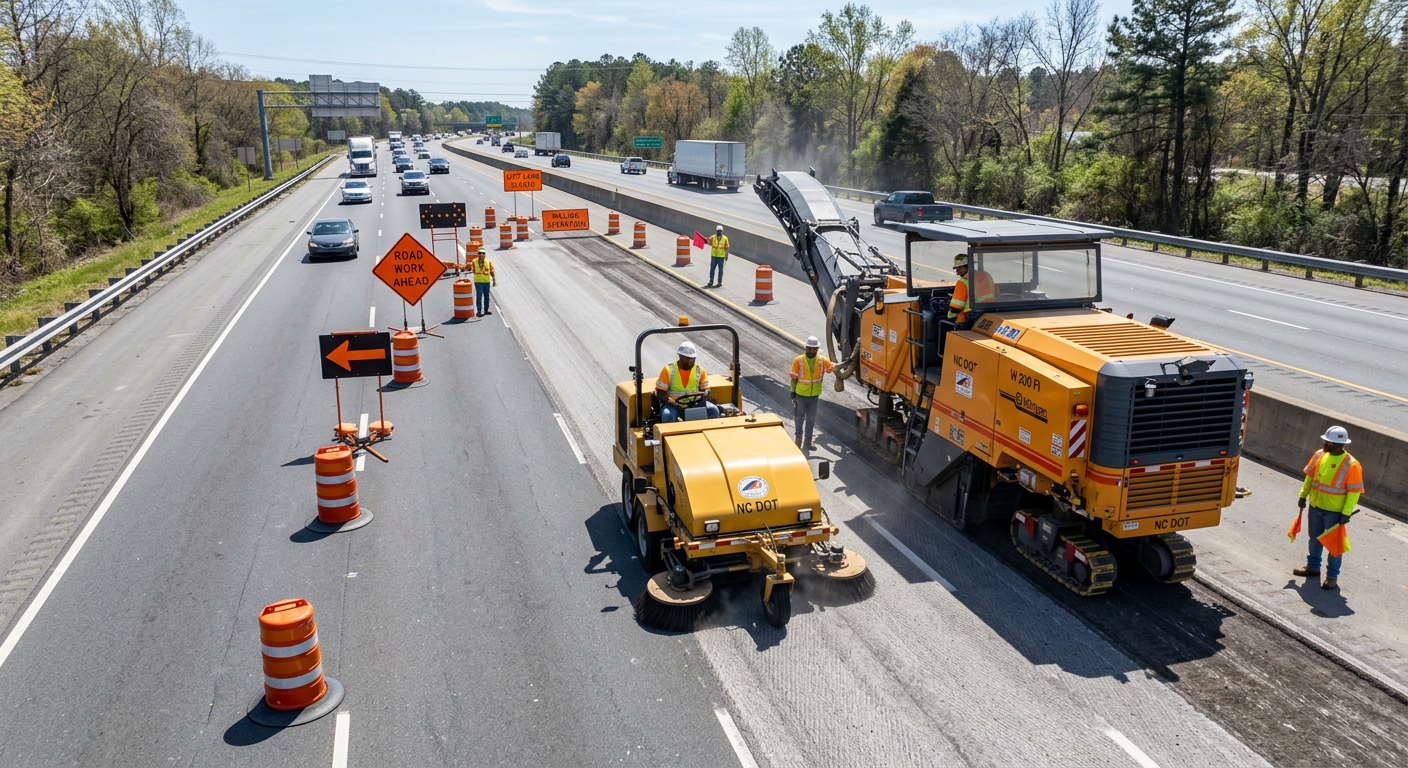
North Carolina highway work often means restricted lane windows, moving traffic, long linear jobsites, and changing debris conditions. NCDOT projects frequently involve milling and resurfacing under overnight or daytime lane closures, so sweeping crews need equipment that can make consistent passes without becoming the reason the work zone stays open longer.
The safety context matters, too. The Federal Highway Administration reported 850 work-zone fatalities nationally in 2024. Clean work areas, coordinated equipment movements, clear visibility, and fewer unnecessary trips through an active closure are practical parts of a disciplined work-zone plan. FHWA National Work Zone Awareness Week fact sheet (ops.fhwa.dot.gov)
| Buying priority | Why it matters on highway work | What to verify |
|---|---|---|
| Hopper capacity | Fewer dump trips | Usable volume and discharge cycle |
| Mechanical broom system | Handles heavy millings and aggregate | Broom width, pressure, wear parts |
| Hydraulic design | Supports steady production | Separate circuits and service access |
| Dust-control system | Improves visibility and cleanup quality | Water capacity and nozzle coverage |
| Serviceability | Protects uptime during long shifts | Daily inspection points and diagnostics |
Capacity Is More Than a Hopper Number
A large hopper matters because it extends productive sweeping time. But procurement teams should not stop at a brochure figure. Ask how much material the machine can carry in real milling conditions, how quickly it discharges, whether the elevator feeds consistently with coarse debris, and how safely the operator can complete the dump cycle.
For example, the published specifications for the XBroom Street Sweeper list a six-yard total hopper with five yards of usable capacity, plus a high-lift side-dump configuration. Those details matter when a crew is cleaning long interstate passes and a disposal area is not immediately adjacent to the closure. (xbroom.com)
Uptime Has to Be Designed Into the Machine
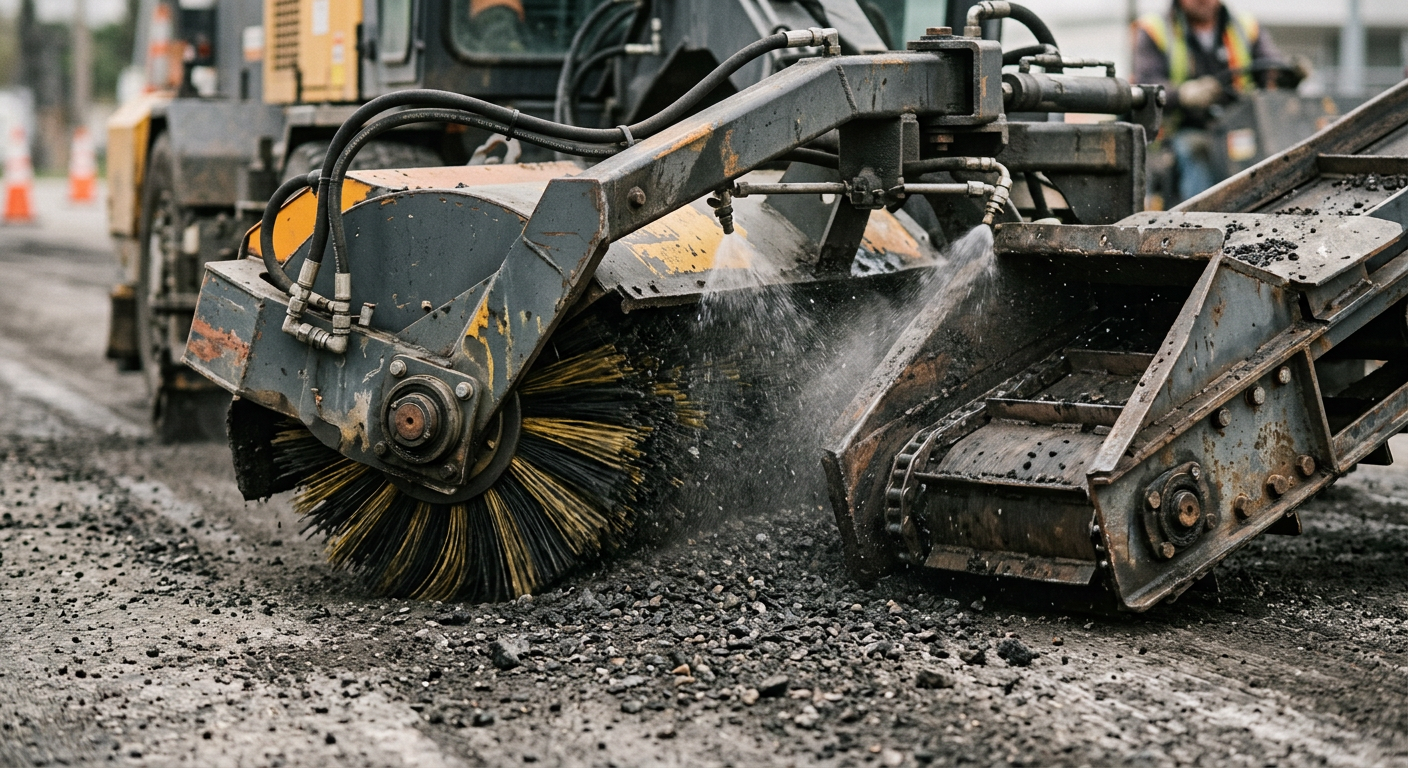
A high-production sweeper is exposed to millings, stone, sand, and roadway debris that can accelerate wear. The best highway construction sweepers are built around protected wear areas, accessible service points, durable broom components, and hydraulic systems that do not force operators to compromise production to protect the equipment.
Before comparing purchase options, have your maintenance lead walk through daily checks. They should be able to inspect broom condition, skid shoes, conveyor or elevator components, hydraulic fluid, water spray, and hopper seals without turning a routine inspection into a half-shift project.
Mechanical Broom, Regenerative Air, or Vacuum Sweeper?
Every sweeper design has a place. The right choice depends on material type, sweeping frequency, dust-control requirements, access to dump sites, and whether the work is heavy construction cleanup or fine-finish maintenance.
| Sweeper type | Strongest fit | Main advantage | Primary limitation |
|---|---|---|---|
| Mechanical broom | Millings, aggregate, chip seal | Heavy-debris pickup and long production runs | More moving wear components |
| Regenerative air | Routine municipal sweeping | Good fine-debris collection | Can be less efficient with coarse material |
| Vacuum sweeper | Fine dust and detailed cleanup | Strong particulate pickup | May not be ideal for sustained milling debris |
For North Carolina milling and highway reconstruction, mechanical broom platforms are often the practical choice because they are intended to move bulky, abrasive material. Regenerative-air and vacuum sweepers can be useful for finish work, light debris, or dust-sensitive applications, but they may not offer the same production fit when a crew must continuously follow a milling operation.
Here is the important distinction: the highest-capacity option is not automatically the best option. A unit is only productive when its broom system, elevator, hopper, water supply, chassis configuration, and maintenance access all fit your actual work cycle.
How to Spec a High Capacity Street Sweeper for Highway Construction
Start With the Material, Not the Brand
List the debris your crew handles most often. Fresh asphalt millings and loose aggregate create different demands than dry leaf debris, roadway fines, or airport foreign-object debris. If your work includes milling, shoulders, patching, and chip seal, prioritize durable mechanical collection and strong material transfer over a machine built mainly for light municipal routes.
We also recommend documenting the typical distance between the active pass and the approved dump point. A sweeper that must travel several miles per cycle needs capacity and reliability that match that travel penalty. This is where a true high capacity street sweeper for highway construction earns its keep.
Match Sweep Width to Lane and Shoulder Work
Highway work rarely happens in a perfect, open lane. You may be sweeping beside barrier wall, through ramp transitions, across shoulders, or around drainage structures. Adjustable gutter brooms, usable sweep width, and stable broom-pressure control help operators pick up material without repeated corrective passes.
Published XBroom specifications list a 60-inch main broom and adjustable gutter-broom coverage up to 140 inches. Those dimensions are worth reviewing against your typical lane, shoulder, and edge-cleanup requirements. (xbroom.com)
Treat Water Management as an Operating Requirement
Dust control is not a cosmetic add-on. During dry milling cleanup, water spray supports visibility, helps keep fines from becoming airborne, and improves conditions for nearby crews and traffic. OSHA requires construction employers to control respirable crystalline silica exposure, and it restricts dry sweeping when wet sweeping, HEPA vacuuming, or other effective methods are feasible. OSHA silica construction guidance (osha.gov)
Check onboard water capacity, nozzle placement, filtration, refill method, and the operator controls used to adjust spray. You want enough water for the expected sweep window without carrying so much weight that it unnecessarily compromises the machine's operating plan.
A Practical Workflow for North Carolina Highway Sweeping
A productive sweep plan begins before the first milling pass. The superintendent, milling lead, traffic-control lead, paving foreman, and sweeper operator should agree on travel direction, safe staging locations, radio communication, dump route, and the handoff point between milling cleanup and paving.
Use this field sequence:
- Inspect broom wear, hydraulic hoses, water spray, warning lights, and hopper controls before entering the closure.
- Identify the dump location and calculate round-trip travel time before production starts.
- Keep the sweeper close enough to the milling operation to prevent buildup, while maintaining safe separation and communication.
- Adjust broom pressure and travel speed for pickup quality, not just speedometer speed.
- Monitor hopper loading and schedule dumps before material spills or pickup performance drops.
- Document recurring delays, such as long dump routes, brush wear, or water-refill interruptions, then address them in the next shift plan.
For deeper planning around milling cleanup, see the practical guidance on improving asphalt milling cleanup speed. It is especially useful when crews need to coordinate sweeping closely behind the mill while minimizing dump-related delays. (xbroom.com)
Questions Procurement Teams Should Ask Before Buying
What is the usable hopper capacity under our normal debris load?
Ask for usable capacity, not just total volume. Heavy or damp millings may affect real payload, and the answer should connect to your anticipated sweep time and dump-route distance.
How does the machine handle abrasive material?
Review main-broom construction, gutter brooms, elevator design, skid shoes, wear liners, and access for replacement parts. A lower purchase price can become expensive if wear items are difficult to inspect or replace.
Can operators control the machine efficiently from the cab?
Highway work demands concentration on traffic, lane position, broom engagement, and debris pickup. Controls should help the operator manage broom speed, pressure, water spray, and system alerts without unnecessary distractions.
What support does the manufacturer provide after delivery?
Confirm parts availability, technical support, warranty terms, and service training. A manufacturer that understands asphalt milling and road construction will ask about your application before recommending a configuration.
Is the truck configuration right for our fleet rules?
Check licensing requirements, GVW needs, axle ratings, visibility packages, lighting, camera options, and state-specific operational requirements. The sweeper body may be only one part of a successful fleet decision.
Configure a Sweeper Around Your Work Cycle
North Carolina contractors and public agencies do not all need the same setup. A fleet that handles interstate mill-and-fill work may prioritize hopper capacity, lighting, wide sweeping coverage, and dust control. A municipal fleet may need a configuration that balances construction support with regular street maintenance and industrial sweeping.
Review the available XBroom street sweeper products, then use Build a Truck to identify options that support your crew's operating environment. For background on the manufacturer’s roadwork and asphalt-milling experience, visit Why Choose XBroom.
Keep Highway Cleanup From Becoming the Schedule Risk
The right sweeper does more than remove debris. It helps the milling crew maintain pace, gives paving crews a cleaner surface to work from, and reduces the wasted travel and idle time that quietly consume profit on highway projects.
For North Carolina highway construction, focus the buying decision on usable capacity, tough mechanical broom performance, effective dust suppression, dependable hydraulics, and maintenance access. A machine that sweeps longer between dumps and returns quickly after service can make a measurable difference across every shift.
Discuss Your North Carolina Sweeping Requirements
If your operation needs a high-production mechanical broom sweeper for milling cleanup, highway construction, municipal work, or chip seal, we can help you evaluate the configuration that fits the job. Contact Nescon to request pricing or schedule a product discussion, or call Phone: 480-505-0001 to speak with the manufacturer directly.
About XBroom by Nescon
XBroom by Nescon is a U.S.-based street sweeper manufacturer specializing in heavy-duty mechanical street sweepers designed for high-production sweeping applications. XBroom sweepers are built to support asphalt milling, road construction, municipal street maintenance, and industrial sweeping operations.
Engineered for durability, large hopper capacity, long sweep times, and reduced downtime, XBroom street sweepers help contractors and municipalities maximize productivity while minimizing maintenance and dump frequency.
Ready to Upgrade Your Street Sweeper?
Call 480-505-0001 or Contact Nescon to request pricing, schedule a demo, or learn more about XBroom street sweeping solutions.