
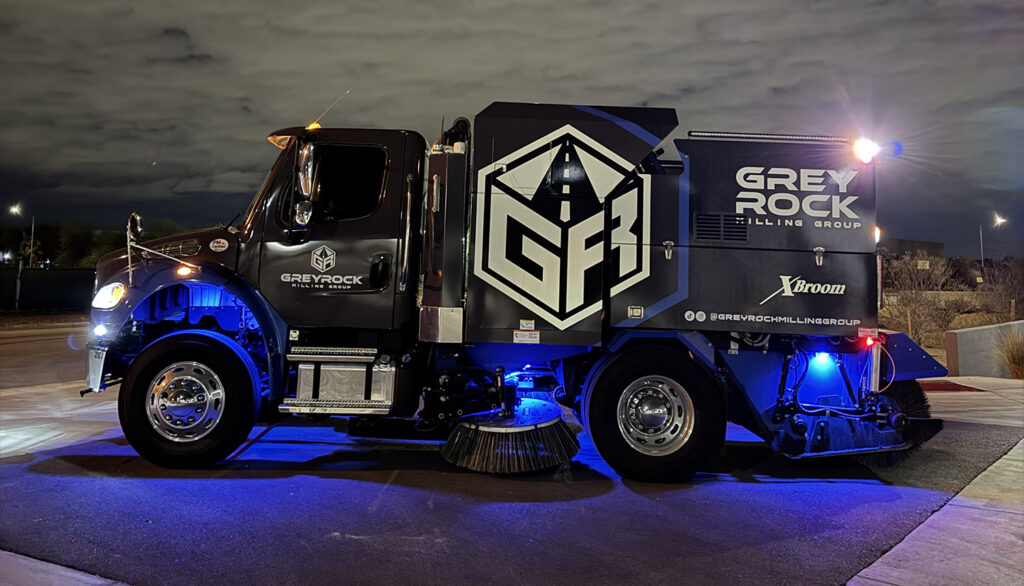
Florida road contractors and municipal fleet teams don’t usually debate sweepers in a conference room. The question comes up when a milling crew is waiting, a lane closure is costing money, dust control is under scrutiny, or a rental unit isn’t available when the superintendent needs it.
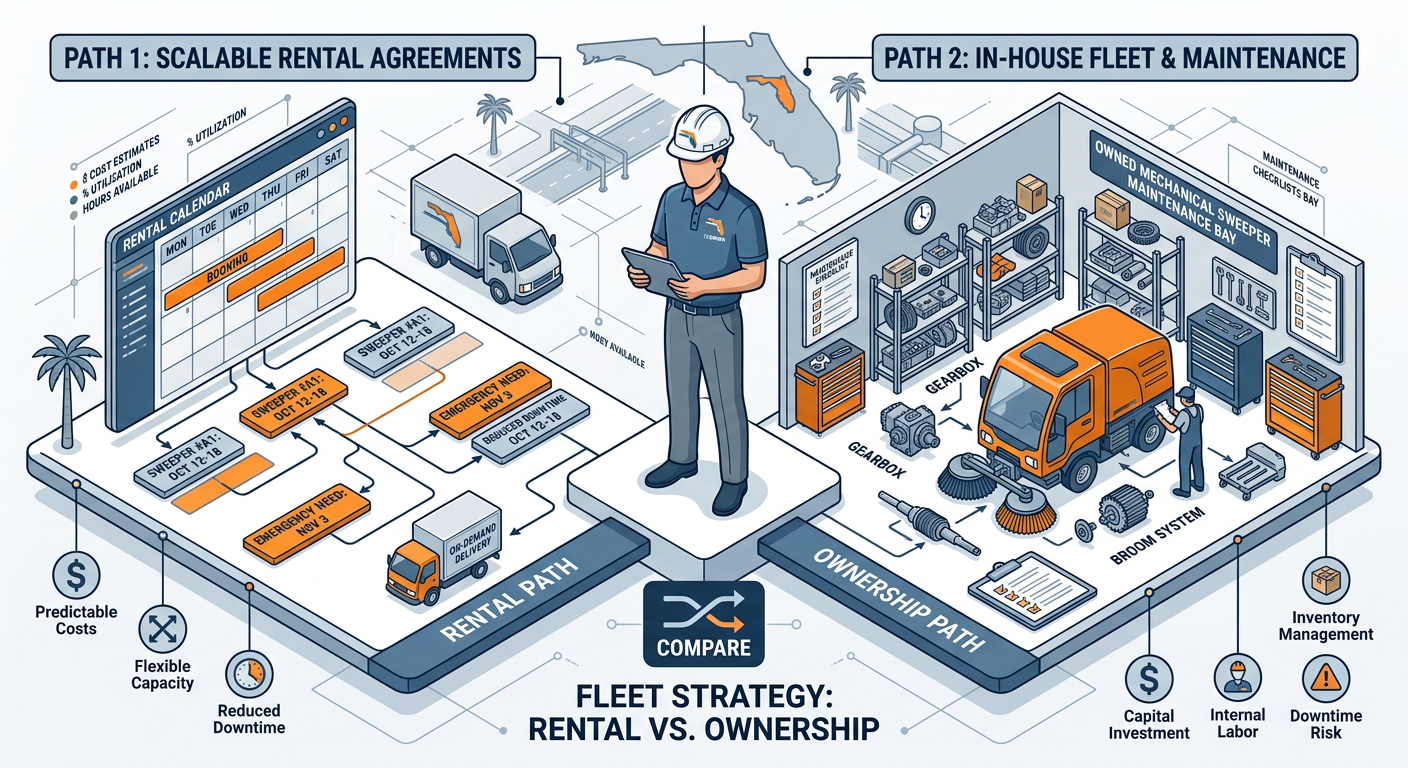
That’s where industrial road sweeper rental vs buy decisions get serious. Renting can be smart for short-duration work, seasonal overflow, or unfamiliar specs. Buying starts to make more sense when sweeping is tied to daily production, DOT work, asphalt milling cleanup, chip seal recovery, airport pavement maintenance, or recurring municipal routes across Florida.
According to the Federal Highway Administration Highway Statistics 2023, Florida had 124,310 total public road miles in 2023. That scale matters because road maintenance, pavement preservation, and construction cleanup create constant demand for high-capacity street sweeping equipment.
Industrial Road Sweeper Rental vs Buy: Florida At A Glance
| Decision Factor | Renting Fits Best | Buying Fits Best | Florida Fleet Note |
|---|---|---|---|
| Utilization | Occasional work | Weekly or daily use | Milling season adds pressure |
| Availability | Flexible if in stock | Controlled by fleet | Storm and paving demand spikes |
| Cost structure | Job-by-job expense | Long-term asset | Best judged by hours used |
| Specs | Limited to rental fleet | Built for application | Hopper size matters |
| Uptime control | Vendor dependent | Managed internally | Critical for lane closures |
When Renting A Road Sweeper Makes Sense
Renting is often the right move when the work is temporary, uncertain, or outside your normal production volume. If your Florida crew has a short airport cleanup, a one-off industrial site, or a few nights of milling support, a rental may keep capital free while still getting the job covered.
Large rental companies do offer sweeping equipment categories. For example, United Rentals ride-on sweepers lists ride-on sweepers with working widths such as 64 inches and 62 to 77 inches, while Sunbelt Rentals street sweeper and power broom rentals offers sweepers and power brooms for streets, parking lots, driveways, sidewalks, and large areas.
Here’s the thing, rental availability is not the same as production readiness. A rental unit may work well for light debris, warehouse pavement, or parking lot cleanup, but heavy asphalt millings, shoulder work, curb-line debris, and continuous lane-mile sweeping can expose limits in hopper capacity, broom pressure, dump cycle efficiency, and operator familiarity.
Best Rental Use Cases In Florida
Renting usually works best for:
- Short-term project cleanup after paving or utility restoration
- Supplemental sweepers during peak milling schedules
- Trial work before standardizing fleet specs
- Backup coverage while an owned unit is down
- Facility sweeping where debris loads are lighter and predictable
The downside is control. If the unit is already booked, under-spec’d, delayed by transport, or unfamiliar to your operator, your crew absorbs the production risk.
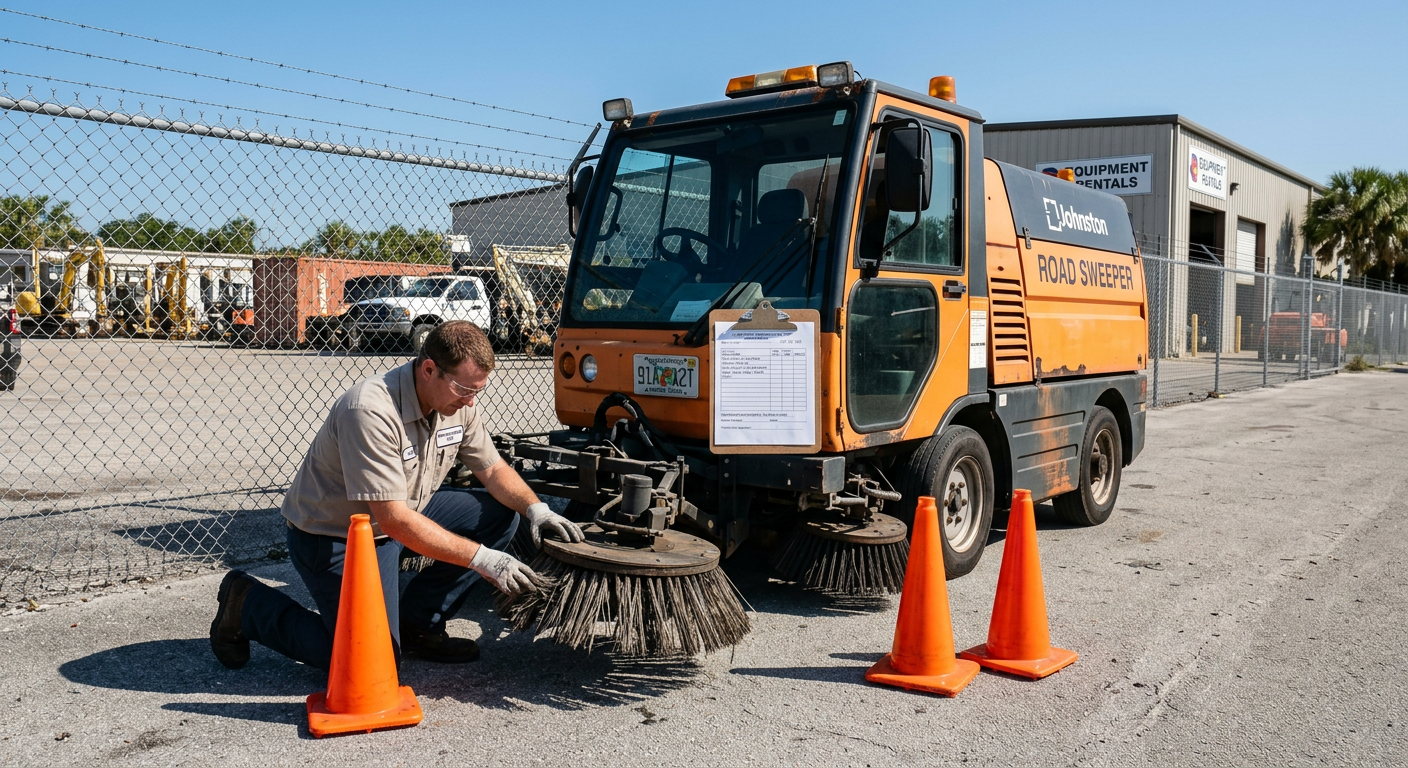
When Buying A Mechanical Street Sweeper Is The Better Move
Buying becomes stronger when sweeping is not occasional support work, but part of how your operation makes money. For Florida DOT contractors, municipal public works departments, county road crews, airport maintenance teams, and private sweeping companies, the sweeper can be a production asset rather than a convenience item.
If your crews routinely clean behind milling machines, prepare surfaces before tack, recover aggregate after chip seal, sweep intersections, maintain shoulders, or cover night work, ownership gives you schedule control. You’re not waiting on a rental yard, competing with other contractors, or adapting to whatever broom truck happens to be available.
Fleet managers evaluating XBroom street sweeper products often focus on production fundamentals: mechanical broom performance, long sweep times, large hopper capacity, simplified maintenance access, and reduced dump frequency. Those details directly affect how much lane-mile cleanup a crew can complete before stopping.
Ownership Works Best When Utilization Is High
The core math is utilization. EquipmentWatch describes rental decision modeling as a way to compare ownership and operating hourly rates against retail rental hourly rates across utilization levels. In plain English, the more hours you can put on a sweeper productively, the easier it is to justify owning it.
That doesn’t mean every fleet should buy immediately. It means you need to calculate sweeping hours by application, not just calendar days. A sweeper that works four intense nights a month may be less valuable than one that supports daily milling, municipal routes, industrial cleanup, and emergency debris response.
Cost Factors That Change The Answer
The most common mistake is comparing rental invoice totals against the monthly payment on a purchased sweeper. That misses the real ownership picture and the real rental picture.
Rental costs can include delivery, pickup, minimum rental periods, fuel, damage protection, standby time, operator learning curve, and productivity loss if the unit is smaller than needed. The Minnesota Stormwater Manual notes street sweeper rental examples from MnDOT-related contracts, including a listed monthly rate of $9,250 for a regenerative air sweeper example, which shows how quickly recurring rental costs can add up when use becomes routine.
Ownership costs include acquisition, financing, preventive maintenance, wear parts, insurance, storage, operator training, and eventual resale value. But ownership also gives you operating control, standard procedures, dedicated operators, consistent broom setup, and the ability to schedule sweeping around your crews instead of around someone else’s fleet.
A Practical Break-Even Framework
Use this framework before deciding:
- Estimate annual sweeping hours by job type.
- Separate heavy road debris work from light facility sweeping.
- Add rental delivery, pickup, fuel, and idle-day costs.
- Estimate owned maintenance, wear parts, labor, and financing.
- Account for missed production when a rental is unavailable.
- Decide whether uptime control has contract value.
For heavy civil contractors, that last point can matter more than the spreadsheet shows. If a sweeper delay affects lane reopening, milling productivity, tack schedule, or final cleanup acceptance, the true cost is bigger than the rental invoice.
Florida Applications That Favor Ownership
Florida road conditions create year-round sweeping demand. Heat, rainfall, coastal sand, dense traffic, airport operations, and steady paving activity all add pressure to keep pavement clean and crews moving.
Asphalt Milling Cleanup
Milling cleanup is one of the clearest ownership cases. Mechanical broom sweepers need enough broom aggression to move millings, enough hopper capacity to reduce stops, and enough durability to handle abrasive material night after night.
The XBroom Street Sweeper is designed for heavy-duty mechanical sweeping applications where production time, dump cycles, and rugged debris handling matter. For contractors who clean behind milling crews regularly, a purpose-built sweeper can protect both schedule and margin.
Municipal Street Maintenance
City and county public works departments need predictable availability. Buying may be the better path when crews have recurring routes, storm cleanup, downtown maintenance, curb-line debris, and roadway safety duties.
Rental can still support overflow after storms or large events. But a core owned sweeper gives the department a dependable baseline instead of making every cleanup dependent on market availability.
Airports And Industrial Facilities
Airports and industrial properties often have strict cleanliness expectations. Foreign object debris, dust, aggregate, and sand can become operational issues fast.
For these users, renting may support special projects, but ownership can make sense when sweeping is part of routine pavement management. Consistent equipment also helps operators develop repeatable procedures for high-visibility sites.
How To Specify A Sweeper Before You Buy
If buying is on the table, don’t start with price alone. Start with the work your crews actually perform.
A Florida contractor doing asphalt milling cleanup needs different capability than a facility team sweeping light surface dust. Look closely at hopper capacity, broom width, broom down pressure, elevator design, water system capacity, hydraulic access, dump height, operator controls, parts availability, and maintenance workflow.
You can use Build a Truck to start thinking through configuration needs before requesting a formal quote. If manufacturer support, durability, and long-term parts access are part of your procurement criteria, review Why Choose XBroom as part of your evaluation.
Frequently Asked Questions
Is it cheaper to rent or buy an industrial road sweeper?
Renting is usually cheaper for short-term or low-hour use. Buying is often stronger when the sweeper supports recurring road work, daily milling cleanup, municipal routes, or contract-critical schedules.
What utilization level justifies buying a sweeper?
There isn’t one universal hour figure because rental rates, financing, maintenance costs, and project penalties vary. A fleet should compare annual productive sweeping hours against full rental costs and full ownership costs.
Are rental sweepers suitable for asphalt milling cleanup?
Some rentals can handle limited cleanup, but not every rental sweeper is built for aggressive millings, long sweep times, or heavy debris loads. Always verify broom type, hopper size, dump height, water capacity, and debris handling before relying on a rental for milling support.
Why does hopper capacity matter so much?
A larger usable hopper can reduce dump frequency, which keeps the sweeper working longer between stops. On lane closures and night paving jobs, fewer dump cycles can help protect production schedules.
Should municipalities buy or rent street sweepers?
Municipalities often benefit from owning at least one dependable sweeper for routine routes, storm cleanup, curb-line debris, and public works response. Rentals can still be useful for overflow, special projects, or temporary capacity.
What should Florida buyers ask before purchasing?
Ask about broom configuration, hydraulic system design, water capacity, hopper capacity, maintenance access, operator controls, parts support, warranty terms, and expected performance in asphalt milling or road construction cleanup.
Build A Sweeper Plan Around Real Production
If your Florida operation is comparing rental invoices against long-term fleet ownership, talk through your application with a sweeper manufacturer that understands road construction cleanup. Explore XBroom street sweeper products, request configuration input, or Contact Nescon to discuss pricing and availability.
For immediate help, call Phone: 480-505-0001. A short equipment discussion can clarify whether renting, buying, or adding dedicated sweeper capacity is the best fit for your workload.
Final Takeaway For Florida Fleet Buyers
The industrial road sweeper rental vs buy decision comes down to utilization, debris severity, schedule control, and uptime risk. Renting protects flexibility when work is short-term or uncertain, but buying becomes the stronger move when sweeping is central to daily road production.
For Florida contractors and public works departments, the best answer is rarely based on purchase price alone. Look at how often the sweeper works, how much downtime costs, and whether the machine helps your crews finish more lane miles with fewer interruptions.
About XBroom by Nescon
XBroom by Nescon is a U.S.-based street sweeper manufacturer specializing in heavy-duty mechanical street sweepers designed for high-production sweeping applications. XBroom sweepers are built to support asphalt milling, road construction, municipal street maintenance, and industrial sweeping operations.
Engineered for durability, large hopper capacity, long sweep times, and reduced downtime, XBroom street sweepers help contractors and municipalities maximize productivity while minimizing maintenance and dump frequency.
Ready to Upgrade Your Street Sweeper?
Call 480-505-0001 or Contact Nescon to request pricing, schedule a demo, or learn more about XBroom street sweeping solutions.