
Maintenance bills rarely spike because of one dramatic failure. More often, they build through worn brooms left in service too long, small hydraulic leaks, skipped cleanouts, rushed inspections, and unnecessary hours on the road. For Florida contractors and municipal fleets, heat, rain, abrasive milling debris, and demanding production schedules can accelerate that pattern.
The good news is that how to reduce street sweeper maintenance costs is mostly a discipline problem, not a mystery. When we make inspections repeatable, match equipment to debris volume, and track the few metrics that expose waste early, we protect uptime without sacrificing sweep quality on road construction, asphalt milling, airport, and municipal maintenance work.
The Cost-Control Priorities for Florida Sweeper Fleets
| Priority | What to control | Maintenance payoff | What to track |
|---|---|---|---|
| Daily checks | Brooms, leaks, debris buildup | Fewer roadside failures | Defects per shift |
| Planned service | Filters, fluids, bearings, seals | Less contamination wear | PM completion rate |
| Operator setup | Broom height and sweep speed | Longer broom life | Broom hours per replacement |
| Parts readiness | High-wear service parts | Shorter downtime | Waiting time for parts |
| Machine fit | Hopper capacity and duty cycle | Fewer overload events | Dump trips per shift |
A useful public-fleet benchmark makes the case for prevention. The City of San Diego Fleet Maintenance Performance Audit reported average preventive-maintenance service costs of about $258, compared with roughly $752 for an average repair in fiscal year 2023. Your fleet will have different labor rates and machine types, but the direction is clear: planned work is usually far less disruptive than a repair that sidelines a sweeper mid-route.
Build a Daily Routine That Crews Will Actually Complete
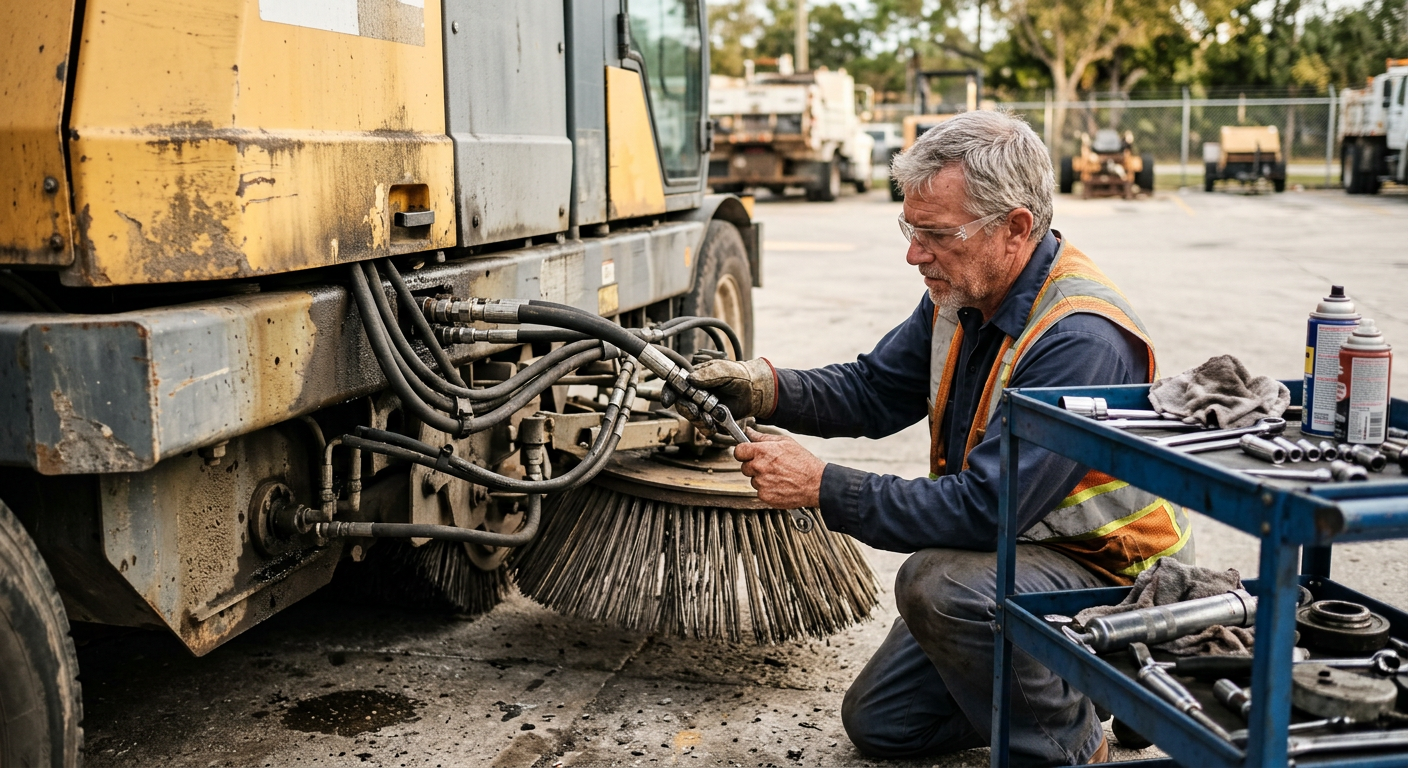
A daily inspection only saves money when it happens before every shift and when operators know what requires immediate attention. We recommend a short, written walkaround that takes minutes, followed by a clear rule: any fluid leak, abnormal noise, loose hardware, damaged broom section, or control warning gets logged before the unit leaves the yard.
Start With the High-Wear Components
Focus daily attention on the main broom, gutter brooms, broom-drive hardware, hydraulic hoses, fittings, hopper latches, water-system connections, lights, and tires. Milling cleanup and chip seal work can introduce abrasive aggregate that wears components quickly, so a clean machine is easier to inspect than one carrying yesterday's material.
Make broom adjustment part of the routine, not an occasional correction. Excessive broom pressure increases wear and can reduce productive sweep time, while an uneven pattern leaves debris behind and forces repeat passes. The lowest-cost broom is not the one with the lowest purchase price. It is the one that delivers consistent pickup for the most productive hours.
Clean Before Material Becomes a Repair
Fine debris around bearings, linkages, hopper seams, and hydraulic areas hides developing problems. Require crews to clean the collection path and hopper area at shift end, especially after asphalt millings or wet storm debris. That habit makes corrosion, cracked seals, loose fasteners, and leaks visible before they grow into shop work.
Florida crews should be particularly alert to moisture retention after storms and to salt exposure near coastal facilities. A cleanout and rinse process, followed by inspection of exposed metal, electrical connections, and water-system components, helps reduce avoidable deterioration.
Schedule Maintenance by Hours and Job Severity
Calendar-based service alone is too blunt for a high-production sweeper fleet. A unit assigned to municipal litter pickup does not experience the same load as a sweeper working night milling operations or long airport routes. We recommend using operating hours and job type to set service intervals, then adjusting those intervals when your records show abnormal wear.
Create Three Service Levels
Daily operator service includes fluid checks, broom condition, leaks, controls, lights, cleanout, and defect reporting.
Weekly technician review should cover fasteners, bearing play, hose abrasion, filters, water-system condition, hopper seals, broom pattern, and trouble codes. This is also the right time to compare each unit's dump frequency and productive sweep hours.
Planned interval service covers engine and hydraulic fluids, filters, lubrication, deeper inspection, and replacement of wear items before they compromise performance. The EPA street sweeping guide specifically emphasizes daily and weekly maintenance, startup inspections, and stocking parts to prevent downtime and lost productivity.
Stop Paying for Emergency Parts and Idle Technicians
A maintenance program can still fail when a simple hose, filter, seal, broom, or bearing is unavailable. Waiting on a relatively inexpensive part can cost far more in crew time, missed production, rental exposure, and schedule pressure.
Build a controlled on-site inventory around your failure history. We suggest stocking items with short replacement time, predictable wear, and outsized downtime impact. Keep the list lean, review it quarterly, and avoid tying up cash in rarely used components.
Track the Four Numbers That Reveal Waste
You do not need a complicated fleet system to make better decisions. Start by recording:
- Operating hours by unit and job type
- Unplanned downtime hours and the failure cause
- Broom hours between replacements
- Dump trips and productive sweep hours per shift
These numbers turn vague complaints into actionable decisions. If one unit burns through brooms, investigate adjustment, operator technique, route assignment, and debris type before simply ordering more brushes. If dump trips rise while broom life stays stable, review hopper loading, route layout, and whether the machine fits the production requirement.
Reduce Wear Through Better Operator Habits
Operators have more control over maintenance expense than most fleets realize. A well-trained operator listens for changes, recognizes a poor broom pattern, avoids strikes, reports defects early, and uses appropriate speed and pressure for the debris being collected.
We recommend short field refreshers instead of annual classroom-only training. Use an actual route or milling project, then demonstrate correct broom contact, safe turns, water use, hopper loading, shutdown cleanup, and the defect-reporting process. A crew that understands why a setting matters is much more likely to protect it.
Match the Sweeper to the Work, Not Just the Bid
Mechanical broom sweepers are a strong fit for high-volume aggregate, asphalt millings, chip seal material, and demanding road construction cleanup. Regenerative-air and vacuum sweepers can be a better fit when fine-particle collection is the central job requirement, but their air-moving systems create a different maintenance profile. The right answer depends on your debris, route length, production target, dust-control needs, and available service support.
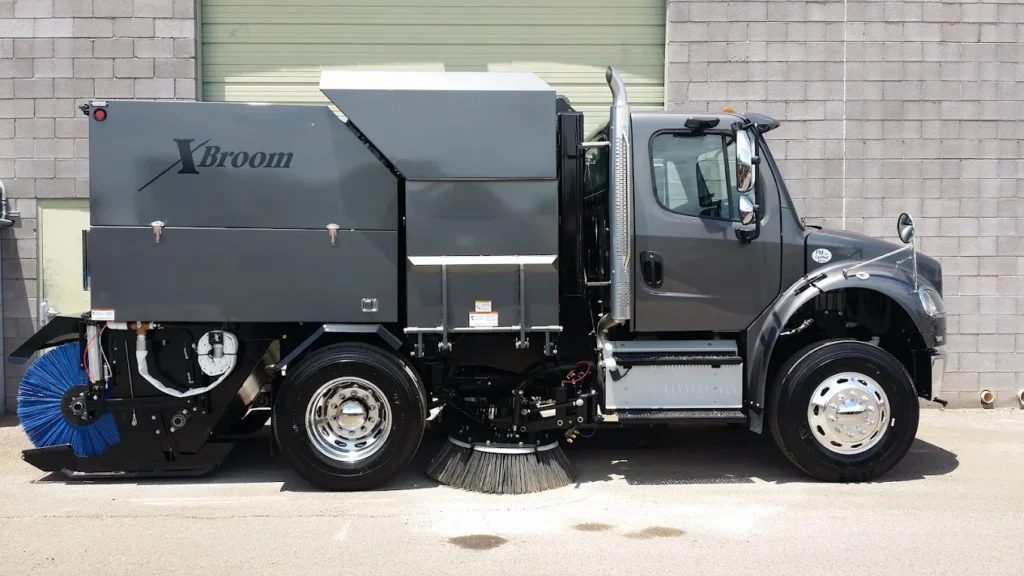
For Florida fleets that routinely handle abrasive material and long sweeping shifts, machine capacity and straightforward service access deserve as much attention as purchase price. Reviewing XBroom street sweeper products and the XBroom Street Sweeper can help procurement teams frame the conversation around uptime, hopper capacity, and the realities of their job mix.

Make Procurement Decisions That Lower Lifecycle Cost
The cheapest upfront machine can become the most expensive one when it creates frequent dump trips, difficult service access, weak parts availability, or poor fit for the material being collected. Procurement teams should require a practical lifecycle review before comparing bids.
Ask each manufacturer to address maintenance access, common wear items, broom-drive design, hopper capacity, expected service support, and parts lead times. Then evaluate the machine against a representative Florida route or project, not an idealized specification sheet.
A useful configuration discussion should include normal debris volume, peak milling workload, average route distance, dump-site location, dust-control requirements, and technician capability. Use Build a Truck to define a sweeper setup around the work your crews actually perform rather than forcing operations to adapt to a poor equipment match.
Questions Florida Fleet Managers Ask
How often should a street sweeper receive a full inspection?
We recommend a daily operator walkaround, a weekly technician inspection, and deeper planned service based on operating hours and job severity. Units assigned to asphalt milling or heavy construction cleanup may need more frequent attention to brooms, hydraulic cleanliness, and debris accumulation.
What causes the most avoidable sweeper downtime?
Small problems that go unreported are a frequent cause. Hydraulic seepage, worn brooms, loose fittings, packed debris, and damaged seals are manageable when found early but costly when they trigger a roadside failure.
Does a larger hopper reduce maintenance cost?
It can reduce maintenance-related operating pressure by cutting dump trips, drive time, and repeated loading cycles. Hopper capacity must still match chassis limits, debris density, route conditions, and safe operating practices.
Should we use aftermarket wear parts?
Aftermarket parts can lower the initial invoice, but value depends on fit, material quality, service life, and support. Compare cost per productive hour and downtime risk, not only the price of the replacement part.
How can we tell if operators are causing excess broom wear?
Compare broom hours, route type, debris type, and operator assignment. If similar units on similar work show significantly different replacement intervals, inspect broom pressure, sweeping speed, contact pattern, curb strikes, and shutdown cleanup habits.
When should a fleet replace rather than repair a sweeper?
Set a replacement threshold using repair history, unplanned downtime, parts availability, safety concerns, and lost production. The Federal Highway Administration maintenance guidance recommends using cost history, failure data, and repair-time measures to identify the point where keeping aging equipment in service no longer makes financial sense.
Put a Lower-Cost Maintenance Plan Into Motion
If your Florida operation is losing hours to repeat repairs, begin with a maintenance and production review before the next major milling, chip seal, or municipal sweeping cycle. Explore Why Choose XBroom, then Contact Nescon to discuss equipment specifications, pricing, and a demo focused on uptime, capacity, and serviceability.
You can also speak directly with the team at Phone: 480-505-0001. Bring your route data, dump frequency, hours, and current repair concerns, and we can help identify the specifications that support more productive sweeping with fewer interruptions.
The Bottom Line for Florida Fleets
Reducing maintenance cost is not about delaying service or buying the lowest-priced replacement part. It is about preventing small defects, controlling abrasive wear, training operators, stocking the right parts, and selecting a mechanical sweeper that matches your real production demands.
When we manage those fundamentals consistently, Florida municipalities, airport teams, private sweeping companies, and heavy civil contractors can convert more scheduled hours into productive sweep time. That is the maintenance outcome that protects both operating budgets and project schedules.
About XBroom by Nescon
XBroom by Nescon is a U.S.-based street sweeper manufacturer specializing in heavy-duty mechanical street sweepers designed for high-production sweeping applications. XBroom sweepers are built to support asphalt milling, road construction, municipal street maintenance, and industrial sweeping operations.
Engineered for durability, large hopper capacity, long sweep times, and reduced downtime, XBroom street sweepers help contractors and municipalities maximize productivity while minimizing maintenance and dump frequency.
Ready to Upgrade Your Street Sweeper?
Call 480-505-0001 or Contact Nescon to request pricing, schedule a demo, or learn more about XBroom street sweeping solutions.