
For Colorado contractors and public works departments, sweeper selection isn’t just about keeping streets clean. It affects production rates, dust control, lane reopening, dump cycles, maintenance labor, and whether your crew can keep pace after milling, chip seal, shoulder work, or municipal pavement repairs.
That’s why the regenerative air vs mechanical broom sweepers decision deserves a practical jobsite view, not a generic spec-sheet debate. Regenerative air units and mechanical broom sweepers both have a place, but they solve different problems. If you’re sweeping heavy millings, aggregate, tracked material, and construction debris across Colorado road projects, the wrong machine can turn cleanup into the bottleneck.
The U.S. Environmental Protection Agency notes that municipalities commonly use mechanical, regenerative air, and vacuum sweepers for street and parking lot sweeping programs in its Stormwater Best Management Practice guidance. The key is matching sweeper technology to the debris load, surface condition, and production requirement.
Quick Comparison for Colorado Sweeping Operations
| Sweeper Type | Best Fit | Key Strength | Main Limitation |
|---|---|---|---|
| Mechanical broom | Milling, chip seal, heavy debris | High-volume pickup | Uses water for dust control |
| Regenerative air | Fine dust, routine streets | Better small-particle recovery | Less ideal for heavy debris loads |
| Vacuum sweeper | Fine material, urban compliance | Strong dust collection | Can struggle with bulky aggregate |
| Combo strategy | Mixed municipal fleets | Flexible coverage | Higher fleet complexity |
How Regenerative Air Sweepers Work
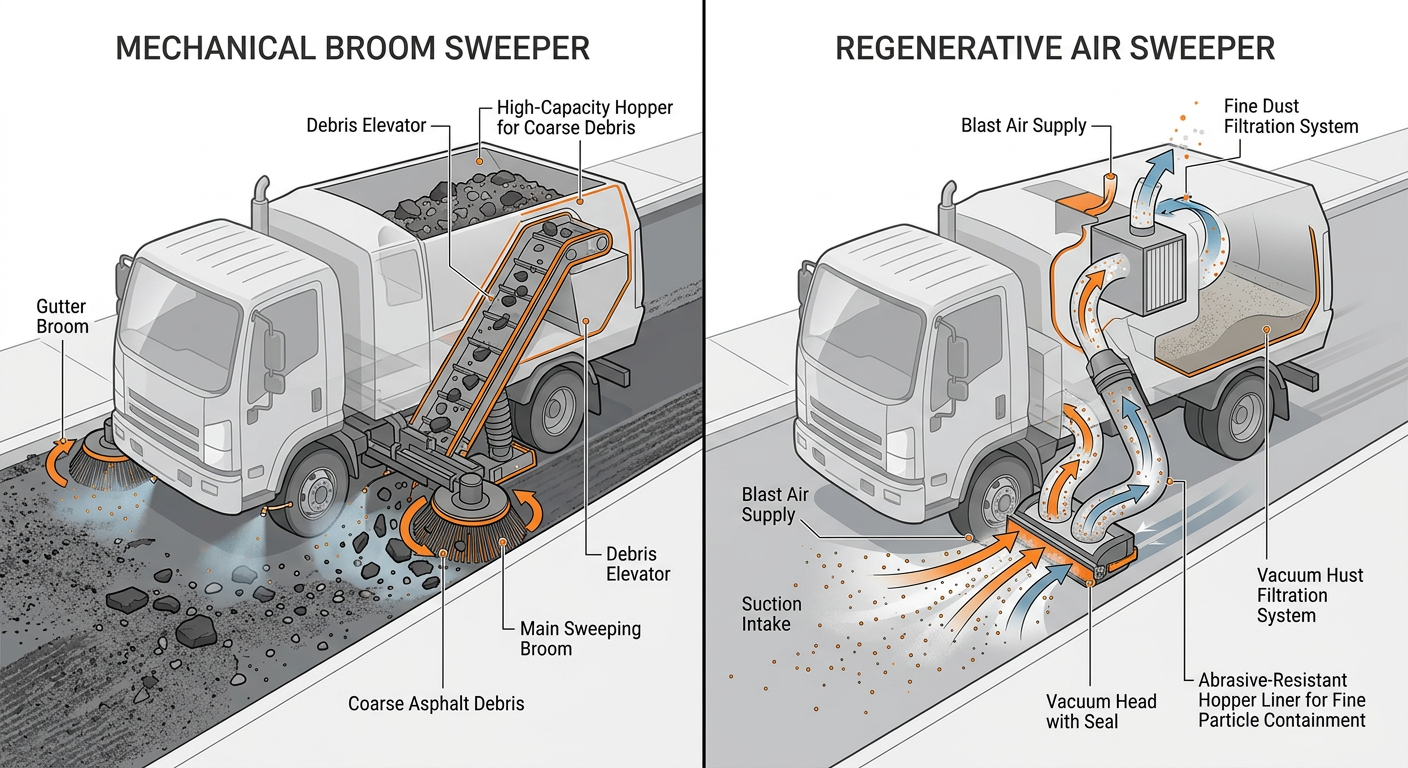
Regenerative air sweepers use a closed-loop air system to blast air onto the pavement, loosen material, and pull dust and debris back into the hopper through a pickup head. They’re often chosen for street sweeping programs where fine sediment, stormwater pollutant reduction, and dust capture are top priorities.
For Colorado municipalities, that can matter on downtown corridors, curbed arterial routes, bike lanes, parking lots, and areas where sediment control is tied to MS4 stormwater requirements. They’re generally strongest when the debris profile is light to moderate and the primary concern is fine particulate recovery.
Here’s the thing, though. Air systems depend heavily on seals, pickup head condition, fan performance, filters, and surface contact. When debris gets bulky, wet, sticky, or highly abrasive, performance can drop fast if the machine isn’t maintained carefully.
Where Regenerative Air Makes Sense
Regenerative air sweepers are a solid fit for:
- Routine municipal street sweeping
- Fine dust and sediment pickup
- Stormwater-focused sweeping routes
- Curbed urban corridors
- Parking lots and airport landside areas
- Areas where visible dust control is a major concern
A U.S. Geological Survey study in Madison, Wisconsin compared regenerative-air, vacuum-assist, and mechanical-broom sweepers in residential basins. In the study summary, USGS reported that 14 of 37 paired samples in the mechanical-broom basin showed higher street-dirt yield after sweeping, while only 2 postsweeping loads were greater for the regenerative-air and vacuum-assist sweepers combined. That doesn’t mean mechanical brooms are poor machines. It means the job type and debris profile matter.
How Mechanical Broom Sweepers Work
Mechanical broom sweepers use gutter brooms and a main broom to physically move material onto an elevator or conveyor system, then into a hopper. Instead of relying primarily on airflow, they use direct mechanical action against the pavement.
That’s why mechanical broom sweepers are so common in road construction, asphalt milling cleanup, chip seal sweeping, and heavy civil work. When a milling machine leaves behind coarse material, when shoulders track dirt onto travel lanes, or when aggregate needs to be removed before striping, physical broom contact is a major advantage.
For Colorado’s mix of mountain corridors, Front Range growth areas, county roads, airport pavement, industrial yards, and seasonal road repair schedules, mechanical broom sweepers are often the production-first choice.
Where Mechanical Broom Sweepers Make Sense
Mechanical broom sweepers are typically best for:
- Asphalt milling cleanup
- Chip seal aggregate removal
- Road construction sweeping
- Heavy dirt and gravel pickup
- Industrial facility sweeping
- Airport construction and maintenance zones
- DOT and county road maintenance support
- Projects where dump frequency affects lane closure time
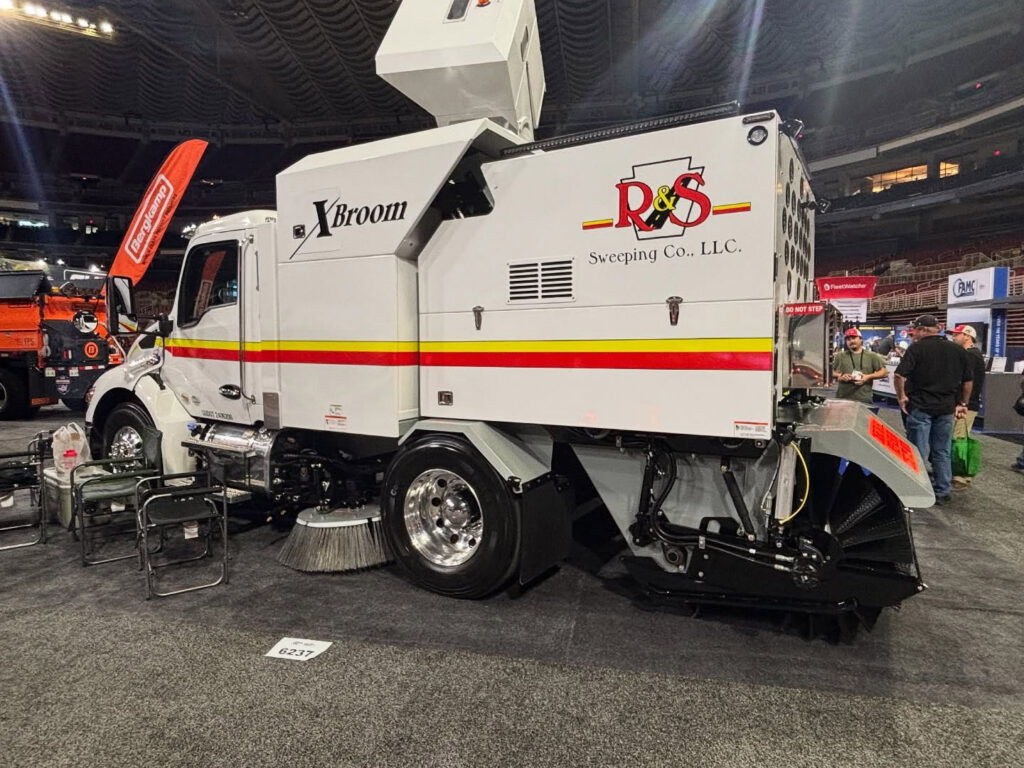
For buyers comparing XBroom street sweeper products, the mechanical broom platform is especially relevant when crews need aggressive pickup, long sweep times, and reduced downtime on high-production work.
Regenerative Air vs Mechanical Broom Sweepers in Colorado Conditions
Colorado creates a tougher sweeper environment than many procurement teams expect. Dry weather can increase dust visibility, mountain routes can involve variable grades, and winter maintenance can leave sand and aggregate behind long after snow events.
In road construction, the most important question usually isn’t, “Which technology sounds cleaner?” It’s, “Which machine keeps our operation moving?” If a sweeper can’t keep up with the mill, the paving train, or lane closure schedule, the cost shows up in labor, traffic control, overtime, and delayed reopening.
Heavy Debris and Asphalt Milling
For heavy asphalt millings, broom sweepers usually have the advantage. The rotating broom and elevator system are designed to move coarse, dense material into the hopper without depending on air velocity alone.
A regenerative air sweeper may handle some fine residue after rough cleanup, but it’s rarely the first choice for aggressive milling debris. Colorado contractors working on I-25, I-70, county arterials, or municipal resurfacing routes generally need production sweeping that can handle volume, not just dust.
Fine Dust and Stormwater Sediment
Regenerative air sweepers can perform well when the debris load is fine sediment. That’s why many municipal programs use them for recurring curb-and-gutter sweeping, especially where stormwater pollutant reduction is a documented goal.
Mechanical broom sweepers can still manage dust with water systems and proper broom adjustment, but they’re built around material movement first. If your program is focused primarily on fine particulate pickup in low-debris urban routes, regenerative air deserves consideration.
Maintenance and Uptime
Mechanical broom systems are relatively straightforward for fleet teams that already understand hydraulic components, brooms, bearings, elevators, and wear parts. Daily inspection still matters, but troubleshooting tends to be direct.
Regenerative air machines add more airflow-sensitive components, including pickup head seals, fan assemblies, screens, and filtration-related maintenance. If those systems aren’t kept tight and clean, pickup performance can suffer.
For superintendents and operations managers, this comes down to availability. A lower-maintenance sweeper that stays in service during the busiest paving months can be worth more than a machine that looks better on paper but needs constant adjustment.
Best-Fit Matrix by Buyer Type
DOT Contractors and Heavy Civil Crews
Mechanical broom sweepers are usually the better fit for DOT contractors, milling subcontractors, and heavy civil crews. They handle aggressive debris, support longer production runs, and are better aligned with active construction cleanup.
If you’re planning equipment for Colorado highway work, compare hopper capacity, dump height, broom width, elevator durability, hydraulic power, and operator controls. The XBroom Street Sweeper is designed around these production-focused requirements, including mechanical sweeping, large hopper capacity, and jobsite durability.
City and County Public Works Departments
Municipal buyers often need a broader mix. A regenerative air sweeper may suit routine residential and downtown routes, while a mechanical broom sweeper may be more useful for patching support, post-storm sanding cleanup, road shoulder debris, and construction coordination.
For Colorado public works departments, the best choice depends on whether the sweeper will spend more time on scheduled curb sweeping or on heavy maintenance support. Many agencies underestimate how often “routine sweeping” turns into cleanup after utility cuts, drainage work, winter sanding, or road repairs.
Airport and Industrial Facility Operators
Airports and industrial sites often need clean pavement, fast response, and reliable pickup of mixed debris. Regenerative air may help with fine dust control in certain paved areas, but mechanical broom sweepers are often more practical where aggregate, rubber chunks, construction debris, and tracked material appear.
The best spec depends on route length, debris weight, FOD sensitivity, water availability, and dump location. If dump distance is long, hopper capacity becomes a serious productivity factor.
Cost Factors That Matter Beyond Purchase Price
Purchase price matters, but it’s only part of the ownership equation. A sweeper that costs less upfront can become expensive if it forces extra passes, frequent dumping, longer cleanup windows, or higher maintenance hours.
When comparing regenerative air and mechanical broom machines, evaluate:
- Number of passes required to achieve acceptable cleanup
- Hopper capacity and usable payload
- Time between dumps
- Broom, seal, filter, and wear-part costs
- Operator training time
- Daily inspection complexity
- Water consumption and fill points
- Dealer or manufacturer support
- Downtime during peak paving season
Colorado fleets should also think about geography. A sweeper working across mountain towns, metro Denver, Colorado Springs, Fort Collins, Pueblo, and rural counties may need to handle many debris types in one week. Versatility matters, but production matters more when lane closures are expensive.
Spec Questions to Ask Before Buying
What Material Will the Sweeper Handle Most Often?
If the answer is asphalt millings, aggregate, gravel, and construction debris, start with mechanical broom sweepers. If the answer is fine sediment on curbed streets, regenerative air may be a better match.
How Far Is the Dump Site?
Long dump runs punish small hoppers. A high-capacity mechanical broom sweeper can reduce dump frequency, which helps crews stay productive during road construction and milling cleanup.
Who Will Maintain the Machine?
If your maintenance team prefers straightforward hydraulic and mechanical systems, mechanical broom sweepers may simplify ownership. If your fleet already supports air sweepers and has disciplined preventive maintenance practices, regenerative air can work well for the right routes.
Will the Sweeper Be Used During Active Road Work?
Active construction usually favors mechanical broom sweeping. Crews need aggressive pickup, predictable performance, and the ability to keep pace with milling, paving, and traffic control windows.
To configure a machine around your route conditions, debris profile, and fleet requirements, use Build a Truck to outline the options that matter most for your operation.
Frequently Asked Questions
Are regenerative air sweepers better than mechanical broom sweepers?
They’re better for some jobs, especially fine dust and sediment-focused municipal routes. Mechanical broom sweepers are usually better for heavy debris, asphalt milling cleanup, chip seal aggregate, and construction sweeping.
Which sweeper is best for asphalt milling cleanup in Colorado?
A mechanical broom sweeper is typically the stronger choice for asphalt milling cleanup because it physically moves coarse millings into the hopper. That direct broom action helps crews keep pace with road construction schedules.
Do mechanical broom sweepers create more dust?
They can create visible dust if water systems, broom pressure, and operator technique aren’t managed correctly. Modern mechanical broom sweepers use water spray systems and adjustable broom settings to improve dust control while maintaining strong debris pickup.
Can a regenerative air sweeper handle chip seal aggregate?
It may handle light residual material, but chip seal aggregate is usually better suited to mechanical broom sweeping. Loose stone and heavier debris require aggressive pickup and higher material-moving capacity.
What should municipalities consider before choosing a sweeper?
Municipal buyers should compare route type, stormwater goals, debris weight, maintenance capacity, hopper size, operator training, and how often the sweeper supports construction or road repair work. A mixed-use public works fleet may benefit from mechanical broom durability even if routine sweeping is part of the schedule.
Is hopper capacity important for street sweeping productivity?
Yes. Larger usable hopper capacity can reduce dump frequency, which keeps sweepers working longer between interruptions. That matters on long Colorado routes, milling projects, airport pavements, and rural county road programs.
Request a Colorado Sweeper Configuration Built for Production
If your Colorado operation needs a street sweeper for asphalt milling, chip seal, road construction, or municipal maintenance, talk with a manufacturer that understands high-production mechanical sweeping. Learn more about Why Choose XBroom, then Contact Nescon to request pricing, compare options, or schedule a demo.
You can also call Phone: 480-505-0001 to discuss route length, debris type, hopper requirements, and truck configuration with the XBroom team.
The Bottom Line for Colorado Fleets
The regenerative air vs mechanical broom sweepers comparison comes down to debris, productivity, and maintenance reality. Regenerative air sweepers can be a strong choice for fine sediment and routine municipal routes, while mechanical broom sweepers are usually the better fit for heavy construction cleanup, milling debris, chip seal aggregate, and long production days.
For Colorado contractors, public works departments, airport operators, and private sweeping companies, the smartest choice is the one that keeps crews moving, reduces downtime, and matches the work you actually do. Don’t buy for the cleanest brochure claim. Buy for the pavement conditions, debris loads, and schedules your fleet faces every week.
About XBroom by Nescon
XBroom by Nescon is a U.S.-based street sweeper manufacturer specializing in heavy-duty mechanical street sweepers designed for high-production sweeping applications. XBroom sweepers are built to support asphalt milling, road construction, municipal street maintenance, and industrial sweeping operations.
Engineered for durability, large hopper capacity, long sweep times, and reduced downtime, XBroom street sweepers help contractors and municipalities maximize productivity while minimizing maintenance and dump frequency.
Ready to Upgrade Your Street Sweeper?
Call 480-505-0001 or Contact Nescon to request pricing, schedule a demo, or learn more about XBroom street sweeping solutions.