
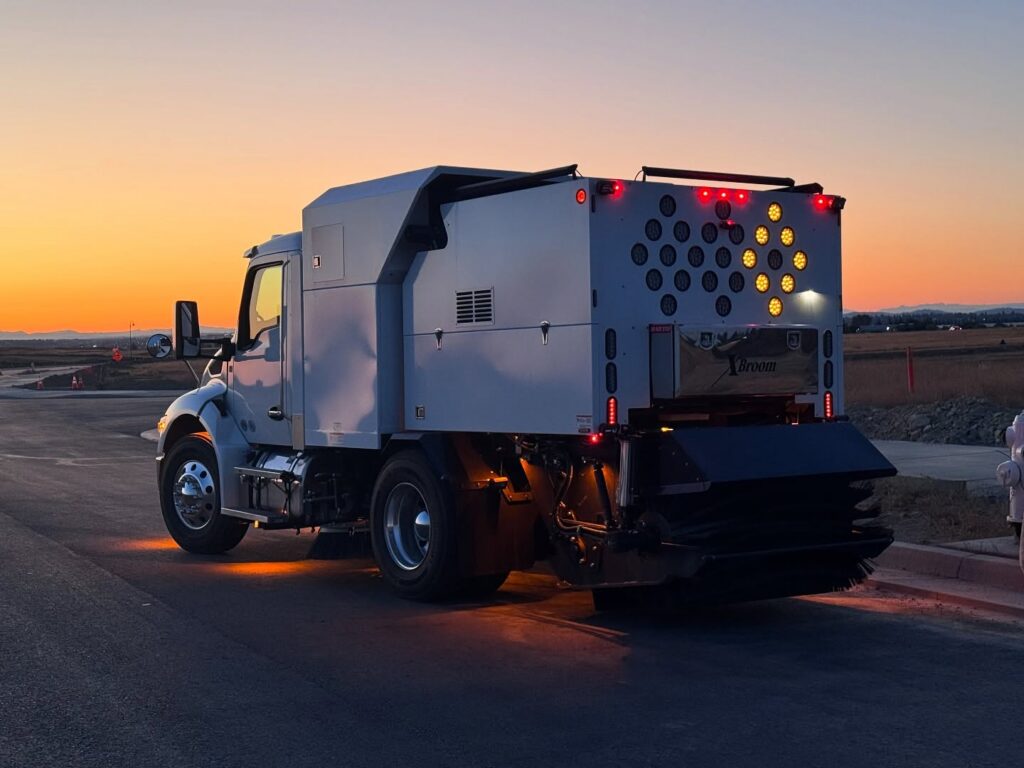
A municipal sweeper can look capable during a yard inspection and still become the weak link when a Georgia road project produces wet millings, dense aggregate, curbline debris, and a tight overnight paving window. The difference comes down to whether the machine was specified for real production work, not just a minimum equipment list.
When we evaluate heavy duty municipal street sweeper specifications, we focus on the systems that protect uptime: debris capacity, broom and elevator durability, hydraulic performance, dust control, operator controls, and traffic safety equipment. For Georgia public works teams, paving contractors, airports, and private sweeping fleets, those details determine whether operators keep sweeping or lose time dumping, adjusting, and repairing.
Georgia Municipal Sweeper Specifications at a Glance
| System | Minimum Buying Question | Heavy-Duty Target | Why It Matters |
|---|---|---|---|
| Hopper | How often will we dump? | Large usable capacity | More productive sweep time |
| Main broom | Can it handle millings? | Heavy-duty, adjustable pressure | Better pickup on rough surfaces |
| Gutter brooms | Can we reach curbs and joints? | Dual, variable-speed brooms | Cleaner edges and wider coverage |
| Hydraulics | Does every function compete for flow? | Load-sensing, dedicated circuits | Consistent sweeping at low engine speed |
| Water system | Can we control dust without mud? | Adequate tank and multi-point misting | Better visibility and cleaner work zones |
| Controls | Can operators diagnose issues quickly? | In-cab monitoring and hour tracking | Faster operation and maintenance planning |
Georgia procurement teams should start with the duty cycle, then write specifications around it. An urban public works route, an interstate milling operation, and an airport perimeter assignment all require a mechanical broom sweeper, but they place very different demands on hopper capacity, water use, maneuverability, and wear components.
Start With the Georgia Workload, Not the Brochure
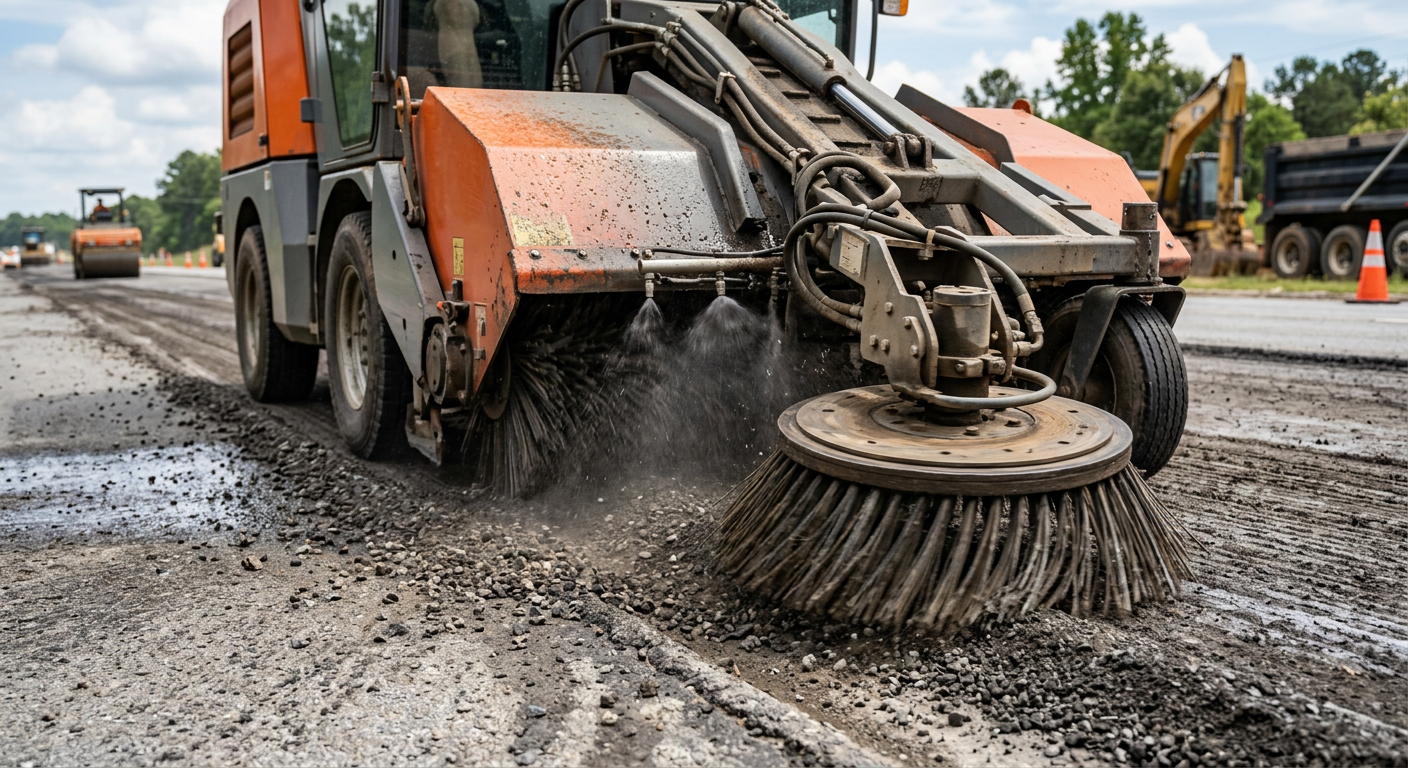
A useful specification describes the material, surface, route length, traffic conditions, and expected daily sweeping hours. If the work includes reclaimed asphalt pavement, chip seal aggregate, or frequent curbline cleanup, we recommend specifying a true high-production mechanical broom system rather than treating the sweeper as a general cleanup vehicle.
Georgia agencies and contractors also need to account for bid requirements. In a recent Athens-Clarke County street-sweeping performance work statement, roadway sweepers were required to have at least 3 cubic yards of capacity, dual steering, dual brooms, an adequate water system for dust control, high-intensity beacons, and an arrow board. The document also recognizes mechanical broom sweepers as an acceptable roadway-sweeping platform. Athens-Clarke County performance work statement
That is a practical baseline, not necessarily an ideal production target. A 3-cubic-yard minimum may satisfy a contract requirement, but larger usable hopper capacity can be the stronger choice when dump locations are distant, traffic control is costly, or crews are sweeping heavy milling debris.
Core Heavy Duty Municipal Street Sweeper Specifications
Hopper Capacity and Dumping Design
Hopper capacity affects more than the number of loads an operator collects. It affects route continuity, labor utilization, fuel burned traveling to disposal, and how often a milling crew waits on cleanup.
Look beyond gross hopper volume. Ask for usable net capacity, door opening dimensions, dump height, lift rating, material thickness, and whether the dump system lets crews unload safely into their established debris-handling process. For road construction and asphalt milling cleanup, a high-lift hopper with a robust mast-style lift can help crews keep the sweeper productive without adding unnecessary transfer cycles.
The current XBroom Street Sweeper specification lists a 6-yard total hopper with 5 yards of usable capacity, a 15,000-pound lift capacity, and variable dump height. Those are the kinds of measurable specifications we encourage buyers to compare side by side, rather than relying on broad claims about capacity.
Main Broom, Gutter Brooms, and Wear Parts
A broom sweeper earns its keep at the pavement. The main broom must move bulky material reliably toward the elevator, while gutter brooms need enough reach, down pressure, and control to clean curb lines, joints, shoulders, and transitions around utility structures.
For municipal and contractor work in Georgia, we recommend specifying:
- Main broom width and diameter appropriate for heavy debris pickup
- Variable broom speed and in-cab pressure adjustment
- Pneumatic or equivalent suspension that compensates for broom wear
- Direct hydraulic drive where reduced chain and sprocket maintenance is a priority
- Replaceable broom wafers and durable carbide skid shoes
- Dual gutter brooms with variable width, tilt, extension, and adjustable down pressure
The goal is controlled contact, not maximum pressure all day. Excessive broom pressure accelerates wear, consumes material, and can leave operators constantly correcting the setup. Adjustable pressure gives crews a better way to match the machine to asphalt millings, loose gravel, leaves, sand, or routine municipal debris.
Elevator Construction and Jam Management
The elevator is where heavy material becomes a maintenance problem if the system is underbuilt. Milling cleanup can place an elevator under steady abrasive load, so specification language should address conveyor type, flight material, chain construction, bearing protection, drive design, reverse capability, and jam indication.
A drag-slat elevator with replaceable rubber wear elements and sealed, self-aligning bearings gives fleet teams serviceable components to inspect. In-cab speed indication and a jam alarm also matter because they help an operator react before material accumulates into a longer downtime event.
Hydraulic System Performance
Hydraulics are often the hidden differentiator between a sweeper that merely functions and one that remains productive through an extended shift. A machine needs dependable power for the main broom, gutter brooms, and elevator at the same time, without forcing operators to raise engine speed simply to maintain cleaning performance.
We look for load-sensing, pressure-compensated hydraulic architecture with dedicated pump capacity for major sweeping functions. Buyers should also assess tank capacity, filtration, cooling, accessible manifolds, hose routing, temperature monitoring, and alarms for low oil level or excessive heat. These details support predictable operation in Georgia summer heat and simplify preventive maintenance for fleet technicians.
Water System and Dust Control
Street sweeping is not a dumping operation. It is a pavement-cleaning process, so dust control needs to support pickup without soaking the work area or creating muddy material in the hopper.
Specify tank capacity, pump output, filtration, fill connection, nozzle locations, and operator-adjustable flow. Fine misting at the gutter brooms, front spray bar, and main broom area can help control airborne dust while preserving visibility and avoiding unnecessary water consumption. For work near neighborhoods, active traffic, mills, and paving crews, this is a direct safety and quality consideration.
Controls, Diagnostics, and Operator Visibility
A heavy-duty sweeper should reduce unnecessary decisions during a busy shift. A programmable control system can sequence brooms, elevator, water, and hopper functions, while also giving operators immediate visibility into operating status.
Put these items in the specification:
- Touchscreen or clear in-cab control interface
- Manual override for diagnostics and service
- Individual hour meters for brooms, elevator, PTO, water pumps, and cooling systems
- Hopper dump count tracking
- Hydraulic temperature and fluid-level warnings
- Reverse interlock that raises or protects sweeping components
- Backup cameras, work lights, beacon lighting, and traffic arrow board options
These controls do not replace training. They make trained operators faster, give supervisors cleaner maintenance records, and help technicians isolate a fault without spending hours tracing basic operating conditions.
How to Write a Procurement Specification That Protects Uptime
The strongest municipal specification does not name a brand first. It identifies the duty cycle, required outcomes, measurable equipment requirements, service expectations, and acceptable proof of compliance.
Define the Application Clearly
State whether the sweeper will handle residential routes, central business districts, municipal streets, bridge decks, road shoulders, asphalt milling cleanup, chip seal projects, industrial facilities, or airport areas. Include estimated daily hours, expected debris types, route distances, disposal constraints, lane-closure conditions, and desired sweep width.
Require Measurable Components
Avoid phrases such as “heavy-duty construction” without a measurable standard behind them. Require the manufacturer to state hopper capacity, lift rating, broom dimensions, hydraulic pump configuration, water-tank capacity, filtration level, controls, safety lighting, and warranty terms.
Evaluate Lifecycle Support
Purchase price matters, but a lower initial number can become expensive when parts lead times, poor accessibility, or frequent dump cycles interrupt the workday. Ask where common wear parts are stocked, how technical support is handled, what operator training is available, and whether the manufacturer can configure the truck for your work profile.
For buyers comparing configurations, XBroom street sweeper products and the Why Choose XBroom page provide a useful starting point for reviewing mechanical broom sweeper components, support expectations, and manufacturer experience in milling and roadwork applications.
Questions Georgia Fleet Managers Should Ask Before Buying
Does a larger hopper always make sense?
Not always. A larger hopper is valuable when routes are long, debris is dense, and dump access is limited. However, fleet managers should balance usable capacity with chassis weight ratings, operating requirements, disposal logistics, and the types of material their crews collect.
Are mechanical broom sweepers suitable for asphalt millings?
Yes, mechanical broom sweepers are commonly used for milling cleanup because their broom-and-elevator design is built to move heavier pavement debris into the hopper. The right configuration depends on broom wear components, elevator durability, hydraulic power, dust control, and the production rate of the milling operation.
Why are dual gutter brooms important for municipal work?
Dual gutter brooms improve edge cleaning and let operators cover curb lines, shoulders, pavement joints, and wider sweeping paths more efficiently. They are especially useful when routes include changing roadway geometry or crews need to clean both sides of a lane with fewer passes.
What safety equipment should Georgia municipalities specify?
At minimum, evaluate beacon lighting, an arrow board, work lights, mirrors, camera systems, dual steering where required, and operator controls that maintain visibility. The exact package should align with the roads, traffic-control plan, local requirements, and agency safety policy.
Which maintenance specifications reduce downtime?
Prioritize accessible filters and manifolds, protected hose routing, sealed bearings, direct-drive systems where appropriate, clear diagnostic information, and hour-based maintenance tracking. These features help technicians service the machine quickly and plan wear-part replacement before it disrupts a route.
Can a sweeper be configured for both municipal routes and contractor work?
Often, yes. The key is defining the harder application first. A machine that must clean millings and construction debris may need higher-capacity components and more durable wear protection than one used only for routine residential sweeping.
Configure a Georgia Sweeper Around Your Actual Route
We encourage Georgia municipalities and contractors to build the specification from daily production requirements, not a generic checklist. Use Build a Truck to discuss options such as camera packages, added lighting, stainless components, broom choices, and other configuration details that can affect maintenance and operator efficiency.
If you are planning a replacement, expanding a private sweeping fleet, or preparing a municipal procurement package, call Phone: 480-505-0001 or Contact Nescon to request specifications, pricing, or a demonstration discussion.
The Bottom Line for Georgia Buyers
The right sweeper specification is a productivity plan in equipment form. When hopper capacity, broom control, elevator construction, hydraulics, dust suppression, safety equipment, and diagnostics align with the workload, crews spend more time cleaning pavement and less time managing avoidable interruptions.
For Georgia public works departments and road contractors, we recommend treating the sweeper as a core production asset. Specify what your routes and projects actually demand, verify every claim with a measurable requirement, and place long-term uptime ahead of a short-term purchase decision.
About XBroom by Nescon
XBroom by Nescon is a U.S.-based street sweeper manufacturer specializing in heavy-duty mechanical street sweepers designed for high-production sweeping applications. XBroom sweepers are built to support asphalt milling, road construction, municipal street maintenance, and industrial sweeping operations.
Engineered for durability, large hopper capacity, long sweep times, and reduced downtime, XBroom street sweepers help contractors and municipalities maximize productivity while minimizing maintenance and dump frequency.
Ready to Upgrade Your Street Sweeper?
Call 480-505-0001 or Contact Nescon to request pricing, schedule a demo, or learn more about XBroom street sweeping solutions.