
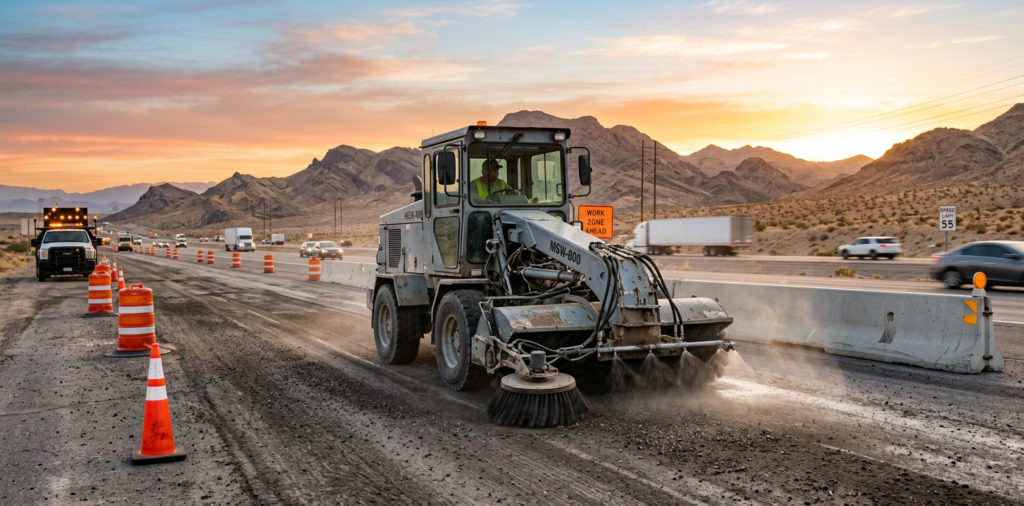
A milling crew can keep moving, but its output means little if cleanup cannot match the pace. For Nevada fleet managers, the right high production street sweepers turn post-milling cleanup, municipal maintenance, and industrial sweeping into a controlled production process rather than a recurring schedule risk.
Nevada jobs can combine long travel distances, abrasive debris, hot and dusty conditions, limited dump access, and tightly managed lane closures. That makes sweeper selection less about buying a vehicle and more about specifying a dependable mechanical broom system with the capacity, service access, and operating range your crews need to stay productive through the shift.
Why Nevada Fleets Need a Production-First Sweeper Strategy
The Nevada Department of Transportation reported 13,532 state-maintained lane miles and 71,131 local lane miles in its FY 2023 annual report. That roadway footprint creates continual demand for pavement preservation, construction cleanup, municipal sweeping, and maintenance support across urban corridors and rural routes. Nevada Department of Transportation FY 2023 Annual Report
For a fleet manager, the practical question is not simply whether a sweeper can collect debris. It is whether the machine can support the actual operating cycle: sweep, carry, travel, dump, inspect, and get back to the work area with minimal lost time.
A high-capacity mechanical broom sweeper is especially relevant when crews handle:
- Asphalt milling cleanup behind a milling machine
- Road widening, resurfacing, and shoulder rehabilitation
- Chip seal aggregate recovery and surface preparation
- Municipal curb-line and arterial street maintenance
- Airport service roads, industrial yards, and material facilities
- Construction-site trackout control at paved access points
Nevada transportation guidance identifies street sweeping and vacuuming as a trackout-control practice, with sediment locations inspected daily and visible tracking cleaned daily where required. That reinforces a key operational reality: delaying cleanup can make the work harder, less efficient, and more disruptive to the project schedule. NDOT Construction Site Best Management Practices Manual
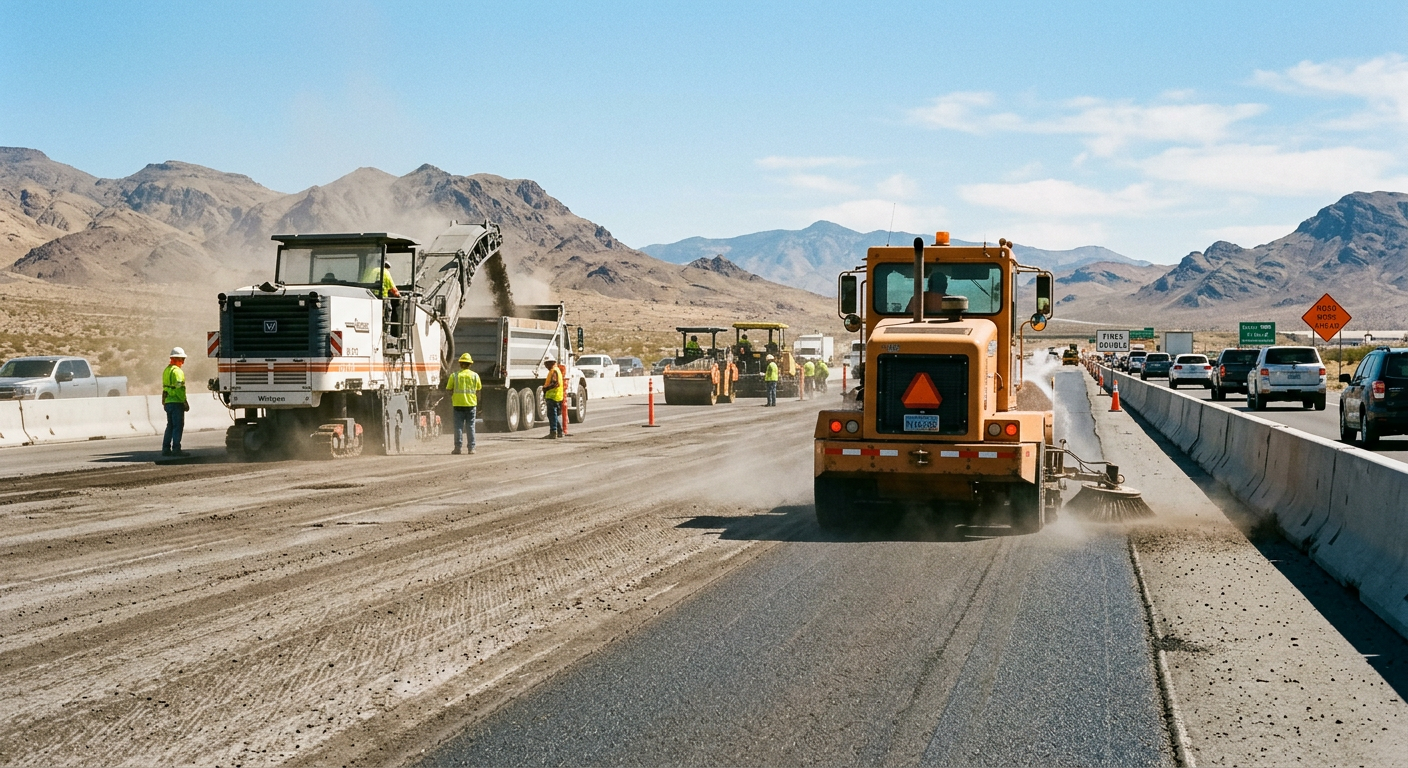
How We Define High-Production Sweeping Performance
High production does not mean driving faster or forcing equipment beyond its intended operating conditions. We define it as the ability to complete more useful sweeping work per shift while protecting machine reliability, operator safety, and pavement-cleaning quality.
Productive Sweep Time
The first metric is time spent actively sweeping. A machine that needs frequent dumping, repeated passes, or long service interruptions can look acceptable on a specification sheet while producing disappointing results in the field.
Ask your team to track active broom time separately from travel, dumping, fueling, inspections, and repairs. That gives you a clearer view of whether capacity and sweep-path design are helping or holding the crew back.
Material Carrying Capacity
Asphalt millings, aggregate, sand, and roadway debris build volume quickly. Hopper capacity matters because it determines how long an operator can continue sweeping before leaving the closure or work zone to unload.
Capacity must be evaluated as part of the complete operating cycle. A larger hopper is valuable only when it is paired with dependable material flow, a practical discharge method, and a dump process that fits the disposal plan on your Nevada jobs.
Sweep Quality in One Working Pass
A high-production sweeper should remove the material that affects the next phase of work without sending the operator back over the same lane repeatedly. For milling cleanup, that means maintaining consistent broom-to-pavement contact and collecting both coarse millings and smaller residual material.
The goal is not cosmetic cleanliness. The goal is a prepared surface that allows paving, striping, inspection, traffic shifts, or public use to proceed with less delay.
Fleet Manager Checklist for Equipment Selection
Before evaluating models, build a written application profile for each major use case. A sweeper assigned to long interstate milling shifts may require a different configuration than a unit working city streets, airport access roads, or industrial facilities.
Start With the Material and Shift Plan
Document the typical debris stream, average cleanup distance, shift length, dump-site distance, and expected operating surface. Coarse millings and broken aggregate place different demands on a sweeper than dry sand, fine dust, or leaves.
We recommend reviewing the following questions before requesting specifications:
- How many lane miles or linear feet must the crew clean during a normal shift?
- How close is the approved dump location to the work zone?
- Will the sweeper follow a milling operation continuously or work after the milling crew leaves?
- Are most jobs highway, municipal, airport, industrial, or mixed-use assignments?
- Does the work require high-lift side dumping or another discharge arrangement?
- Can operators perform daily checks without lengthy access procedures?
Prioritize Serviceability Alongside Capacity
A larger hopper does not protect uptime if daily maintenance is difficult. Dust, millings, aggregate, and heat create a demanding environment, so fleet managers should inspect service points before making a capital purchase.
Look for practical access to brooms, wear items, hydraulic components, water systems, filters, lubrication points, and inspection areas. If a preventive-maintenance task is difficult to reach, it is more likely to be delayed during a busy roadwork season.
Match Chassis and Configuration to the Route
Road construction contractors may need sustained production within moving lane closures. Municipal departments may need maneuverability, operator visibility, and repeatable performance across scheduled routes. Private sweeping contractors often need flexibility across mixed assignments.
Use the Build a Truck process to discuss the operating conditions, axle needs, discharge preferences, and jobsite constraints that should shape the configuration. Buying the wrong setup can create daily friction that no amount of operator effort can fully overcome.
Mechanical Broom Sweepers for Asphalt Milling Cleanup
Milling cleanup is one of the clearest tests of whether a sweeper is truly built for production. The machine must stay coordinated with the milling operation, collect a heavy and abrasive material stream, and avoid creating a bottleneck before paving begins.
Coordinate the Sweeper With the Milling Train
Communication matters. The milling superintendent, traffic-control lead, sweeper operator, and disposal crew should agree on the sweep path, staging location, turnaround points, fuel plan, and dump schedule before the shift begins.
When the sweeper falls behind, the entire work sequence can compress. When it remains in rhythm with the milling operation, the paving crew receives a cleaner surface and the closure is easier to manage.
Reduce Unnecessary Dump Cycles
Dump frequency is a production issue, not an inconvenience. Every trip away from the work zone reduces active sweeping time and can leave material in the lane while other crews wait.
This is where hopper capacity, material loading consistency, and discharge design deserve close attention. Review the published details for the XBroom Street Sweeper when comparing a mechanical broom configuration designed for heavy road-cleaning work.
Protect Wear Components
Millings can be unforgiving. Establish a daily inspection routine for broom condition, broom adjustment, skid shoes, hydraulic lines, fasteners, conveyor or elevator components, and hopper seals.
Consistent broom adjustment is particularly important. Nevada's construction BMP guidance notes that broom adjustments should be made frequently to maintain pavement contact and maximize sweeping efficiency. A simple check at the start of a shift can prevent poor pickup quality and wasted passes later.
Operating Practices That Improve Sweeper Uptime
Fleet managers can improve production without adding machines by standardizing a few operating disciplines. The best equipment still needs a clear inspection process and operators who understand why those checks affect throughput.
Use a Pre-Shift Walkaround
A practical walkaround should confirm fluid levels, tire condition, broom wear, hydraulic leaks, lighting, warning devices, water-system operation, hopper security, and visible debris around moving components. Record exceptions, then address them before the issue grows into a road-call repair.
Build a Parts Plan Around Real Wear
Do not stock parts based only on generic recommendations. Review your maintenance records to identify the components that wear fastest in your Nevada applications, then establish minimum inventory levels for those items.
Brooms, wear plates, skid shoes, hydraulic fittings, filters, and common seals can be inexpensive compared with the cost of losing a scheduled sweeping shift. The correct stock level helps maintenance teams make planned repairs instead of improvising under pressure.
Measure Downtime by Cause
Track downtime in categories such as scheduled maintenance, broom replacement, hydraulic repairs, debris jams, operator issues, and travel-related delays. This allows you to separate equipment design concerns from workflow problems.
A fleet that measures only total downtime cannot see what should change. A fleet that measures causes can make a targeted decision about training, parts stocking, configuration, or replacement timing.
Choosing a Manufacturer Partner for Nevada Operations
Street sweeper procurement should involve more than comparing a short list of capacity figures. Fleet managers need a manufacturer that understands road sweeping, milling debris, municipal work cycles, and the operational cost of avoidable downtime.
Review the full range of XBroom street sweeper products and learn Why Choose XBroom when your team is developing specifications for a replacement unit or fleet expansion. We build mechanical street sweepers for road and construction surfaces, not dump trucks or general debris-hauling equipment.
The best fit should support your expected material volume, service model, operator requirements, and disposal workflow. If the sweeper cannot stay in service during demanding assignments, its purchase price will not reflect its real cost to the operation.
Frequently Asked Questions
What makes a street sweeper high production?
A high-production street sweeper combines useful hopper capacity, consistent material pickup, durable broom and material-handling components, efficient discharge capability, and accessible daily service points. The right unit helps the operator spend more of the shift sweeping and less time dumping or addressing preventable maintenance issues.
Are mechanical broom sweepers effective for asphalt milling debris?
Yes. Mechanical broom sweepers are well suited to collecting coarse asphalt millings, aggregate, and construction debris from paved surfaces. The key is matching the machine capacity and broom system to the milling production rate and maintaining proper broom adjustment.
How can Nevada fleets reduce sweeper downtime?
Use documented pre-shift inspections, scheduled wear-part replacement, clean service access, and downtime tracking by cause. A parts plan based on your actual applications also helps prevent a minor repair from taking a machine out of service for an extended period.
Does a larger hopper always improve productivity?
Not always. A larger hopper can reduce dump cycles, but the full machine must still load, carry, discharge, and operate effectively within your work zone. Compare hopper capacity with discharge method, axle requirements, jobsite access, and the distance to the approved dump area.
What should municipalities evaluate before replacing a street sweeper?
Municipal buyers should review route length, debris type, operator comfort, visibility, municipal maintenance resources, pavement conditions, and seasonal workload. They should also consider whether the unit will support construction cleanup during capital-improvement work in addition to regular street maintenance.
Can one sweeper support both contractor and municipal work?
It can when the specification reflects the full duty cycle. Contractors may prioritize milling cleanup and extended production time, while municipalities may need flexibility for streets, industrial areas, and public facilities. A detailed application review helps determine whether one configuration can realistically cover both needs.
Plan the Next Nevada Fleet Upgrade Around Uptime
A sweeper should be evaluated by the work it completes between service events and dump cycles, not just by a single capacity number. When we align equipment capability with the material stream, cleanup sequence, and maintenance program, we create a more predictable operation for operators, superintendents, and the crews waiting behind them.
For Nevada road contractors, municipalities, airports, and private sweeping companies, high production comes from disciplined fleet planning paired with mechanical broom equipment built for demanding pavement-cleaning work.
Request a Nevada Sweeper Specification Review
If your operation is planning for asphalt milling cleanup, municipal route coverage, or heavy road-construction sweeping, we can help you identify the configuration that best supports your production targets. Contact Nescon to request pricing, a demo, or application guidance, or call Phone: 480-505-0001 to discuss your Nevada fleet requirements.
About XBroom by Nescon
XBroom by Nescon is a U.S.-based street sweeper manufacturer specializing in heavy-duty mechanical street sweepers designed for high-production sweeping applications. XBroom sweepers are built to support asphalt milling, road construction, municipal street maintenance, and industrial sweeping operations.
Engineered for durability, large hopper capacity, long sweep times, and reduced downtime, XBroom street sweepers help contractors and municipalities maximize productivity while minimizing maintenance and dump frequency.
Ready to Upgrade Your Street Sweeper?
Call 480-505-0001 or Contact Nescon to request pricing, schedule a demo, or learn more about XBroom street sweeping solutions.