
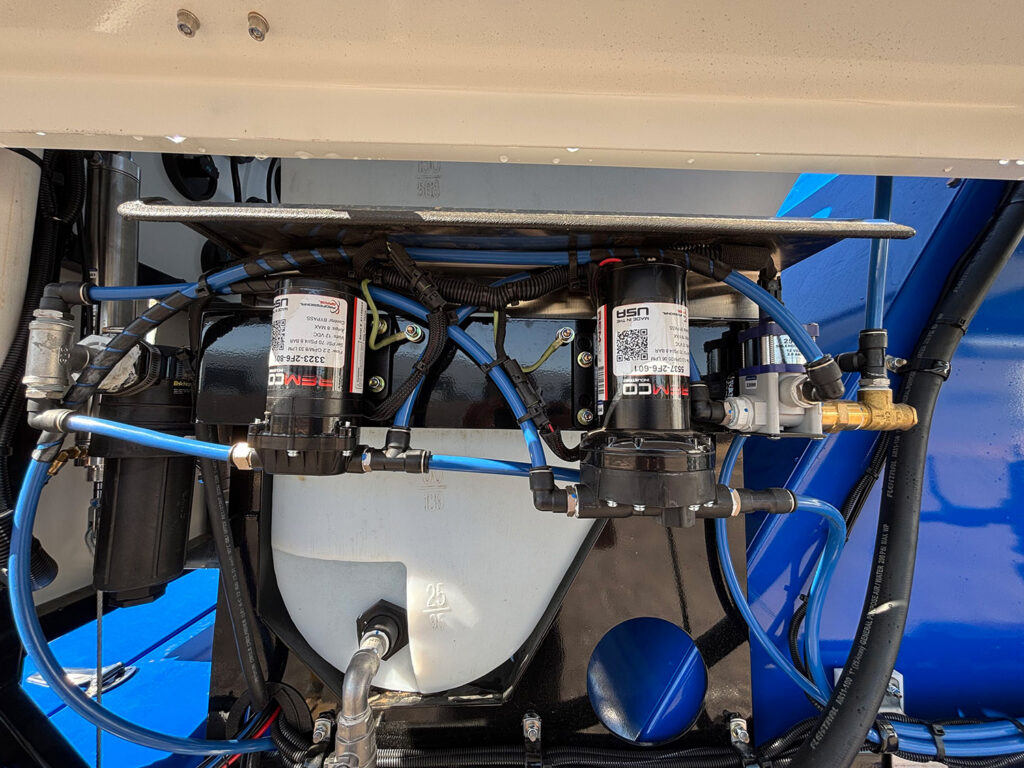
Colorado roadwork schedules leave little room for a sweeper that needs repeated shop attention, frequent dump trips, or extra cleanup passes. For fleet managers and procurement teams, buying durable street sweepers means evaluating the full duty cycle, from abrasive asphalt millings and chip seal aggregate to mountain weather, jobsite travel, and technician access.
A low purchase price can become a costly decision when a machine cannot maintain production during a restricted lane closure. Colorado’s 2025 transportation workload illustrates the stakes: the Colorado Department of Transportation reported completing 99 projects, improving 555 miles of rural roads, and paying more than $961 million to contractors that year. CDOT’s 2025 Project Accomplishments Report also documents resurfacing, milling, paving, and chip seal activity across the state, all of which create demanding sweeping assignments.
Start With the Colorado Duty Cycle, Not a Generic Spec
The right procurement specification begins with the material, hours, travel pattern, and disposal constraints your crew actually faces. A sweeper assigned to long asphalt milling shifts near Denver or Colorado Springs has different requirements than one handling municipal curb routes, airport pavement, or seasonal chip seal work on rural roads.
Colorado fleets should document several representative assignments before issuing an RFQ. Include the material mix, average sweep hours, expected broom width, road travel between sites, dump-site distance, elevation changes, water availability, and seasonal temperature range. This gives manufacturers a usable picture of production needs instead of a vague request for a “heavy-duty” sweeper.
Specify for the hardest routine assignment
Write requirements around the toughest job the machine will regularly perform, not the lightest route on the calendar. Asphalt millings, coarse aggregate, packed shoulder debris, and winter sand are abrasive materials that place sustained demand on brooms, dirt shoes, conveyors or elevators, hydraulic components, hopper structure, and controls.
That does not mean every buyer needs the largest configuration available. It means the machine must match the normal high-load assignment without becoming the bottleneck in the paving or maintenance operation. Review the available XBroom street sweeper products alongside actual route and production data before narrowing the specification.
Measure Productivity in Sweep Time, Not Just Hopper Size
Hopper capacity matters because it can reduce interruptions, but capacity by itself does not guarantee higher output. Procurement teams should compare usable material capacity, material flow, dump-cycle time, payload limitations, and the distance to approved disposal sites.
For a milling contractor, every unplanned dump run can pull the sweeper away from the milling train and leave debris in the work zone. For a municipal department, short routes and nearby disposal may make maneuverability, broom control, and operator visibility more important than maximum hopper volume. The best procurement decision ties capacity to how long crews can keep sweeping productively.
| Procurement Measure | What We Recommend Measuring | Why It Protects Uptime |
|---|---|---|
| Material profile | Millings, sand, aggregate, leaves | Matches broom and hopper demands |
| Usable capacity | Productive time between dumps | Limits non-sweeping travel |
| Broom system | Width, adjustment, wear access | Supports consistent pickup |
| Service access | Daily checks and wear parts | Reduces repair delays |
| Acceptance test | Actual jobsite material | Confirms field performance |
Require a field-based acceptance test
A brochure cannot show whether a sweeper will maintain pickup quality in dense millings or irregular aggregate. Add an acceptance test that reflects a real Colorado application, such as cleaning a milled lane, sweeping chip seal excess, or recovering sand and debris from a municipal arterial.
Define what the demonstration must show: target sweep width, residual material after a pass, time between dumps, operator control adjustments, and access to daily inspection points. Procurement teams should ask the same questions of every manufacturer so the comparison remains fair.
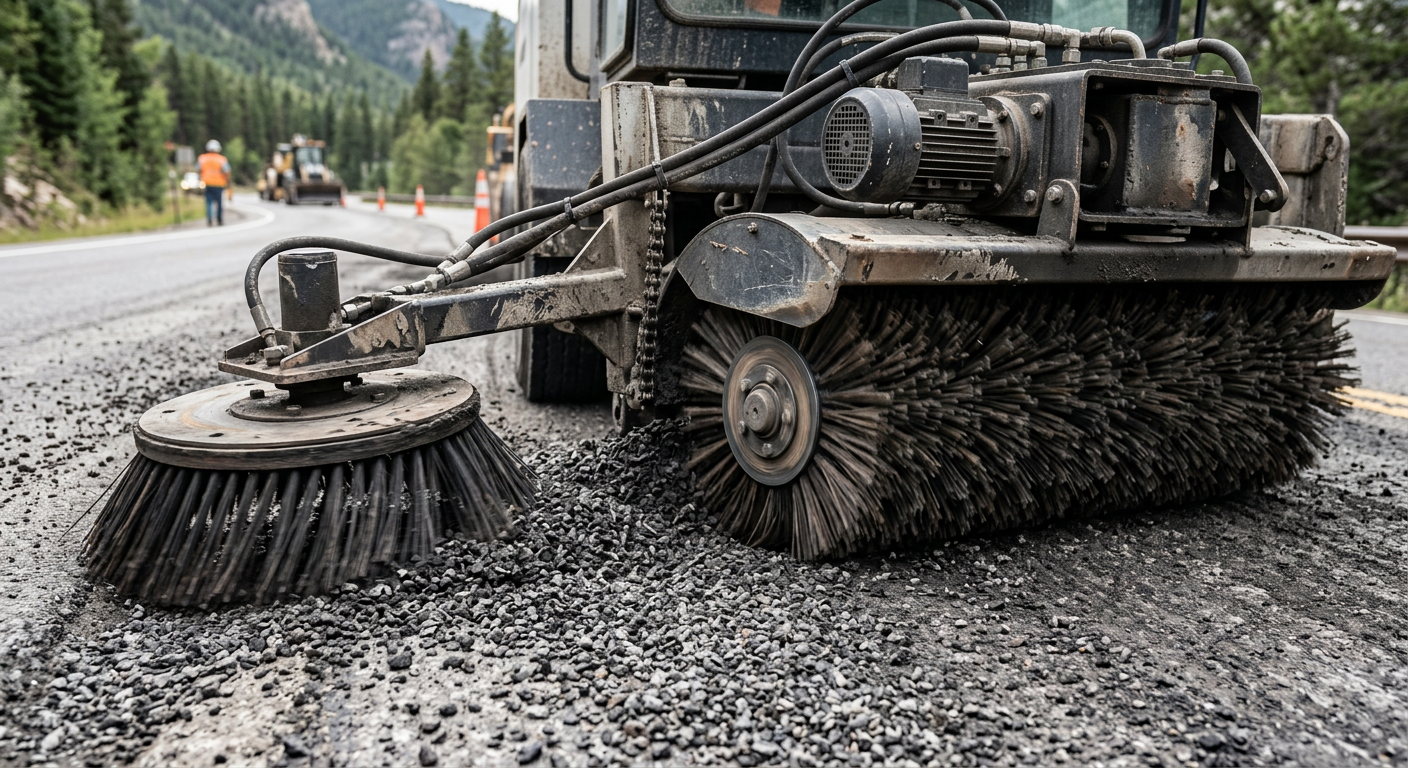
Build Durability Requirements Into the RFQ
Durability should be written as measurable equipment and service requirements, not as a marketing adjective. The RFQ should identify the wear points, maintenance access, operator controls, and support expectations that determine whether the sweeper can stay in service.
Focus on wear components and service access
Ask manufacturers to explain the components most exposed to abrasive material and how technicians inspect or replace them. Look closely at broom adjustment, gutter broom hardware, dirt shoes, hydraulic hoses and fittings, hopper structure, water-system filtration, and access panels.
A durable mechanical broom sweeper makes routine checks straightforward. If a technician must remove multiple components to inspect a common wear area, minor maintenance can become deferred maintenance. That delay often appears later as lost production during a scheduled work window.
Review controls with the operator team
Operators need clear controls for broom pressure, broom speed, water use, and sweeping adjustments. Include experienced operators in the review process, especially if the fleet must move from municipal route work to construction cleanup during the same week.
The XBroom Street Sweeper is designed as a heavy-duty mechanical broom platform for road construction, asphalt milling cleanup, municipal maintenance, and industrial sweeping. We recommend comparing its configuration and service-access approach with the daily demands documented by operators and shop personnel.
Colorado Procurement Must Account for Weather and Terrain
Colorado conditions make seasonal readiness and road travel part of equipment procurement. High-elevation cold, freeze-thaw cycles, windblown material, steep grades, and long distances between jobs can expose weak maintenance plans quickly.
Include cold-weather operating requirements in the specification when the sweeper will work outside the main paving season. Confirm water-system winterization procedures, drainage points, hose protection, storage expectations, and the process for returning the machine to service after freezing conditions.
Terrain also affects how a sweeper performs across a shift. For mountainous or rural assignments, evaluate chassis suitability, braking and safety equipment, loaded travel considerations, visibility, and the logistics of reaching a disposal location. CDOT’s report notes that the state improved 555 rural road miles in 2025, reinforcing the importance of fleets that can support geographically dispersed resurfacing and preservation work.
Compare Total Ownership Cost With Consistent Assumptions
The best buying decision compares each option over its working life, not only at delivery. A lower bid can lose its advantage if it produces more dump cycles, consumes wear parts faster, requires more shop labor, or spends too much time out of service.
Build a cost model that uses the same assumptions for every machine under consideration:
- Expected annual sweep hours and years of ownership
- Average material load and estimated dumps per shift
- Operator labor during dump travel and downtime
- Wear-part intervals and replacement labor
- Fuel, water, and preventive-maintenance needs
- Warranty scope, exclusions, and response process
- Parts availability and service access in Colorado
- Residual value and expected replacement timing
The objective is not to pretend that every operating cost can be predicted exactly. It is to reveal where one configuration may create a higher operational burden than another. For an active road contractor, one missed overnight paving window can carry a much larger cost than a modest difference in acquisition price.
Use Day Eight Procurement Discipline: Validate the Entire Work Cycle
On day eight of a recurring procurement review, we recommend moving past the machine specification and validating the work cycle around it. The sweeper does not operate in isolation. It works between milling, paving, traffic control, dump sites, water fills, maintenance checks, and operator handoffs.
Map one full shift from dispatch to return-to-yard. Record when the sweeper begins work, how many productive sweeping hours it delivers, how often it dumps, where it fills water, and what inspection or adjustment steps occur during the shift. Then ask where production is lost.
This exercise often exposes a better procurement question. Instead of asking, “Which sweeper has the lowest price?” ask, “Which machine and support plan allow us to complete this shift with the fewest avoidable interruptions?” That question directs attention to hopper usability, maintenance access, parts planning, controls, and manufacturer responsiveness.
When you are ready to define chassis, production, and jobsite requirements, use Build a Truck to begin a more structured configuration discussion. For manufacturer background and heavy-duty sweeping priorities, review Why Choose XBroom.
Questions Colorado Buyers Ask Before Ordering
How do we know if a mechanical broom sweeper is right for asphalt millings?
A mechanical broom sweeper is often a strong fit when the work involves dense, abrasive millings, loose aggregate, and high-volume road debris. Confirm the broom system, material-transfer path, hopper capacity, and wear-component access against your actual milling production.
Should we buy a new sweeper or continue renting?
Ownership can make sense when sweep hours are consistent, dispatch control matters, and the work schedule cannot tolerate rental availability constraints. Renting may suit short-term peak demand, but compare transport, familiarization, availability, and project-delay exposure before relying on it for recurring work.
What should a street sweeper warranty review include?
Review the duration, covered components, exclusions, required maintenance records, labor coverage, and process for obtaining service or parts. Ask how warranty support works when the unit is assigned to a remote Colorado jobsite.
How much hopper capacity do we need?
The correct capacity depends on material density, legal payload limits, travel distance to disposal, and production targets. Request a recommendation based on representative debris loads rather than selecting a capacity number without route data.
Can one sweeper handle municipal routes and road-construction cleanup?
It can, provided the configuration fits the heavier assignment and the fleet plans for adjustments in broom settings, water use, route logistics, and maintenance. A machine selected only for light litter and curb debris may not hold up under sustained milling cleanup.
What should be included in a Colorado sweeper RFQ?
Include duty cycle, debris type, sweep width, hopper and water requirements, safety equipment, chassis preferences, warranty terms, operator training, parts support, delivery timing, and field acceptance criteria. Require each supplier to identify exclusions and recommended maintenance intervals.
Put Production Requirements Ahead of Purchase Price
Colorado procurement teams get better long-term results when they make uptime, serviceability, and productive sweep time non-negotiable evaluation criteria. The right sweeper should support the real work cycle, handle the normal material stream, and keep crews moving through milling cleanup, municipal routes, chip seal support, and industrial assignments.
We encourage buyers to bring operators, maintenance personnel, and project supervision into the decision early. Their operational detail turns a generic equipment purchase into a street sweeping investment built around fewer disruptions and more reliable production.
Discuss a Colorado Sweeper Configuration With Our Team
We build mechanical broom sweepers for demanding road and construction applications, and we can help translate your work cycle into a purchase specification. Review the equipment options, then contact Nescon about a Colorado street sweeper configuration or call Phone: 480-505-0001 to request pricing, schedule a demo, or discuss a quote.
About XBroom by Nescon
XBroom by Nescon is a U.S.-based street sweeper manufacturer specializing in heavy-duty mechanical street sweepers designed for high-production sweeping applications. XBroom sweepers are built to support asphalt milling, road construction, municipal street maintenance, and industrial sweeping operations.
Engineered for durability, large hopper capacity, long sweep times, and reduced downtime, XBroom street sweepers help contractors and municipalities maximize productivity while minimizing maintenance and dump frequency.
Ready to Upgrade Your Street Sweeper?
Call 480-505-0001 or Contact Nescon to request pricing, schedule a demo, or learn more about XBroom street sweeping solutions.