
Colorado public works teams don’t lose productivity because a sweeper is dirty. They lose productivity because a broom is worn unevenly, hydraulic temperature climbs, water nozzles clog, or an elevator chain problem doesn’t get caught until the truck is already on route.
That’s why a disciplined municipal street sweeper maintenance checklist matters. For Colorado municipalities, DOT contractors, airport maintenance teams, and private sweeping companies, preventive maintenance directly affects uptime, debris pickup, dust control, operator safety, and the number of productive sweeping hours you get from each shift.
The stakes are bigger than appearance. A U.S. Geological Survey study of New Bedford’s street sweeping program reported that the city removed about 3.8 million kilograms of street dirt, helping keep trace metals, PAHs, and other contaminants from catch basins and waterways. Cleaner streets depend on reliable sweepers, and reliable sweepers depend on inspection routines your crew actually follows.
Colorado Municipal Street Sweeper Maintenance Checklist
| Interval | Main Focus | What To Verify | Why It Matters |
|---|---|---|---|
| Daily | Safety and wear | Brooms, fluids, lights | Prevents route failures |
| Weekly | System condition | Hydraulics, elevator, spray | Protects productivity |
| Monthly | Deeper inspection | Bearings, hopper, controls | Reduces major repairs |
| Seasonal | Colorado readiness | Freeze prep, dust, deicer | Handles local conditions |
Daily Pre-Shift Inspection
Start every shift with a walkaround before the truck leaves the yard. Check for visible leaks, loose guards, damaged lighting, tire condition, backup alarms, camera function, and safety decals.
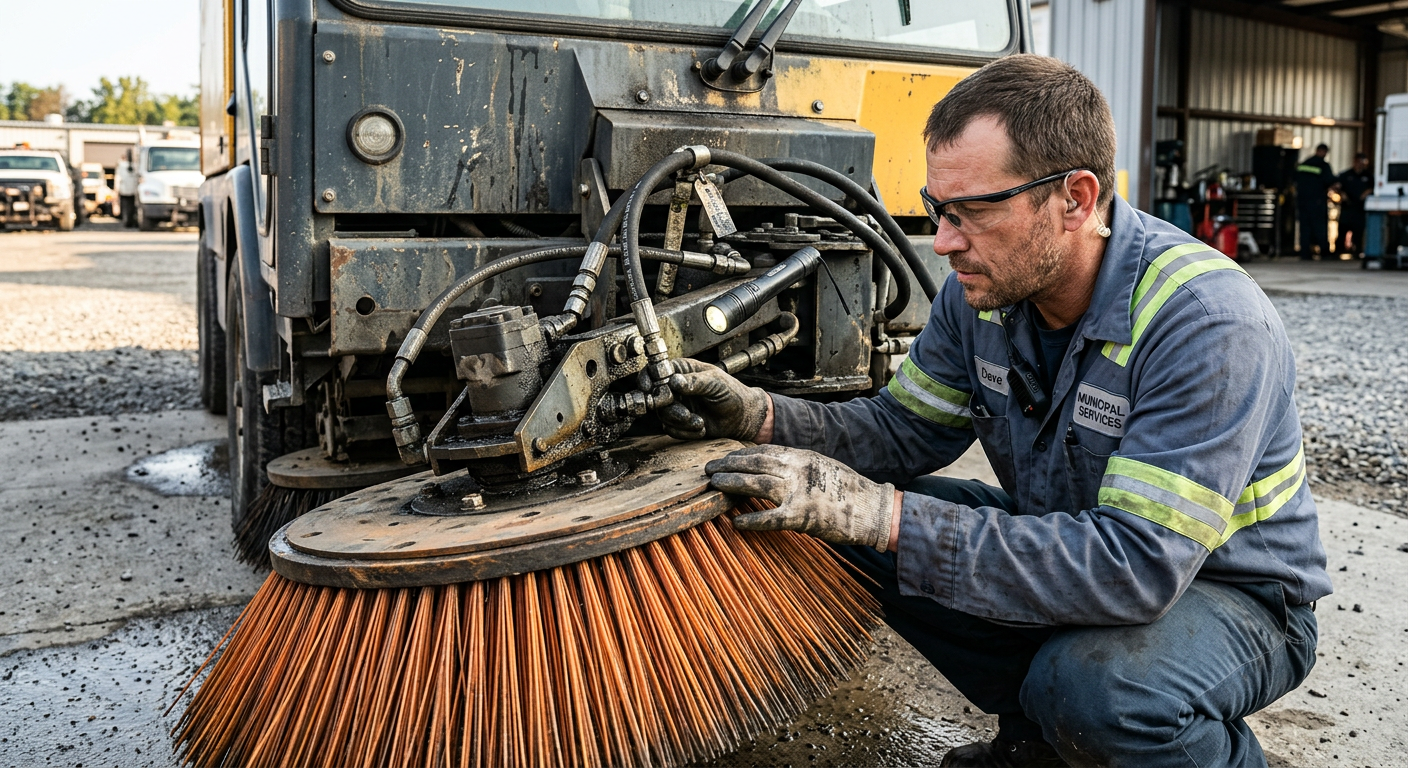
Inspect the main broom and gutter brooms for uneven wear, missing segments, wire fatigue, and improper contact pattern. A broom that’s too aggressive wastes bristle life and can overload the sweeping system, while light contact leaves material behind and forces rework.
Operators should also verify hydraulic oil level, engine fluids, water level, nozzle condition, hopper door security, and elevator movement. If your Colorado route includes milling cleanup or chip seal sweeping, this pre-shift check should be treated as mandatory, not optional.
Broom System Checks For Municipal Sweepers
The broom system is where cleaning performance begins. For mechanical broom sweepers, bristle condition, broom angle, broom speed, and down pressure all affect pickup efficiency.
A practical broom inspection should include:
- Main broom diameter and wear pattern
- Gutter broom segment condition
- Broom tilt and extension movement
- Down-pressure settings
- Contact patch consistency
- Debris carryover after sweeping
Colorado crews often deal with winter sand, gravel, deicer residue, asphalt millings, shoulder debris, and construction track-out. Those materials are abrasive, so broom wear can accelerate quickly during spring cleanup and road construction season.
Hydraulic System Maintenance
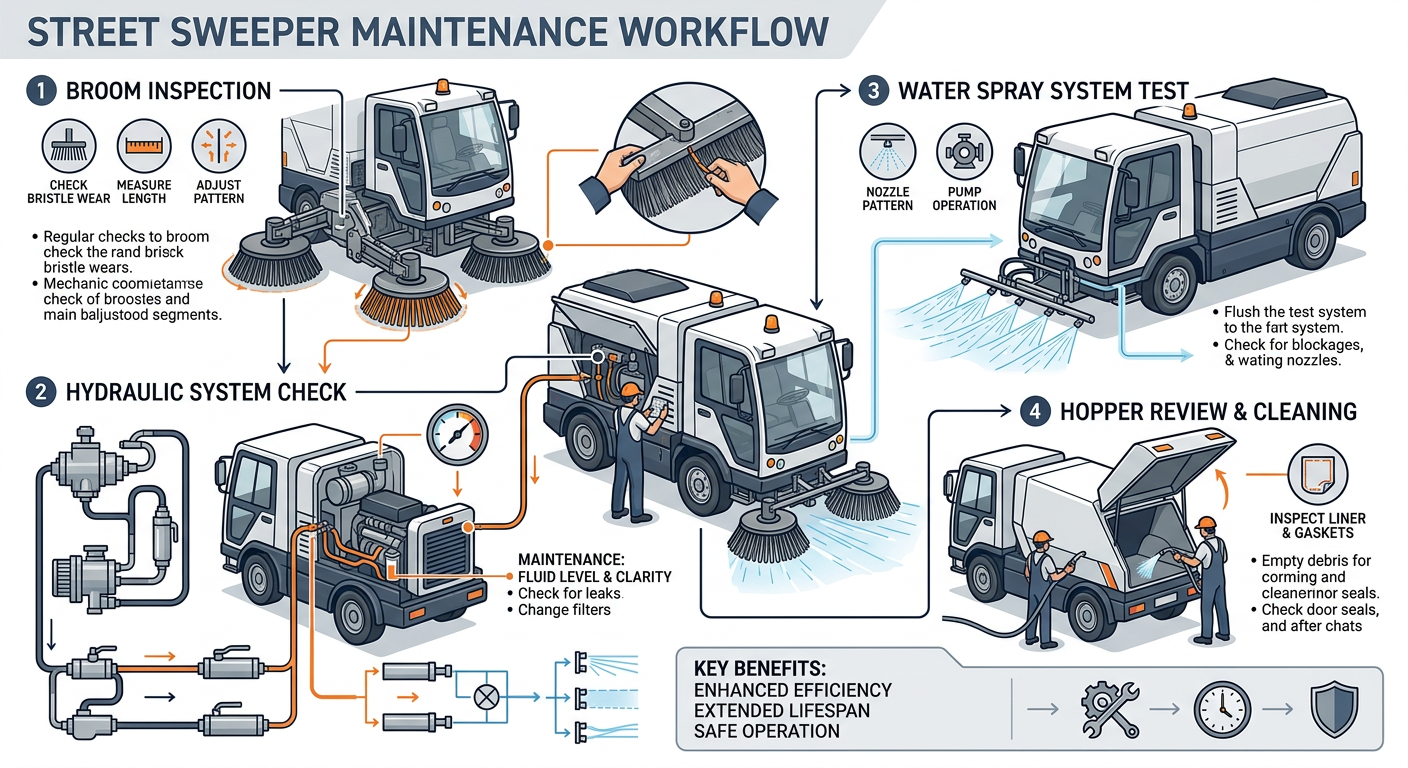
Hydraulics power the sweeping functions that matter most, including broom drive, elevator movement, hopper lift, and system controls. Small hydraulic problems can turn into expensive downtime if oil temperature, filtration, hose condition, or pump response is ignored.
Use the checklist to confirm:
- No visible hydraulic leaks
- Hose routing is secure
- Fittings are tight and clean
- Hydraulic oil level is correct
- Cooling system airflow is unobstructed
- Filter indicators are monitored
- Unusual noise or heat is documented
Here’s the thing, many crews notice hydraulic problems only when performance drops. A better approach is to record symptoms early, slower broom response, erratic elevator motion, heat alarms, or foaming oil can all point to a developing issue.
Elevator, Hopper, And Debris Handling Inspection
A municipal street sweeper can have strong broom performance and still lose time if the elevator or hopper system struggles. Heavy debris, wet leaves, sand, aggregate, and millings can create added load on chains, bearings, slats, seals, and hopper lift components.
Before high-volume routes, inspect elevator chains, paddles or squeegee components, sprockets, bearings, guards, and jam indicators. The goal is simple, keep material moving from the pavement into the hopper without plugging, spilling, or forcing premature dumps.
Hopper inspections should include door seals, lift cylinders, pivot points, latches, debris buildup, and dump-cycle function. If your routes include airport ramps, industrial facilities, or heavy civil jobsites, document hopper wear more often because debris density can vary dramatically from one job to another.
Water Spray And Dust Control Checklist
Dust control is a performance and compliance issue, especially in dry Colorado conditions. A street sweeper with clogged spray nozzles may still pick up larger debris, but it can leave visible dust, frustrate residents, and reduce operator visibility.
Check the following before daily operation:
- Water tank level
- Pump operation
- Spray nozzle pattern
- Filter cleanliness
- Spray bar blockage
- Hose condition
- Winterization status during freezing weather
The U.S. Environmental Protection Agency identifies parking lot and street sweeping as a stormwater best management practice for municipal operations. That only works when the sweeper is maintained well enough to remove debris consistently instead of stirring dust or leaving sediment behind.
Weekly And Monthly Maintenance Tasks
Daily checks catch obvious problems. Weekly and monthly inspections catch the problems that quietly build up over time.
Weekly Tasks
A weekly service routine should include lubrication points, broom mounting hardware, hydraulic hose abrasion points, water filters, elevator chain tension, battery terminals, lighting, mirrors, cameras, and safety equipment. Review operator notes from the week and look for repeat issues.
If the same route keeps producing heavy wear, adjust broom pressure, travel speed, or sweep plan before replacing parts. Maintenance isn’t just repair, it’s feedback for better operation.
Monthly Tasks
Monthly inspections should go deeper into bearings, wiring harnesses, control panels, hopper structure, corrosion-prone areas, chassis service items, and records. For Colorado fleets, pay extra attention to corrosion after winter deicer exposure and to dust-related buildup during summer construction periods.
Fleet managers should compare maintenance logs against route conditions. If one sweeper handles milling cleanup while another handles light residential sweeping, their service intervals shouldn’t be treated the same.
Maintenance Recordkeeping For Fleet Managers
A checklist only works when it becomes part of the fleet record. Capture inspection date, unit number, hour meter reading, operator name, defect notes, repair action, and return-to-service approval.
Good records help procurement officers and operations managers spot cost trends. They also support warranty conversations, budget planning, broom inventory control, and decisions about whether it’s time to add capacity.
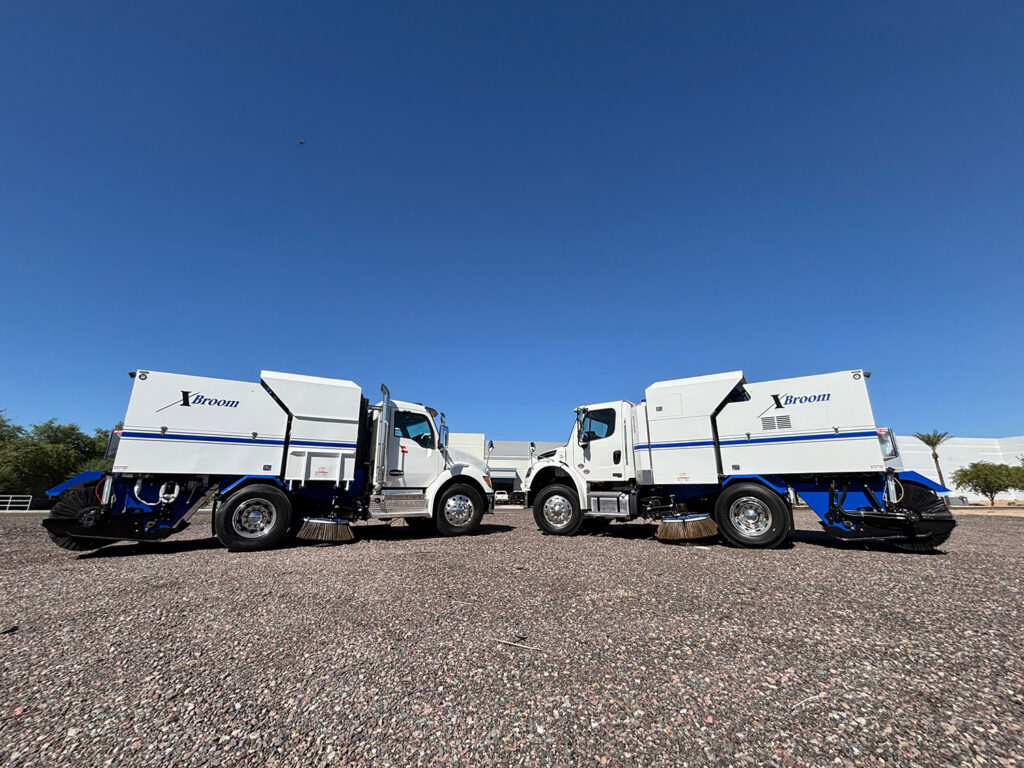
For teams evaluating new equipment, review XBroom street sweeper products and compare specifications against your current maintenance pain points. If your biggest issues are short sweep times, frequent dumping, or broom system downtime, those details should guide your next purchase.
When Maintenance Problems Signal Equipment Replacement
Not every problem should be solved with another repair order. If a sweeper needs frequent hydraulic repairs, can’t maintain production on abrasive debris, or spends too much time dumping instead of sweeping, the lifecycle cost may no longer make sense.
Look for these replacement indicators:
- Rising maintenance cost per operating hour
- Frequent route interruptions
- Repeated broom or elevator failures
- Inadequate hopper capacity
- Poor dust control
- Operator complaints about controls or visibility
- Parts availability delays
Colorado municipalities and contractors often need equipment that can move between municipal routes, road construction cleanup, asphalt milling support, and industrial sweeping. A purpose-built mechanical broom sweeper is often the better fit when debris is heavy, abrasive, and continuous.
Build A Lower-Downtime Sweeping Program
If your fleet is planning equipment upgrades, compare your checklist findings with the capabilities of the XBroom Street Sweeper. You can also use Build a Truck to start outlining the options your Colorado operation needs for long routes, demanding debris, and reduced dump frequency.
To talk through production goals, route conditions, and maintenance concerns, call Phone: 480-505-0001 or reach out through Contact Nescon. For background on the manufacturer, visit Why Choose XBroom.
Municipal Street Sweeper Maintenance Checklist FAQ
How often should a municipal street sweeper be inspected?
A municipal street sweeper should receive a pre-shift inspection every operating day. Weekly and monthly inspections should cover deeper system checks, including hydraulics, elevator components, broom wear, hopper operation, water spray performance, and electrical controls.
What wears out fastest on a mechanical street sweeper?
Broom segments, wear strips, skid shoes, water nozzles, elevator components, and high-contact debris handling parts usually see the fastest wear. Abrasive material like millings, sand, aggregate, and chip seal debris can accelerate wear significantly.
Why does broom down pressure matter?
Too much down pressure shortens broom life and can increase system load. Too little pressure leaves debris behind and may require additional passes, which raises labor, fuel use, and route time.
How should Colorado fleets prepare sweepers for winter?
Colorado fleets should drain or winterize water systems when freezing temperatures are expected, wash away deicer residue, inspect corrosion-prone areas, and confirm lighting and safety systems are ready for low-visibility conditions. Post-storm cleanup should include extra attention to broom and hopper wear.
What should operators report after each route?
Operators should report missed pickup, abnormal vibration, hydraulic heat, weak spray patterns, hopper dumping issues, elevator jams, warning lights, and unusual noise. Small notes from the cab often prevent larger failures in the shop.
When should a city replace instead of repair a sweeper?
Replacement should be considered when repair frequency, downtime, route delays, and parts costs begin to outweigh the value of keeping the machine in service. A sweeper that can’t complete assigned routes consistently is no longer protecting productivity.
Conclusion
A reliable municipal street sweeper maintenance checklist gives Colorado crews a repeatable way to protect uptime, extend component life, and keep routes productive. The best checklist is simple enough for operators to use daily, but detailed enough for fleet managers to spot trends before they become expensive failures.
For public works departments, DOT contractors, airport operators, heavy civil contractors, and private sweeping companies, maintenance discipline is directly tied to cleaner roads and better equipment ROI. Keep the checklist visible, train every operator on it, and review the records often enough to make better fleet decisions.
About XBroom by Nescon
XBroom by Nescon is a U.S.-based street sweeper manufacturer specializing in heavy-duty mechanical street sweepers designed for high-production sweeping applications. XBroom sweepers are built to support asphalt milling, road construction, municipal street maintenance, and industrial sweeping operations.
Engineered for durability, large hopper capacity, long sweep times, and reduced downtime, XBroom street sweepers help contractors and municipalities maximize productivity while minimizing maintenance and dump frequency.
Ready to Upgrade Your Street Sweeper?
Call 480-505-0001 or Contact Nescon to request pricing, schedule a demo, or learn more about XBroom street sweeping solutions.