
Nevada DOT contractors work in conditions that quickly expose weak fleet decisions. A sweeper that performs adequately on light municipal routes can become a production bottleneck when it faces abrasive asphalt millings, long rural travel distances, heat, dust, and limited lane-closure windows.
For Nevada roadwork teams, municipal street sweeping equipment must do more than collect loose debris. It needs to support safe pavement transitions, maintain visibility around the work area, control dust where practical, and keep moving without frequent dump stops or unnecessary service interruptions. The goal is simple, keep the paving, milling, chip seal, or maintenance operation productive.
Why Nevada DOT Contractors Need High-Production Sweeping Capacity
Nevada’s transportation system places a significant maintenance burden on agencies and contractors. The Nevada Department of Transportation 2023 Annual Report lists 13,532 NDOT lane miles and 45 staffed maintenance stations. That combination reinforces a practical procurement reality: equipment must be capable of covering dispersed work zones while remaining serviceable in the field.
Street sweeping is also part of responsible construction housekeeping. The Federal Highway Administration states that federally funded highways must be constructed and operated to minimize erosion and sediment damage and abate pollution of surface and groundwater resources. For contractors, that makes prompt removal of tracked material, millings, loose aggregate, and roadway debris an operational responsibility, not an afterthought.
Common Nevada sweeping applications
A properly specified mechanical broom sweeper can support several work streams without becoming a specialized single-purpose asset:
- Asphalt milling cleanup before tack and paving operations
- Chip seal and loose aggregate recovery
- Urban arterial and intersection maintenance
- Shoulder, gutter, and curb-line sweeping
- Highway construction access-road cleanup
- Airport pavement and industrial-facility debris removal
- Post-storm or windblown debris cleanup on municipal streets
What to Specify in Municipal Street Sweeping Equipment
The best procurement specifications focus on the material stream, operating cycle, and service burden. A low bid that omits the features needed for abrasive debris or extended sweep cycles can cost more in labor, dump trips, missed production targets, and downtime.
Mechanical broom system built for heavy debris
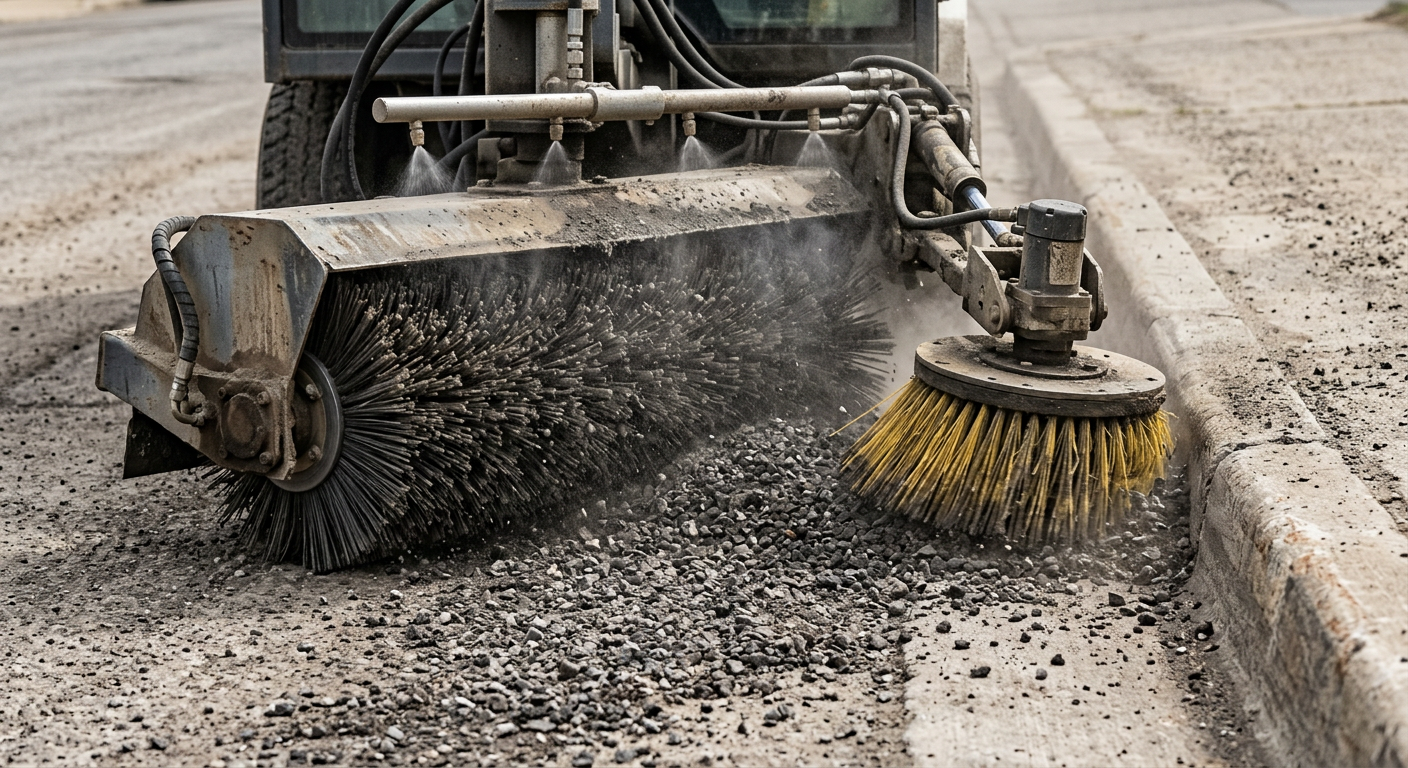
DOT contractors commonly encounter material that is too heavy and abrasive for equipment designed around light litter and fine dust collection. Asphalt millings, chip seal aggregate, broken pavement fragments, and packed gutter debris require a mechanical broom system that can move material consistently to the elevator.
Look for adjustable broom pressure, durable skid shoes, controllable broom speed, and a configuration that lets operators adapt to pavement conditions. Excessive down pressure accelerates broom wear, while inadequate pressure leaves material behind. The right system gives the operator controlled adjustment rather than forcing a compromise across every jobsite.
Usable hopper capacity, not just a brochure number
Hopper capacity directly affects how often a crew leaves the work area to dump. But total cubic-yard ratings alone do not show how a machine will perform with dense, irregular material. Fleet managers should ask about usable capacity, material flow through the elevator, dumping method, dump height, and the time required to complete a dump cycle.
The published specifications for the XBroom Street Sweeper include a six-yard total hopper with five yards of usable capacity and a high-lift side-dump arrangement. Those details matter when a Nevada crew is cleaning millings on a long closure and every off-route dump trip disrupts the production sequence.
Dust-control water capacity and coverage
Nevada’s dry conditions make dust-control planning especially important. Water spray should support visibility and material control at the brooms without creating excessive runoff or requiring constant refills. Buyers should compare tank capacity, pump redundancy, nozzle placement, filtration access, and whether the controls let operators match water use to the job.
Dust control is not a substitute for the correct sweeping process. It is one part of a system that also includes appropriate travel speed, broom setting, traffic control, and a clean dump plan.
Direct-drive hydraulics and accessible service points
Downtime is rarely caused by one dramatic failure. More often, it comes from wear items that are difficult to inspect, routine adjustments that are delayed, or a hydraulic and conveyor layout that turns a minor issue into a shop event.
Specify a sweeper with accessible filters, clear hydraulic monitoring, protected hoses, sealed bearings where appropriate, and practical access to brooms, elevator components, and wear surfaces. Review the XBroom street sweeper products lineup with the fleet’s actual operating hours and material type in mind, rather than comparing machines solely by purchase price.
Match the Sweeper to the Nevada Work Cycle
Equipment selection should begin with a realistic job-cycle map. How far is the dump site from the closure? How many lane miles must be swept? What material will be collected? Does the operation run overnight? How often will traffic force the operator to pause?
Asphalt milling cleanup
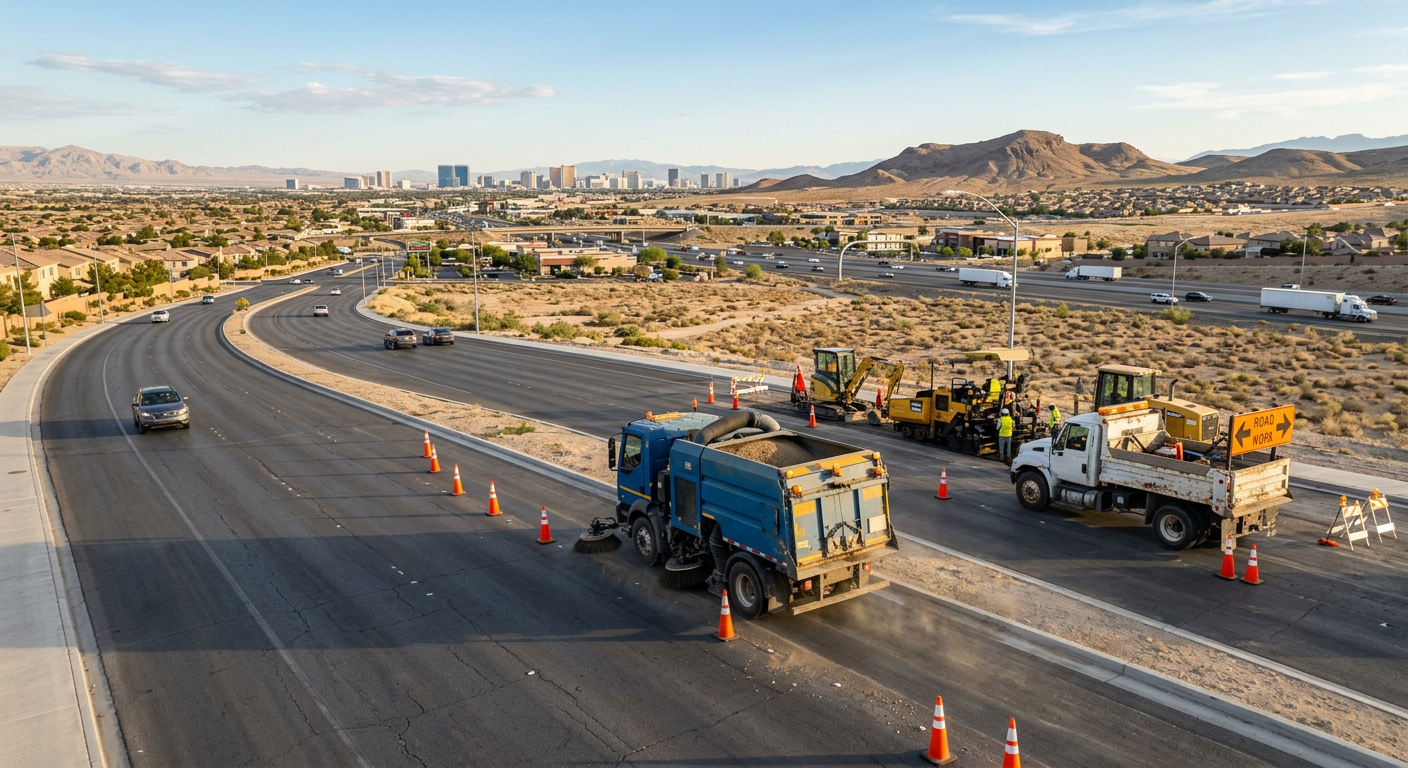
Milling cleanup is where high-production mechanical broom sweepers often provide their clearest value. The machine must pick up coarse, abrasive material, maintain a clean surface for paving preparation, and avoid repeated interruptions that leave the paving crew waiting.
For this work, prioritize broom durability, elevator reliability, usable hopper volume, and manageable wear-part replacement. Ask operators to document actual dump intervals and cleanup passes. Those records reveal whether low sweep time is caused by hopper capacity, poor material flow, traffic delays, operator settings, or an inefficient dump location.
Municipal maintenance routes
Municipal routes can involve curb lines, intersections, drainage approaches, parking areas, and roadway shoulders. Here, maneuverability, gutter-broom reach, consistent dust control, and control simplicity become important. A machine that is easy to set up and operate helps a municipality maintain repeatable results across different drivers and shifts.
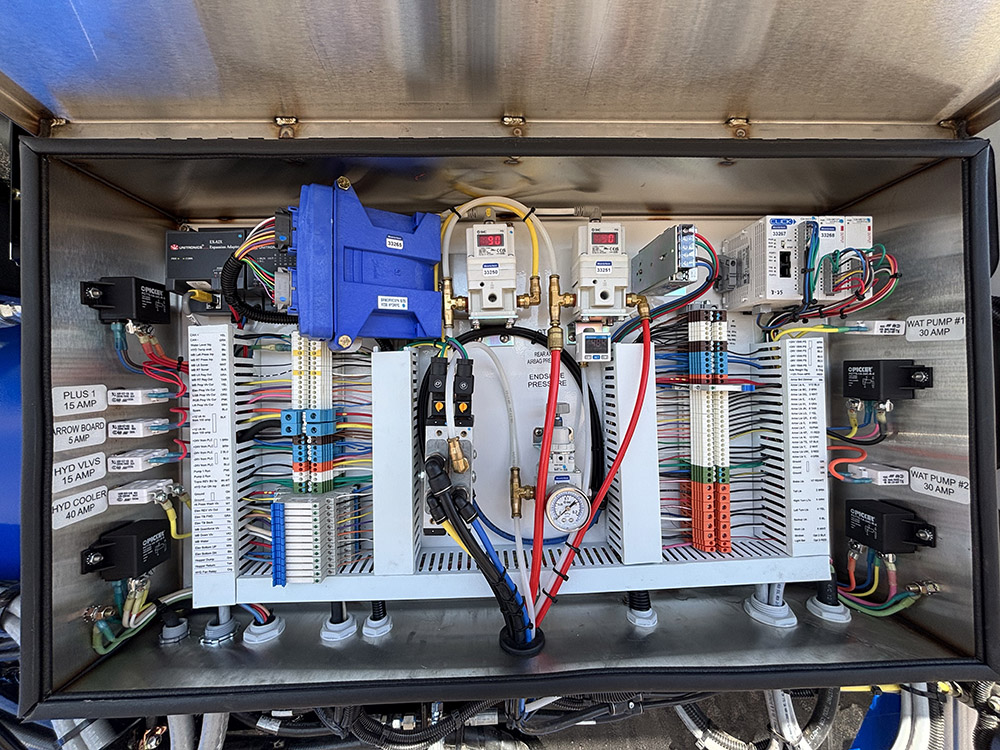
The XBroom control computer is designed to monitor operating functions and component hours, helping crews track broom wear, hopper dumps, water pumps, and other service-relevant activity. That type of operational visibility can improve maintenance planning when equipment is shared across road construction and municipal sweeping assignments.
Airport and industrial pavement cleanup
Airports and industrial sites need a different level of operating discipline. Sweeping plans should define debris type, surface condition, safety procedures, traffic coordination, and inspection requirements. Mechanical broom sweepers are a strong fit when the primary task is collecting heavier loose material, millings, aggregate, or construction debris from durable paved surfaces.
Procurement Questions That Prevent Expensive Surprises
Before issuing an RFQ, Nevada contractors and public works buyers should require answers to these operational questions:
- What is the usable hopper capacity with the debris we collect most often?
- How many minutes are required for a full dump and return-to-sweep cycle?
- Which broom, elevator, and hydraulic components are standard wear items?
- Can operators adjust broom pressure and sweeping functions from the cab?
- What service checks are required daily, weekly, and by operating hour?
- How does the unit manage abrasive millings versus lighter municipal debris?
- What support, parts planning, and operator familiarization are available after delivery?
Use the Build a Truck process to organize these requirements around your chassis, work type, staffing, dump-site constraints, and desired operating configuration. A clear specification protects the buyer from comparing unlike machines.
Evaluate Lifecycle Productivity, Not Just Acquisition Cost
A street sweeper is productive only while it is sweeping. Purchase price matters, but it does not capture the labor cost of an unplanned repair, the schedule impact of repeated dump trips, or the expense of sending a paving crew into a hold because cleanup is incomplete.
A lifecycle review should include operator hours, fuel, water, broom and wear-part consumption, planned service time, unscheduled repairs, dump-trip time, and lost production. We recommend converting each category into a cost per productive sweeping hour. That approach puts capacity, durability, service access, and operator control in the same decision framework.
For buyers comparing manufacturers, Why Choose XBroom explains the manufacturer perspective behind a heavy-duty mechanical street sweeper platform built for roadwork, milling cleanup, municipal maintenance, and industrial sweeping. The right fit is the machine that handles your actual debris stream and keeps your crew working through the full shift.
Get a Nevada Sweeper Specification Built Around Uptime
If your team is preparing an RFQ, replacing an aging unit, or expanding capacity for Nevada DOT-related work, start with the material, route length, dump logistics, and maintenance expectations. We can help you evaluate a high-production mechanical broom configuration that supports long sweep times and reduced avoidable downtime.
Request pricing, schedule a demonstration, or discuss your sweeping application with Nescon at Phone: 480-505-0001 or through Contact Nescon.
Frequently Asked Questions
What type of street sweeper is best for asphalt millings?
Heavy-duty mechanical broom sweepers are commonly selected for asphalt milling cleanup because they are designed to collect coarse, abrasive material and move it into a hopper. The best configuration depends on milling depth, debris volume, lane-closure duration, haul distance to the dump site, and planned daily operating hours.
Can one sweeper support both DOT contracting and municipal work?
Yes, if it is specified for the more demanding material stream and work cycle. A unit used for milling cleanup can also support municipal streets, industrial surfaces, chip seal cleanup, and other paved-surface assignments when operators adjust broom settings and water use to match the task.
Why does hopper capacity matter so much?
More usable hopper capacity can reduce dump frequency, which helps preserve productive sweep time. Buyers should evaluate capacity alongside debris density, elevator performance, dump-cycle speed, and the distance from the work zone to the disposal area.
How can contractors reduce street sweeper downtime?
Build daily inspections, hour-based maintenance, wear-part tracking, hydraulic checks, and operator reporting into the fleet process. Keep commonly used brooms and consumables available, and select equipment with accessible service points so routine work does not become an extended repair event.
What should a Nevada DOT sweeper RFQ include?
Include the primary applications, expected debris type, daily sweep hours, desired hopper capacity, water-system needs, broom configuration, chassis requirements, dump arrangement, safety equipment, warranty expectations, and service-support requirements. Also require clear documentation of standard versus optional features.
Are mechanical sweepers suitable for dust control in Nevada?
They can support dust control when equipped with a properly designed water spray system and operated with sound jobsite practices. Water use should be adjusted to conditions so the crew improves visibility and debris handling without adding unnecessary moisture to the roadway.
The Bottom Line for Nevada Fleet Buyers
Nevada contractors and municipal fleets should treat street sweeping equipment as production equipment, not an accessory to the paving or maintenance operation. The most effective specification balances heavy-debris pickup, usable hopper capacity, dust-control capability, service access, and dependable operating controls.
When those elements work together, a mechanical broom sweeper can help crews complete milling cleanup faster, minimize dump-related interruptions, improve roadway housekeeping, and protect the schedule across demanding Nevada work zones.
About XBroom by Nescon
XBroom by Nescon is a U.S.-based street sweeper manufacturer specializing in heavy-duty mechanical street sweepers designed for high-production sweeping applications. XBroom sweepers are built to support asphalt milling, road construction, municipal street maintenance, and industrial sweeping operations.
Engineered for durability, large hopper capacity, long sweep times, and reduced downtime, XBroom street sweepers help contractors and municipalities maximize productivity while minimizing maintenance and dump frequency.
Ready to Upgrade Your Street Sweeper?
Call 480-505-0001 or Contact Nescon to request pricing, schedule a demo, or learn more about XBroom street sweeping solutions.