
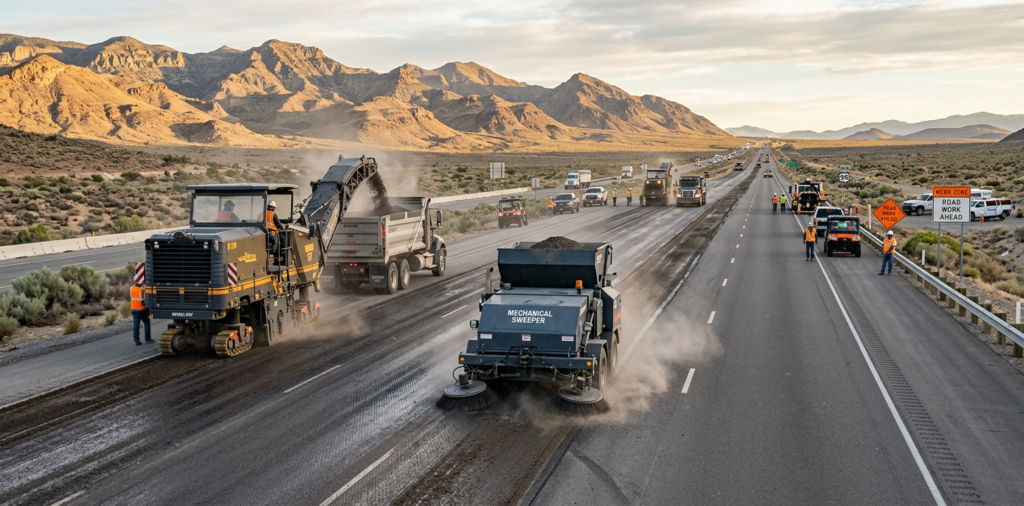
Nevada heavy civil work does not leave much room for a sweeper that falls behind. When milling, paving, chip seal, or municipal maintenance crews are working inside a limited lane closure, cleanup has to keep pace with the operation ahead of it.
For contractors managing heavy civil contractor sweeping solutions, the priority is not a machine that simply picks up debris. We need a high-production mechanical street sweeper that handles abrasive millings, loose aggregate, fines, and long shifts while protecting uptime across the entire paving or maintenance train.
Why Nevada Heavy Civil Projects Demand Production Sweeping
Nevada roadwork often requires crews to cover substantial distances, work in dry and dusty conditions, and maintain a clean surface before the next phase can begin. A mechanical broom sweeper must therefore be selected as a production asset, not as an afterthought assigned to final cleanup.
The Nevada Department of Transportation manages 13,810 lane miles of state roadway, and its 2025 pavement preservation report notes that 1,717 lane miles of pavement work were restored to acceptable condition through contracted repair work in fiscal years 2023 and 2024. That scale underscores why dependable milling cleanup, chip seal recovery, and roadway sweeping capacity matter to Nevada contractors and public agencies. Nevada State Highway Preservation Report (dot.nv.gov)
A sweeper that repeatedly stops for service, needs excessive dump trips, or cannot handle coarse material can create delays that affect milling production, tack application, paving, traffic control, and crew utilization. We look at the full work cycle, not just the sweeping pass.
Match the Sweeper to the Work, Not the Brochure
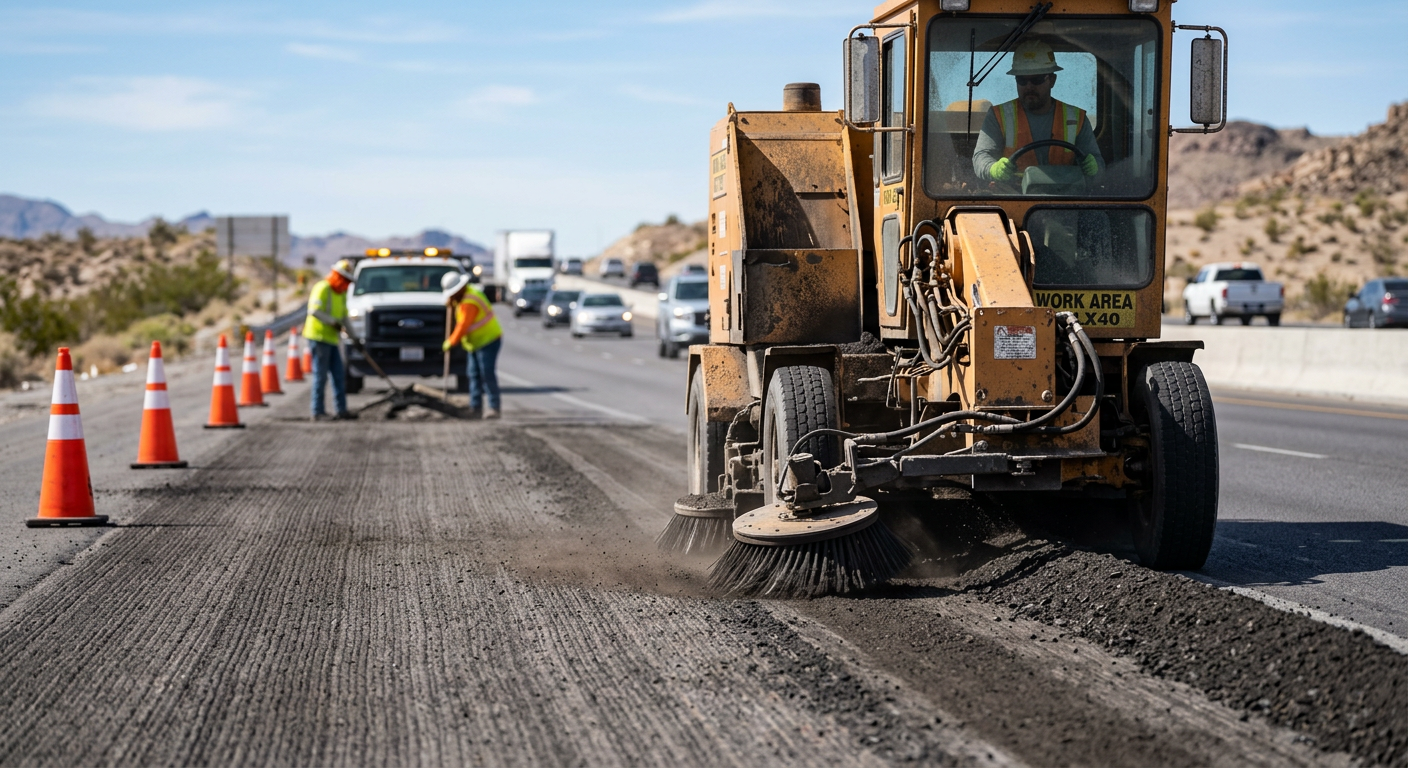
The right machine is the one that keeps material moving in the actual conditions your crew faces. For demanding Nevada work, that means comparing debris type, shift duration, dumping access, and maintenance exposure before comparing purchase price.
| Job condition | Sweeper requirement | Operational benefit |
|---|---|---|
| Asphalt milling | Heavy-duty broom and conveyor | Consistent millings pickup |
| Chip seal cleanup | Durable broom system | Better loose aggregate recovery |
| Long rural runs | Large usable hopper | Fewer dump interruptions |
| Urban lane closures | Reliable controls and service access | Less schedule risk |
| Municipal maintenance | Versatile mechanical sweeping | More productive fleet use |
Asphalt Milling Cleanup
Milling cleanup is among the most punishing uses for a street sweeper. Material is abrasive, volume can be high, and the machine has to work in sequence with the milling operation instead of creating a bottleneck behind it.
We recommend reviewing hopper capacity, conveyor durability, broom accessibility, hydraulic performance, and daily service points as a combined package. A high-capacity machine may reduce dump frequency, but that advantage is lost if the crew cannot maintain the broom system efficiently between shifts. Review the available heavy-duty mechanical street sweeper configuration with those production factors in mind.
Chip Seal and Aggregate Recovery
Chip seal projects produce loose aggregate that can affect traction, striping preparation, and the finished appearance of the roadway if it is not recovered effectively. Mechanical broom sweepers are well suited to this work because they are designed to collect heavier material rather than relying solely on airflow.
For Nevada contractors working rural corridors, the key question is how long the machine can stay in the work zone before it must leave to dump. Long sweep intervals can help keep traffic-control windows productive and reduce interruptions for the chip seal crew.
Municipal and Industrial Street Maintenance
Municipal departments need equipment that can move from construction-related cleanup to routine street sweeping, shoulder debris, industrial access roads, and post-event maintenance. Nevada DOT identifies sweeping as part of routine maintenance work used to keep highway facilities safe and usable. NDOT Maintenance and Asset Management (dot.nv.gov)
A heavy-duty mechanical sweeper gives public works and contractor fleets a practical tool for collecting sediment, loose road material, and jobsite debris without treating every assignment as a light-duty route-sweeping task.
Build Sweeping Into the Heavy Civil Production Train
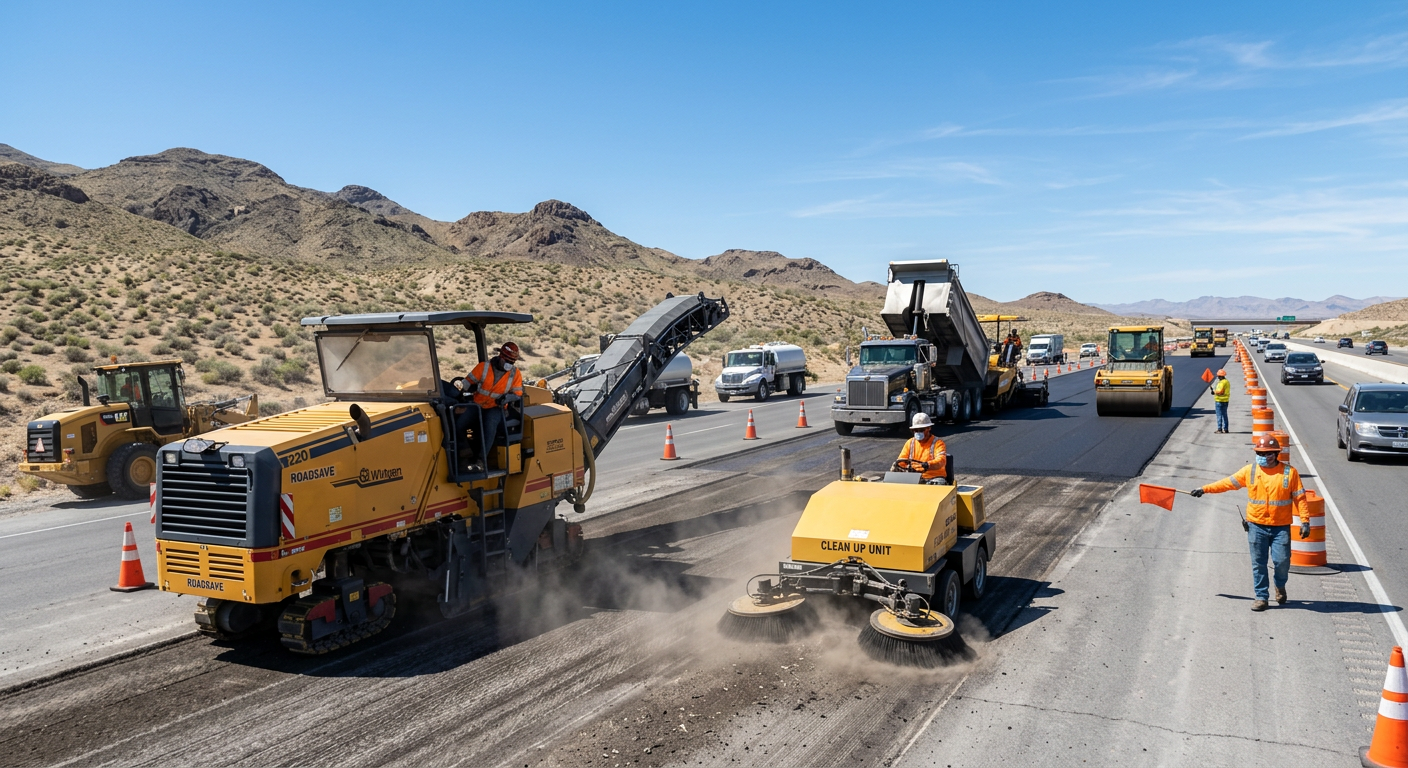
Sweeping performs best when the superintendent plans it as a linked production activity. Assigning the broom after the milling train has already moved too far ahead often increases travel time, leaves material exposed longer, and puts pressure on the paving schedule.
Define the Handoff Point
Before the shift starts, establish where milling ends, where sweeping begins, where the truck can safely dump, and where the clean surface must be ready for the next operation. This gives the sweeper operator a clear production target instead of a vague instruction to clean the road.
For wide or high-volume jobs, use a communication rhythm between the milling foreman, sweeper operator, and paving superintendent. A small delay communicated early is easier to manage than a gap that stops the entire operation.
Measure Productive Sweep Time
Productive time is the period spent collecting material in the work area. Dump travel, fueling, service work, repositioning, and waiting for access all reduce the percentage of the shift that the sweeper is contributing to production.
This is why hopper capacity and serviceability are buying criteria, not optional features. We encourage procurement teams to compare expected productive hours per shift, expected dump cycles, and likely maintenance interruptions. The lowest initial cost is not always the lowest cost per productive sweeping hour.
Specify for Uptime Before Price
A practical procurement review should include these questions:
- Can the broom system handle coarse millings and loose aggregate without premature wear?
- Is the hopper sized to support the planned work cycle and available dump locations?
- Can operators inspect and service key wear components without extended downtime?
- Does the manufacturer maintain parts availability and knowledgeable support?
- Can the unit be configured to meet your truck, axle, and fleet requirements?
For fleets that need application-specific configuration, our street sweeper truck build process helps align the equipment with worksite demands and fleet operating goals.
What We Recommend Nevada Buyers Prioritize
Heavy civil buyers should prioritize durable construction, usable capacity, service access, and manufacturer support. These factors directly affect the ability to keep a road project moving through long Nevada shifts.
A high-production mechanical sweeper should be evaluated on its ability to collect material consistently, remain in the work zone longer, and return to service quickly. That approach differs from buying a machine for occasional parking-lot debris or light-duty curb cleanup.
XBroom by Nescon is built around those heavy-use requirements. Our equipment is engineered for high-production sweeping applications, including milling cleanup, road construction, municipal street maintenance, and industrial work. You can compare available mechanical street sweeper product options and learn more about the manufacturing approach behind the equipment through Why Choose XBroom.
Frequently Asked Questions
Is a mechanical broom sweeper the right choice for asphalt millings?
Yes, a mechanical broom sweeper is a strong fit for asphalt milling cleanup because it is designed to collect heavy, abrasive debris and move it into a hopper. Buyers should still verify broom, conveyor, hopper, and hydraulic specifications against the expected material volume and shift length.
How does hopper capacity affect a road construction schedule?
A larger usable hopper can reduce the number of times the sweeper leaves the work zone to dump. Fewer dump cycles can improve continuity, particularly when the nearest approved disposal location is not close to the project.
Can one sweeper support both contractor and municipal work?
Yes, if the machine is specified for heavy-duty use and the applications are compatible. Many fleets use mechanical street sweepers for milling cleanup, chip seal recovery, municipal street maintenance, industrial roads, and construction-site cleanup.
What causes the most street sweeper downtime on demanding jobs?
Wear exposure, inadequate preventive maintenance, difficult access to service points, and delays obtaining replacement parts are common contributors. We recommend reviewing daily inspection requirements and parts support before making a purchase decision.
Should we buy based on purchase price or cost per hour?
Cost per productive sweeping hour is the more useful measure for heavy civil procurement. Purchase price matters, but a lower-priced unit may cost more over time if it produces shorter sweep intervals, more downtime, or higher maintenance demand.
How do Nevada dust conditions affect sweeper selection?
Dry, dusty conditions increase the importance of effective material pickup, reliable components, and disciplined maintenance. Crews should inspect brooms, conveyors, hydraulic systems, and filters at intervals suited to their work environment and manufacturer recommendations.
Keep the Cleanup Operation Moving
The strongest heavy civil contractor sweeping solutions are built around production continuity. When a mechanical broom sweeper is matched to the debris load, dump cycle, work-zone layout, and maintenance plan, it supports cleaner surfaces and fewer avoidable interruptions across the project.
For Nevada paving contractors, DOT teams, municipalities, airports, and industrial operators, the best decision is a sweeper that stays productive through demanding shifts. Start by defining the material, cycle time, service expectations, and uptime requirements that apply to your crews.
About XBroom by Nescon
XBroom by Nescon is a U.S.-based street sweeper manufacturer specializing in heavy-duty mechanical street sweepers designed for high-production sweeping applications. XBroom sweepers are built to support asphalt milling, road construction, municipal street maintenance, and industrial sweeping operations.
Engineered for durability, large hopper capacity, long sweep times, and reduced downtime, XBroom street sweepers help contractors and municipalities maximize productivity while minimizing maintenance and dump frequency.
Ready to Upgrade Your Street Sweeper?
Call 480-505-0001 or Contact Nescon to request pricing, schedule a demo, or learn more about XBroom street sweeping solutions.