
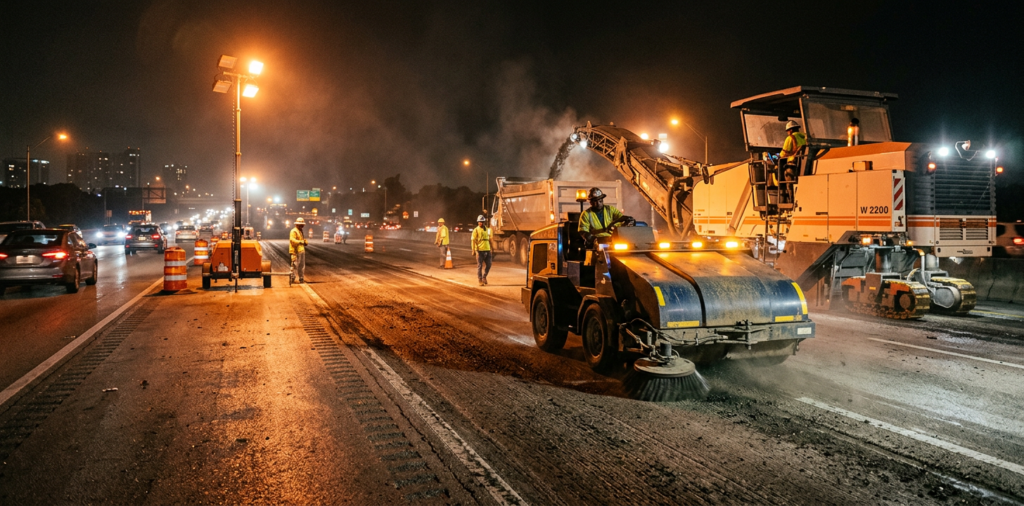
Florida paving crews cannot afford a sweeper that becomes the slow point in a lane closure. When milling debris builds up, the cleanup machine has to match the production pace, handle abrasive material, and stay in service through long overnight shifts.
For contractors comparing Schwarze A7000 alternatives, the best decision starts with job mix rather than brand familiarity. Regenerative-air sweepers can be effective when fine particulate pickup is the priority, but milling cleanup, chip seal work, and heavy construction debris often call for a different operating approach. We help Florida contractors and municipal fleets assess sweepers based on uptime, hopper capacity, maintenance access, material handling, and the number of productive hours they can maintain between dump cycles.
Why Florida Roadwork Crews Are Reassessing Sweeper Type
Florida road projects demand consistent cleanup because traffic volumes, weather exposure, and tight work windows leave little room for repeat passes. The sweeper must clear the lane efficiently after milling while supporting a safe, clean surface for follow-on paving operations.
The Florida Transportation Commission reports that the State Highway System contains 46,032 lane miles. In fiscal year 2024 to 2025, Florida also let 3,064.8 lane miles of resurfacing work to contract. That scale means contractors need equipment that can keep pace with recurring pavement preservation and rehabilitation work across the state. Florida Transportation Commission
The A7000, later identified by Schwarze as the A7 Tornado, is a regenerative-air sweeper platform. It can be a sensible fit for routes where fine debris control and broad surface cleaning are central requirements. But a Florida contractor working directly behind a cold planer faces a more demanding material stream that includes fines, coarse aggregate, and irregular asphalt fragments.
That distinction is why many buyers comparing Schwarze A7000 alternatives place mechanical broom sweepers on the same evaluation list. A mechanical design is purpose-built around direct broom contact, material transfer, and hopper loading for demanding cleanup work.
Mechanical Broom vs. Regenerative Air for Asphalt Millings
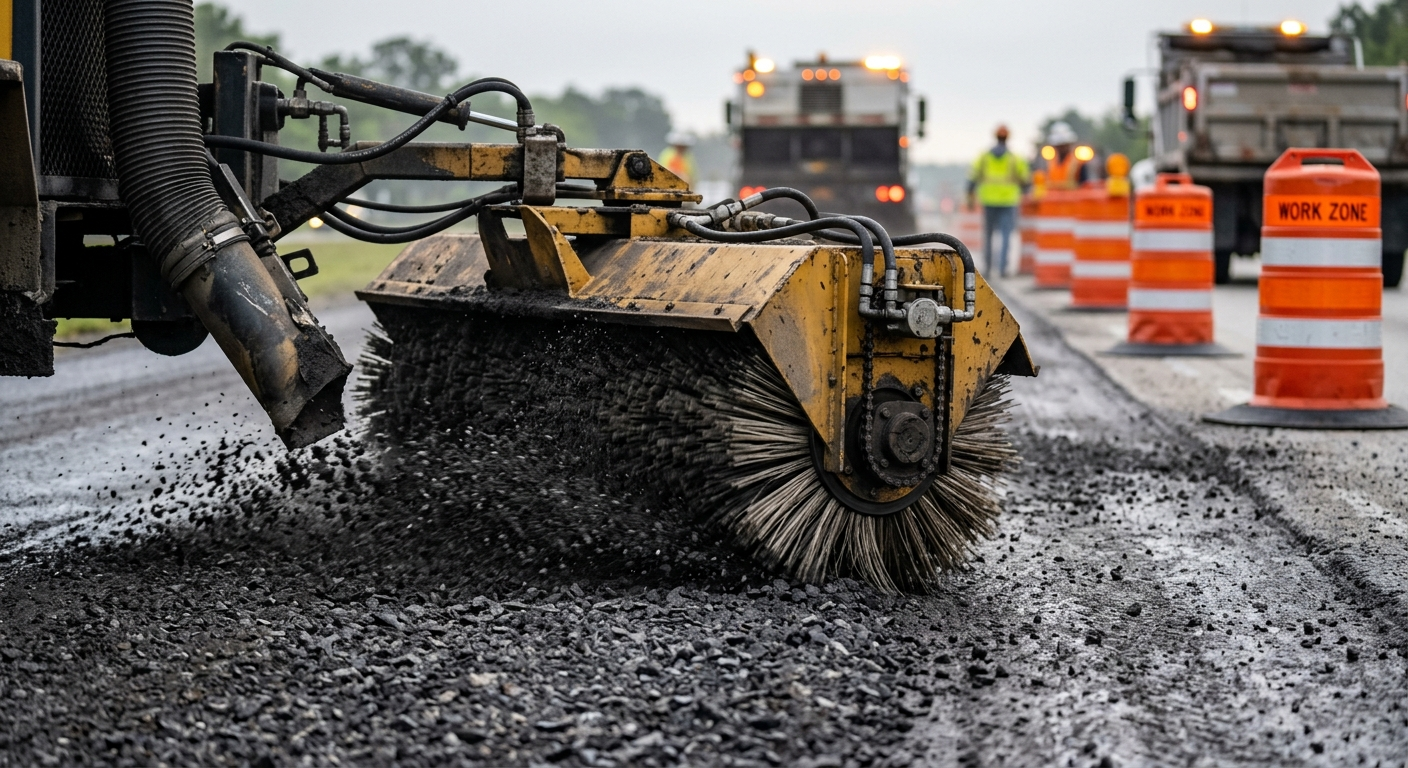
For heavy milling cleanup, a mechanical broom sweeper is often the more direct answer because it is designed to move dense, abrasive debris into a hopper. Regenerative-air machines remain valuable for fine material applications, but their operating strengths do not automatically make them the best replacement for every high-production milling crew.
| Evaluation Point | Regenerative-Air Sweeper | Mechanical Broom Sweeper |
|---|---|---|
| Primary strength | Fine debris and dust pickup | Heavy material pickup |
| Milling debris | Application dependent | Strong fit for coarse millings |
| Material transfer | Airflow-based collection | Broom and conveyor collection |
| Productive focus | Surface cleanliness | High-volume jobsite cleanup |
| Typical concern | Wear in abrasive applications | Broom and conveyor wear management |
When a Regenerative-Air Sweeper Still Fits
A regenerative-air machine may fit municipalities, airport operations, or contractors whose work is heavily weighted toward fine dust, sand, leaves, and routine street cleaning. Buyers should verify dust-control requirements, water system capacity, and the expected debris profile before committing to a particular design.
It may also be the right solution for a fleet that needs a broad-purpose municipal sweeper rather than a dedicated milling cleanup unit. The key is to avoid evaluating a truck only by its purchase price or advertised technology. The right question is how the unit will perform on the material that actually reaches the broom every shift.
Why Mechanical Brooms Fit Production Cleanup
Mechanical broom sweepers use direct surface contact to gather loose millings, aggregate, dirt, and construction debris. That makes them especially relevant for cold-planing cleanup, road widening, shoulder rehabilitation, utility restoration, and industrial yard sweeping.
For a contractor who must stay near the milling train, pickup consistency matters more than a specification sheet alone. A sweeper that loads effectively and runs longer between dumps can keep the paving sequence moving, reduce hand cleanup, and lower the risk of a delayed lane reopening.
Learn more about the role of mechanical equipment in demanding applications through common mechanical street sweeper questions from Nescon.
What to Compare Beyond the Schwarze A7000 Nameplate
The strongest Schwarze A7000 alternatives are not necessarily similar on paper. They are machines that match your fleet’s material volume, maintenance capabilities, operating environment, and production expectations.
Hopper Capacity and Dump Frequency
Hopper capacity directly affects active sweep time. A smaller hopper may be acceptable on short municipal routes with accessible disposal locations, but frequent dump trips can create a major production penalty on highway milling projects.
Measure the distance to the legal dump location, the likely material volume per shift, and the effect of every dump cycle on the milling and paving schedule. Longer sweep intervals can help a Florida crew maintain momentum during overnight work, where traffic-control windows are limited and labor costs are high.
Broom, Conveyor, and Wear-Point Access
A heavy-duty sweeper will encounter wear. The better ownership question is how quickly your crew can inspect, adjust, and replace wear components before a small issue becomes an unplanned outage.
Ask each manufacturer to walk through daily inspection points, broom adjustment procedures, hydraulic-service access, conveyor or elevator maintenance, and availability of common parts. A design that is straightforward to service helps protect uptime when abrasive material and high ambient temperatures add stress to the equipment.
Chassis Integration and Operator Controls
The body is only one part of the production system. The chassis, control layout, visibility, lighting, safety systems, and operator ergonomics all affect whether the sweeper can remain productive throughout a long shift.
Require a demo on the kind of material your crew actually handles. If possible, test the machine on coarse millings, uneven pavement transitions, and edge-line debris. A clean demonstration on a smooth parking lot is not the same as a real Florida resurfacing operation.
Manufacturer Support and Parts Planning
A sweeper that is down for a small component is not generating revenue or supporting your paving schedule. Evaluate where the manufacturer builds the equipment, how parts requests are handled, the expected response process, and what preventive-maintenance items should be stocked at your yard.
We recommend reviewing why contractors choose XBroom by Nescon when manufacturer responsiveness, rugged construction, and serviceability are important factors in the purchase decision.
A Florida Evaluation Process That Protects Uptime
A disciplined comparison process helps fleet managers separate useful specifications from features that will not improve production. Start with the work, then use it to define the machine.
Document the Material Stream
Record the type and volume of debris from a representative shift. Include millings, loose aggregate, fines, road-base material, mud, leaves, and other contamination that reaches the sweeper. A unit that handles light material well may not perform the same way when large, abrasive millings enter the workflow.
Track Productive Time, Not Just Engine Hours
Engine hours do not show how much of a shift was spent actively sweeping. Track loading time, dump travel, dump time, fuel stops, routine adjustments, and unscheduled service. This gives procurement teams a clearer view of total cost of ownership and the real impact of hopper size.
Define a Minimum Demo Standard
Ask manufacturers to demonstrate pickup on your material and at your normal working speed. The demo should also include gutter-line debris, pavement joints, turns, loading performance, dumping, and access to daily maintenance points.
For buyers seeking a purpose-built option for high-volume cleanup, review the capabilities of the heavy-duty XBroom Street Sweeper. It is designed for contractors and public agencies that need long sweep times, large debris loads, and reduced dump frequency in road construction work.
Applications Where a Heavy-Duty Alternative Makes Sense
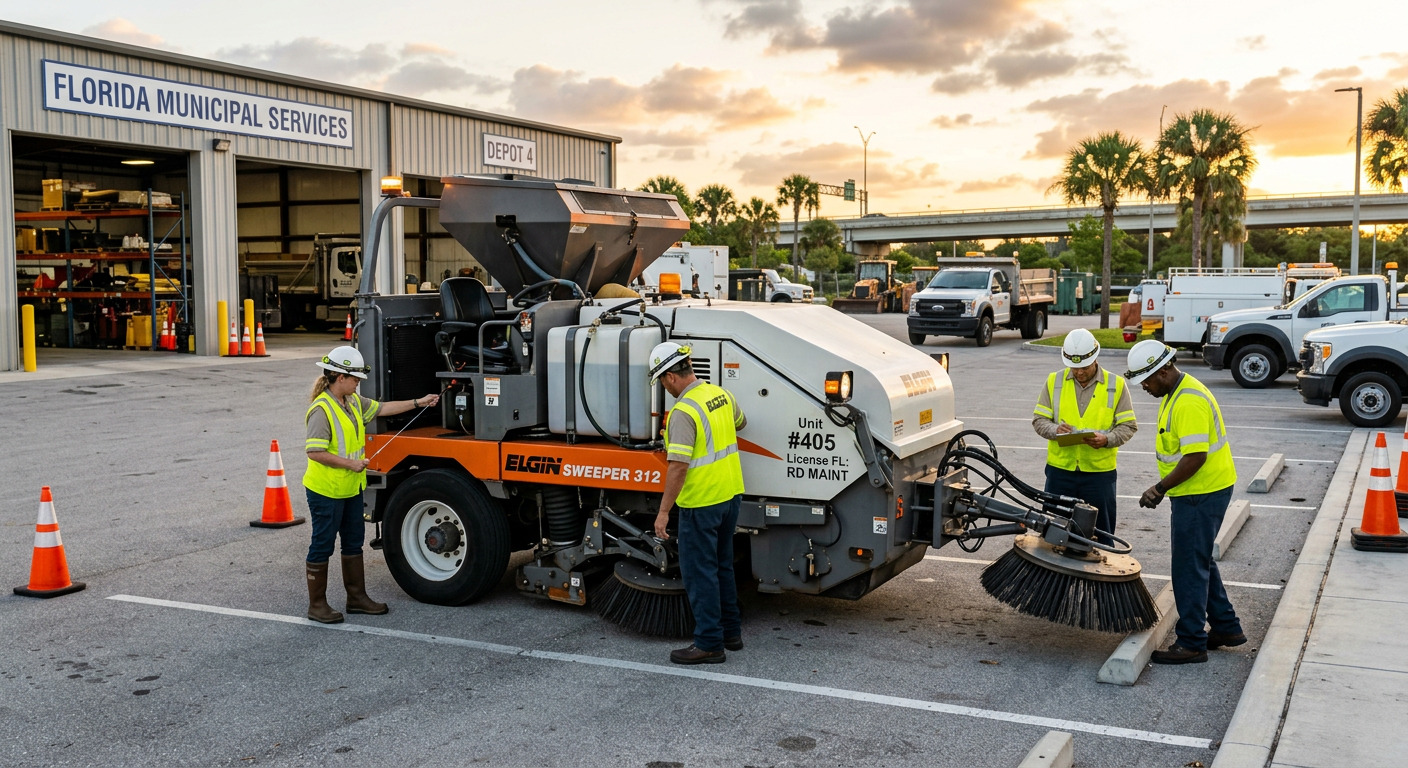
The correct sweeper configuration depends on the job, but mechanical broom designs deserve close consideration where debris volume and material size are high. Florida buyers commonly evaluate these machines for several production-critical applications.
Asphalt Milling Cleanup
Cold-planing operations create a variable mix of fines, broken asphalt, and aggregate. A broom sweeper that can stay behind the milling operation, load consistently, and avoid repeated dump interruptions helps keep paving crews on schedule.
Chip Seal and Surface Treatment Cleanup
Loose chips and residual aggregate need to be collected without adding unnecessary passes. A durable mechanical broom can support cleanup before traffic is returned to the treated roadway.
Municipal Street Maintenance
Cities and counties need reliable equipment for curb-line debris, storm-season cleanup, public works routes, and construction-related maintenance. The right configuration should balance route requirements with the ability to handle occasional heavier material.
Airports and Industrial Facilities
Airport service roads, industrial yards, ports, and distribution facilities can generate abrasive debris that demands dependable sweeping. Buyers should align the sweeper’s collection method and safety requirements with the facility’s operating standards.
Explore available configurations and applications through XBroom street sweeper products before narrowing the specification list.
Questions Florida Buyers Ask About Schwarze A7000 Alternatives
Is a mechanical broom sweeper better than a regenerative-air sweeper for milling cleanup?
A mechanical broom sweeper is often a stronger fit for high-volume milling debris because it is designed to collect coarse, abrasive material through direct broom action and material transfer. Regenerative-air sweepers can still be useful where fine particulate pickup is the primary need.
Can one sweeper handle both municipal routes and paving work?
It can, but the fleet should define which work is most demanding before buying. A compromise configuration may work for mixed-duty use, while a dedicated high-production broom sweeper is usually more appropriate for frequent milling and road-construction cleanup.
How important is hopper size for a Florida paving contractor?
It is very important when dump sites are distant or work windows are short. Larger usable capacity can reduce dump cycles, preserve active sweep time, and help the operator remain aligned with the milling train.
What should we inspect during a street sweeper demo?
Inspect pickup on real debris, broom contact, hopper loading, dump operation, operator visibility, control layout, service access, and the time required for daily checks. A demo should include the conditions your crews face, not only ideal pavement.
Are Schwarze A7000 alternatives only for large contractors?
No. Smaller paving companies and private sweeping operations can benefit when a heavy-duty machine reduces downtime and supports a broader range of paid work. The best choice depends on workload frequency, material volume, and planned utilization.
How do we request a sweeper configuration for our operation?
Start by sharing your primary applications, expected debris type, chassis preferences, geographic service area, and production goals. You can use Build a Truck to begin discussing a configuration aligned with your operation.
Put the Comparison to Work on Your Next Florida Project
The right replacement decision is less about finding a machine with a familiar feature list and more about selecting equipment that will stay productive on your toughest jobs. For Florida milling contractors, that means prioritizing material handling, hopper capacity, service access, and the ability to maintain consistent cleanup behind the paving operation.
If your fleet is evaluating Schwarze A7000 alternatives for road construction or municipal work, compare each option against actual shift data and a demanding field demo. That approach makes it easier to identify the sweeper that protects uptime instead of adding another production constraint.
Discuss a High-Production Sweeper Configuration
We build mechanical broom sweepers for demanding road cleanup, not dump trucks or general hauling equipment. To discuss a Florida configuration, request pricing, arrange a demo, or review your project requirements with our team through Contact Nescon or call Phone: 480-505-0001.
About XBroom by Nescon
XBroom by Nescon is a U.S.-based street sweeper manufacturer specializing in heavy-duty mechanical street sweepers designed for high-production sweeping applications. XBroom sweepers are built to support asphalt milling, road construction, municipal street maintenance, and industrial sweeping operations.
Engineered for durability, large hopper capacity, long sweep times, and reduced downtime, XBroom street sweepers help contractors and municipalities maximize productivity while minimizing maintenance and dump frequency.
Ready to Upgrade Your Street Sweeper?
Call 480-505-0001 or Contact Nescon to request pricing, schedule a demo, or learn more about XBroom street sweeping solutions.