
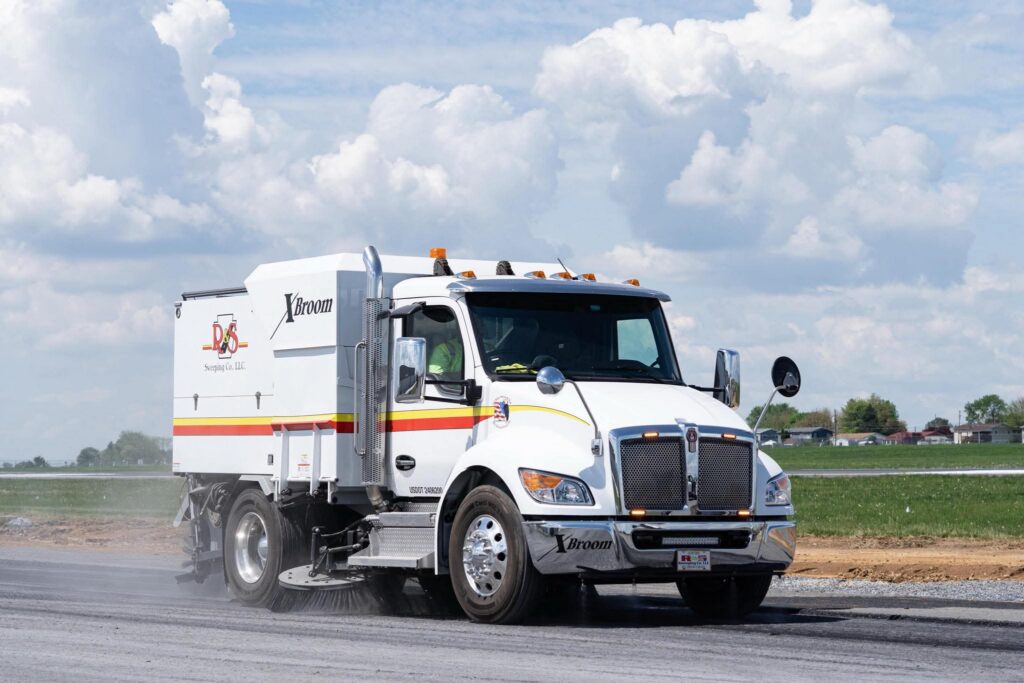
A clean roadway is not just a visual standard. For Georgia public works departments, contractors, and airport maintenance teams, it supports safer work zones, cleaner drainage paths, and a smoother transition from milling to paving. The best fleet decisions begin by treating municipal road sweeping equipment Georgia buyers need as production equipment, not a secondary cleanup expense.
We see the same challenge across Georgia, from dense metro routes to county resurfacing work. Crews need a sweeper that can manage abrasive millings, loose aggregate, roadside debris, and long route days without creating extra dump stops or maintenance delays.
What Georgia Buyers Should Compare First
| Buying Factor | Why It Matters in Georgia | What to Verify |
|---|---|---|
| Debris capacity | Less time spent unloading | Usable hopper volume and payload limits |
| Mechanical durability | Milling debris is abrasive | Broom, elevator, and wear-part design |
| Sweep time | Routes and paving windows are tight | Fuel, water, and hopper planning |
| Service access | Uptime protects schedules | Daily inspection and maintenance access |
| Application fit | Municipal and contractor work differs | Route, material, and dump-site profile |
Georgia’s stormwater programs make road and parking-area cleaning operationally relevant, not cosmetic. The Georgia Stormwater Management Manual identifies sediment, nutrients, oil and grease, heavy metals, and trash among the pollutants that sweeping and cleaning practices can help manage on paved surfaces.
For municipal operators, that means sweeping plans should connect route frequency, documented activity, disposal procedures, and equipment availability. A Georgia Environmental Protection Division permit-response document also states that the applicable program requires at least one mile of street maintenance and cleaning per reporting period, or an alternate litter-removal activity when sweeping is not performed. That is a minimum benchmark, not a practical production target for a busy city or county fleet. Georgia EPD
Match the Sweeper to the Actual Work
Municipal route sweeping and stormwater support
Municipal street maintenance involves more than curb lines. Crews may cover downtown corridors, residential collector roads, parking areas, special-event routes, drainage-prone streets, and facility yards in the same week. The right machine has to tolerate inconsistent debris loads while remaining simple enough for daily inspections and operator handoffs.
A mechanical broom sweeper is often a strong fit where leaves, grit, sand, gravel, road debris, and heavier material are common. It is especially valuable when the work calls for sustained cleanup rather than fine-dust collection alone. Georgia municipalities should map their high-load routes, drain-clogging locations, and post-event schedules before setting fleet capacity requirements.
Asphalt milling and resurfacing cleanup
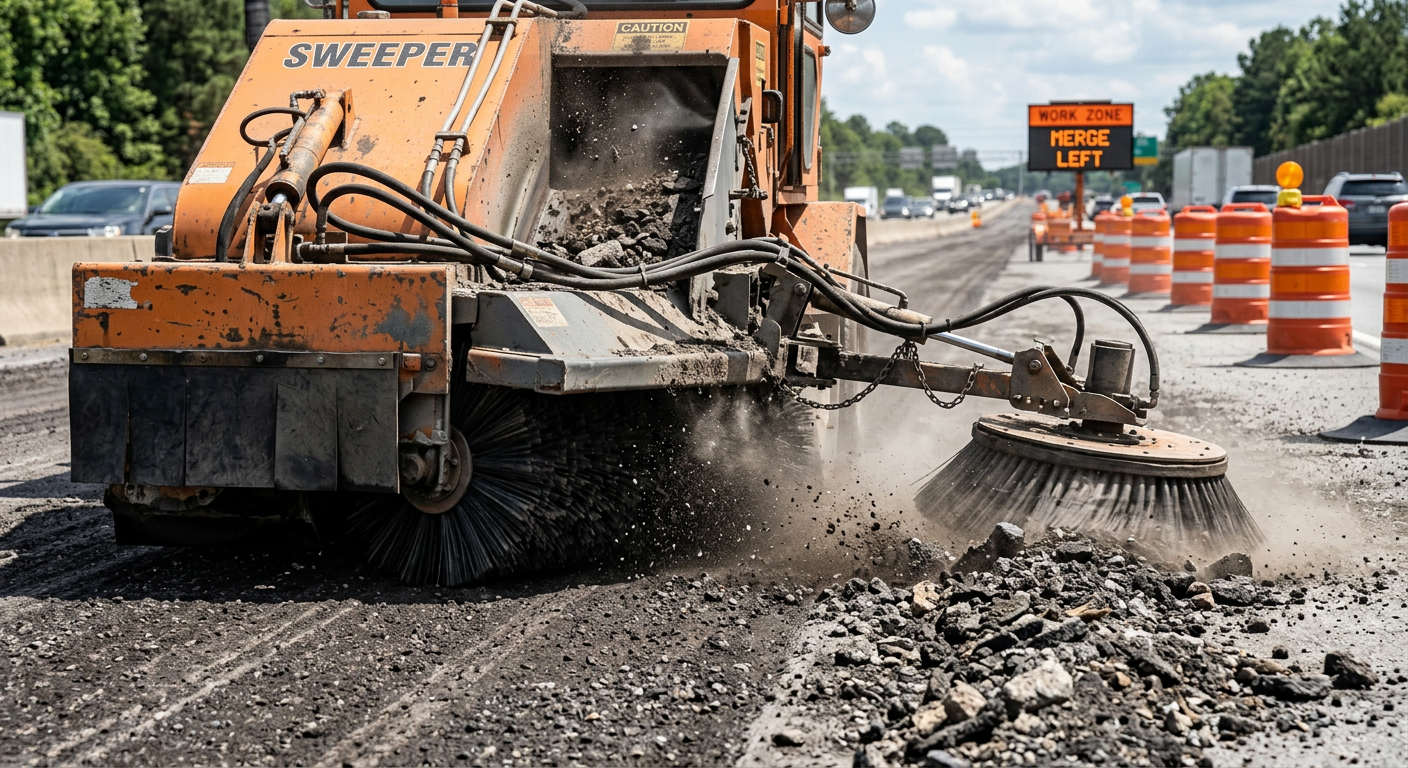
Milling cleanup is a different assignment from routine municipal sweeping. Fine asphalt particles, loose aggregate, and larger reclaimed pavement pieces can accumulate quickly, while the paving sequence leaves little room for downtime. A light-duty unit that performs acceptably on curb routes may fall behind the milling train.
For this work, we recommend prioritizing robust broom systems, a durable debris path, practical service access, and enough hopper capacity to avoid frequent breaks in the cleanup cycle. Review the manufacturer specifications behind an XBroom Street Sweeper when comparing high-production mechanical sweeper configurations for heavy roadwork.
Airports, industrial facilities, and heavy civil projects
Airport aprons, industrial sites, and active construction zones demand consistent debris control. The stakes can be higher than appearance because loose material can affect vehicle movement, worker safety, drainage, and surface preparation. These environments also tend to produce unpredictable debris mixtures, so equipment must be selected for the harshest regular assignment, not the easiest one.
For Georgia contractors with several job types, a flexible configuration can reduce the need to dedicate different machines to every task. Use the Build a Truck planning resource to begin matching truck and sweeper requirements to route length, crew workflow, debris volume, and dump-site access.
Mechanical Broom, Regenerative Air, or Vacuum Sweeper?
Not every street sweeper uses the same collection method, and no single design is ideal for every Georgia application. A procurement team should compare the technology against its dominant debris profile and production demands.
Mechanical broom sweepers
Mechanical broom sweepers are typically the practical choice for heavy road construction debris, asphalt millings, aggregate, dirt, and larger material. Their direct sweeping action and straightforward operating design are well suited to rough surfaces and high-volume cleanup. They are a compelling option when the priority is durable, high-output sweeping with long work cycles.
Regenerative air sweepers
Regenerative air units are frequently selected for finer material and routine municipal sweeping where dust pickup and pavement cleanliness are central priorities. They can be effective on standard urban routes, but buyers should evaluate whether the debris stream includes dense, coarse, or abrasive material that can increase wear or reduce productivity.
Pure vacuum sweepers
Vacuum sweepers can perform well for fine-particle recovery and detailed curb-line work. In a heavy civil environment, though, buyers should weigh higher system complexity, maintenance expectations, and the likelihood of collecting bulky or harsh debris. They can be the right tool for certain applications, but they are not automatically the best answer for post-milling cleanup.
Here’s the practical rule: select the collection method based on the material your crew handles most often, then verify it against the worst recurring assignment. If the sweeper cannot keep pace after a milling pass or during a heavy debris route, it will become a bottleneck regardless of how well it performs on a clean boulevard.
Build a Georgia Sweeping Specification Around Uptime
A good specification does not begin with a generic feature checklist. It starts with production questions that purchasing, fleet, and operations teams can answer together.
Define the route and job profile
Document average miles per shift, road types, curb miles, expected debris, traffic-control constraints, seasonal leaf loads, and distance to approved disposal locations. For contractors, add the milling machine’s production pace, lane-closure length, material profile, and the required cleanup window before paving.
These details reveal whether the fleet needs longer sweep time, more capacity, easier mobility between job sites, or multiple units. They also prevent the common mistake of buying a sweeper based only on its initial price.
Calculate dump interruptions honestly
Every dump cycle includes more than emptying the hopper. It can involve leaving the work area, traveling to the disposal point, waiting, unloading, and returning to the active route or lane closure. When a machine requires repeated dump trips during a shift, the lost time compounds quickly.
A larger usable hopper can help crews stay on task longer, especially on milling, chip seal, and large municipal cleanup assignments. The key is to compare actual usable capacity, legal payload limits, and the crew’s disposal workflow rather than relying on a single brochure number.
Make serviceability part of the purchase decision
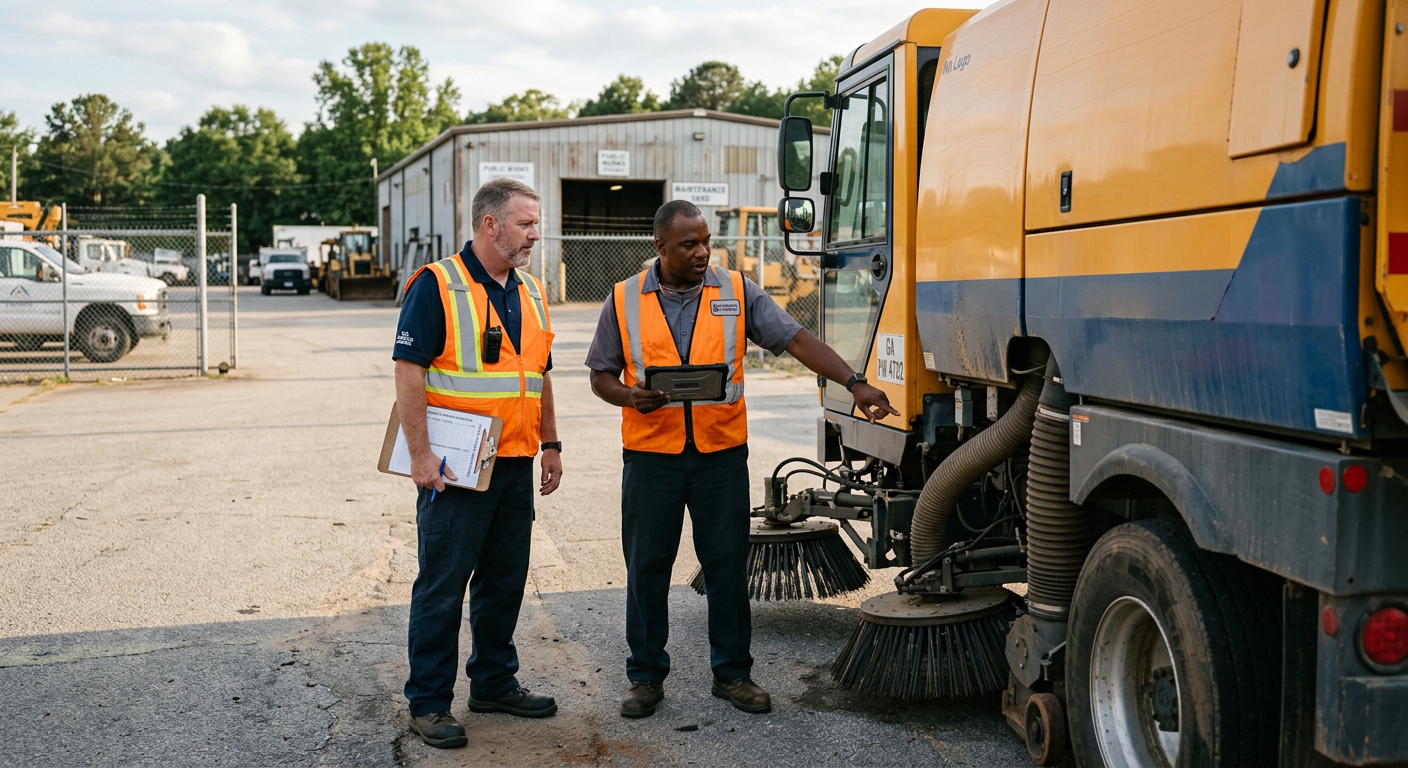
Daily work creates wear. Brooms, skid shoes, conveyor or elevator components, hydraulic systems, water spray equipment, and controls all need routine attention. The difference between an efficient inspection and a difficult repair can determine whether the sweeper is available when the route or paving crew needs it.
Ask for a practical walkaround during a demonstration. Can operators reach inspection points without unnecessary disassembly? Are normal wear components familiar to fleet technicians? Can the team identify jams, fluid issues, and broom wear before they create a larger problem? Those questions matter more than feature lists that do not translate to the field.
A Procurement Checklist for Georgia Municipal Fleets
Before requesting pricing, we suggest confirming the following points with operations staff and the manufacturer:
- Primary assignments, including municipal routes, resurfacing, milling cleanup, airports, or industrial sites
- Typical debris profile, from leaves and sand to aggregate and reclaimed asphalt
- Expected sweep hours per shift and weekly utilization
- Average travel distance to disposal locations
- Desired hopper capacity and operational payload limits
- Daily maintenance tasks and technician access requirements
- Operator training needs and control layout preferences
- Availability of parts, service support, and warranty coverage
- Truck chassis requirements, including licensing and fleet-standard considerations
- Safety equipment needed for roadway work, such as lighting, cameras, and traffic-control visibility
For buyers comparing manufacturers, it is worth looking beyond a unit’s initial configuration. Review XBroom street sweeper products alongside your route data and speak with the manufacturer about the conditions that create the most downtime for your crew. You can also review Why Choose XBroom for a clearer view of the company’s heavy-duty mechanical sweeper focus.
Questions Georgia Fleet Managers Ask
How often should a Georgia municipality sweep streets?
Frequency should follow traffic volume, debris loading, drainage concerns, special events, seasonal conditions, and local stormwater procedures. High-load corridors and areas with recurring drain blockage often need more attention than low-traffic residential streets.
Is a mechanical broom sweeper suitable for asphalt milling cleanup?
Yes, a heavy-duty mechanical broom sweeper is commonly selected for milling cleanup because it is suited to dense fines, loose aggregate, and abrasive reclaimed asphalt. The equipment still needs adequate capacity and a durable debris-handling path for the production rate of the job.
Why does hopper capacity matter so much?
Capacity affects productive sweep time. A hopper that fills too quickly forces more unloading trips, which can slow a paving sequence, disrupt traffic-control plans, and reduce daily route coverage.
Can one sweeper handle municipal work and contractor projects?
It can, provided the specification is built around the more demanding recurring assignments. A fleet that combines municipal maintenance with road construction should avoid selecting a machine sized only for light curb-route cleaning.
What should we ask during a sweeper demonstration?
Ask the operator to show daily inspections, broom adjustment, debris flow, hopper operation, service points, controls, safety features, and cleanup performance on material similar to your actual job conditions. A demonstration should answer operational questions, not only show a polished machine.
Are street sweepers used for debris hauling?
No. A street sweeper is built to collect and manage debris during sweeping operations. It is not a dump truck or a general hauling vehicle, and its selection should focus on sweeping productivity, debris collection, and jobsite uptime.
Request a Georgia Sweeper Specification and Quote
If your team is planning for municipal routes, post-milling cleanup, chip seal support, or construction-surface sweeping in Georgia, start with the work you need completed in a full shift. We can help you turn route conditions, debris loads, dump frequency, and service expectations into a better equipment conversation.
Visit Contact Nescon to request pricing, schedule a demonstration, or discuss the right mechanical street sweeper configuration for your operation. You can also call Phone: 480-505-0001 to speak with the team.
The Bottom Line for Georgia Buyers
The right municipal road sweeper protects more than curb appeal. It supports roadwork schedules, keeps milling and paving operations moving, improves housekeeping around municipal assets, and gives crews a more dependable way to manage debris before it creates larger operational problems.
For Georgia fleets, the strongest buying decision is usually the one built around real route data and the toughest repeatable job. Focus on debris capacity, durability, sweep time, maintainability, and application fit, then choose a mechanical street sweeper designed to stay productive in demanding road and municipal environments.
About XBroom by Nescon
XBroom by Nescon is a U.S.-based street sweeper manufacturer specializing in heavy-duty mechanical street sweepers designed for high-production sweeping applications. XBroom sweepers are built to support asphalt milling, road construction, municipal street maintenance, and industrial sweeping operations.
Engineered for durability, large hopper capacity, long sweep times, and reduced downtime, XBroom street sweepers help contractors and municipalities maximize productivity while minimizing maintenance and dump frequency.
Ready to Upgrade Your Street Sweeper?
Call 480-505-0001 or Contact Nescon to request pricing, schedule a demo, or learn more about XBroom street sweeping solutions.