
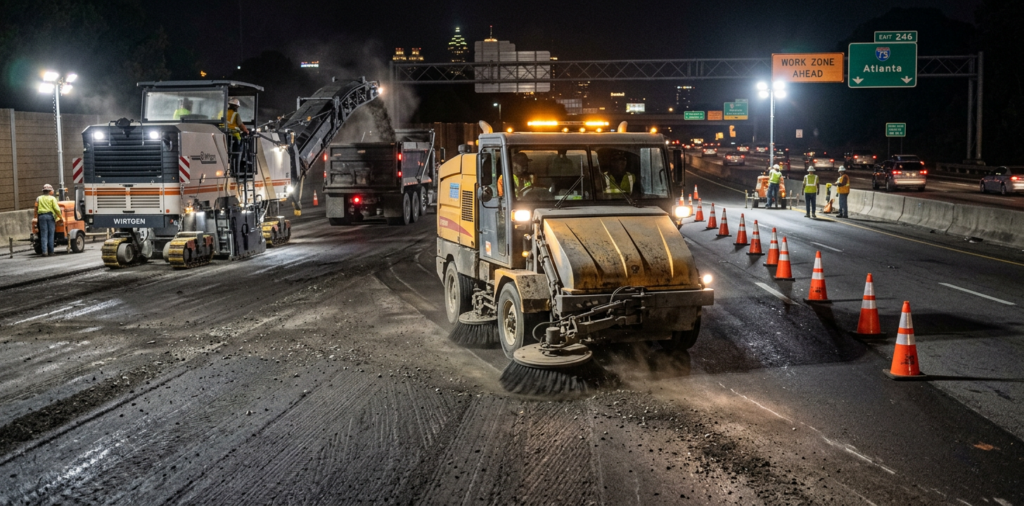
A sweeper parked on the shoulder can delay the paving train, extend a lane closure, and consume labor that should be cleaning the roadway. For Georgia contractors, municipal fleets, and private sweeping operators, how to reduce street sweeper downtime comes down to controlling the avoidable causes of failure before they interrupt production.
We see the strongest uptime results when crews treat the sweeper as a production asset, not a machine that only needs attention after it breaks. That means matching maintenance to operating hours, keeping critical wear parts available, training operators to report small changes early, and selecting equipment that stays productive through abrasive millings, loose aggregate, and long sweeping shifts.
Why Street Sweeper Uptime Matters on Georgia Road Projects
Street sweeper uptime protects schedule, safety, and project margin. A machine that can stay on the route, maintain pickup performance, and avoid unnecessary dump trips gives the entire roadwork operation more predictable production.
The safety stakes are real in active work zones. The Federal Highway Administration reported that 850 people were killed in U.S. work-zone crashes in 2024, reinforcing why crews should minimize unplanned roadside repairs and keep equipment movements organized. Federal Highway Administration
For Georgia milling, paving, chip seal, and municipal maintenance work, downtime often comes from a short list of repeatable issues:
- Brooms run past their useful service life or are adjusted incorrectly.
- Hydraulic leaks, heat, contamination, or declining fluid levels are ignored.
- Bearings, belts, chains, seals, and filters fail without a planned replacement interval.
- Operators continue working after pickup quality or machine response changes.
- A full hopper creates frequent unproductive travel to the dump location.
- The shop does not have the small parts needed for a same-shift repair.
A heavy-duty mechanical sweeper should be specified and managed around those realities. We recommend beginning with the available XBroom street sweeper products to compare equipment built for demanding road-cleanup applications.
Build a Preventive Maintenance Routine Crews Will Actually Follow
The best maintenance program is brief, repeatable, and connected to how the sweeper is used. We recommend a daily pre-shift inspection, a weekly service review, and hour-based replacement planning for components that wear under abrasive conditions.
Make the Pre-Shift Inspection Short and Specific
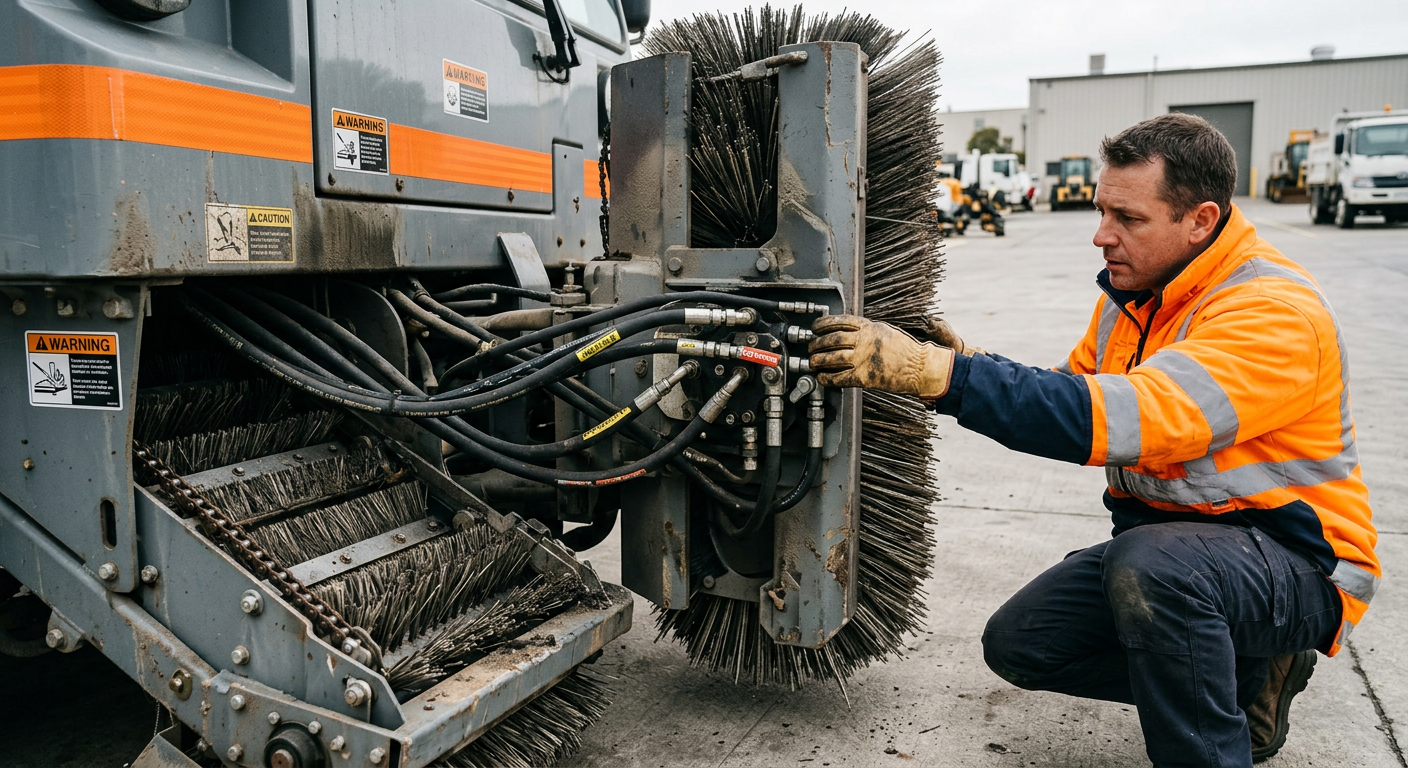
Operators are more likely to complete a checklist when it can be finished before dispatch without slowing the shift. We recommend inspecting broom condition, hydraulic fluid level, visible hose wear, conveyor or elevator condition, tire condition, lights, water spray components, hopper latches, and obvious leaks.
The goal is not paperwork. The goal is to identify a loose fitting, worn broom, low fluid level, or damaged hose while the machine is still at the yard and the repair can be made safely.
Service by Hours and Wear, Not by Breakdown
Waiting for a belt, bearing, seal, or filter to fail turns a manageable service task into an emergency. We recommend tracking operating hours and documenting replacements so the shop can identify normal wear intervals for each application.
Milling cleanup deserves its own maintenance baseline because fine abrasive material can accelerate wear. Chip seal routes, municipal curb-line work, airport surfaces, and industrial facilities may create different patterns, so we advise reviewing service records by job type instead of applying one generic schedule to every truck.
Keep Hydraulics Clean and Cool
Hydraulic issues can stop a sweeper quickly, but many are preventable. Check fluid level and condition, inspect hose routing and fittings, change filters on schedule, and investigate repeated heat-related warnings instead of treating them as normal.
A small leak is also a scheduling signal. Addressing it before the next long shift is usually less costly than losing the machine during a lane-closure window.
Day 4: Use a Failure Review to Stop Repeat Downtime
By the fourth operating day of a project cycle, we should know whether the equipment and workflow are holding up. A Day 4 review creates a practical checkpoint before small operational problems become lost shifts.
Gather the operator, superintendent, and maintenance lead for a brief review of the prior shifts. Focus on what interrupted sweep time, what slowed the dump cycle, what parts were consumed, and where operators had to make repeated adjustments.
Review These Four Questions
- What stopped the machine or reduced pickup quality? Record the actual cause, such as worn bristles, a hydraulic leak, debris buildup, a sensor issue, or a full hopper.
- How much time did the issue consume? Separate wrench time from travel time, waiting time, and time spent finding parts.
- Was the issue predictable? If an item has failed repeatedly, add it to the hour-based replacement plan or stocked-parts list.
- Does the job setup need to change? A remote dump point, poor staging area, or mismatched sweeper capacity can create downtime even when the truck is mechanically sound.
This review is particularly valuable on Georgia road projects with night work, shifting traffic control, and tight paving sequences. We can use the information to adjust broom setup, stage mobile service support, reposition the dump plan, or rotate another unit into the schedule before the next shift begins.
Carry the Parts That Keep a Sweeper Working
Parts availability is a maintenance strategy, not an afterthought. We recommend stocking the high-frequency items that can sideline a sweeper but do not require a major repair event.
A practical on-hand parts list often includes:
- Replacement broom sections and hardware
- Hydraulic filters and approved hydraulic fluid
- Common belts, seals, bearings, and fittings
- Hose repair supplies and frequently used hose assemblies
- Conveyor or elevator wear components where applicable
- Electrical connectors, fuses, lamps, and common fasteners
The exact inventory should come from your own work orders. If a part has caused multiple schedule interruptions, it belongs in the shop or service truck. Direct manufacturer support also matters when a less common component is needed. Our reasons to choose XBroom as a manufacturer partner include application knowledge that helps fleets address service and parts questions with the people closest to the equipment.
Reduce Dump Stops Through Equipment and Job Planning
Dump frequency is often hidden downtime. Every full hopper can require travel out of the work zone, waiting at the disposal point, unloading, and returning through traffic or restricted access.
We reduce those interruptions by evaluating usable hopper capacity, expected debris volume, haul distance to the dump point, and the number of sweeping passes required. For heavy asphalt millings or loose aggregate, a larger usable capacity can extend productive sweep time and reduce the number of non-sweeping miles during the shift.
A high-production mechanical broom sweeper is especially well suited to heavy debris applications where simple, durable material handling and long operating periods matter. Review the heavy-duty XBroom Street Sweeper configuration when comparing capacity, durability, and serviceability for your route profile.
Plan the Dump Cycle Before the Shift Starts
Dispatch should confirm the approved dump site, access route, traffic-control limitations, and disposal timing before crews mobilize. On larger road projects, we recommend assigning a clear point of contact for disposal-site coordination so the sweeper operator is not left waiting for access or direction.
This planning also helps determine whether one sweeper can support the production target or whether the project needs a second machine to maintain continuity during dumping and routine service.
Train Operators to Detect Problems Early
Operators are the first line of defense against downtime. We should train them to recognize changing broom contact, reduced pickup, unusual vibration, hydraulic temperature concerns, debris buildup, and changes in control response.
Early reporting is more valuable than a vague note at the end of a shift. A photo, brief description, machine hour reading, and location of the issue can help the maintenance team bring the right tools and parts to the jobsite.
Standardize How Operators Report Faults
We recommend a simple reporting format:
- Machine number and current operating hours
- Symptom observed and when it started
- Photo or short video when safe to capture
- Whether the machine can continue operating safely
- Parts or fluids added during the shift
That structure prevents technicians from arriving without the component needed to make the repair. It also creates data that can reveal repeat failures across the fleet.
Specify New Sweepers for Serviceability and Long Sweep Time
Equipment design has a lasting effect on downtime. When we evaluate a new sweeper, we look beyond initial purchase price and ask how quickly technicians can reach wear items, inspect systems, perform routine service, and diagnose a fault in the field.
Prioritize accessible service points, rugged mechanical broom components, reliable hydraulic performance, practical controls, and hopper capacity suited to the debris volume. A lower-cost configuration that requires constant dump trips or time-consuming service can cost more in lost production over its working life.
For fleets that need a machine around their route conditions and truck preferences, build a street sweeper truck for your operation to start a configuration discussion based on duty cycle, debris type, and uptime goals.
Common Questions About Reducing Street Sweeper Downtime
How often should a road-construction sweeper be inspected?
We recommend a brief inspection before every shift and a more detailed weekly review. High-abrasion milling work may require additional checks during the shift because broom wear, debris accumulation, and hydraulic stress can develop quickly.
Which parts should every sweeper fleet keep in stock?
Every fleet should stock the items that repeatedly stop its own machines, typically including broom sections, filters, belts, seals, bearings, fittings, hydraulic fluid, and common electrical repair items. Work-order history should determine the final list.
Can operator technique really reduce maintenance downtime?
Yes. Proper operating speed, broom adjustment, water use, and early fault reporting reduce unnecessary stress on components and help technicians intervene before a small issue becomes a breakdown.
Does a larger hopper reduce total downtime?
It can. A larger usable hopper can reduce dump trips on heavy milling and aggregate cleanup, but the right capacity depends on debris density, route distance, disposal access, and truck configuration.
What is the biggest avoidable cause of street sweeper downtime?
Deferred maintenance is often the most avoidable cause. When known wear items are left in service too long or small leaks are ignored, the result is more likely to be an unplanned repair during production.
Should municipalities use the same maintenance plan as paving contractors?
Not necessarily. Municipal route sweeping may involve different debris, speeds, distances, and duty cycles than asphalt milling or chip seal work. We recommend maintaining a common inspection standard while tailoring replacement intervals and parts inventory to each application.
Put Uptime at the Center of Your Next Sweeper Decision
Reducing street sweeper downtime in Georgia requires disciplined daily checks, hour-based maintenance, practical parts inventory, trained operators, and job planning that limits wasted travel. The fleet that captures small problems early and uses its service history to improve the next shift will keep more productive hours on the pavement.
When we specify equipment for heavy roadwork, we should also evaluate how capacity, durability, maintenance access, and manufacturer support work together. Those factors determine how consistently the sweeper can support the paving, milling, municipal, or industrial operation around it.
Discuss a High-Uptime Sweeper Configuration
We help contractors and public agencies evaluate mechanical street sweeping equipment for demanding Georgia applications, including asphalt milling cleanup, road construction, municipal maintenance, and industrial surfaces. Explore configuration options, request pricing, or schedule a product discussion through Contact Nescon for street sweeper information.
For immediate assistance, call Phone: 480-505-0001 and ask about a high-production sweeper built to reduce interruptions, extend sweep time, and keep crews productive.
About XBroom by Nescon
XBroom by Nescon is a U.S.-based street sweeper manufacturer specializing in heavy-duty mechanical street sweepers designed for high-production sweeping applications. XBroom sweepers are built to support asphalt milling, road construction, municipal street maintenance, and industrial sweeping operations.
Engineered for durability, large hopper capacity, long sweep times, and reduced downtime, XBroom street sweepers help contractors and municipalities maximize productivity while minimizing maintenance and dump frequency.
Ready to Upgrade Your Street Sweeper?
Call 480-505-0001 or Contact Nescon to request pricing, schedule a demo, or learn more about XBroom street sweeping solutions.