
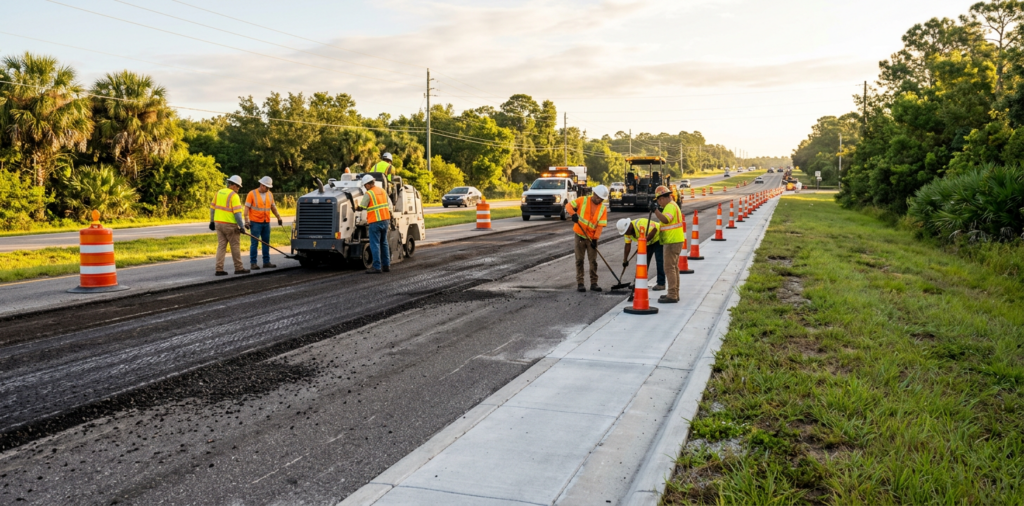
Florida roadwork crews often compare a Broce broom with a Scarab sweeper as though they are direct substitutes. In most cases, they are not. The right decision depends first on the debris stream, production target, dust-control needs, disposal access, and the type of work the fleet performs most often.
For Broce Broom vs Scarab sweeper comparisons, we recommend separating heavy mechanical collection from suction-based sweeping before comparing cab features or purchase price. A construction crew cleaning dense asphalt millings has a fundamentally different requirement than a municipal route team removing lighter fines from curb lines, downtown corridors, and drainage-sensitive areas.
Broce Broom vs Scarab Sweeper: The Core Difference
A Broce construction broom is generally designed around a mechanical broom system that moves and collects heavier roadway material. Scarab sweepers are commonly associated with suction-based street sweeping, using brushes and an air system to lift debris into the hopper. Neither approach is automatically better, but each is better suited to a different operating profile.
| Evaluation Point | Broce 350 Construction Broom | Scarab Suction Sweeper | Best Fit |
|---|---|---|---|
| Primary debris | Millings, aggregate, heavy road debris | Fines, litter, lighter curb debris | Match material stream |
| Collection method | Mechanical broom action | Brush and suction system | Match cleanup standard |
| Typical environment | Paving, milling, chip seal, jobsite cleanup | Municipal routes, urban areas, curb lines | Match route type |
| Dust management | Water system and operating practices | Water-assisted brush and suction setup | Match dust-control plan |
| Key buying concern | Material movement and jobsite durability | Sweep finish and fine-particle pickup | Match production goal |
Broce’s 350 Series is positioned for larger road-maintenance and construction assignments, with a mid-mounted hydraulically powered brush intended to move material efficiently. Its published application list includes paving cleanup, chip seal, cleanup behind milling machines, airport maintenance, and industrial yards. Broce 350 Series specifications
Scarab’s M25H literature emphasizes brush configuration, suction performance, compact maneuverability, onboard monitoring, and service access. That package can make sense for routes where fine debris, curb reach, maneuvering room, and a polished municipal sweep matter as much as raw material movement. Scarab M25H brochure
Why Florida Fleets Need to Define the Work Before Selecting a Sweeper
Florida fleets need equipment that fits humid conditions, frequent rain events, active paving schedules, and long municipal service areas. The state’s road network creates a wide range of sweeping assignments, from interstate rehabilitation to coastal municipal maintenance and industrial access-road cleanup.
A Florida Department of Transportation research report describes the state as having more than 12,000 centerline miles and about 41,000 lane miles of roadway. That scale is a useful reminder that route coverage, reliable sweeping cycles, and time lost to dumping or service matter as much as a specification sheet. Florida Department of Transportation research report
Asphalt Milling and Paving Cleanup
Dense reclaimed asphalt pavement, loose aggregate, and milling fines are abrasive and can build quickly behind a milling machine. For this type of production work, a mechanical broom is often the more natural starting point because the equipment is designed to move heavier material into the collection path.
A Broce-style construction broom can be a logical fit when the crew’s priority is keeping a milling or paving sequence moving. Florida contractors should still validate broom wear, water-system capacity, hopper handling, service access, and how the unit performs on their typical mix of wet millings and dry fines.
Municipal Curb Lines and Fine Debris
A Scarab-type suction sweeper can be a stronger fit where the assignment centers on curb lanes, downtown districts, light litter, sediment, leaves, and finer debris. Its collection approach is especially relevant when visual cleanliness and consistent fine-particle pickup are important route outcomes.
That does not mean a suction sweeper should be assumed to replace a high-production mechanical broom on every road-construction project. Heavy milling cleanup can challenge any machine that is specified primarily for lighter municipal debris and frequent curb-line work.
Evaluate Production Across Seven Full Shifts, Not One Demonstration
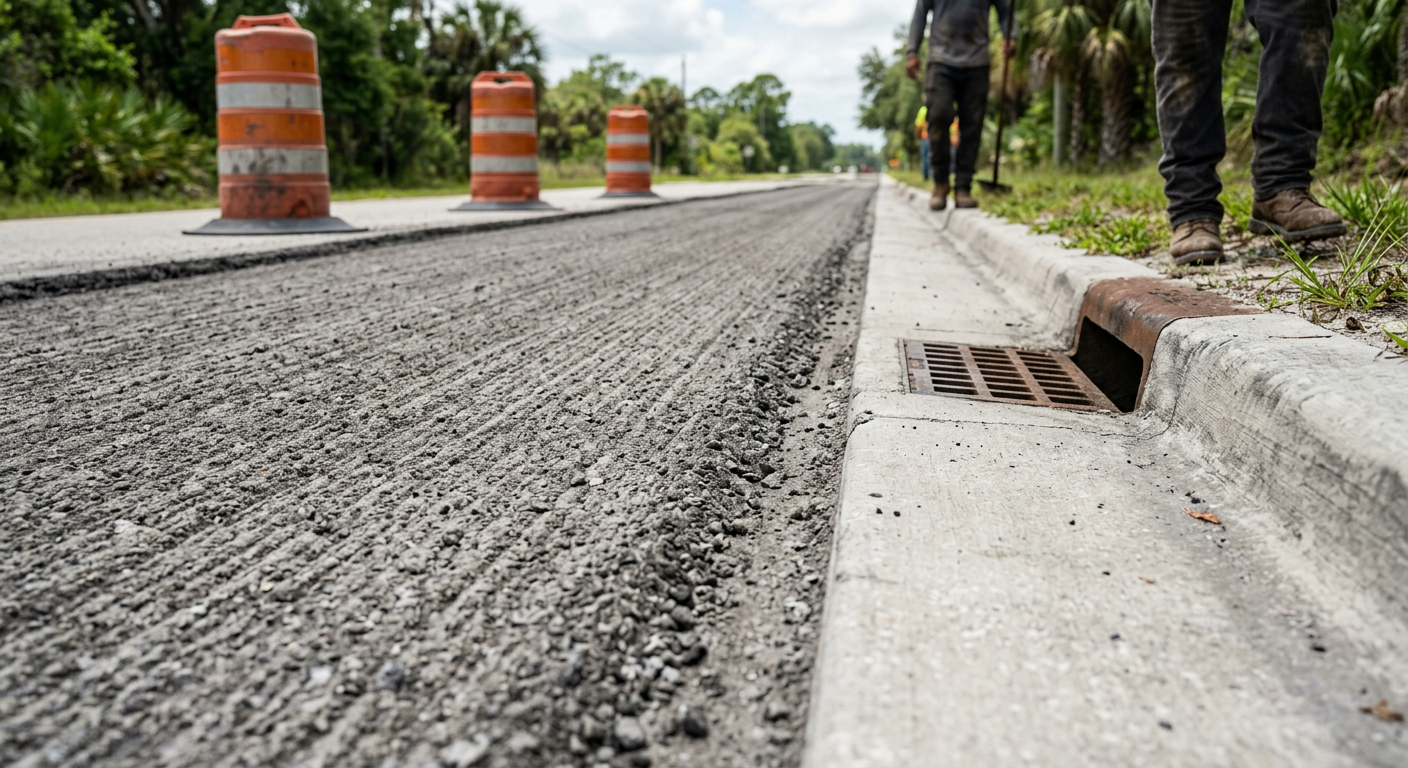
The most useful comparison comes from a full-week operating test that measures productive sweep time, not a short pass over ideal material. A machine can look impressive in a controlled demonstration and still create delays when the hopper fills early, water runs low, wear parts need attention, or the route changes from millings to light municipal debris.
For a seven-shift evaluation, we recommend fleet managers document the following items for each unit:
- Productive sweeping hours before the first dump trip
- Number of hopper dumps per shift
- Time spent traveling to disposal and returning to the work zone
- Water refills and dust-control effectiveness
- Broom, brush, and wear-part condition
- Operator visibility, controls, and fatigue feedback
- Daily inspection time and access to service points
- Cleanup quality on the actual material the crew encounters
This process gives Florida paving contractors a fair way to compare a Broce broom against a Scarab sweeper without treating two different machine categories as identical. It also exposes the cost of downtime that is rarely visible in an initial quote.
For heavy roadwork fleets, the decision should include total productive hours per shift, not just acquisition cost. More sweeping time between disposal cycles can protect paving schedules, reduce labor interruptions, and keep traffic-control resources working as planned.
Where a Broce Broom Is Usually the Better Fit
A Broce broom is usually the better fit when the fleet’s dominant work involves dense, abrasive, or bulky roadway debris. That includes asphalt milling cleanup, chip seal recovery, road-base material, quarry access roads, industrial yards, and active paving projects.
Strong Use Cases for a Mechanical Construction Broom
Mechanical construction brooms are often practical when crews need to:
- Clean behind cold-planing and milling operations
- Recover loose aggregate after chip seal work
- Manage material on road-construction sites
- Sweep industrial pavement with heavier debris
- Support airport or large-facility maintenance where debris is substantial
The tradeoff is that mechanical broom equipment should be specified around material volume and broom wear. A crew that mainly services narrow, litter-heavy downtown corridors may need a different machine profile than a contractor working behind a milling train.
Where a Scarab Sweeper Is Usually the Better Fit
A Scarab sweeper is usually the better fit when the fleet needs strong maneuverability and detailed pickup of lighter debris along urban streets, parking areas, and curb lines. This is especially relevant for municipal operations where the route changes constantly and visual finish is a major service measure.
Strong Use Cases for Suction-Based Sweeping
Suction-based sweepers can be well suited for:
- Downtown and neighborhood street programs
- Curb-line sediment and litter collection
- Parking facilities and commercial corridors
- Routine municipal maintenance routes
- Areas where fine debris pickup is a priority
The buyer should ask direct questions about hopper capacity, water use, brush wear, filter or air-system maintenance, and service availability. A well-equipped suction sweeper may be highly productive in its intended environment, but it should be evaluated carefully before being assigned to repetitive heavy-millings cleanup.
How XBroom Fits Into the Florida Comparison
For fleets whose recurring work is asphalt milling cleanup, road construction, chip seal, and high-volume debris recovery, a purpose-built mechanical broom sweeper deserves a separate evaluation. We build equipment around the work profile of contractors and municipalities that need long sweep times, durable debris handling, accessible maintenance points, and reduced dump frequency.
Review XBroom street sweeper products to compare available equipment, then examine the component details of the XBroom Street Sweeper. For a Florida fleet that needs a configuration aligned with its chassis preferences, routes, and material profile, use Build a Truck to begin a more specific equipment discussion.
Questions Florida Buyers Ask Before Choosing
Is a Broce broom better than a Scarab sweeper for asphalt millings?
For heavy asphalt millings, a mechanical broom is often the more appropriate category because it is intended to handle denser, abrasive road material. The correct decision still depends on the volume of millings, sweep width, disposal distance, water needs, and the rest of the fleet’s assignments.
Can a suction sweeper handle road-construction cleanup?
Yes, but suitability depends on the material and production requirement. A suction sweeper may work well for lighter construction cleanup and fine debris, while repetitive, high-volume millings recovery typically calls for close scrutiny of pickup performance, hopper capacity, wear, and downtime.
Should a Florida municipality own both types of sweepers?
It can make sense when the municipality handles both dense construction debris and routine curb-line sweeping. A mixed fleet allows public works teams to assign the mechanical broom to heavy material and use suction equipment for detailed urban maintenance.
What should we bring to a street sweeper demonstration?
Bring the material and operating conditions that define your work. Ask the manufacturer to demonstrate sweeping on actual millings, aggregate, damp fines, and curb-line debris, then review hopper loading, daily checks, service access, water use, and dump operation.
How does Florida weather affect street sweeper selection?
Frequent rain, humidity, and sudden weather changes make water management, corrosion-resistant components, visibility, traction, and cleanup planning important. Fleets should specify equipment around their wet-weather procedures rather than treating weather as an afterthought.
Choose the Collection Method Before Comparing Features
The best Broce Broom vs Scarab sweeper decision starts with an honest assessment of the debris your crews collect every day. Mechanical broom equipment is commonly the stronger choice for sustained heavy material, while suction-based sweeping can be better suited to fine debris and detailed municipal routes.
Florida contractors and public works teams should compare full-shift output, dump frequency, maintenance requirements, and cleanup quality on real jobs. When the fleet selects the collection method first, the remaining decisions become clearer and more defensible.
Discuss a High-Production Mechanical Sweeper for Florida Work
If your operation needs a mechanical broom sweeper for milling cleanup, paving support, municipal maintenance, or industrial surfaces, we can help you evaluate capacity, serviceability, and expected duty cycle. Learn why contractors evaluate Why Choose XBroom, then request equipment information through Contact Nescon or call Phone: 480-505-0001 to discuss pricing and demonstrations.
About XBroom by Nescon
XBroom by Nescon is a U.S.-based street sweeper manufacturer specializing in heavy-duty mechanical street sweepers designed for high-production sweeping applications. XBroom sweepers are built to support asphalt milling, road construction, municipal street maintenance, and industrial sweeping operations.
Engineered for durability, large hopper capacity, long sweep times, and reduced downtime, XBroom street sweepers help contractors and municipalities maximize productivity while minimizing maintenance and dump frequency.
Ready to Upgrade Your Street Sweeper?
Call 480-505-0001 or Contact Nescon to request pricing, schedule a demo, or learn more about XBroom street sweeping solutions.