

Nevada sweeping crews lose production when routine wear is allowed to become a jobsite failure. A heavy-duty mechanical broom sweeper works through abrasive millings, chip seal aggregate, fine dust, heat, and long travel distances, so maintenance needs to be built around the actual operating cycle, not postponed until a component breaks.
For contractors, public works departments, airports, and private sweeping companies, how to maintain a heavy-duty street sweeper starts with a disciplined daily inspection, correct broom adjustment, clean hydraulic oil, and prompt attention to unusual noises, heat, leaks, or pickup changes. Consistent service protects uptime, helps crews finish milling cleanup on schedule, and reduces avoidable shop time.
Build Maintenance Around Nevada Operating Conditions
Nevada conditions make preventive maintenance especially important because dry dust, abrasive roadway debris, temperature swings, and extended shifts can accelerate wear. We recommend using a written routine that links inspections to every shift, every service interval, and every major paving or milling project.
The Nevada Department of Transportation's February 2025 construction stormwater manual directs crews to inspect construction access points daily and adjust brooms frequently to maintain ground contact and sweeping efficiency. That guidance is operationally useful for any Nevada fleet because poor broom contact increases wear while leaving material behind. Review the relevant NDOT Construction Site Stormwater BMP Manual requirements alongside your project specifications.
A dependable maintenance program should account for:
- Asphalt milling cleanup, where sharp millings and dust load the pickup path quickly
- Chip seal work, where aggregate can accelerate broom and conveyor wear
- Municipal routes, where repetitive curb contact affects gutter broom setup
- Airport and industrial facilities, where foreign-object debris control and reliable inspections are critical
- High-temperature shifts, where cooling, hydraulic temperature, and tire condition deserve added attention
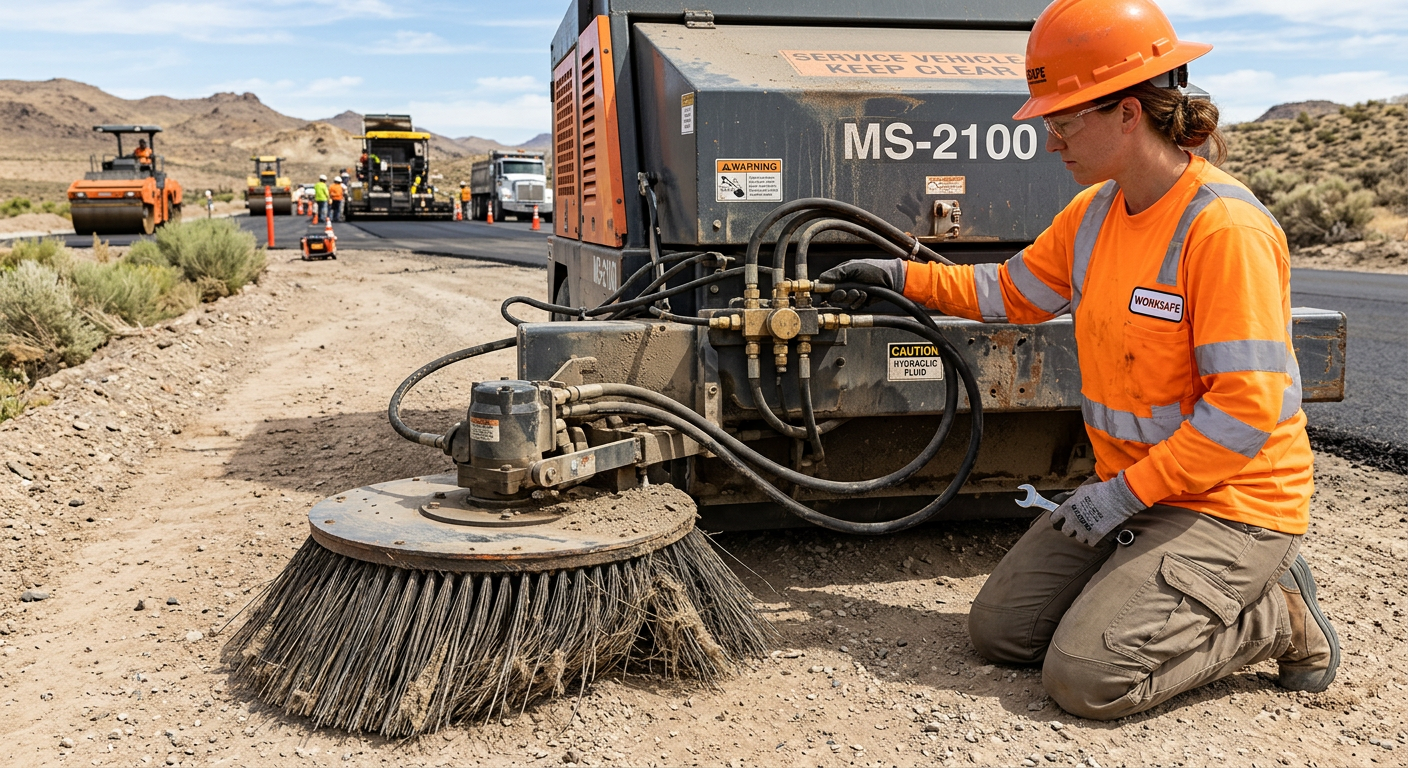
Use a Daily Pre-Shift Inspection That Finds Problems Early
A pre-shift inspection is the most effective way to identify developing failures before the sweeper enters traffic control or falls behind the paving crew. Operators should complete the same inspection sequence every day and record defects clearly for the maintenance team.
Check broom condition and sweeping contact
Inspect the main broom and gutter brooms for uneven wear, missing sections, wire loss, damaged cores, and incorrect ground pattern. A broom that is set too aggressively consumes material, adds drag, and can overload the sweeping system. A broom set too lightly leaves millings, aggregate, and fines on the surface.
Confirm that the main broom, side brooms, and skid shoes are adjusted for the debris and pavement condition. On milling projects, crews should check adjustment more frequently because changes in surface texture, material volume, and grade can alter the contact pattern during the shift.
Inspect the pickup path, elevator, and hopper
Walk the material path from the brooms through the elevator and into the hopper. Remove packed debris, inspect drag slats and wear strips, and look for damaged sprockets, loose fasteners, or material that could restrict movement.
Check the hopper door, lift structure, hinges, cylinders, controls, and safety devices before operation. Never work beneath an unsupported raised hopper. Follow the manufacturer procedures for lockout, blocking, and service access.
Review hydraulics, cooling, and fluid levels
Hydraulic performance drives sweeping production. Check hoses, fittings, cylinders, pumps, and the tank area for leaks, abrasion, loose clamps, or signs of overheating. A small leak or damaged hose may not stop a truck at the beginning of a shift, but it can become an expensive failure under continuous heavy-duty sweeping.
Verify hydraulic fluid level and condition according to the service schedule. Also inspect the hydraulic cooler and airflow path, especially after dusty milling work. Restricted cooling can raise oil temperatures and shorten component life.
Verify truck and safety systems
Inspect tires, brakes, lights, mirrors, cameras, backup alarms, strobes, arrow boards, and traffic-control equipment. Nevada road projects often require crews to work close to live traffic, so a sweeper that cannot be seen, stopped, or safely positioned is not ready for production.
Establish a Post-Shift Cleanup Routine
A clean sweeper is easier to inspect, safer to service, and less likely to carry debris into the next shift. Post-shift cleanup should be a planned operating task, not an optional detail after a long night of milling work.
Empty the hopper in the approved location, remove remaining material from the elevator and broom area, and wash down areas where debris can hold moisture or restrict component movement. Be deliberate around electrical components, bearings, hydraulic fittings, and control systems. High-pressure water in the wrong location can create a new maintenance problem.
Use the water system correctly to manage dust during sweeping, then clean filters and nozzles so the system is ready for the next job. A plugged filter or damaged nozzle can reduce dust suppression and make operators compensate with poor sweeping settings.
For fleets evaluating serviceability during equipment selection, review the maintenance access and component layout of the heavy-duty XBroom Street Sweeper. Direct access to service points helps technicians complete routine work without creating extended downtime.
Plan Weekly and Scheduled Service, Not Just Daily Checks
Daily inspections identify visible problems, but scheduled service protects the components operators cannot fully assess in the field. Fleet managers should create interval-based work orders based on engine hours, sweeping hours, job severity, and manufacturer recommendations.
Weekly service priorities
At least once each week, review these areas in greater detail:
- Lubricate all points listed in the manufacturer maintenance schedule.
- Inspect broom suspension, lift components, bushings, pins, and mounts.
- Check elevator chain condition, tension, alignment, slat wear, and drive response.
- Clean cooling surfaces and inspect fan operation.
- Examine hydraulic fittings and hose routing for chafing.
- Test hopper lift and dump functions in a controlled area.
- Inspect water spray filters, pumps, plumbing, and nozzles.
- Review operator defect reports and repair recurring issues instead of repeatedly clearing the same warning.
Track wear parts by operating hours
Wear parts should be replaced based on condition and operating hours, not only when a failure occurs. Main broom wafers, gutter broom segments, skid shoes, conveyor wear strips, squeegees, chains, and bearings are production components. If they are ignored, the sweeper can lose pickup quality before the crew recognizes the cost.
Maintain a simple record for each unit showing broom replacements, hose repairs, filter changes, elevator work, hydraulic service, and downtime events. Over time, those records show which routes and applications create the highest wear rate and help purchasing teams stock the correct parts before a busy paving season.
Prevent Hydraulic and Electrical Downtime
Hydraulic heat, contamination, and electrical connection issues are common causes of unexpected sweeping interruptions. The best defense is inspection discipline combined with clean service practices.
When servicing hydraulic components, keep fill points, tools, and replacement fluid clean. Contamination can damage pumps, motors, valves, and other precision components. If oil appears discolored, smells burned, foams, or repeatedly reaches high operating temperatures, remove the truck from production long enough to diagnose the cause.
Electrical checks should include battery terminals, ground straps, harness routing, circuit protection, switches, cameras, lights, alarms, and control displays. Road vibration, washdown exposure, and debris accumulation can loosen connections over time. A quick check during scheduled service is far less disruptive than troubleshooting a dead control circuit on a night shift.
XBroom sweepers use a service-focused mechanical design for demanding roadwork applications. Learn more about the manufacturer approach and construction background behind that equipment at Why Choose XBroom.
Match Maintenance to Asphalt Milling Cleanup
Asphalt milling cleanup places heavier demands on the sweeper than routine municipal curb sweeping. High volumes of abrasive material can wear brooms, skid shoes, elevator components, and hopper areas quickly, particularly when the milling crew is moving fast.
We recommend assigning one person on each shift to verify broom pattern, elevator operation, hydraulic temperature, and hopper function before the sweeper begins following the mill. During production, operators should pay attention to pickup quality, material buildup, alarms, vibration, and changes in operating sound. These are early warnings, not inconveniences to ignore.
A high-capacity hopper can also reduce unnecessary interruption. The XBroom Street Sweeper is configured with a 5-yard usable hopper capacity, which can support longer sweep intervals between dumps when the application and material density allow. See the available configurations and options through Build a Truck.
Train Operators to Protect the Equipment
Operators are the first line of maintenance because they see and hear the sweeper under real job conditions. A good operator training program teaches more than controls. It explains why broom adjustment, dump practices, washdown, idle procedures, inspection reports, and early defect reporting matter to the entire paving or municipal operation.
Train operators to avoid:
- Running brooms with excessive down pressure
- Sweeping oversized debris that should be removed by another method
- Continuing operation after a hydraulic leak, overheating warning, or unusual vibration
- Dumping on unstable ground or without adequate overhead clearance
- Skipping cleanup because the next shift is waiting
- Using water spray without checking filters, nozzles, and available water capacity
A maintenance culture works best when the shop responds promptly to useful operator reports. If operators repeatedly report an issue and nothing changes, defects will eventually go unreported until they become major repairs.
Questions Nevada Fleet Managers Ask
How often should we replace street sweeper brooms?
Replace brooms when wear prevents the correct contact pattern or pickup quality, not on a fixed calendar alone. Milling cleanup, chip seal aggregate, curb work, pavement texture, and operator setup can all change the replacement interval substantially.
Should we wash a mechanical street sweeper every day?
Yes, a controlled post-shift cleanup is usually worthwhile after heavy-duty roadwork. Remove millings and debris from the pickup path, elevator, hopper, and accessible service areas, while protecting electrical and sensitive components from improper high-pressure washing.
What is the most important hydraulic maintenance task?
Keeping hydraulic fluid clean, correctly filled, and within a normal temperature range is the priority. Pair fluid checks with filter service, cooler cleaning, hose inspections, and immediate correction of leaks or repeated high-temperature alerts.
Can a sweeper keep working with a small hydraulic leak?
It should not continue operating until the leak is assessed and repaired. Fluid loss can create safety concerns, contaminate the roadway, damage components, and turn a small repair into a larger outage.
How do we reduce street sweeper downtime during paving season?
Use a daily inspection form, stock high-wear replacement parts, schedule service around production windows, and act on operator reports early. The goal is to replace predictable wear components on your schedule instead of losing a night shift to an avoidable failure.
Do municipal sweepers need a different maintenance plan than milling sweepers?
The core inspections are similar, but duty cycle should determine service frequency. A sweeper dedicated to abrasive milling debris generally needs closer monitoring of brooms, elevator components, hydraulic cooling, and hopper areas than a unit running routine municipal routes.
Keep Nevada Sweepers Productive Through Every Shift
The strongest maintenance plan is simple enough to use every shift and detailed enough to catch wear before it disrupts the job. When crews inspect brooms, hydraulics, material flow, safety equipment, and cleaning needs consistently, they protect production capacity and extend equipment life.
For Nevada contractors and municipalities, the objective is not merely to keep a sweeper moving. It is to keep it picking up effectively, operating safely, and staying available when milling, paving, municipal maintenance, or industrial cleanup cannot wait.
Put a Serviceable Sweeper Into Your Fleet Plan
If your Nevada operation needs a high-production mechanical broom sweeper built for demanding cleanup work, review XBroom street sweeper products and discuss the application with the manufacturer. We can help you assess truck configuration, hopper capacity, sweeping conditions, service access, and options that support reliable uptime.
For pricing, equipment details, or a demo request, call Phone: 480-505-0001 or use Contact Nescon to speak with our team.
About XBroom by Nescon
XBroom by Nescon is a U.S.-based street sweeper manufacturer specializing in heavy-duty mechanical street sweepers designed for high-production sweeping applications. XBroom sweepers are built to support asphalt milling, road construction, municipal street maintenance, and industrial sweeping operations.
Engineered for durability, large hopper capacity, long sweep times, and reduced downtime, XBroom street sweepers help contractors and municipalities maximize productivity while minimizing maintenance and dump frequency.
Ready to Upgrade Your Street Sweeper?
Call 480-505-0001 or Contact Nescon to request pricing, schedule a demo, or learn more about XBroom street sweeping solutions.