
Elgin Broom Bear vs. Eagle: Colorado Fleet Fit Comparison
Colorado sweeping crews need more than a familiar model name. They need a mechanical broom sweeper that matches the material, route distances, dump workflow, altitude, pavement profile, and maintenance capacity of the operation.
For contractors handling asphalt milling cleanup and municipalities maintaining streets from the Front Range to smaller mountain communities, the Elgin Broom Bear vs. Eagle street sweeper decision comes down primarily to power architecture and operating priorities. Both are four-wheel, commercial-chassis mechanical sweepers with similar hopper, water, dump-height, and sweeping-path specifications. The major distinction is that the Broom Bear uses a chassis-powered single-engine arrangement, while the Eagle uses a separate auxiliary sweeper engine.
Fast Comparison for Colorado Fleet Managers
The Broom Bear is generally the better fit for fleets that prioritize a single-engine layout and want sweeping power tied to the truck chassis. The Eagle is a strong fit for fleets that prefer separating sweeper-system operation from chassis propulsion with a dedicated auxiliary engine.
| Decision Factor | Elgin Broom Bear | Elgin Eagle | What It Means in Colorado |
|---|---|---|---|
| Sweeper power | Chassis engine | 74 hp auxiliary engine | Different maintenance and operating approach |
| Hopper capacity | 4.5 cubic yards | 4.5 cubic yards | Similar material-carrying interval |
| Water capacity | 360 gallons | 360 gallons | Similar dust-control reserve |
| Maximum sweep path | 10 feet standard | 10 feet standard | Similar lane and milling-pass coverage |
| Conveyor setup | Squeegee standard | Chevron belt standard | Match conveyor to debris and service preference |
| Maximum dump height | 11 ft. 2 in. | 11 ft. 2 in. | Similar unloading compatibility |
Elgin’s current specifications list the Broom Bear with a 260 hp Cummins L9 chassis engine, a 4.5-cubic-yard hopper, 360-gallon water capacity, and a 10-foot maximum sweeping path. The Eagle brochure lists a 74 hp Cummins auxiliary engine alongside the same 4.5-cubic-yard hopper, 360-gallon water tank, and 10-foot sweep path. Elgin Broom Bear specifications and the Elgin Eagle brochure should be reviewed during final procurement because configurations and options can change. (elginsweeper.com)
The Main Difference: Single-Engine vs. Auxiliary-Engine Operation
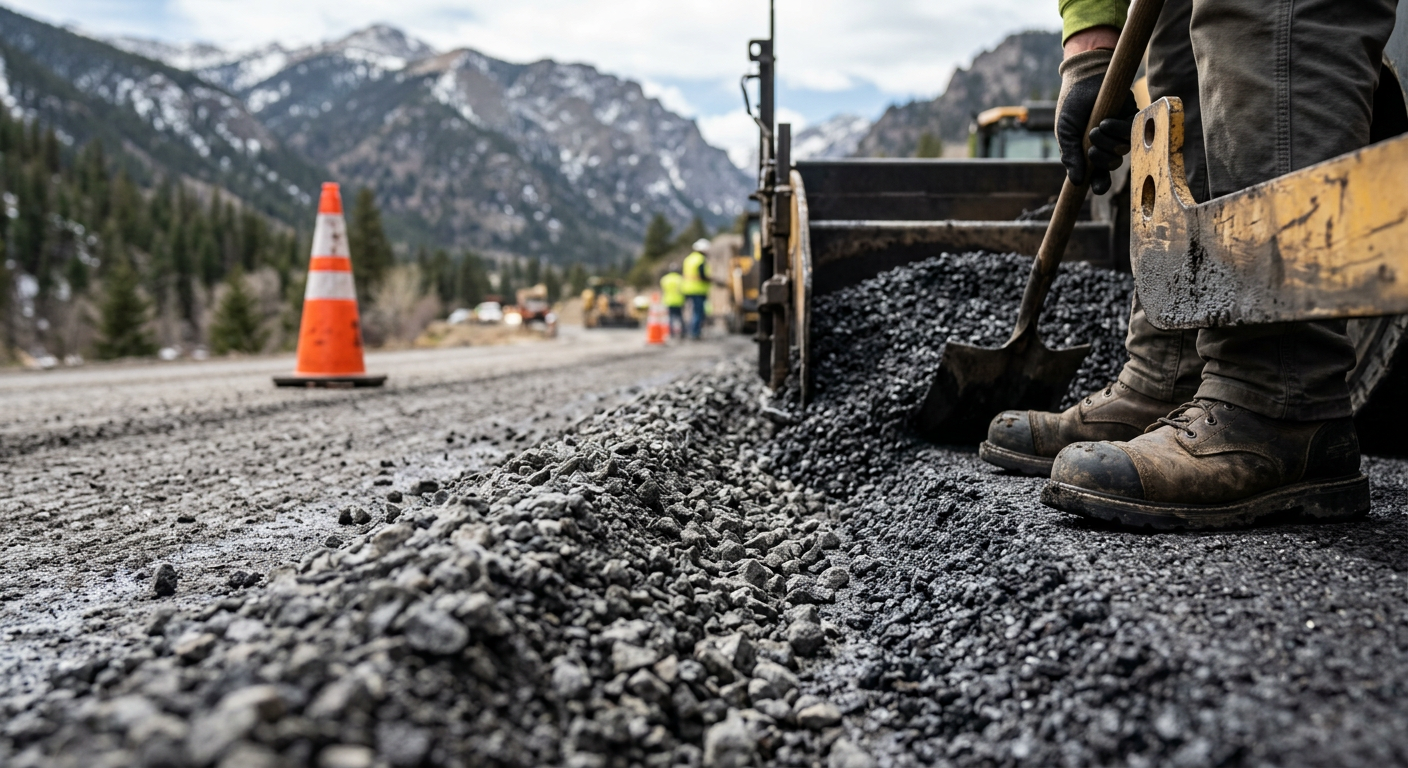
The operating architecture is the meaningful dividing line between these two sweepers. A fleet should assess it against technician skill sets, preventive-maintenance schedules, fuel-management practices, and the daily pattern of sweeping versus road travel.
Broom Bear: Chassis Engine Powers the Sweeping System
The Broom Bear is built around a single-engine concept, using the commercial chassis engine to power both travel and sweeping functions. Its published configuration includes a Cummins L9 rated at 260 hp and 860 lb-ft of torque, with a hydraulic sweep system and a standard squeegee elevator. (elginsweeper.com)
For Colorado contractors, this can be attractive when the goal is to reduce the number of engines requiring routine service. One engine does not automatically mean lower lifecycle cost for every fleet, but it does create a different maintenance workflow. Fleet managers should evaluate chassis-engine service intervals, local dealership support, operator training, and how much sweeping occurs during each shift.
The Broom Bear’s independent conveyor lift and published 12-inch ground clearance can also matter when milling cleanup includes occasional larger chunks of loose material. That does not replace disciplined jobsite cleanup practices, but it is a useful consideration for heavy civil and paving crews working variable road surfaces. (elginsweeper.com)
Eagle: Dedicated Auxiliary Power for Sweeping
The Eagle uses a dedicated 74 hp Cummins auxiliary diesel engine for its sweep system. The truck chassis provides transportation, while the auxiliary engine supports sweeping functions, giving operations a distinct power source for the mechanical broom system. (elginsweeper.com)
This design can suit organizations that prefer a conventional dual-engine maintenance model or want a clear separation between propulsion and sweeping-system operation. The Eagle’s published configuration also includes a variable-speed chevron conveyor, with an optional squeegee conveyor system, offering a different material-handling decision than the Broom Bear’s standard squeegee arrangement. (elginsweeper.com)
Neither arrangement is universally better. The stronger purchase decision comes from identifying which layout fits your maintenance department, operator practices, service access, and dominant debris stream.
How Conveyor Choice Affects Milling Cleanup
Conveyor design matters because the machine’s ability to move dense aggregate, millings, dirt, and mixed road debris directly affects sweep speed and unplanned stops. For Colorado paving operations, that makes conveyor selection a job-production issue rather than a brochure feature.
The Eagle is equipped with a no-jam chevron belt conveyor as standard and can be configured with an elevator squeegee system. Elgin describes the belt design as having full-width cleats that move material toward the hopper and improve hopper fill. (elginsweeper.com)
The Broom Bear spec sheet lists a squeegee conveyor with replaceable rubber edging, abrasion-resistant steel plates, forward and reverse operation, and independent lift control. Its available enhancements include a chevron conveyor belt option. (elginsweeper.com)
For dense asphalt millings, crews should ask detailed questions during a demonstration:
- What debris mix will the sweeper encounter most often, including millings, gravel, compacted fines, leaves, or general road debris?
- How frequently does the conveyor need cleaning or adjustment under real jobsite conditions?
- Can the operator reverse the conveyor quickly if material bridges or stalls?
- How accessible are wear items, chains, belt components, and hydraulic connections?
- How will the conveyor choice affect daily inspections and parts stocking?
Mechanical broom sweepers are particularly relevant when the work involves heavy material. Elgin’s municipal application guidance identifies mechanical sweepers as well suited to heavy, compacted material such as sand, gravel, silt, and traction residue. (elginsweeper.com)
Capacity and Dumping: Similar Numbers, Different Workflows
On paper, Broom Bear and Eagle capacity figures are very close. Both list a 4.5-cubic-yard hopper, 360-gallon water system, 11-foot-2-inch maximum dump height, right-side dumping, and 11 inches of hopper side shift. (elginsweeper.com)
That means a Colorado fleet should not make its decision solely on hopper capacity. Instead, look at the complete unloading cycle. Consider where dump trucks or containers sit relative to the work zone, whether crews sweep in narrow urban corridors, and how often the sweeper must leave a paving train to unload.
At XBroom by Nescon, we encourage buyers to calculate production around actual dump frequency, not advertised hopper size alone. An equipment comparison should account for material density, haul distance to the dump location, traffic control, operator handoff time, and the cost of interrupting a milling or paving operation.
For fleets seeking a higher-capacity mechanical sweeper platform, review the specifications for the heavy-duty XBroom mechanical street sweeper. XBroom lists a 6-yard total hopper, 5-yard usable capacity, and a variable right-side dump height up to 150 inches, features intended to support longer work intervals in high-production sweeping. (xbroom.com)
Colorado Applications That Should Drive the Decision
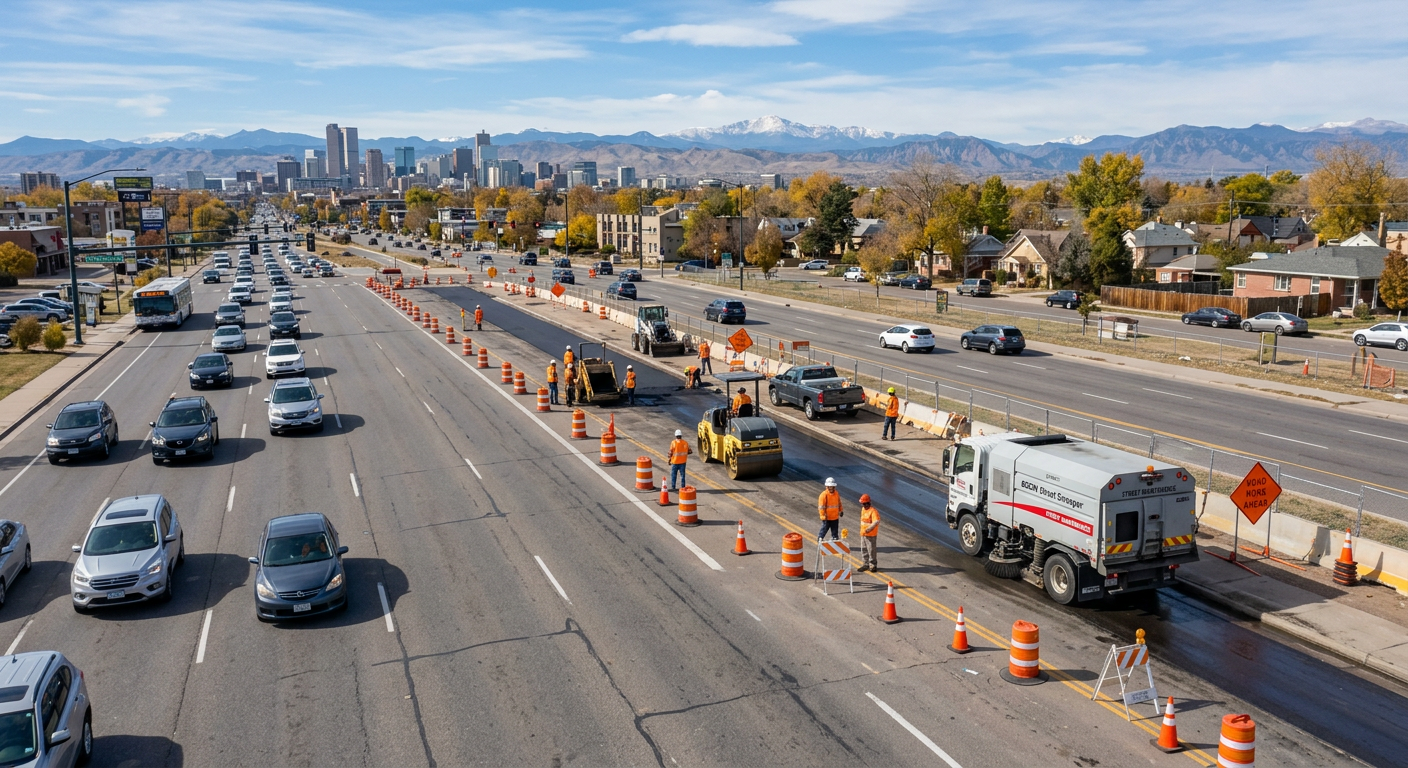
The correct choice starts with the work, not the badge on the hood. Colorado fleets often combine municipal routes, road construction support, asphalt-milling cleanup, industrial access roads, and airport or facility maintenance within the same operating year.
Asphalt Milling and Paving Support
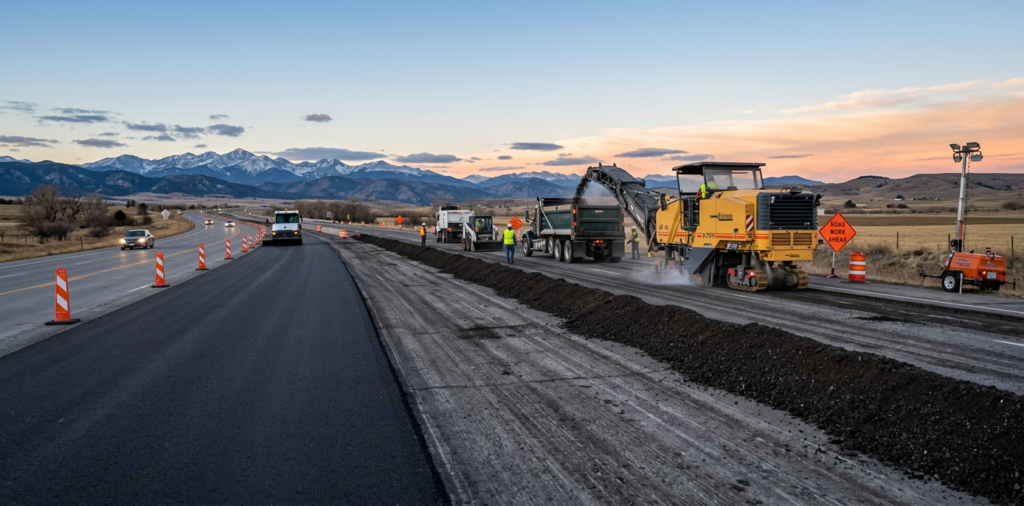
Milling cleanup calls for dependable broom pressure, debris conveyance, dust control, and enough hopper volume to keep the paving sequence moving. Ask for an on-site demonstration using the actual millings, aggregate, and road geometry your crew encounters.
For long linear projects, examine sweep speed at the required cleanup standard, load-out workflow, water use, and the time required to restore the road surface after a pass. The machine that performs best on a dealer lot may not deliver the same result behind a milling machine on a sloped, uneven Colorado roadway.
Municipal Streets and Seasonal Sand Removal
Municipal operations need flexibility. Spring cleanup can mean sand, gravel, and silt, while summer work may focus on construction debris and routine curb-line maintenance. Both models provide a 10-foot maximum sweep path and 46-inch side brooms, according to current Elgin specifications. (elginsweeper.com)
For these fleets, operator visibility, maneuverability, water availability, noise requirements, parts support, and shift length may matter as much as engine layout. Build the bid specification around measurable route demands, including lane miles, debris type, sweeping hours, dump stops, and service response expectations.
Industrial Facilities and Airport Perimeters
Industrial sites and aviation-related maintenance areas require a deliberate equipment match. Mechanical broom sweepers can be productive for coarse debris and construction material, but operations that prioritize fine particulate pickup may also need to assess regenerative-air or vacuum technology based on site requirements and environmental specifications.
A good procurement process does not force one sweeper type into every job. It defines the debris, cleanup standard, safety requirements, surface condition, and shift schedule before equipment selection.
What to Inspect During a Broom Bear or Eagle Demo
A serious demo should answer questions that specification sheets cannot. Run the machine in the material, traffic conditions, and unload sequence that create your actual production constraints.
Use This Field Checklist
- Sweep a representative stretch of milled pavement, not just loose dry debris.
- Observe pickup at joints, utility cuts, uneven patches, and curb transitions.
- Time the full unloading cycle, including positioning, lifting, dumping, and return to sweeping.
- Evaluate water consumption over a normal shift segment.
- Inspect access to daily service points and wear components.
- Confirm how the operator monitors broom wear, conveyor status, hydraulic temperature, and hopper position.
- Review local parts availability, technician response time, and training options.
Fleet managers comparing models against a high-production alternative can also explore XBroom street sweeper product configurations and use the Build a Truck planning tool to start matching chassis, capacity, and mechanical sweeping requirements to the application.
Frequently Asked Questions
Is the Elgin Broom Bear better than the Eagle for asphalt millings?
Not automatically. The Broom Bear may be preferred by fleets that value a chassis-powered single-engine setup and standard squeegee conveyor, while the Eagle may suit operations that prefer a dedicated auxiliary engine and standard chevron belt conveyor. Test both in your typical milling material before deciding.
Do the Broom Bear and Eagle have the same hopper capacity?
Yes, current published specifications list both machines with a 4.5-cubic-yard hopper. Real-world sweep time between dumps will still vary with material density, moisture, operator technique, and the cleanup standard required.
Which model has a wider sweep path?
Neither has a clear advantage in standard published configuration. Both list a maximum 10-foot sweep path with the main broom and two side brooms.
Is a single-engine sweeper cheaper to maintain?
It can simplify the maintenance program by eliminating a separate auxiliary engine, but total cost depends on engine service costs, downtime, hydraulic-system care, consumable wear, local support, and operating hours. Compare lifecycle costs using your own annual utilization and labor assumptions.
Can either sweeper travel between Colorado job sites at highway speeds?
Both models are listed by Elgin as highway-capable commercial-chassis sweepers. Confirm the exact chassis, GVWR, licensing requirements, and route restrictions for the unit being quoted.
What should Colorado municipalities prioritize in a street sweeper purchase?
Municipal buyers should prioritize the dominant debris type, route length, seasonal conditions, water access, dump workflow, maintenance capacity, operator ergonomics, and local service support. A properly written specification should reflect measured route needs rather than simply copying a prior bid.
Specify the Sweeper Around Production, Not Familiarity
The Broom Bear and Eagle share several core capabilities, including commercial chassis compatibility, 4.5-cubic-yard hoppers, 360-gallon water capacity, 10-foot sweeping paths, and high-dump capability. The practical decision rests on whether your Colorado operation is better served by the Broom Bear’s chassis-engine-powered design or the Eagle’s dedicated auxiliary-engine and standard chevron-conveyor configuration.
For demanding milling cleanup, road construction, and municipal maintenance, we recommend using the demo to measure what matters most: material pickup, time between dump cycles, service accessibility, and the number of productive sweeping hours delivered per shift.
Discuss a High-Production Mechanical Sweeper Build
If your operation needs greater capacity, extended sweeping intervals, and a configuration built around heavy-duty roadwork, explore why contractors and municipalities choose XBroom by Nescon. We design mechanical broom sweepers for high-production street sweeping, not hauling or debris transport.
Request equipment information, pricing, or a demo through Nescon’s equipment contact team, or call Phone: 480-505-0001. We can help your Colorado fleet evaluate hopper capacity, sweeping duration, dump workflow, and mechanical sweeper configuration for the work you perform.
About XBroom by Nescon
XBroom by Nescon is a U.S.-based street sweeper manufacturer specializing in heavy-duty mechanical street sweepers designed for high-production sweeping applications. XBroom sweepers are built to support asphalt milling, road construction, municipal street maintenance, and industrial sweeping operations.
Engineered for durability, large hopper capacity, long sweep times, and reduced downtime, XBroom street sweepers help contractors and municipalities maximize productivity while minimizing maintenance and dump frequency.
Ready to Upgrade Your Street Sweeper?
Call 480-505-0001 or Contact Nescon to request pricing, schedule a demo, or learn more about XBroom street sweeping solutions.