
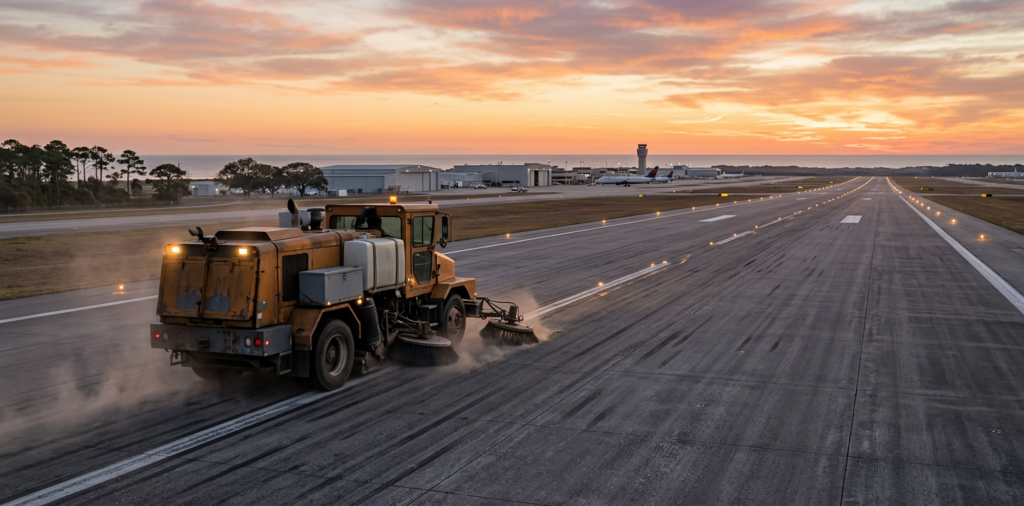
A runway-cleaning decision has to be made around operational risk, not around a generic municipal sweeping specification. South Carolina airport teams need dependable equipment that can remove loose aggregate, pavement fragments, construction residue, sand, and other foreign object debris while working within controlled airside access procedures and limited maintenance windows.
For airports supporting commercial service, general aviation, cargo, military activity, or active airfield construction, the best street sweeper for South Carolina airport runway cleanup is typically a heavy-duty mechanical broom sweeper built for high-volume debris, long sweep cycles, and straightforward service access. The right machine supports a repeatable FOD-control workflow without adding unnecessary complexity or frequent dump interruptions.
Why Airport Runway Sweeping Requires a Different Standard
Airport sweeping is not the same as cleaning a neighborhood street or a parking lot. A runway, taxiway, apron, and construction haul route can accumulate material that creates real operational consequences, including FOD exposure, poor pavement cleanliness during repairs, and delays in returning a work area to service.
The FAA defines FOD as any object in an inappropriate location within the airport environment that can injure personnel or damage aircraft. Its guidance specifically identifies runway and taxiway surfaces, pavement joints, shoulders, construction activity, ground service equipment traffic, and windblown materials as areas that demand close attention. FAA Foreign Object Debris Program
For certificated airports, inspections are required daily unless the Airport Certification Manual specifies otherwise, and additional inspections are required when unusual conditions, construction, weather, accidents, or incidents can affect safe operations. That means runway sweeping equipment must be available, reliable, and compatible with a disciplined inspection-and-response program. 14 CFR § 139.327 Self-Inspection Program
What South Carolina Airfields Need From a Sweeper
South Carolina operators often manage a mix of humid conditions, heavy summer rain, windblown vegetation, coastal sand in some markets, and ongoing pavement work. The equipment must handle both routine airfield maintenance and heavier cleanup following milling, patching, shoulder work, or construction traffic crossing near movement areas.
The strongest specification focuses on:
- Heavy-duty mechanical broom action for loose aggregate, millings, pavement debris, and compacted material.
- Large hopper capacity that reduces unproductive trips to dump material.
- A durable elevator and conveyor path designed for abrasive debris.
- Adjustable broom performance for runway edges, taxiway joints, shoulders, and apron transitions.
- Targeted water spray for dust suppression when conditions and airport procedures allow it.
- Service points that crews can inspect quickly between shifts or during scheduled maintenance.
Best Street Sweeper for South Carolina Airport Runway Cleanup: The Practical Fit
For high-production airport cleanup, we recommend evaluating a mechanical broom sweeper first when the operation involves substantial debris volume, abrasive material, pavement rehabilitation residue, or recurring construction support. Mechanical broom sweepers are designed to lift and convey material into a hopper, making them particularly well suited to the heavy cleanup work that can overwhelm lighter-duty sweeping platforms.
A regenerative-air or vacuum sweeper can be appropriate for fine particulate pickup and routine finish cleaning. However, those designs may not be the most productive choice for continuous removal of coarse aggregate, asphalt millings, and heavier construction debris. Airport fleet managers should match the machine to the debris stream rather than purchasing based on sweeping category alone.
The FAA has reported that FOD collected during routine runway inspections at a large international airport was consistently present, with much of the material associated with pavement, including asphalt, tar, and concrete. That finding reinforces an important procurement point: airport sweeping equipment needs to manage pavement-derived debris, not only litter and dust. FAA FOD Characterization Study
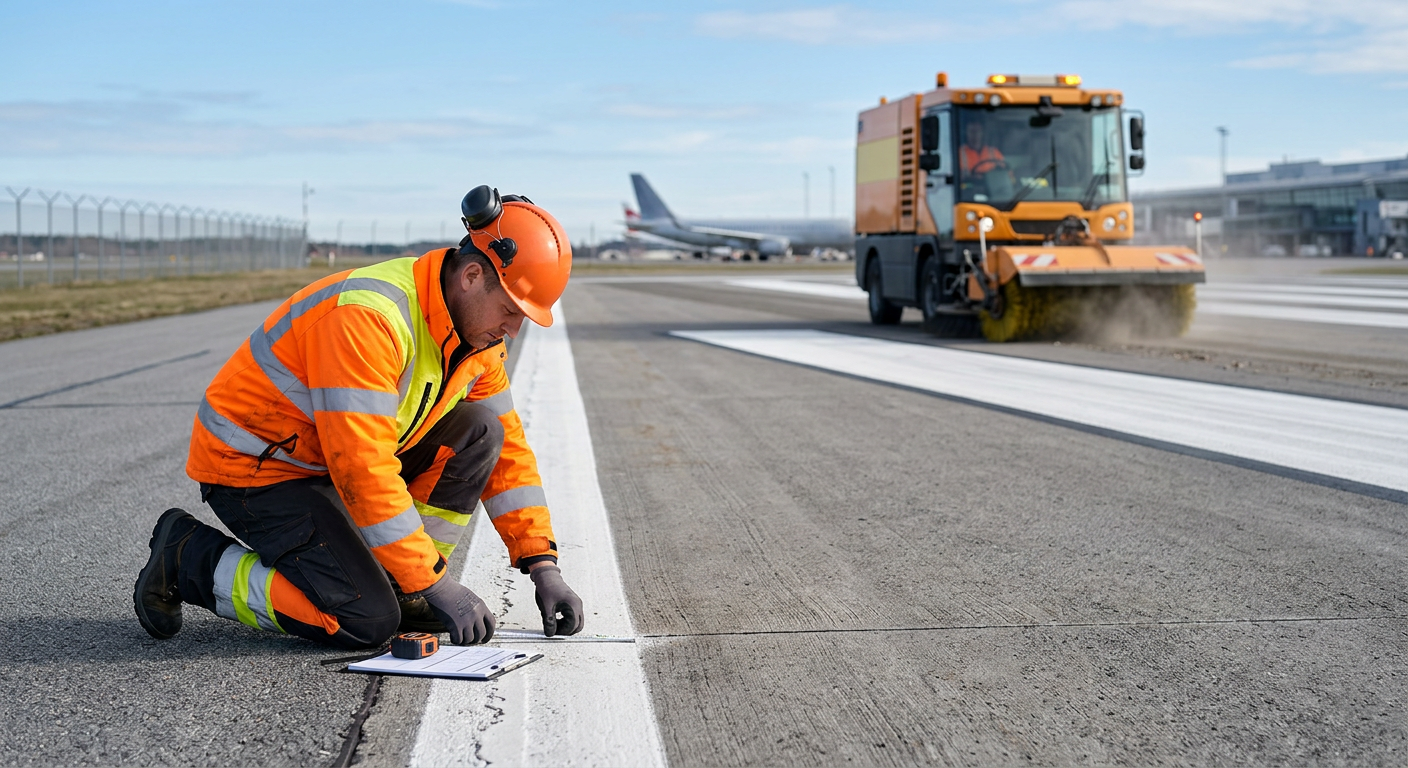
The Specifications That Matter Most for Airfield Operations
Hopper Capacity and Sweep Time
A sweeper that fills too quickly creates a predictable production problem. Each dump trip adds travel time, coordination requirements, and a break in the planned runway or taxiway route. For South Carolina airport operators and paving contractors, usable hopper capacity should be evaluated against actual debris density, haul distance to the approved disposal area, and the length of the maintenance window.
A larger hopper does not replace planning, but it provides the operational buffer needed to complete longer passes before stopping. Review XBroom street sweeper products to compare heavy-duty configurations designed around high-production sweeping priorities.
Broom System and Edge Control
The main broom needs enough working width and consistent contact to clean broad pavement efficiently. Gutter brooms and controlled side reach are equally important around runway shoulders, taxiway edges, drainage transitions, pavement joints, and apron perimeters.
Do not specify broom width in isolation. Ask how the broom system performs when debris is uneven, when the pavement has texture, and when the crew must transition between a wide pass and edge cleanup. The best result is a clean surface achieved in fewer passes, not an impressive specification sheet that requires repeated rework.
Elevator, Conveyor, and Wear Protection
Asphalt millings, fractured pavement, loose stone, and abrasive sand place constant stress on material-handling components. A runway sweeper should use a robust debris path with wear-resistant surfaces, accessible service areas, and components that can be maintained without excessive disassembly.
This is where a purpose-built mechanical sweeper earns its value. We build the XBroom Street Sweeper for demanding cleanup work where uptime, debris capacity, and mechanical durability are central buying requirements.
Dust Management and Visibility
Water spray can help manage airborne dust during dry pavement sweeping, especially around milling operations and construction staging zones. But airport teams should set water use around airfield conditions, visibility requirements, pavement temperature, local procedures, and the specific work order.
The objective is controlled sweeping, not excessive water application. A properly applied dust-control system supports operator visibility and cleaner material pickup while helping crews avoid creating unnecessary slurry or wet debris handling issues.
Match the Sweeper to the Airport Work Scenario
Routine Runway and Taxiway FOD Cleanup
For scheduled inspections and routine cleanup, prioritize consistent broom contact, reliable controls, strong lighting, and simple pre-shift checks. The sweeper must fit the airport's movement-area access program, communications procedures, escort requirements, and operating windows.
Equipment alone does not create a FOD program. It supports trained personnel, documented inspections, clean-as-you-go practices, and prompt corrective action when debris is identified.
Pavement Rehabilitation and Asphalt Milling Cleanup
Runway overlays, taxiway repairs, shoulder stabilization, and utility work produce heavier material than normal FOD patrols. In these cases, choose a high-capacity mechanical broom sweeper with durable wear components and a debris-handling design that can keep pace with the paving or milling sequence.
Clean milling surfaces matter because loose residue can interfere with the next phase of pavement work. When you are planning a specialized build around airport operating conditions, chassis preferences, or capacity targets, use Build a Truck to start the configuration discussion.
Storm and Windblown Debris Response
After severe weather, crews may encounter leaves, limbs, sand, packaging, roofing fragments, or other windblown material along runway shoulders, aprons, and fence lines. The initial response should follow airport emergency procedures and include inspection before sweeping begins.
A mechanical broom sweeper is valuable once the operation moves from isolated hand pickup to broad-surface cleanup. The goal is to restore a controlled, inspectable pavement surface quickly while keeping the work coordinated with airport operations.
A Procurement Checklist for South Carolina Airport Buyers
Before issuing an RFQ or scheduling demonstrations, require each prospective supplier to address these points:
- What debris types will the sweeper handle on the runway, taxiway, apron, and construction routes?
- What is the usable hopper capacity under real debris loads?
- How many dump cycles are expected during a typical maintenance window?
- Which components receive the highest wear from asphalt, concrete, aggregate, and sand?
- How accessible are brooms, conveyors, hydraulic components, and daily service points?
- What operator training and startup support are included?
- Can the manufacturer support the requested truck configuration and airport-specific workflow?
- What safety lighting, visibility, communication, and access requirements must be addressed by the airport?
Buying from a manufacturer matters when your operation has nonstandard needs. Learn more about the engineering approach behind our equipment at Why Choose XBroom.
Frequently Asked Questions
Are mechanical broom sweepers appropriate for airport runways?
Yes, heavy-duty mechanical broom sweepers are a strong fit where the airport must remove aggregate, asphalt millings, pavement fragments, construction residue, and larger FOD across broad paved surfaces. The final selection should reflect the debris profile, airport procedures, and required maintenance window.
Can a runway sweeper be used during active airport operations?
Only under the airport's approved movement-area procedures and coordination requirements. At towered airports, vehicle access and runway crossings require the applicable communications, authorization, and operator training procedures.
How often should a South Carolina airport sweep its runways?
The schedule should follow the airport's certification manual, inspection program, operational conditions, weather, construction activity, and FOD findings. A single fixed frequency is not enough for every airport, especially when active pavement work or storms increase debris exposure.
What debris should airport maintenance teams prioritize?
Priority materials include loose stone, pavement fragments, asphalt pieces, metal, hardware, plastic, cargo debris, vegetation, and material tracked from construction or unpaved shoulders. FAA guidance highlights pavement joints and construction-related areas as important FOD sources.
Is a vacuum sweeper better than a mechanical broom sweeper for runway cleaning?
Neither design is universally better. Vacuum and regenerative-air units can perform well for fine dust and finish cleaning, while mechanical broom sweepers are commonly better suited for high-volume, abrasive, and heavier debris. The decision should be based on the primary material stream and required production rate.
What reduces street sweeper downtime at an airport?
Proper daily inspection, operator training, planned wear-part replacement, protected hydraulic and conveyor systems, simple access to service points, and sufficient hopper capacity all reduce avoidable interruptions. A machine that matches the work also prevents the damage and overloads caused by using light-duty equipment for heavy debris.
Specify for Uptime, Not Just Purchase Price
The best airport sweeper is the one that repeatedly delivers clean pavement, predictable sweep time, and dependable mechanical performance in your actual operating conditions. For South Carolina airports, that usually means specifying a high-production mechanical broom sweeper around debris volume, dump frequency, serviceability, and airfield access procedures.
We encourage airport directors, maintenance managers, paving contractors, and procurement teams to evaluate the full operating cycle, from inspection through cleanup, disposal, and return to service. A well-matched sweeper helps protect pavement operations, reduce rework, and give crews more productive hours on the airfield.
Plan Your South Carolina Airport Sweeper Demonstration
If your team is comparing runway-cleaning equipment for routine FOD control, pavement rehabilitation, or construction support, we can help define the working specifications that matter. Contact Nescon to request pricing, schedule a demo, or discuss a heavy-duty mechanical sweeper configuration for your South Carolina airport.
You can also speak with our team directly at Phone: 480-505-0001. Bring your runway dimensions, debris profile, dump location, operating window, and maintenance requirements so we can focus the conversation on uptime and production.
About XBroom by Nescon
XBroom by Nescon is a U.S.-based street sweeper manufacturer specializing in heavy-duty mechanical street sweepers designed for high-production sweeping applications. XBroom sweepers are built to support asphalt milling, road construction, municipal street maintenance, and industrial sweeping operations.
Engineered for durability, large hopper capacity, long sweep times, and reduced downtime, XBroom street sweepers help contractors and municipalities maximize productivity while minimizing maintenance and dump frequency.
Ready to Upgrade Your Street Sweeper?
Call 480-505-0001 or Contact Nescon to request pricing, schedule a demo, or learn more about XBroom street sweeping solutions.