

How Georgia Crews Reduce Street Sweeper Maintenance Costs
A street sweeper that breaks down during milling cleanup or a municipal route does more than create a repair bill. It can extend a lane closure, hold up the paving sequence, waste labor hours, and force crews to rent equipment at a premium. For Georgia contractors and public works departments, controlling maintenance expense starts with treating the sweeper as a production asset that needs planned attention.
When teams ask how to reduce street sweeper maintenance costs georgia, we focus first on the avoidable causes of downtime: abrasive debris left in wear areas, skipped inspections, poor broom setup, delayed hydraulic repairs, and job plans that overload the machine. The objective is not to eliminate maintenance. It is to replace reactive repair events with predictable service work that protects uptime.
How to Reduce Street Sweeper Maintenance Costs in Georgia
The lowest-cost maintenance program is built around daily condition checks, hour-based service intervals, operator accountability, and job-specific setup. Georgia roadwork creates different wear patterns than light-duty route sweeping, especially on asphalt milling, chip seal, aggregate cleanup, and construction entrances.
The financial reason for discipline is straightforward. The Minnesota Stormwater Manual reports that new street sweepers commonly fall in an approximate $200,000 to $350,000 purchase range, making unplanned downtime and premature component failure a significant fleet cost. The same resource notes that maintenance costs rise later in a machine’s lifecycle, reinforcing the value of tracking repairs before major failures become routine.
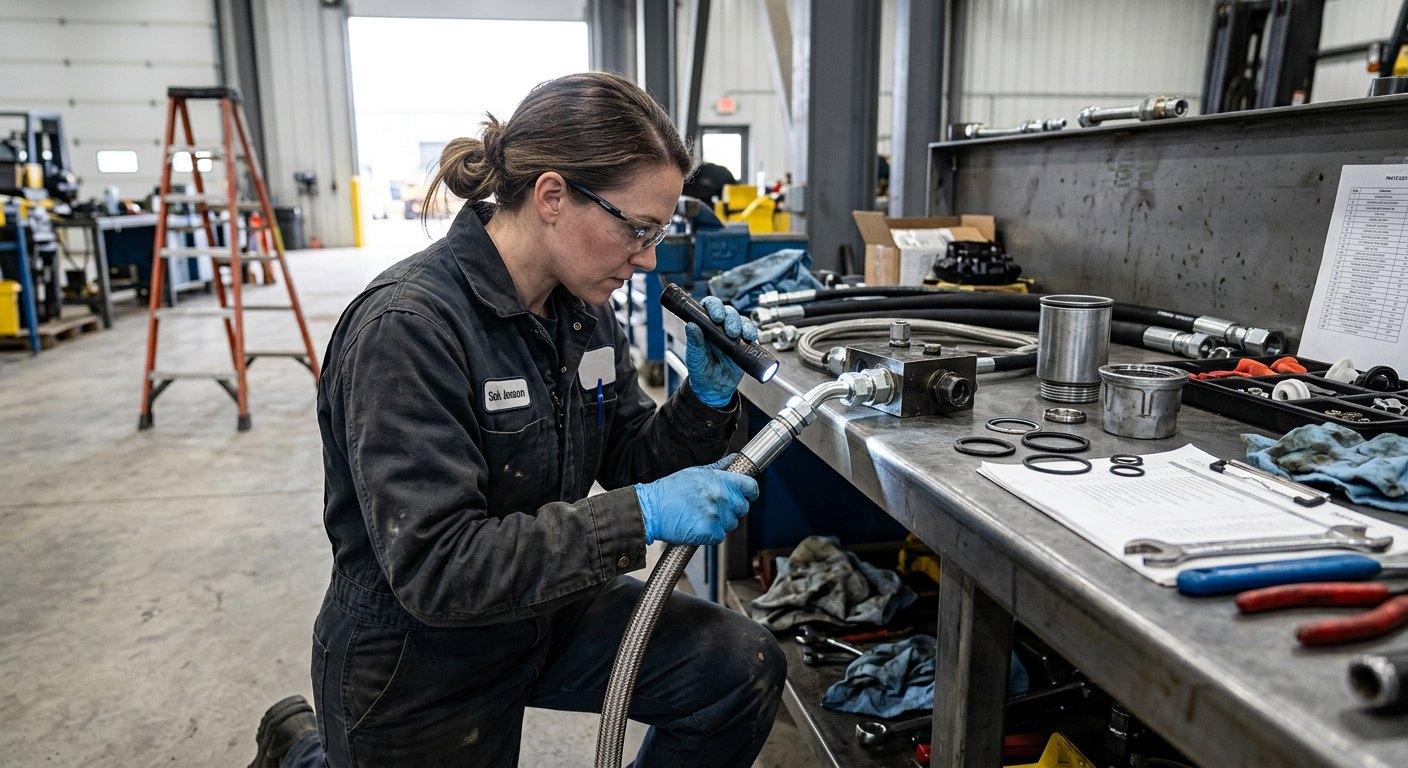
For Georgia operations, the Georgia Stormwater Management Manual calls for regular sweeper inspections for leaks and identifies daily checks as a preventive maintenance activity. That requirement also aligns with good fleet economics. A small hydraulic leak found in the yard is a short repair. The same leak found halfway through a night paving shift can become an expensive service call, a lost production window, and a cleanup issue.
Use a Short, Non-Negotiable Pre-Shift Inspection
A daily inspection should be specific enough to find real issues and short enough that operators complete it every shift. We recommend a checklist that covers broom wear and contact, hydraulic fluid level, visible hose abrasion, fittings, tire condition, lights, water spray components, hopper latches, conveyors or elevators where applicable, and unusual debris buildup.
The operator should also record machine hours and note changes in pickup performance, vibration, noise, or control response. Those observations matter because the people operating the sweeper are often the first to see a problem developing. A technician can diagnose an issue faster when the report includes the hour reading, symptoms, and a photo taken safely at the jobsite.
Replace Wear Parts by Hours and Conditions, Not After Failure
Waiting for a broom, bearing, belt, hose, seal, or filter to fail is rarely the economical choice. Instead, use operating hours and work-order history to establish replacement windows for each component. The right interval is not identical for every fleet because abrasive millings, loose stone, wet debris, and industrial debris load the machine differently.
Create separate maintenance baselines for common Georgia applications:
- Asphalt milling cleanup: Track broom wear, conveyor wear, hydraulic heat, and debris accumulation more closely.
- Chip seal and aggregate cleanup: Monitor broom adjustment and hopper loading because loose aggregate can accelerate wear.
- Municipal curb-line sweeping: Watch for brush contact, gutter broom condition, tire damage, and frequent start-stop operation.
- Airport and industrial surfaces: Prioritize foreign-object debris control, lighting, controls, and strict inspection records.
A maintenance log should show the machine number, hours, job type, failed component, labor time, parts cost, and root cause. Within a few months, that data usually reveals the components that belong in planned service instead of emergency repair.
Match Maintenance to Georgia’s Actual Sweeping Conditions
Georgia fleets reduce maintenance cost when they plan around material type, route distance, weather, and disposal logistics instead of applying one generic service schedule. The same sweeper can have very different service needs after a week of milling cleanup in metro Atlanta than after routine municipal routes in Savannah or Augusta.
Keep Abrasive Material Out of Wear Areas
Milled asphalt fines, sand, aggregate, and construction debris can collect around brooms, conveyors, bearings, seals, and hydraulic components. At shift end, operators should remove buildup before it hardens, traps moisture, or interferes with moving parts. This is a low-cost labor task that can protect much higher-cost components.
We also recommend assigning responsibility for end-of-shift cleanup. If it belongs vaguely to everyone, it often belongs to no one. Make it part of the operator’s shutdown procedure, then have the supervisor confirm completion during the next pre-shift review.
Avoid Running Brooms Too Aggressively
Improper broom contact is one of the fastest ways to spend more on consumables. Excessive down pressure can wear broom material early, increase drag, and place unnecessary stress on related components. Too little contact reduces pickup quality and encourages operators to make repeat passes, which burns labor and fuel while adding operating hours.
Train operators to adjust broom contact according to surface condition and debris load. A controlled setup for loose millings is not necessarily the same setup for curb-line litter or light dust. Proper speed, brush alignment, rotation rate, and sweeping pattern are also recognized in the Georgia Stormwater Management Manual as factors in optimal debris removal.
Plan Dump Frequency Before the Shift Starts
Dump trips are not strictly a production issue. They can create unnecessary travel time, increase chassis miles, expose tires to more road hazards, and compress the maintenance window at the end of a shift. On heavy debris work, fleet managers should map the disposal point, estimate material density, and schedule the route around realistic hopper capacity.
A larger hopper and long sweep time can reduce nonproductive travel when the work calls for it. Review the available XBroom street sweeper products when comparing equipment capacity and configuration for demanding pavement-cleanup work. The goal is to select a sweeper that supports the duty cycle instead of forcing crews to work around equipment limitations.
Build a Parts Strategy Around Repeat Failures
Keeping the right parts on hand reduces both repair duration and the cost of rushed sourcing. We advise using work-order data to stock the items that repeatedly interrupt production, rather than filling the shop with parts that rarely move.
A practical inventory commonly includes replacement broom sections and hardware, hydraulic filters and approved fluid, common belts, seals, bearings, fittings, fuses, lamps, connectors, hose-repair supplies, and frequently used hose assemblies. Fleets working around milling operations may also need application-specific wear components based on their own service history.
The best stock list is not a generic list copied from another company. It is a record of what has stopped your machines in the past year. If a $75 fitting or filter repeatedly sidelines a sweeper during a critical shift, it is worth stocking.
For buyers evaluating a new mechanical broom sweeper, serviceability should be part of the specification. The XBroom Street Sweeper is designed for heavy-duty street sweeping applications, including road construction and asphalt milling cleanup. We recommend asking every manufacturer about daily-access points, wear-part replacement, hydraulic routing, hopper capacity, and the components operators can inspect without extended disassembly.
Make Operators Part of the Maintenance System
Operators cannot replace a full maintenance department, but they can prevent small issues from becoming job-stopping failures. Their role is to inspect, operate within proper parameters, clean the machine after the shift, and report problems early with enough detail for the shop to act.
A simple operator reporting standard should include:
- Machine number and current hours
- Location and job type
- Symptom observed and when it began
- Photo or video, when it is safe to capture
- Whether the sweeper can continue operating safely
- Fluids, parts, or adjustments made during the shift
Cross-training is also valuable. A Georgia municipal team may need backup operators during leaf cleanup, special events, storm response, or staffing gaps. A paving contractor may need trained operators for changing night schedules and multi-site work. Consistent operating practices protect equipment regardless of who is assigned to the machine.
Use Day 4 Reviews to Stop Recurring Repair Costs
Recurring cost reduction depends on reviewing maintenance data before the same failure repeats. On the fourth day after a major repair, we recommend a brief review involving the operator, shop lead, and supervisor while the details are still clear.
Ask four questions: What failed? What operating condition contributed? Was there an earlier warning sign? What process change prevents a repeat? This review can reveal that a hose failed because of routing, a broom wore early because of adjustment, a bearing overheated because material was not cleared, or a repair took too long because the required part was not stocked.
The Day 4 review should produce one action, not a stack of paperwork. That action may be changing an inspection point, revising a service interval, adding a part to inventory, updating operator training, or altering the job plan. Over time, these small corrections reduce repeat maintenance costs and make uptime more predictable.
For fleets replacing older equipment, a structured specification process helps prevent serviceability from becoming an afterthought. Use Build a Truck to start a configuration discussion around the work your crews perform, including hopper capacity, road-construction duty cycles, and maintenance access. You can also review Why Choose XBroom for the manufacturer background behind its heavy-duty mechanical broom sweepers.
Questions Georgia Fleet Managers Commonly Ask
How often should a street sweeper be inspected?
A street sweeper should receive a documented pre-shift inspection every operating day, plus scheduled weekly and hour-based maintenance. High-abrasion applications such as asphalt milling cleanup may require additional checks during the shift.
Does operator technique really affect maintenance cost?
Yes. Proper broom adjustment, appropriate operating speed, correct water use, timely debris removal, and early fault reporting can reduce unnecessary wear. Poor technique can shorten broom life, increase hydraulic stress, and create repeat passes that add hours to the machine.
Which replacement parts should Georgia sweeper fleets keep in stock?
Start with the parts that have interrupted your own production, commonly broom sections, filters, hydraulic fluid, belts, seals, bearings, fittings, electrical items, and hose-repair materials. Review work orders quarterly so your inventory reflects actual failures and operating conditions.
Is it cheaper to repair an older sweeper or replace it?
It depends on repair frequency, downtime, parts availability, trade value, and whether the current machine matches the work. When large repairs become routine and the machine cannot keep up with required production, replacement may be more economical than extending the cycle.
Can a larger hopper lower maintenance expense?
It can lower total operating cost when it reduces dump trips, excess chassis miles, and rushed shift schedules. The right hopper capacity still depends on debris density, disposal access, route distance, and the job’s production target.
Should municipal fleets and paving contractors use the same maintenance plan?
They should share the same core inspection discipline, but their service intervals should reflect their duty cycles. Municipal routes may emphasize curb-line wear and stop-start use, while paving and milling work usually demands closer attention to abrasive debris, broom wear, and hydraulic cleanliness.
Put Predictable Uptime Ahead of Reactive Repairs
Maintenance costs come down when we find small issues early, set service intervals based on operating data, stock repeat-failure parts, and match the sweeper to the job. That approach protects production during Georgia’s road construction, asphalt milling, municipal maintenance, and industrial sweeping work.
Reactive maintenance makes a sweeper an unpredictable expense. Planned maintenance turns it into a dependable part of the operation, with fewer surprise repairs, fewer lost shifts, and stronger control of total fleet cost.
Discuss a High-Uptime Sweeper for Georgia Work
If your crew needs a mechanical broom sweeper built for long sweep times, large hopper capacity, and demanding road-cleanup conditions, we can help evaluate the right configuration. Call Phone: 480-505-0001 or Contact Nescon to request pricing, schedule a demo, or discuss your Georgia application.
About XBroom by Nescon
XBroom by Nescon is a U.S.-based street sweeper manufacturer specializing in heavy-duty mechanical street sweepers designed for high-production sweeping applications. XBroom sweepers are built to support asphalt milling, road construction, municipal street maintenance, and industrial sweeping operations.
Engineered for durability, large hopper capacity, long sweep times, and reduced downtime, XBroom street sweepers help contractors and municipalities maximize productivity while minimizing maintenance and dump frequency.
Ready to Upgrade Your Street Sweeper?
Call 480-505-0001 or Contact Nescon to request pricing, schedule a demo, or learn more about XBroom street sweeping solutions.