
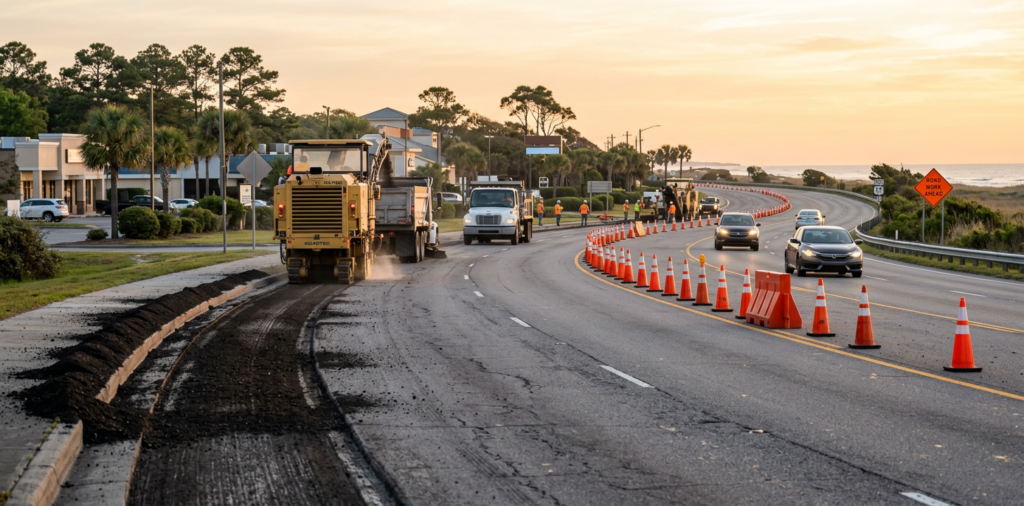
Low-Capacity Street Sweepers Slow South Carolina Paving Crews
A sweeper can appear productive while it is moving, yet a small hopper can quietly consume the shift through repeated dump runs, jobsite travel, and idle time. For South Carolina paving contractors, milling crews, public works departments, and private sweeping operators, low-capacity street sweeper problems usually show up as lost production rather than one obvious equipment failure.
The issue becomes more costly when sweeping supports asphalt milling, chip seal, roadway reconstruction, or municipal maintenance. A full hopper does not just pause the sweeper. It can interrupt the paving sequence, leave material in the work zone longer, extend lane-closure exposure, and force supervisors to rework a plan that was already moving.
Why Capacity Matters on South Carolina Roadwork
Usable hopper capacity determines how long a mechanical broom sweeper can stay productive before leaving the work area. On abrasive milling cleanup and aggregate-heavy assignments, the difference between a properly matched machine and an undersized one can shape the entire crew’s pace.
South Carolina roadwork creates a demanding operating environment. SCDOT reported in its January 2026 Annual Report that paving projects were underway in all 46 counties and that nearly one-quarter of the state highway network had been put under contract for repaving since 2017. That level of activity makes predictable cleanup capacity important for contractors and agencies that need to protect schedules across multiple locations.
| Low-Capacity Condition | Immediate Effect | Operational Impact | Better Planning Focus |
|---|---|---|---|
| Hopper fills too quickly | More dump stops | Less sweeping time | Match hopper volume to debris load |
| Dump site is remote | Excess travel miles | Delayed paving support | Confirm disposal access before mobilizing |
| Heavy millings enter hopper | Reduced usable capacity | Uneven cleanup pace | Specify for material density |
| One sweeper supports several crews | Production gap during dumping | Crew idle time | Add capacity or coordinate a backup unit |
A Full Hopper Creates More Than One Delay
The visible delay is unloading. The larger cost includes leaving the closure, traveling to the disposal area, waiting for access, dumping safely, and rejoining the work zone. On a high-volume paving or milling assignment, those non-sweeping miles can accumulate faster than most production plans allow.
Low-capacity sweepers also limit flexibility. If the milling crew produces a heavier-than-expected windrow, an undersized machine cannot absorb the added material without changing the dump cycle. That puts the operator in a reactive position when the rest of the crew needs consistent cleanup support.
The Main Problems With Low-Capacity Street Sweepers in South Carolina
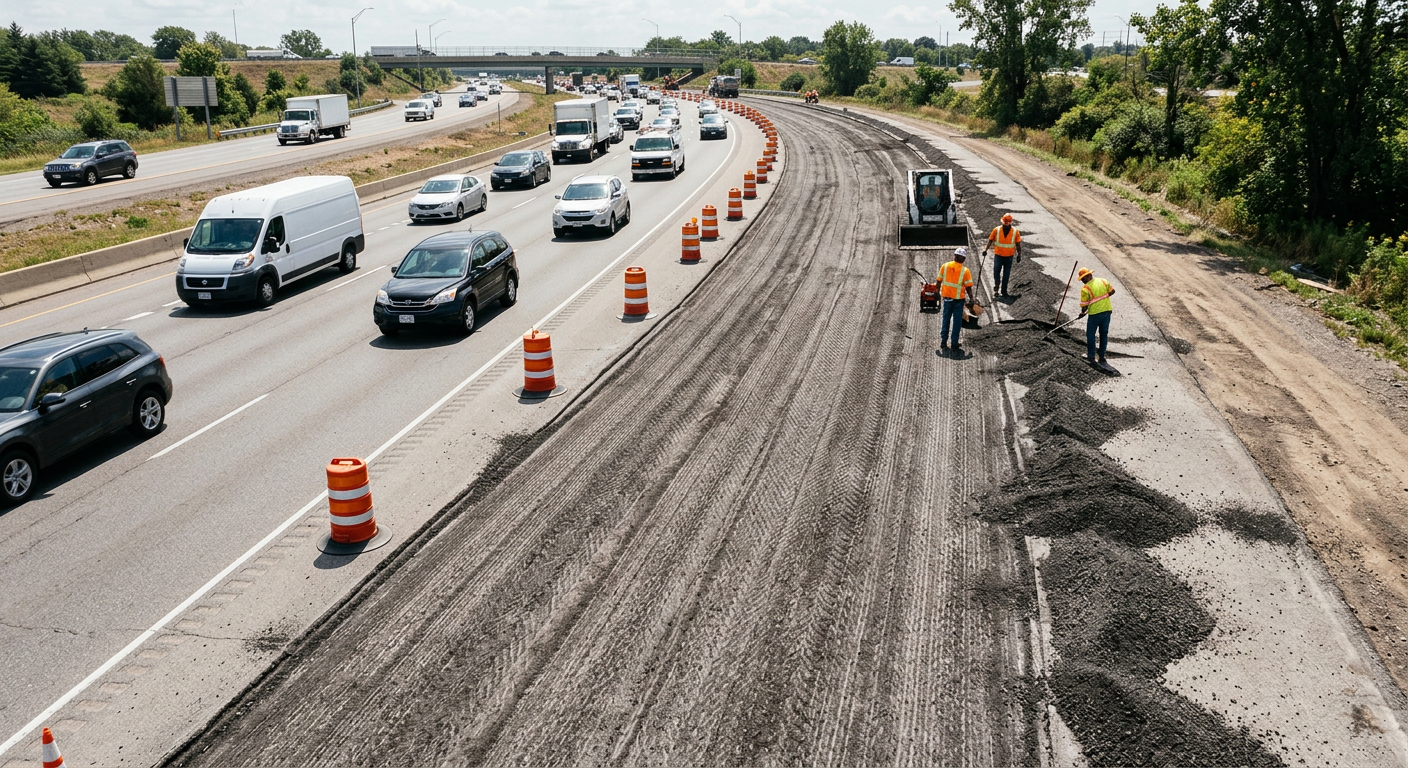
Low-capacity equipment creates predictable production constraints on South Carolina road projects, particularly when debris volume is high and disposal locations are not close to the active work zone. The result is usually less sweep time, more coordination pressure, and higher exposure to schedule slippage.
Frequent Dump Runs Reduce Productive Sweep Time
A mechanical broom sweeper earns its value while it is collecting material from the road surface. Every dump trip reduces that active collection window, especially on projects where the disposal point is beyond the lane closure or requires travel through active traffic.
This is a common issue on corridor paving, rural resurfacing, and municipal street maintenance routes with dispersed collection points. A crew may have enough labor, traffic control, and paving capacity to maintain pace, but the sweeper becomes the limiting asset because it cannot stay on the roadway long enough.
Paving and Milling Crews Can Outrun the Sweeper
Milling work can create concentrated debris loads that quickly exceed the practical working capacity of a small hopper. If the sweeper falls behind, loose material may remain where subsequent operations need a clean surface, increasing the likelihood of extra passes and delayed hand cleanup.
The right question is not simply whether a sweeper can collect millings. It is whether it can collect enough millings, for enough time, to support the production rate of the milling crew. Equipment selection should account for expected tons, material density, sweep width, jobsite distance, and disposal access.
Lane Closures Last Longer Than Planned
A sweeper that repeatedly exits and re-enters the work area can stretch the time required to finish cleanup. That may keep traffic-control devices in place longer, increase labor hours, and make project sequencing less predictable.
For public agencies, longer closure windows can also affect service expectations and resident complaints. For contractors, they can create avoidable labor and traffic-control costs that erode the margin on a planned production day.
Operators Face Higher Stress and More Rework
An undersized hopper forces operators to make constant decisions about when to leave the sweep path. If they wait too long, performance can decline. If they leave too early, the crew loses productive time. Neither option improves the job.
This pressure can lead to inconsistent cleanup, excess broom wear from repeated passes, or additional support equipment being used to compensate for the capacity shortfall. A properly specified high-production sweeper makes the operating plan simpler because the operator can focus on pickup quality and safe machine operation.
Capacity Planning Should Start Before Mobilization
The most effective way to avoid low-capacity street sweeper problems is to define the duty cycle before equipment reaches the project. We recommend treating hopper capacity as a production variable, not a catalog feature.
Evaluate Debris Volume and Material Type
Asphalt millings, loose aggregate, sand, dirt, and municipal litter do not fill a hopper at the same rate. Heavy, dense millings can consume usable capacity quickly, while lighter municipal debris may allow longer intervals between dumps.
Project managers should estimate the material load based on the work scope, not a generic machine specification. A sweeper supporting a short downtown maintenance route has very different capacity requirements than one assigned to a long milling closure on a state route.
Map the Dump Cycle
Before the shift begins, crews should confirm the approved disposal location, travel route, access restrictions, opening hours, and any site-specific safety requirements. A nearby dump point can make a moderate-capacity hopper workable. A remote or congested disposal point can make that same hopper a bottleneck.
We also recommend documenting the expected dump interval during the first shift. That real-world observation gives fleet managers a better basis for assigning equipment to the next project than a theoretical estimate alone.
Match Equipment to the Full Production System
A sweeper should be matched to the milling machine, paving train, traffic-control plan, labor availability, and disposal process around it. Selecting the lowest initial-cost configuration without considering the full cycle can create higher operating costs through lost time.
For fleets reviewing high-production options, the XBroom street sweeper products page provides a starting point for comparing equipment built for demanding road sweeping applications. Contractors can also review the heavy-duty XBroom Street Sweeper configuration when evaluating long sweep times, mechanical broom durability, and jobsite productivity.
What a Better Sweeper Specification Looks Like
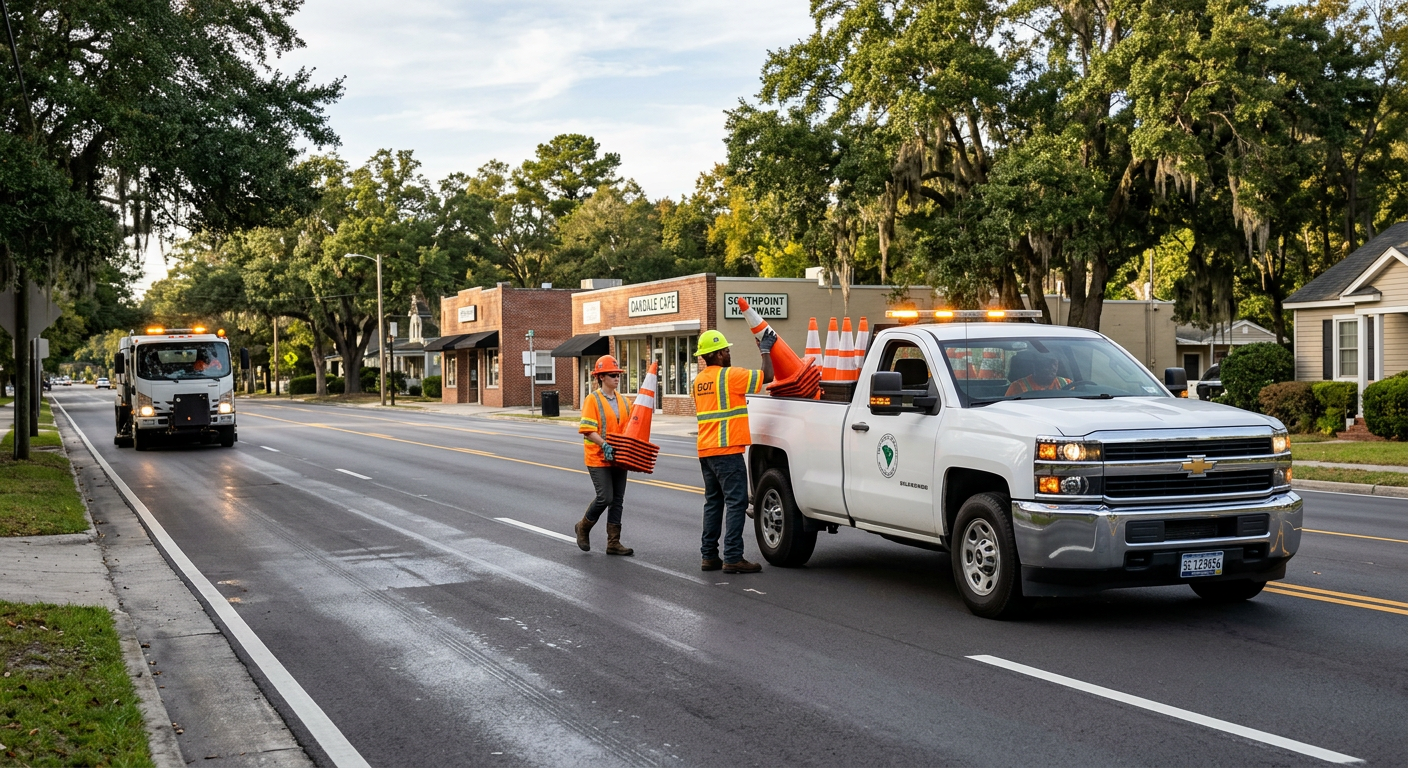
A better specification focuses on productive hours, service access, and debris-handling capability rather than hopper size alone. Capacity matters most when it works alongside durable broom components, reliable controls, and maintenance access that supports uptime.
Prioritize Usable Capacity, Not Just Published Capacity
Published capacity is only one part of the decision. Fleet managers should ask how much material the hopper can handle in the actual debris conditions, how easily operators can manage the load, and how often the expected job will require unloading.
The best fit is the unit that keeps the sweeper in the work zone longer without compromising safe handling, maintenance access, or truck configuration. A large hopper that is poorly matched to the route, disposal plan, or chassis is not automatically the right answer.
Build for the Jobsite, Not a Generic Route
South Carolina contractors may need different configurations for interstate work, coastal municipal routes, industrial facilities, airport access roads, or rural resurfacing. We recommend using the Build a Truck process to discuss chassis preferences, debris conditions, operating hours, and capacity targets before committing to a configuration.
Manufacturer experience also matters when a fleet needs equipment designed around the realities of milling cleanup and road construction. Learn more about the contractor background behind the equipment at Why Choose XBroom.
Common Questions About Low-Capacity Street Sweepers
How do we know if our street sweeper hopper is too small?
Your hopper is likely too small if dump runs repeatedly interrupt the production plan, force the sweeper to fall behind the milling crew, or extend lane-closure time. Track active sweep time, travel time to disposal, and the number of unloading cycles for several comparable jobs to identify the pattern.
Can a small hopper work for municipal street sweeping?
Yes, a small hopper can work for light municipal routes with short disposal distances and lower debris volume. It becomes less suitable when routes are long, debris is dense, or the machine must support special-event cleanup, construction zones, or multiple service areas in one shift.
Does a larger hopper eliminate the need for job planning?
No, a larger hopper reduces dump frequency, but it does not replace planning. Crews still need a confirmed disposal location, safe traffic movements, maintenance checks, and a realistic understanding of debris volume.
Are mechanical broom sweepers suitable for asphalt milling cleanup?
Yes, heavy-duty mechanical broom sweepers are well suited to collecting dense millings and loose aggregate when they are configured for the production rate and debris load. The key is selecting adequate usable capacity and maintaining broom condition throughout the shift.
Should we assign a backup sweeper on large paving projects?
A backup unit can be worthwhile when one sweeper is supporting a high-output milling or paving operation with limited tolerance for interruption. The decision should consider project duration, dump-cycle distance, expected material volume, and the cost of a stalled crew.
What operating data should fleet managers track?
Fleet managers should track productive sweep hours, dump frequency, travel time to disposal, debris type, broom wear, fuel use, and unscheduled maintenance. Those measurements show whether capacity is limiting production or if another part of the operation needs attention.
Specify for More Productive South Carolina Sweeping
Low capacity is rarely an isolated equipment issue. It affects the entire production chain, from milling output and lane closures to labor utilization and daily project margin.
For South Carolina crews, the stronger equipment decision is the one that supports the actual debris load, jobsite distance, and working hours. When a sweeper stays productive longer between dumps, operators can maintain cleanup quality, supervisors can protect the schedule, and the paving operation can keep moving.
Discuss a High-Capacity Sweeper Configuration
We help contractors, municipalities, and private sweeping companies evaluate mechanical street sweepers for asphalt milling, paving cleanup, municipal maintenance, and industrial surfaces. To discuss capacity, uptime, and truck configuration, Contact Nescon for a quote or demo request or call Phone: 480-505-0001.
A properly specified sweeper can reduce dump frequency, protect productive sweep time, and help South Carolina crews keep roadwork on schedule.
About XBroom by Nescon
XBroom by Nescon is a U.S.-based street sweeper manufacturer specializing in heavy-duty mechanical street sweepers designed for high-production sweeping applications. XBroom sweepers are built to support asphalt milling, road construction, municipal street maintenance, and industrial sweeping operations.
Engineered for durability, large hopper capacity, long sweep times, and reduced downtime, XBroom street sweepers help contractors and municipalities maximize productivity while minimizing maintenance and dump frequency.
Ready to Upgrade Your Street Sweeper?
Call 480-505-0001 or Contact Nescon to request pricing, schedule a demo, or learn more about XBroom street sweeping solutions.