
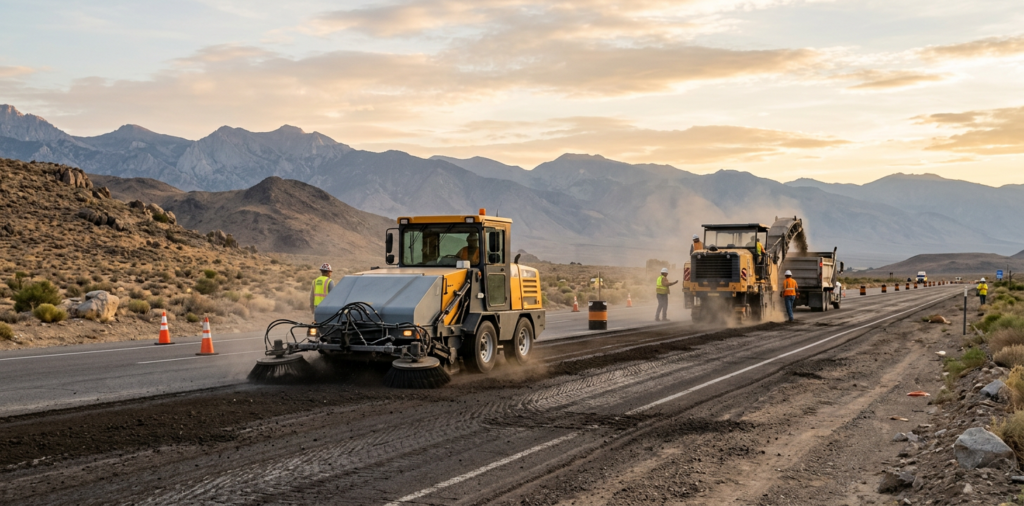
On an active Nevada paving project, a full hopper can interrupt far more than the sweeping pass. It can pull an operator out of the work zone, create an unproductive trip to the disposal area, and leave the milling or paving crew waiting on a clean surface. Those interruptions add up quickly during restricted lane closures and overnight production windows.
We reduce street sweeper dump frequency by treating material collection as part of the production plan, not an afterthought. The right combination of hopper capacity, broom setup, material flow, dump-site planning, dust control, and preventive inspections helps a mechanical broom sweeper stay productive longer between stops.
Why Dump Frequency Matters on Nevada Construction Sites
Nevada contractors often work around long haul distances, limited access points, wind, abrasive aggregate, and tightly controlled traffic windows. A sweeper that needs frequent dump trips can become the pacing item for milling cleanup, shoulder reconstruction, chip seal support, and final pavement preparation.
Every unnecessary dump cycle creates several forms of lost production:
- Travel time from the sweep zone to the approved disposal area
- Waiting time at a shared dump location
- Time spent leaving and re-entering traffic control
- Reduced coordination with milling, tack, paving, and striping crews
- Added wear from repeated travel and dump cycles
- More opportunities for missed cleanup or repeat passes
The goal is not to run a hopper until it is overloaded. The goal is to collect material efficiently, use available capacity productively, and schedule planned dumps around the work sequence instead of reacting to a full hopper at the worst possible moment.
Start With the Actual Debris Stream
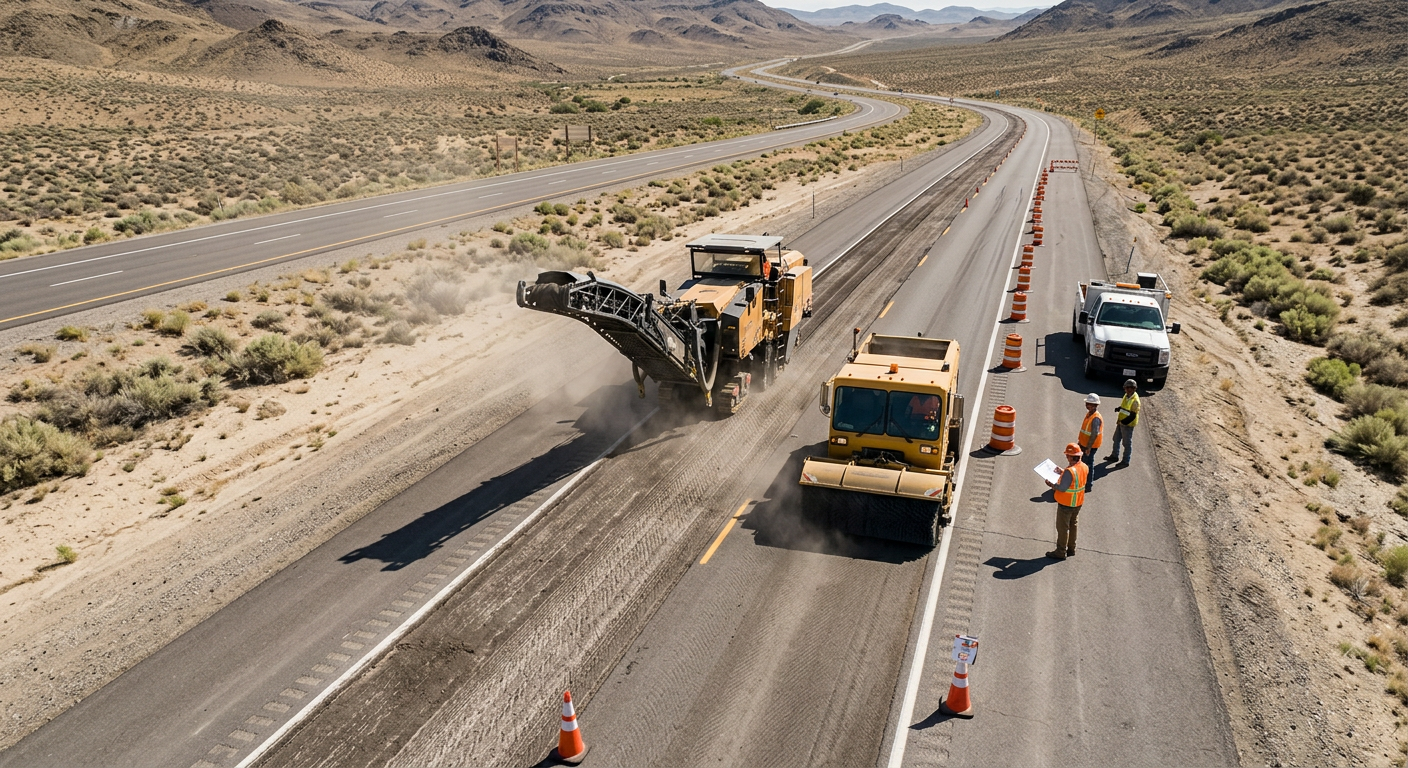
A construction sweeper should be evaluated by the material it handles on the hardest normal shift, not by a light-duty cleanup demonstration. Asphalt millings, dense fines, loose aggregate, sand, and broken pavement particles fill a hopper differently, and they place different demands on brooms, elevators, conveyors, hydraulic systems, and water control.
Measure Material Volume Before Specifying Capacity
We recommend tracking several representative Nevada jobs before setting a minimum hopper requirement. Record the sweep width, route length, material type, average dump interval, distance to disposal, and number of repeat passes. This creates a realistic production baseline for fleet managers and procurement teams.
A large hopper helps only when the complete collection system can move material into it consistently. If broom contact is poor or material bridges before reaching the hopper, operators may stop early even when the nominal capacity looks adequate on paper.
Separate Heavy Milling Cleanup From General Route Sweeping
Municipal routes and industrial yards may include lighter debris, but asphalt milling cleanup can involve dense, abrasive material that accumulates quickly. We advise contractors to avoid using the same production assumptions for both duties.
For high-volume work, compare the expected debris load per lane mile with the usable collection capacity and the actual distance to an approved dump location. That calculation gives operations teams a much clearer picture of likely dump frequency than capacity alone.
Improve Pickup Quality to Avoid Repeat Passes
A sweeper that leaves windrows, fines, or loose aggregate behind is not saving time by moving faster. Repeat passes consume hopper capacity, fuel, water, labor, and lane-closure time. Strong first-pass pickup is one of the most practical ways to extend productive sweep time.
Set Broom Contact for the Surface and Material
Main-broom pressure, gutter-broom angle, and operating speed must match the surface condition. A milled roadway surface may require different settings than a smooth asphalt lane, industrial access road, or chip seal project.
Operators should inspect the broom pattern at the beginning of the shift, after major material changes, and whenever cleanup quality drops. Excessive pressure accelerates broom wear and can move material inefficiently. Too little contact leaves debris behind and forces a second pass.
Keep the Material Stream Centered
Mechanical broom sweepers perform best when collected material moves steadily from the broom area into the elevator and hopper. Oversized chunks, wet clumps, or inconsistent windrows can disrupt that flow.
We recommend coordinating with the milling crew so windrows remain manageable and predictable. When operators encounter concentrated piles, they should use a deliberate approach speed and make controlled passes rather than pushing a large volume into the pickup area at once.
Plan Dump Logistics Before the Shift Begins
Reducing dump frequency is only half the equation. When a dump is necessary, it should be fast, safe, and scheduled around the work sequence. A well-planned dump cycle minimizes the time the sweeper is away from the cleanup zone.
Choose Disposal Locations That Protect Production
Before work begins, confirm the approved disposal area, travel route, turnaround space, traffic-control requirements, and any site restrictions. On long Nevada projects, placing the dump location without considering sweeper travel can create avoidable lost hours over the course of a shift.
Where possible, plan dump stops near natural production breaks, such as a lane closure transition, milling-machine reposition, truck changeover, or scheduled crew pause. This prevents a full hopper from stopping cleanup while the paving crew is ready to proceed.
Track the Full Dump Cycle
Fleet managers should measure more than time spent dumping. Track the complete cycle from the moment the sweeper leaves the work area until it resumes productive sweeping. Include travel, queueing, dumping, return travel, inspections, and traffic-control delays.
That information often reveals the real bottleneck. A small improvement in dump-site placement or access can be more valuable than asking an operator to sweep faster.
Use Water Strategically, Not Excessively
Dust control is essential around active traffic, nearby properties, and crews working behind milling operations. However, excessive water can add material weight, create clumping, and consume water capacity before the hopper reaches its productive limit.
OSHA identifies 25 micrograms per cubic meter as the action level for respirable crystalline silica over an eight-hour time-weighted average. Its construction guidance also restricts dry sweeping where it could contribute to silica exposure when feasible alternatives are available. OSHA silica construction guidance (osha.gov)
Match Water Flow to Conditions
We recommend adjusting water application for material, temperature, wind, and the amount of airborne dust. The objective is to control dust at the point of collection without saturating the debris stream.
Operators should inspect nozzles, filters, hoses, and tank level before each shift. Inconsistent water delivery can force operators to compensate with slower travel speeds, extra passes, or unnecessary stops.
Prevent Flow Problems Before They Cause Early Dumps
A hopper that appears to fill too soon may be dealing with restricted material transfer rather than true capacity limits. Worn brooms, damaged dirt shoes, poor elevator performance, hydraulic issues, or material buildup can reduce the usable volume of every collection cycle.
Use a Pre-Shift Inspection Routine
A short, disciplined inspection protects uptime and dump frequency. We advise checking the following items before entering the work zone:
- Main-broom condition and contact pattern
- Gutter-broom condition, reach, and pressure
- Elevator or conveyor operation
- Hopper interior for buildup or obstructions
- Hydraulic hoses, fittings, and fluid levels
- Water nozzles, filters, and tank level
- Tires, lighting, cameras, alarms, and safety equipment
Maintenance should be scheduled by operating hours and job severity, not only by calendar date. Milling debris is abrasive, and high-production Nevada work can consume wear components faster than light municipal sweeping.
Carry High-Wear Parts That Can Stop Production
A delayed replacement for a broom, dirt shoe, hydraulic fitting, or water-system component can turn a minor issue into a lost shift. Contractors and municipal fleets should stock the parts most likely to wear under their own duty cycle.
For teams comparing heavy-duty equipment options, review XBroom street sweeper products and the XBroom Street Sweeper to discuss collection capacity, mechanical broom operation, serviceability, and configuration needs.
Specify for Sweep Time, Not Just Hopper Size
Hopper capacity is a critical factor, but it should not be the only buying criterion. The productive value of a sweeper depends on how its broom system, elevator, hydraulics, water system, chassis, and service access work together over a complete shift.
Questions We Recommend Asking During a Demo
A meaningful demonstration uses real jobsite material, normal operators, and enough runtime to expose collection and maintenance issues. Ask vendors to demonstrate:
- First-pass pickup on dense millings and fines
- Material transfer under a realistic debris load
- Time between productive dump cycles
- Controlled dumping and return-to-work time
- Access to routine inspection points
- Broom and wear-part replacement process
- Dust-control adjustment from the operator position
We also recommend documenting results with a consistent scorecard. Compare productive sweep time, pickup quality, operator feedback, water use, maintenance access, and full dump-cycle duration across machines.
For a configuration built around Nevada roadwork, municipal routes, or asphalt milling duty cycles, use Build a Truck to start a practical requirements discussion. You can also review Why Choose XBroom for more detail on manufacturer-focused support and heavy-duty mechanical sweeping priorities.
Frequently Asked Questions
What causes a street sweeper hopper to fill too quickly?
Dense material, poor pickup settings, repeat passes, restricted material flow, excess water, and inefficient dump planning can all make a hopper seem smaller than it is. Start by inspecting the debris stream and collection path before assuming the machine needs a larger hopper.
How can Nevada milling contractors reduce dump trips?
We recommend combining sufficient usable capacity with strong first-pass pickup, controlled windrows, an approved nearby disposal route, and scheduled dump windows. The best results come from coordinating the sweeper with the milling and paving sequence.
Does a larger hopper always reduce dump frequency?
Not necessarily. Larger capacity can extend sweep time, but only if the elevator, brooms, and hopper design transfer material efficiently. The material density, haul distance, and jobsite workflow also matter.
What is the best sweeper type for asphalt millings?
A heavy-duty mechanical broom sweeper is commonly used for asphalt milling cleanup because it is designed to collect heavier debris, loose aggregate, and abrasive millings. The right specification depends on production targets, sweep width, disposal logistics, and maintenance expectations.
How does broom adjustment affect dump frequency?
Correct adjustment improves first-pass pickup and prevents material from being left behind. That reduces repeat sweeping, which preserves hopper capacity and keeps the operation moving.
Can preventive maintenance reduce dump frequency?
Yes. Maintaining brooms, elevators, hydraulic systems, and water controls helps material move into the hopper consistently. It also reduces unexpected downtime that can disrupt the entire cleanup schedule.
Put More Productive Sweeping Time Into Every Shift
The most effective way to reduce street sweeper dump frequency is to manage the entire collection cycle. When we match equipment capacity to actual material, improve first-pass pickup, plan disposal logistics, control water use, and maintain the collection system, operators spend more time sweeping and less time traveling to dump.
For Nevada contractors and public agencies, that means stronger support for milling, paving, roadway maintenance, airport pavement cleanup, and industrial site operations. A production-focused sweeper plan protects the lane closure, the crew schedule, and the quality of the finished surface.
Request a Nevada Sweeper Productivity Review
We help contractors, municipalities, and fleet teams evaluate mechanical broom sweepers for long sweep times, abrasive debris, and reduced interruptions on demanding Nevada jobsites. Visit XBroom by Nescon or Contact Nescon to request pricing, schedule a demo, or discuss your required production cycle.
Call Phone: 480-505-0001 to speak with our team about hopper capacity, sweeping performance, configuration options, and manufacturer-backed support.
About XBroom by Nescon
XBroom by Nescon is a U.S.-based street sweeper manufacturer specializing in heavy-duty mechanical street sweepers designed for high-production sweeping applications. XBroom sweepers are built to support asphalt milling, road construction, municipal street maintenance, and industrial sweeping operations.
Engineered for durability, large hopper capacity, long sweep times, and reduced downtime, XBroom street sweepers help contractors and municipalities maximize productivity while minimizing maintenance and dump frequency.
Ready to Upgrade Your Street Sweeper?
Call 480-505-0001 or Contact Nescon to request pricing, schedule a demo, or learn more about XBroom street sweeping solutions.