
High Production Street Sweeper for North Carolina Chip Seal Jobs
Chip seal crews lose production when loose aggregate remains on the roadway too long. It can disrupt traffic control, create cleanup bottlenecks, complicate striping preparation, and force the work train to slow down while operators make repeated passes.
For North Carolina contractors and public agencies, a high production street sweeper for chip seal should be evaluated as a core production asset. The right mechanical broom sweeper helps remove excess stone efficiently, supports safer reopening conditions, and stays productive across long rural routes where dump locations may be far from the active work zone.
North Carolina relies heavily on pavement preservation. The Federal Highway Administration reported that the state had approximately 60,000 miles of secondary paved roads, with 44 percent of that system treated with chip seal at the time of the report. FHWA Pavement Preservation Workbook This scale makes consistent aggregate cleanup an operational requirement, not an afterthought.
Why Chip Seal Cleanup Demands Production-Focused Sweeping
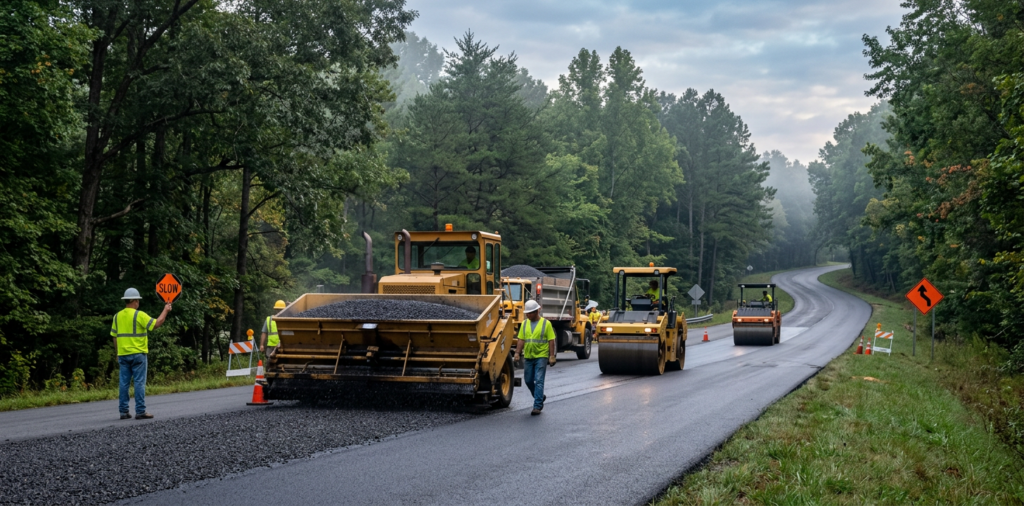
Chip seal is a fast-moving process with little room for equipment that cannot maintain the crew's pace. Aggregate is intentionally placed across the road surface, then rolled into the emulsion, but excess loose stone must be managed as curing progresses and the road is prepared for regular traffic.
The North Carolina Department of Transportation explains that loose aggregate is inevitable during asphalt surface treatment work and that traffic speed management supports curing and improves driver safety. Its guidance also emphasizes that the treatment train should remain close together, with the aggregate spreader following the distributor within about 500 feet and rollers following shortly afterward. NCDOT Asphalt Surface Treatment Best Practices Manual
That tight operational sequence affects how we recommend evaluating a sweeper. A unit that fills too quickly, requires frequent service, or lacks dependable mechanical collection can become the limiting factor on a chip seal project.
| Buying Priority | Why It Matters for Chip Seal | What to Verify |
|---|---|---|
| Usable hopper capacity | Fewer dump interruptions | Real working capacity and dump cycle |
| Mechanical broom system | Handles coarse stone | Broom durability and pickup consistency |
| Dust-control water system | Helps manage fines | Tank capacity and spray coverage |
| Maintenance access | Protects uptime | Daily service points and wear-part access |
| Sweep width | Covers lanes and edges | Main broom and gutter broom reach |
What Makes a Mechanical Broom Sweeper Productive on Chip Seal
Capacity Must Match the Dump Cycle
High production is more than a large hopper number. The meaningful measure is how long the sweeper can remain on the route before dumping, how consistently material transfers into the hopper, and how quickly the operator can complete the discharge cycle.
On long North Carolina secondary-road routes, a distant disposal location can create substantial nonproductive travel time. We advise fleet managers to document the average distance to the dump point, expected aggregate volume, and number of productive sweeping hours needed per shift. That information gives procurement teams a better basis for selecting capacity than a brochure comparison alone.
A high-capacity mechanical sweeper can help reduce dump frequency, but it must also provide reliable material flow. Coarse stone, roadway fines, and chip seal debris are abrasive. The broom, elevator, hopper, and hydraulic systems must be designed for repeated exposure without creating unnecessary maintenance delays.
Broom Performance Matters More Than Fine-Dust Ratings
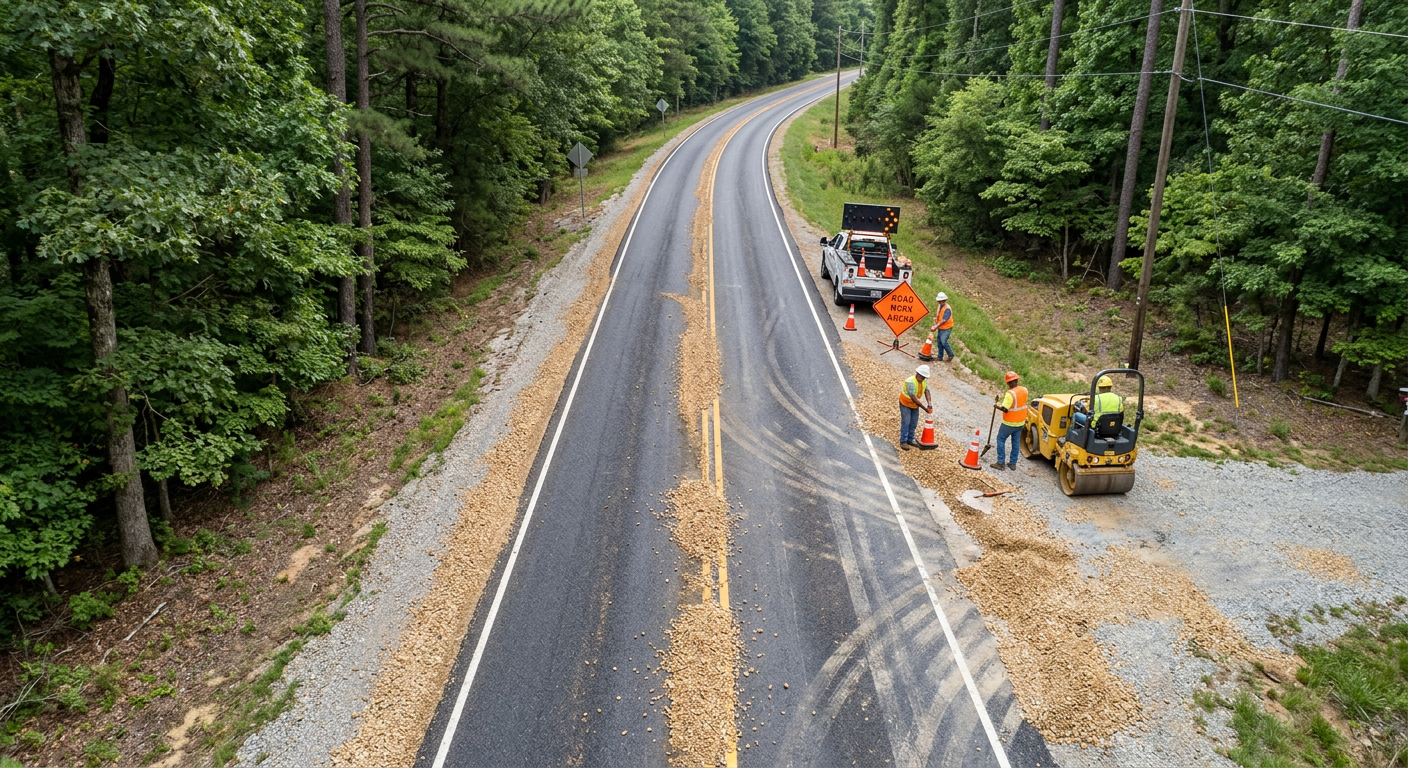
Chip seal cleanup is fundamentally different from routine downtown route sweeping. The objective is not simply removing light litter or fine sediment. Crews need to collect loose aggregate, sweep transition areas, clean intersections, and manage stone along shoulders and driveways without excessive repeat passes.
Mechanical broom sweepers are a practical fit for this type of heavy debris. Their direct collection approach is well suited to coarse aggregate and other road-construction material. Regenerative-air and vacuum equipment can be useful for fine particulate collection and detailed urban cleanup, but a contractor should not assume that those systems are the most productive answer for continuous loose-stone work.
Review XBroom street sweeper products to compare equipment built around demanding roadway applications. For a closer look at the platform, see the XBroom Street Sweeper and assess its capabilities against your actual route, material, and disposal cycle.
Dust Control Supports Visibility and Work Quality
Loose stone is the main collection challenge, but dust still matters. Dry fines can affect operator visibility and working conditions for the entire chip seal crew, especially during hot, dry periods.
The right water system supports controlled sweeping without overwatering the work surface. Evaluate onboard water capacity, spray-nozzle placement, refill logistics, filtration, and cab controls. Operators should be able to adjust water use to conditions while maintaining steady broom performance.
How North Carolina Crews Should Spec a Sweeper
A productive street sweeper specification begins with the work cycle, not the brand name. Before comparing models, define how the unit will support your chip seal operation from start to finish.
Start With the Material Profile
List the materials the sweeper will encounter throughout the season. A unit assigned to chip seal work may also be needed for asphalt milling cleanup, shoulder reconstruction, patching, municipal street maintenance, or industrial facility sweeping.
For aggregate-heavy work, prioritize durable brooms, protected wear areas, consistent material transfer, and straightforward service access. For mixed municipal and construction use, evaluate whether the configuration can support both heavy cleanup and recurring maintenance routes without compromising uptime.
Plan Around Road Geometry and Traffic Control
North Carolina chip seal routes often include narrow lanes, rural driveways, intersections, guardrail sections, bridge approaches, and variable shoulders. Productive cleanup requires usable sweep width and adjustable gutter-broom coverage, not just a wide main broom on paper.
We recommend mapping the difficult portions of a typical route before purchasing. Identify where operators must sweep edge lines, intersections, bridge joints, turn lanes, and shoulder transitions. This helps determine whether the machine can perform the required work in one pass or whether repeat passes will erode production.
Make Daily Service a Procurement Requirement
A sweeper that is difficult to inspect is difficult to keep productive. Maintenance leaders should be able to check broom wear, hydraulic components, water spray, hopper seals, skid shoes, and material-transfer areas without losing a significant part of the shift.
When we help operations teams configure equipment, we encourage input from the superintendent, lead operator, and maintenance manager. Use Build a Truck to begin identifying a configuration that reflects the conditions your crew manages rather than a generic application profile.
A Practical Chip Seal Sweeping Workflow
The most reliable results come from coordinating the sweeper with the treatment train. A sweeper should not be treated as a vehicle that arrives only after every other activity is complete.
Establish the Cleanup Trigger
Set clear expectations for when sweeping begins and what level of loose aggregate requires action. The crew should identify whether cleanup occurs after initial rolling, before opening to traffic, after controlled traffic has helped seat the aggregate, or through a combination of these stages.
The decision depends on project requirements, weather, aggregate behavior, curing conditions, and traffic-control plans. The important point is consistency. Operators need a defined standard for acceptable residual stone and a shared understanding of priority areas such as intersections, curves, driveways, and bridge decks.
Protect the Sweeper's Productive Time
Every unnecessary dump trip, avoidable service stop, or unplanned wait reduces the amount of roadway cleaned per shift. Stage the dump area carefully, confirm travel routes, coordinate radio communications, and give the sweeper a position in the work sequence that avoids conflicts with rollers and other equipment.
This is also where hopper capacity becomes an operating advantage. More usable collection volume can reduce interruptions, particularly on long routes with limited access to a suitable disposal area.
Track the Numbers That Affect Uptime
We suggest tracking a few basic metrics for each chip seal project:
- Productive sweeping hours per shift
- Average time between dumps
- Number of dump cycles per lane mile
- Repeat-pass frequency
- Daily broom and wear-part inspections
- Unscheduled maintenance time
These measurements reveal whether the challenge is equipment capacity, route planning, traffic control, material conditions, or operator workflow. They also create a stronger foundation for future equipment decisions.
Questions North Carolina Buyers Ask
Is a mechanical broom sweeper the best choice for chip seal aggregate?
For sustained loose-stone cleanup, mechanical broom sweepers are often the strongest fit because they are intended to collect heavy, abrasive road debris. The best choice still depends on material volume, route length, dust-control needs, and whether the unit will also serve municipal or industrial work.
How much hopper capacity is enough for chip seal work?
The correct capacity depends on aggregate volume and the distance to the dump location. Instead of selecting by capacity alone, calculate expected material per shift and determine how much downtime each dump cycle creates for the crew.
Can one sweeper handle chip seal and asphalt milling cleanup?
Yes, provided the machine is configured for the material and duty cycle. Both applications involve abrasive road debris, but milling may introduce heavier millings and more fines, so broom durability, material transfer, water control, and serviceability remain important.
Why is water capacity important on a chip seal sweeper?
Water helps manage dust and supports visibility when fines are present. A properly planned system gives the operator practical control without forcing frequent refill stops or carrying unnecessary water weight.
What should municipal fleets prioritize?
Municipal fleets should consider whether the sweeper will support chip seal work, routine streets, industrial areas, and emergency cleanup. Prioritize durable mechanical collection, accessible service points, practical hopper capacity, and a configuration that fits local routes and staffing.
How can contractors reduce street sweeper downtime?
Start with accessible maintenance points, routine inspections, properly matched wear components, and clear operator practices. Review the manufacturer's support approach as well, including parts availability, technical assistance, and configuration guidance. Learn more about Why Choose XBroom when evaluating manufacturer experience and support.
Put Chip Seal Sweeping Capacity to Work
North Carolina chip seal work rewards disciplined production planning. The most effective sweeping operation keeps pace with the treatment schedule, controls loose aggregate, limits avoidable dump travel, and gives operators dependable equipment that can handle abrasive material shift after shift.
A high-production mechanical broom sweeper is not simply a cleanup expense. When it is properly specified around hopper capacity, broom performance, water management, and maintenance access, it can protect workflow across the entire road-maintenance operation.
Discuss Your North Carolina Sweeping Requirements
We work with contractors, public works departments, and fleet managers who need street sweeping equipment for chip seal, asphalt milling, road construction, and municipal maintenance. Contact Nescon to request pricing, schedule a demo, or discuss a configuration built around your production targets.
You can also speak with our team directly at Phone: 480-505-0001. We will help you evaluate the equipment factors that support longer sweep times, fewer interruptions, and reduced downtime on North Carolina projects.
About XBroom by Nescon
XBroom by Nescon is a U.S.-based street sweeper manufacturer specializing in heavy-duty mechanical street sweepers designed for high-production sweeping applications. XBroom sweepers are built to support asphalt milling, road construction, municipal street maintenance, and industrial sweeping operations.
Engineered for durability, large hopper capacity, long sweep times, and reduced downtime, XBroom street sweepers help contractors and municipalities maximize productivity while minimizing maintenance and dump frequency.
Ready to Upgrade Your Street Sweeper?
Call 480-505-0001 or Contact Nescon to request pricing, schedule a demo, or learn more about XBroom street sweeping solutions.