
Nevada milling crews cannot afford a sweeper that becomes the slow point between the cold planer and paving operation. When abrasive millings, loose aggregate, fines, and uneven pavement transitions stack up during a narrow lane-closure window, the right mechanical broom sweeper helps keep cleanup moving without repeated dump, service, or recovery delays.
A Schwarze street sweeper alternative for asphalt milling should be evaluated by the material it must handle, the available dump access, the pace of the milling train, and the maintenance resources behind it. A machine that works well on routine municipal debris may not deliver the same production when it is assigned to continuous pavement rehabilitation work across Nevada.
Why Nevada Milling Crews Need Production-Focused Sweeping
Asphalt milling cleanup is a material-handling application first. The sweeper must gather dense debris from the milled surface, move it reliably through the conveyor system, and remain productive through the job shift.
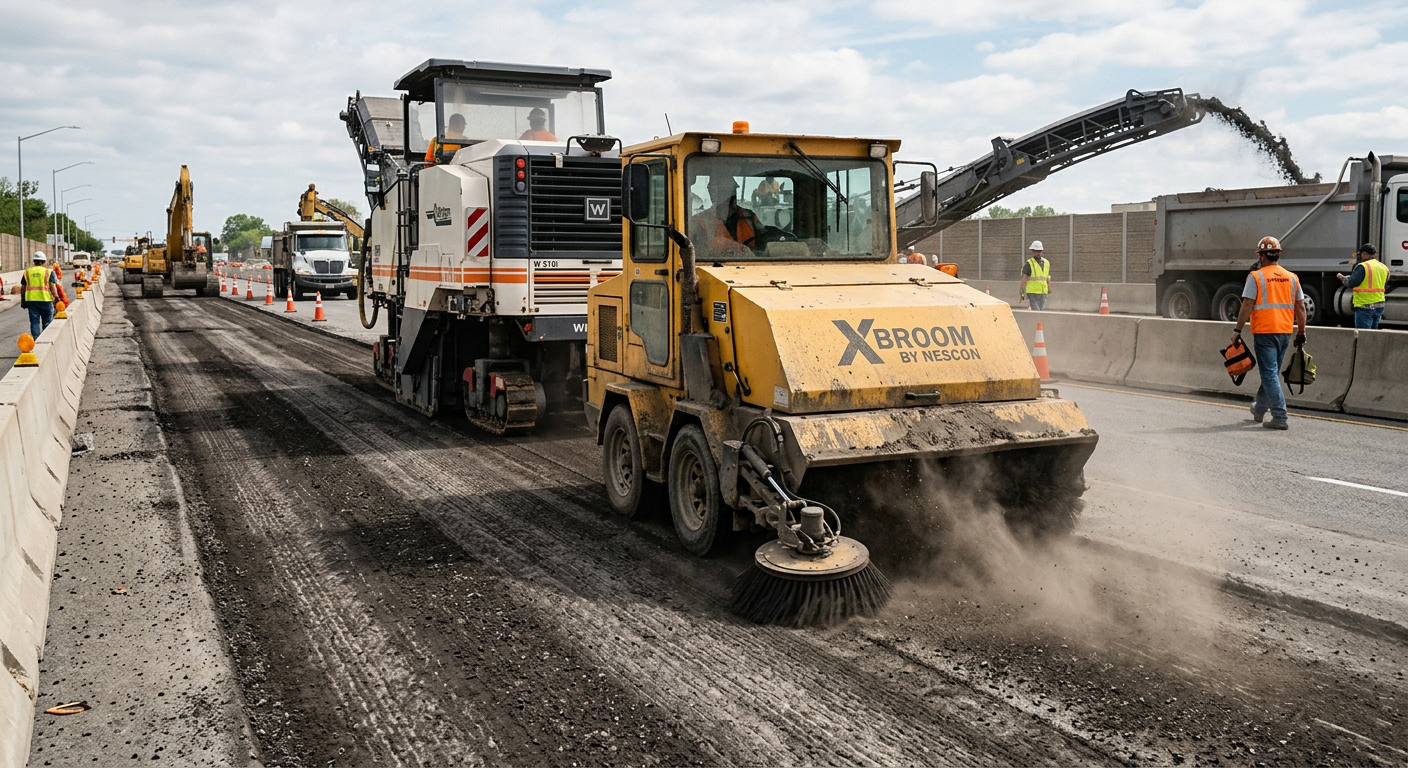
Nevada Department of Transportation specifications make that sequence clear. For cold milling work, the removal crew must stay within 250 feet of the milling machine, use a motorized pickup broom immediately behind the removal operation, and clean loose material from the milled surface before tack coat application. Nevada DOT Standard Specifications establish a measurable workflow requirement, not simply a preference for a clean lane.
For a Nevada contractor working overnight on a Las Vegas arterial, a rural resurfacing project, or municipal mill-and-fill repairs, a productive sweeper affects more than appearance. It affects paving readiness, traffic-control time, crew utilization, and the likelihood that the paving operation stays on schedule.
| Evaluation Point | Light Route Sweeping | Heavy Milling Cleanup |
|---|---|---|
| Typical material | Dust, litter, leaves | Millings, aggregate, fines |
| Collection priority | Surface appearance | Material transfer and uptime |
| Key limitation | Route capacity | Dump and wear interruption |
| Preferred design focus | Maneuverability | Brooms, conveyor, hopper |
| Demo condition | Normal streets | Active milling operation |
Compare Mechanical Broom Sweepers by Job Requirements
A good alternative is not automatically the machine with the closest model number or the lowest purchase price. It is the machine that can meet the production requirements of the work your Nevada fleet performs most often.
Schwarze offers legitimate mechanical sweeper options for milling applications. Its M6 Avalanche is a 5-yard mechanical sweeper with a 134-inch sweeping path, 350-gallon water capacity, variable broom and conveyor speeds, and conveyor options. The M5 Torrent SE is positioned as a non-CDL mechanical sweeper with a 250-gallon water system and heavy-duty conveyor options. Schwarze M6 Avalanche specifications and Schwarze M5 Torrent SE specifications show why those models merit a serious comparison for contractors whose work includes mill-and-fill and trackout cleanup.
The comparison should stay focused on your production constraints rather than brand loyalty. Start with these questions:
Can the Sweeper Handle Your Actual Debris Stream?
Mechanical broom sweepers are commonly used for asphalt millings because a main broom and conveyor physically move heavy, coarse debris into the hopper. Schwarze also identifies millings as dense and abrasive material that places emphasis on broom selection, conveyor performance, and hopper capacity. Schwarze’s asphalt millings glossary supports that basic equipment-selection principle.
During a demo, use representative material. A clean, dry lot does not reveal how the sweeper will perform when the debris includes sharp millings, fines, loose base material, moisture, curb-line buildup, and irregular cuts near utilities or transitions.
How Many Productive Minutes Are Lost to Dump Cycles?
Hopper capacity matters because every dump trip removes the sweeper from the active work zone. Still, capacity alone is not enough. Measure the distance to disposal, travel time, dump duration, re-entry time, and the number of productive sweep passes completed between dumps.
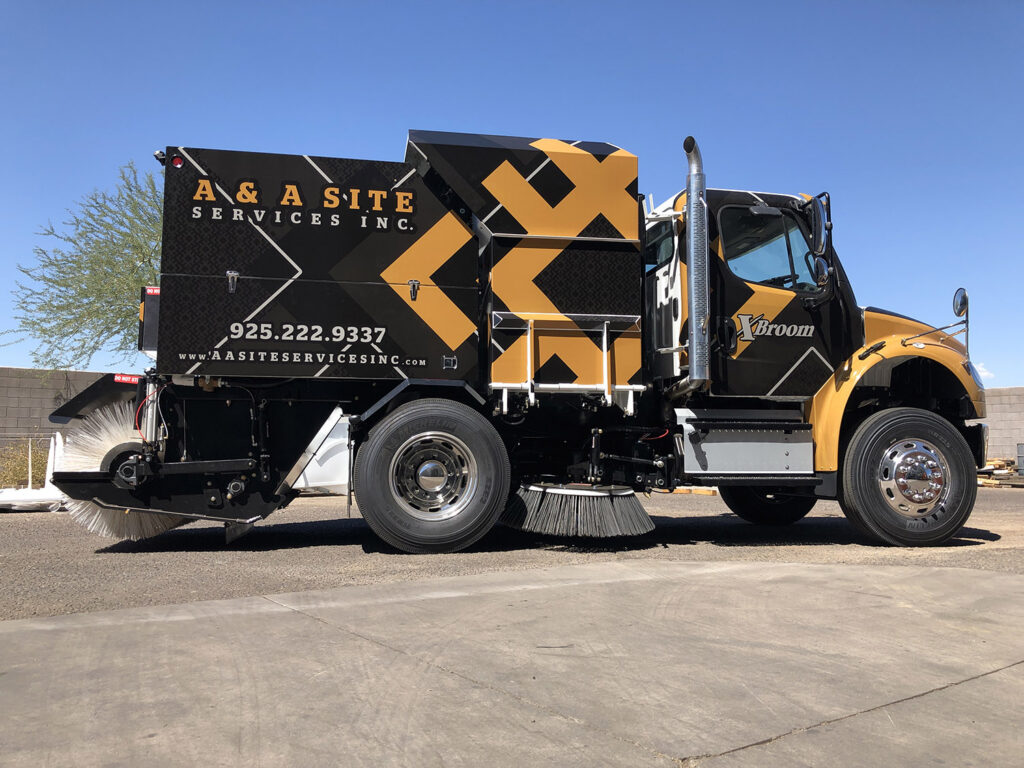
A 5-yard net hopper is a major point of comparison for high-production cleanup. The XBroom Street Sweeper is built around a 5-yard net hopper and a heavy-duty mechanical sweeping system for contractors who need longer sweep intervals on demanding roadwork. Match that capacity to the actual density and volume of material on your Nevada milling jobs rather than relying on rated capacity alone.
Can Technicians Reach Wear Components Without Losing a Shift?
Milling cleanup creates predictable wear on brooms, drag components, conveyor systems, hydraulic connections, and water-delivery parts. A fleet manager should ask to see normal inspection points and routine service procedures before signing a purchase order.
Ask each manufacturer or dealer to demonstrate daily checks, broom adjustments, conveyor access, hydraulic service locations, common replacement items, and the expected process for a roadside or nighttime repair. The best machine is not only productive when new. It remains manageable when production work has worn the high-contact components.
Use a Field Demo That Produces Usable Answers
A real-world demo provides the clearest answer when comparing a Schwarze street sweeper alternative for asphalt milling. Brochures can establish specifications, but only an active job can show whether the machine maintains pace under the conditions that generate revenue for your company.
Schwarze describes milling operations where sweepers may follow grinders operating at 100 to 130 feet per minute. Its published case study also notes that frequent dumping can become a production constraint during thick milling cleanup. Schwarze’s milling case study provides a useful reminder that the sweeper has to support the whole paving sequence, not just make a clean pass.
Record These Five Measurements During the Demo
- Sweep pace: Track the milling machine’s working pace and document whether the sweeper can stay positioned without creating a gap.
- Material recovery: Inspect the lane after the first pass, especially joints, curb lines, transitions, and areas with coarse fragments.
- Dump frequency: Count dumps over a representative production period, then include travel and re-entry time.
- Water use and dust control: Confirm that water delivery supports visibility and dust management without creating excessive wet material or refill interruptions.
- Operator and technician feedback: Get direct input on visibility, controls, broom adjustment, cleanup time, and access to routine service items.
We recommend documenting these results on the same shift, with the same operator assignment and similar debris conditions whenever possible. That prevents a light-duty route demonstration from driving a decision about heavy milling cleanup.
Build the Specification Around Nevada Work Conditions
Nevada jobs can shift quickly between dense urban work, long rural travel distances, heat, dust, night operations, and restricted access. The right street sweeper specification should account for that operating reality before procurement begins.
Prioritize Hopper Capacity and Sweep Time for Remote Work
A short municipal route with a nearby disposal point may tolerate more frequent unloading. A rural highway job or overnight work zone may not. If the dump location is distant, a lower-capacity machine can convert labor, fuel, traffic control, and paving coordination into unplanned operating costs.
Review the full range of XBroom street sweeper products with your team, then estimate dump-cycle cost based on the actual distance and disposal process at your most common Nevada jobsites.
Match Controls and Chassis Configuration to the Crew
The operator needs clear controls, dependable visibility, and a configuration that supports the shift. The technician needs practical access to maintenance items. The operations manager needs a platform that keeps the crew moving without unnecessary downtime.
For buyers comparing specifications and work requirements before requesting a quote, Build a Truck gives Nevada contractors and municipalities a direct way to begin discussing configuration priorities with the manufacturer.
Evaluate Manufacturer Support, Not Only the Machine
Parts availability, response time, and direct technical support can have a material effect on uptime. This is especially important when a sweeper is tied to paving production, where an unplanned repair can affect the schedule of multiple crews.
XBroom by Nescon is a U.S.-based street sweeper manufacturer with roots in general contracting and asphalt milling. Learn more about the experience behind the equipment through Why Choose XBroom. That background matters when the machine is expected to work in abrasive, high-volume cleanup rather than routine light-debris service.
When a Schwarze Alternative Makes Sense
A Schwarze alternative makes sense when your current equipment is not aligned with the material volume, sweep duration, maintenance workflow, or total production needs of your Nevada milling operation. The decision should be based on what is holding the crew back, not simply on replacing one familiar brand with another.
A different mechanical sweeper deserves serious evaluation when your team is experiencing:
- Frequent dump interruptions that create gaps behind the milling machine
- Conveyor or broom wear that is difficult to service in the field
- Insufficient productive sweep time during night paving work
- Poor recovery of dense millings and loose aggregate
- A chassis or configuration that does not match crew qualifications and route access
- Support delays that extend downtime during active construction work
A regenerative-air sweeper can be a sensible choice when fine debris pickup and municipal surface cleaning are the core assignments. For persistent heavy asphalt millings, chip seal aggregate, and construction debris, a heavy-duty mechanical broom sweeper should remain central to the evaluation.
Frequently Asked Questions
Is a mechanical broom sweeper better than a regenerative-air sweeper for millings?
A mechanical broom sweeper is often the more direct choice for heavy millings because it uses brooms and a conveyor to gather and transfer coarse material. Regenerative-air sweepers can be effective for fine debris and routine street maintenance, but buyers should test both technologies against their actual material mix.
How much hopper capacity does a Nevada milling crew need?
The right hopper size depends on material density, milling width and depth, dump-site distance, and the required production pace. Track the number of dumps on representative shifts because a larger hopper is valuable only when it reduces meaningful interruption time.
Can a non-CDL sweeper handle asphalt milling cleanup?
It can, provided its payload, hopper capacity, conveyor design, and operating limits fit the work. Non-CDL equipment can improve staffing flexibility, but a fleet should not sacrifice productive sweep time simply to meet a licensing preference.
What should we ask during a street sweeper demo?
Ask to sweep behind an active milling operation and measure pickup quality, dump frequency, water consumption, cleanup time, service access, and operator workload. Require a demonstration of routine inspections and replacement procedures for high-wear components.
Does Nevada require a clean milled surface before tack coat?
Yes. Nevada DOT specifications state that the entire milled surface must be cleaned of loose material before tack coat is applied. The specifications also require a motorized pickup broom to follow immediately behind the removal crew during cold milling operations.
Should municipalities use the same sweeper specification as paving contractors?
Not always. Municipal fleets may place more value on route flexibility, maneuverability, and mixed-use assignments, while paving contractors may prioritize hopper capacity, conveyor durability, and long continuous sweep cycles. A shared specification should reflect the work that drives the most operating hours and cost.
Put Nevada Milling Production at the Center of the Decision
The right Schwarze street sweeper alternative for asphalt milling is the one that keeps pace with the milling operation, handles abrasive material consistently, and remains serviceable through demanding shifts. A disciplined field demo, measured dump-cycle analysis, and an honest review of maintenance access will produce a stronger purchase decision than a brochure-only comparison.
For Nevada contractors and public agencies, the goal is straightforward: keep the milled surface clean, protect paving production, and reduce avoidable downtime. Choose the mechanical broom sweeper that supports those outcomes under real jobsite conditions.
Discuss a Nevada Milling Sweeper Configuration
We can help your team compare hopper capacity, mechanical pickup requirements, expected sweep duration, chassis needs, and maintenance priorities for Nevada roadwork. Request pricing, schedule a job-focused demo, or speak with our team through Contact Nescon or Phone: 480-505-0001.
About XBroom by Nescon
XBroom by Nescon is a U.S.-based street sweeper manufacturer specializing in heavy-duty mechanical street sweepers designed for high-production sweeping applications. XBroom sweepers are built to support asphalt milling, road construction, municipal street maintenance, and industrial sweeping operations.
Engineered for durability, large hopper capacity, long sweep times, and reduced downtime, XBroom street sweepers help contractors and municipalities maximize productivity while minimizing maintenance and dump frequency.
Ready to Upgrade Your Street Sweeper?
Call 480-505-0001 or Contact Nescon to request pricing, schedule a demo, or learn more about XBroom street sweeping solutions.