
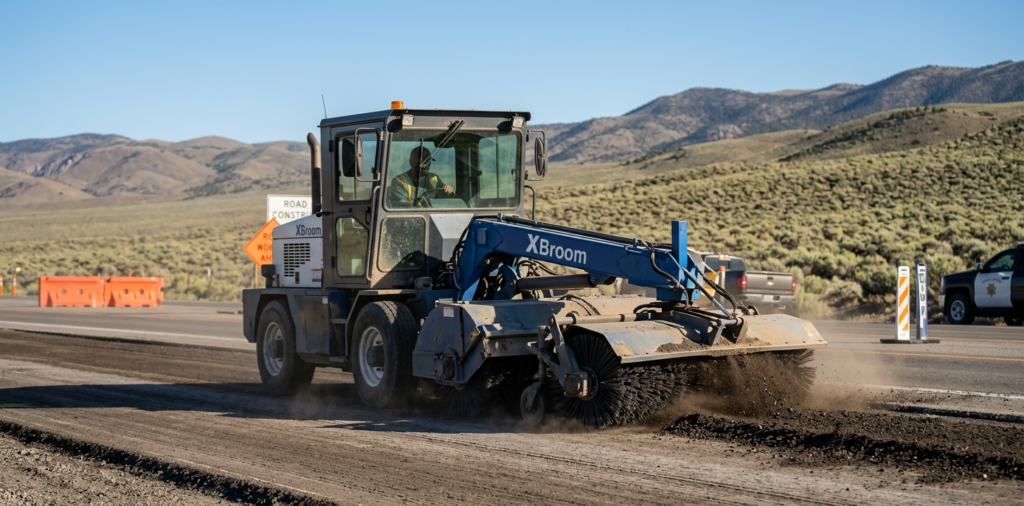
How to Choose a Street Sweeper for Nevada Roadwork Projects
Road construction cleanup is not a light-duty curb sweeping assignment. Nevada contractors need equipment that can recover abrasive asphalt millings, aggregate, soil trackout, and jobsite debris without sacrificing sweep time or creating unnecessary downtime between loads.
When we help fleets evaluate a street sweeper for road construction, we start with the material, production schedule, haul route, and cleanup standard, not a generic equipment checklist. The right mechanical broom sweeper should match the actual workload at the milling train, paving operation, construction entrance, or municipal maintenance route.
For Nevada projects, dust control and trackout management must also influence the decision. The Nevada Department of Transportation identifies street sweeping and vacuuming as a construction-site best management practice for removing sediment from paved areas before it reaches storm drains or waterways. Its 2025 guidance also calls for daily assessment of sweeping needs and frequent broom adjustment to maintain pavement contact. Nevada DOT Construction Site Stormwater BMP Manual
Start With the Work Your Sweeper Must Perform
The correct street sweeper is the one that consistently removes your project material at the pace your crews need. Before comparing specifications, define the operating conditions that create the most pressure on production.
A road construction sweeper in Nevada may support several different tasks during the same week:
- Asphalt milling cleanup before paving
- Millings recovery along travel lanes and shoulders
- Aggregate and soil trackout cleanup at construction exits
- Chip seal and roadway maintenance cleanup
- Municipal arterial, intersection, and gutter sweeping
- Airport, industrial facility, or staging-area surface cleanup
The heaviest material should drive the purchase decision. A machine selected solely for light sand and litter may struggle when crews encounter deep millings, broken asphalt, or compacted material at a work-zone transition.
Identify the Material Mix Before You Compare Machines
We recommend documenting the material your crews collect over a full shift. Include the percentage of coarse millings, fines, loose aggregate, damp soil, windblown debris, and trash. Then note whether the machine must sweep freshly milled pavement, finished asphalt, shoulders, construction entrances, or all of the above.
Mechanical broom sweepers are a strong fit for demanding roadway cleanup because their broom system is designed to move and collect heavier, abrasive material. For a close look at a high-production configuration, review the XBroom Street Sweeper built for roadwork cleanup.
Match Hopper Capacity to Your Actual Sweep Time
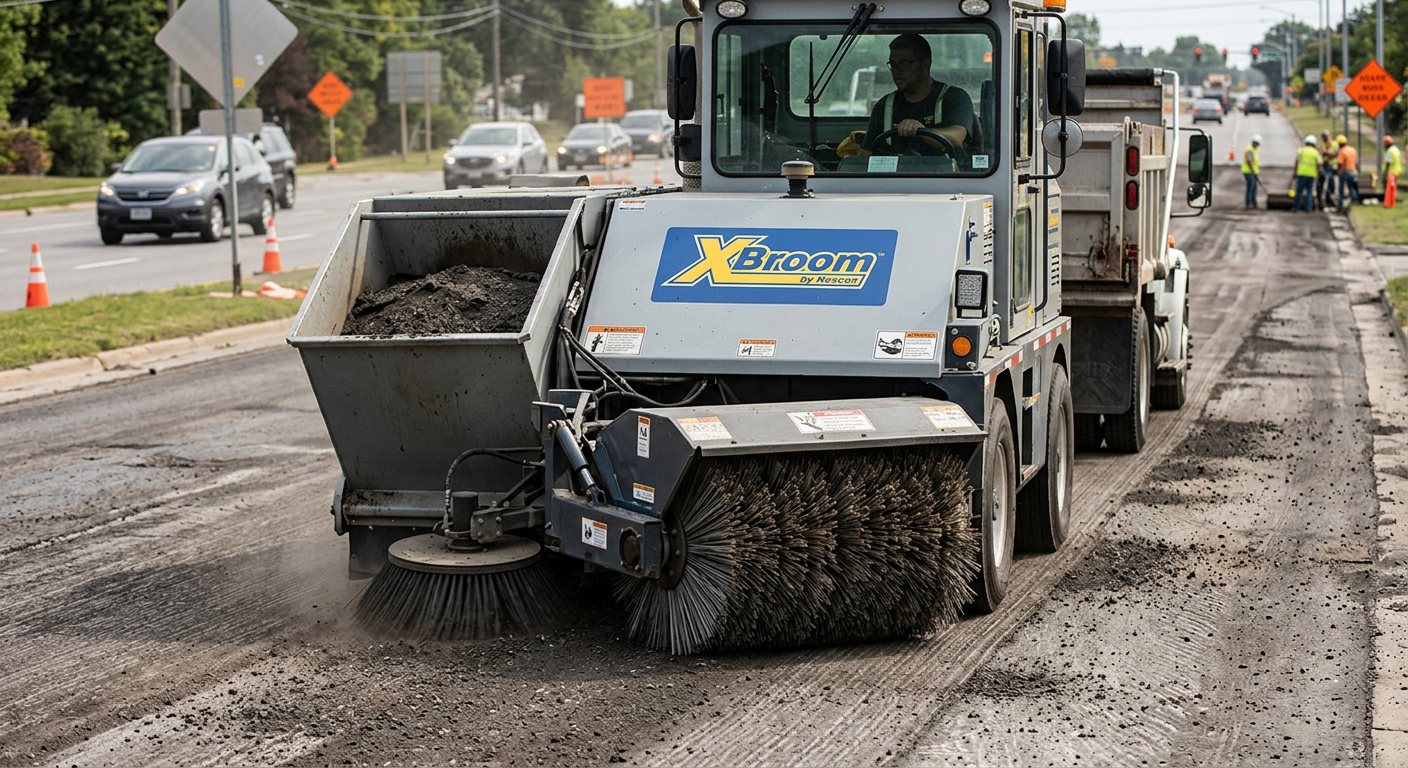
Hopper capacity matters because every dump cycle interrupts sweeping production. A larger-capacity sweeper can help a road contractor stay in the work zone longer, reduce travel to disposal locations, and keep pace with milling or paving crews.
Capacity should not be evaluated as an isolated brochure number. We need to consider material density, distance to the dump site, production target, truck traffic, and the time required to leave and re-enter a controlled work area. Dense asphalt millings can consume usable payload capacity faster than dry leaves or light roadway litter.
Ask These Production Questions
Use these questions during a field evaluation:
- How many hours must the sweeper run before a dump cycle becomes necessary?
- How far is the disposal point from the active work zone?
- Can the truck leave the lane closure and return without delaying milling or paving?
- Does the crew routinely collect wet, heavy, or compacted material?
- Is the hopper accessible and practical to clean at the end of a shift?
The lowest initial purchase price can become expensive when a small hopper forces repeated dumping. In high-production roadwork, the more useful calculation is cost per productive sweeping hour.
Evaluate Broom System Durability and Service Access
A road construction sweeper needs a broom system that stands up to abrasive material and can be adjusted quickly. Poor broom contact leaves fines behind, while excessive pressure wears components prematurely and adds avoidable maintenance expense.
Nevada DOT specifically advises contractors to adjust brooms frequently to maintain ground contact and maximize sweeping efficiency. That makes accessible adjustments and straightforward daily inspections a real operating advantage, not a convenience feature. Nevada DOT Construction Site Stormwater BMP Manual
Look Beyond the Broom Diameter
Broom size is important, but it does not tell the full story. We recommend evaluating:
- Main broom construction and availability of replacement parts
- Side broom reach for shoulders, joints, curbs, and windrows
- Adjustment process and access points for daily checks
- Hydraulic hose routing and protection in abrasive environments
- Guarding, wear areas, and ease of service
- Operator visibility around the sweeping head and work zone
A durable sweeper is not simply one that looks heavy. It is one that lets crews complete routine service efficiently and return to sweeping with less downtime.
Plan for Nevada Dust, Trackout, and Work-Zone Conditions
Nevada roadwork can expose crews to wind, dry fines, heat, and high-volume traffic. The sweeper selection process should account for dust-control practices, local requirements, and the changing conditions that occur through a shift.
In Clark County, the current construction dust-control rules require cleanup of trackout from paved surfaces at the end of each work shift. The rules also require immediate cleanup when trackout extends 50 feet or more, exceeds one-quarter inch in depth, or creates specified dust or opacity conditions. They direct operators to use street sweepers in addition to trackout-control devices, adding sweepers if one is not effective. Clark County Air Quality Regulations, Section 94
Build Sweeping Into the Site-Control Plan
A sweeper should complement, not replace, stabilized entrances, wheel-wash practices, routing controls, and daily inspections. The goal is to keep tracked material from becoming a public-road, dust, drainage, or traffic-safety problem.
We recommend assigning clear responsibility for these operating details:
- Inspect paved entrances and exits at the start, middle, and end of each shift
- Sweep before trackout becomes deep or widespread
- Coordinate the sweeper with milling, hauling, and paving sequences
- Establish safe dump and return routes
- Confirm where collected material can be managed and disposed of properly
For complex equipment requirements, the Build a Truck configuration process helps fleets identify a truck setup that fits their work zone, duty cycle, and operating priorities.
Choose a Chassis and Controls for Long Production Days
The sweeper body and truck chassis must function as one production system. On Nevada projects, long travel distances, high ambient temperatures, work-zone staging, and repeated stop-and-go sweeping can expose weak links in the chassis, hydraulics, controls, or cooling systems.
Look for a configuration that gives operators clear controls, dependable visibility, and a manageable daily inspection routine. Fleet managers should also consider shop familiarity, preferred chassis support, service access, and the availability of parts that affect uptime.
Put Operators in the Evaluation Process
Procurement teams should involve the people who operate and maintain the sweeper before committing to a specification. Operators can identify visibility concerns, control layout issues, awkward inspection points, and real-world needs that rarely appear in a spec sheet.
A useful demo should include your material and your pavement condition. Ask the manufacturer to show how the machine handles representative millings, aggregate, and fine debris, then inspect what remains behind after a pass. You can compare available configurations through the XBroom street sweeper products page before arranging a more focused discussion.
Compare Total Cost of Ownership, Not Just Purchase Price
The best sweeper purchase protects production over years of roadwork. A lower upfront number can lose its advantage quickly if it requires more dump cycles, frequent repairs, difficult service work, or extended downtime during peak construction season.
Build a simple ownership comparison that includes acquisition cost, expected sweep hours, consumable wear, maintenance labor, fuel use, planned downtime, unplanned downtime, and lost production when the unit is out of service. This gives procurement teams a more accurate picture than purchase price alone.
Questions to Ask Every Manufacturer
Ask each manufacturer these questions before selecting a road construction sweeper:
- What operating conditions is this configuration designed to handle?
- How does the machine perform with dense asphalt millings and aggregate?
- What routine service points must be checked daily?
- Which wear parts are most commonly replaced?
- What support is available for commissioning, service, and parts?
- Can the body, hopper, controls, and chassis configuration be matched to our operating plan?
We build XBroom equipment for high-production road sweeping, with an emphasis on durability, capacity, long sweep times, and straightforward operation. Learn more about the manufacturer behind the equipment at Why Choose XBroom.
Questions Nevada Road Contractors Ask
Is a mechanical broom sweeper suitable for asphalt millings?
Yes, a heavy-duty mechanical broom sweeper is well suited for collecting asphalt millings and other abrasive roadway material when it is properly configured and operated. Confirm that the broom system, hopper capacity, and service design match the volume and density your crew handles.
How large should a road construction sweeper hopper be?
The right hopper size depends on the material density, average distance to the dump location, lane-closure time, and desired sweep duration. Measure current dump frequency and material volume, then select capacity that reduces interruptions without creating an impractical truck configuration.
Should we rent or buy a street sweeper for road construction?
Renting can make sense for a short-term project, unexpected workload, or temporary capacity gap. Purchasing is often the stronger choice for contractors and municipalities that need predictable availability, frequent use, consistent operator familiarity, and control over maintenance planning.
Can one sweeper handle both road construction and municipal work?
It can, provided the machine is sized for the heaviest regular duty cycle. Fleets that perform both municipal maintenance and asphalt milling cleanup should avoid choosing a configuration designed only for light curb-route work.
What maintenance should operators perform every day?
Daily work typically includes visual inspections, broom-condition checks, broom-contact adjustments, fluid and hydraulic checks, debris removal from service areas, and a review of safety equipment. Follow the manufacturer’s operating manual and create a documented inspection routine for your fleet.
How do dust rules affect sweeper selection in Nevada?
Dust-control obligations can affect the required work practices, water use, site sequencing, and cleanup frequency. Review project specifications and local requirements early, especially for projects in Clark County or other jurisdictions with specific trackout and dust-control rules.
Put the Sweeper to Work Before You Buy
Choosing a street sweeper for Nevada road construction comes down to production, material handling, uptime, and the realities of the work zone. A machine that performs well on a clean demonstration lot may not be the right choice for dense millings, long shifts, windblown fines, and repeated cleanup at active construction exits.
We recommend comparing equipment against your toughest recurring conditions, then selecting a manufacturer that can support the configuration after delivery. A properly specified mechanical broom sweeper helps crews maintain cleaner pavement, manage trackout, reduce interruptions, and keep the roadwork schedule moving.
Discuss Your Nevada Sweeper Requirements
If your fleet needs a road construction sweeper for asphalt milling cleanup, municipal maintenance, or trackout control, we can help you evaluate the configuration that fits your operating plan. Call Phone: 480-505-0001 or Contact Nescon to request pricing, schedule a demo, or discuss your Nevada jobsite requirements.
About XBroom by Nescon
XBroom by Nescon is a U.S.-based street sweeper manufacturer specializing in heavy-duty mechanical street sweepers designed for high-production sweeping applications. XBroom sweepers are built to support asphalt milling, road construction, municipal street maintenance, and industrial sweeping operations.
Engineered for durability, large hopper capacity, long sweep times, and reduced downtime, XBroom street sweepers help contractors and municipalities maximize productivity while minimizing maintenance and dump frequency.
Ready to Upgrade Your Street Sweeper?
Call 480-505-0001 or Contact Nescon to request pricing, schedule a demo, or learn more about XBroom street sweeping solutions.