
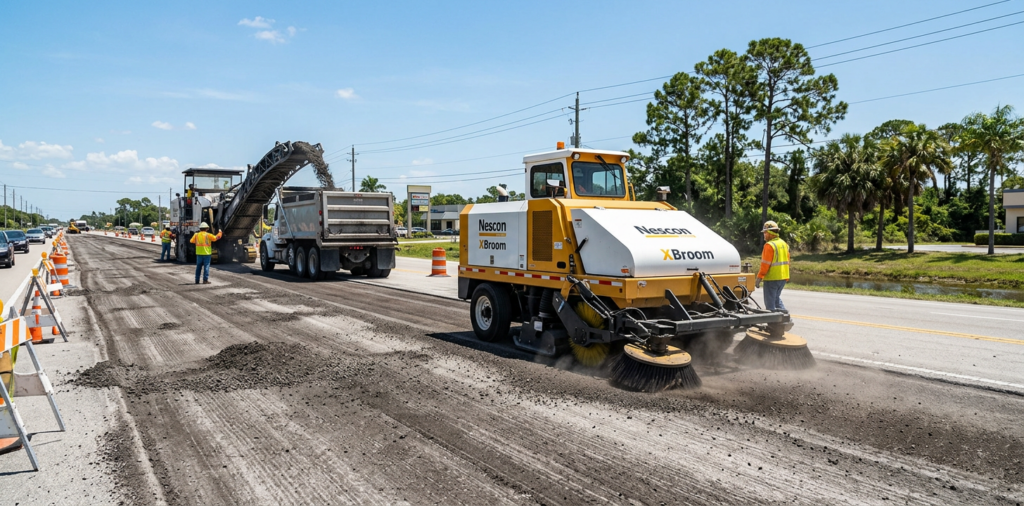
Road cleanup can become the bottleneck on a paving or maintenance shift when loose millings, aggregate, sand, and construction debris remain in the work zone. For Florida contractors, municipalities, and public works departments, the right sweeper keeps material moving off the pavement without slowing the next phase of work.
A mechanical broom street sweeper uses rotating brooms and an elevator or conveyor to collect pavement debris into an onboard hopper. It is designed for high-production sweeping applications where crews need to remove heavier material, maintain cleaner surfaces, and reduce interruptions caused by repeated cleanup passes or frequent dumping.
What Is a Mechanical Broom Street Sweeper?
A mechanical broom street sweeper is a truck-mounted sweeping machine that physically moves debris from the pavement into a hopper. Instead of relying on air suction as its primary collection method, it uses gutter brooms, a main pickup broom, and a mechanical elevator system.
That direct collection process makes mechanical sweepers a strong fit for demanding Florida work involving asphalt millings, chip seal aggregate, road-base material, track-out, and storm debris. The goal is not simply to improve appearance. It is to prepare a paved surface for paving, traffic, drainage, striping, inspection, or the next maintenance activity.
The operating cycle is straightforward:
- Gutter brooms pull debris inward. Side brooms reach curb lines, lane edges, windrows, and joints where material tends to collect.
- The main broom gathers material. A rotating pickup broom moves loose debris toward the elevator intake.
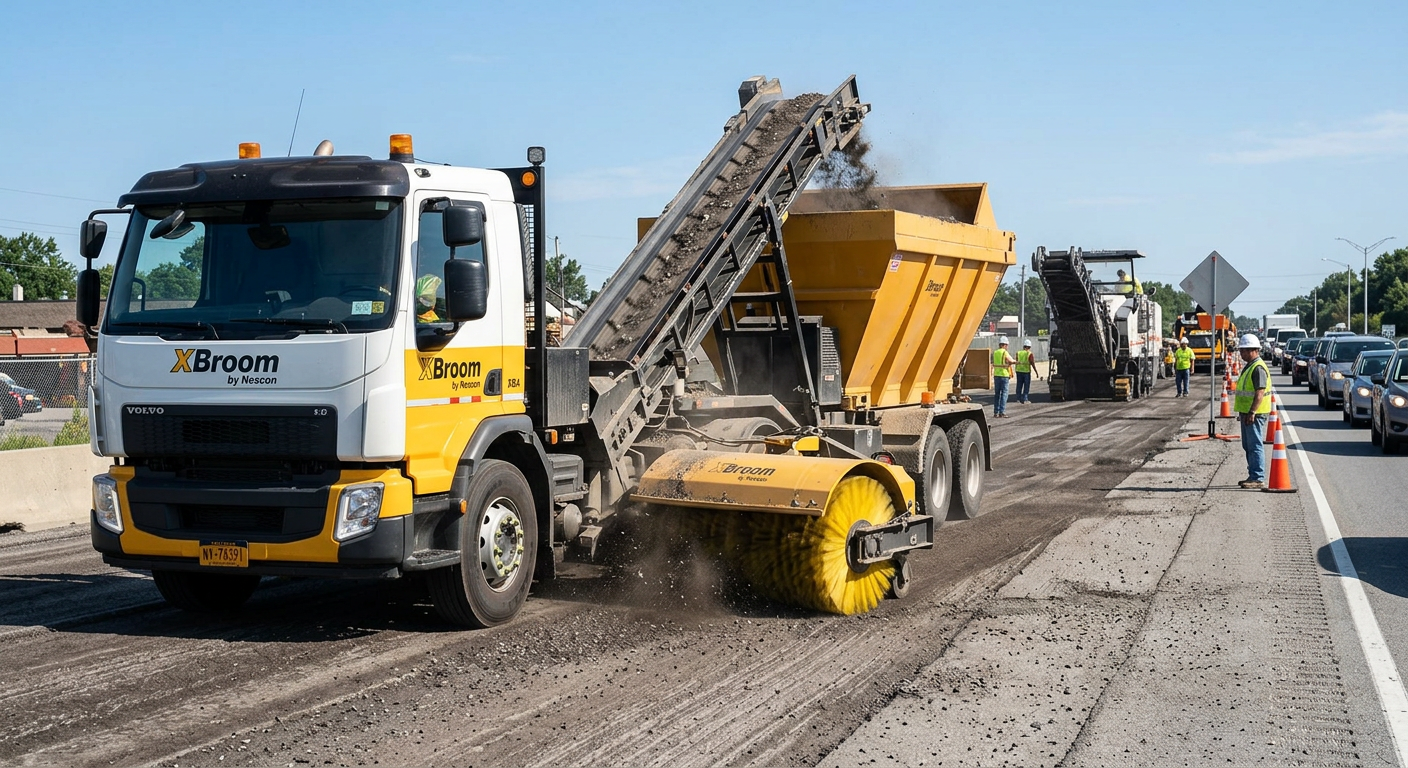
- The elevator transfers debris. A conveyor or drag-slat elevator carries material upward into the onboard hopper.
- The hopper stores the collected load. The operator continues sweeping until the material needs to be discharged at an approved disposal location.
The Federal Highway Administration describes mechanical sweepers as equipment that uses a rotating gutter broom, a cylindrical broom, and a conveyor to move collected material into a storage hopper. The agency also notes that mechanical sweepers are generally effective for larger debris and wet streets, while vacuum and regenerative-air machines can be better suited to fine-particle collection. Federal Highway Administration
Why Mechanical Sweepers Matter on Florida Roadwork
Mechanical broom sweepers are built for the material and pace of heavy road cleanup. Florida crews regularly encounter damp sand, abrasive millings, loose aggregate, vegetative debris, and construction material that must be removed efficiently within lane-closure and weather constraints.
Florida Department of Transportation guidance identifies mechanical roadway sweeping as a maintenance activity used to prevent debris from becoming a safety or drainage problem. Its 2025 maintenance guidance flags buildup greater than three-quarters of an inch deep for more than one continuous foot in a traveled way as below the desired maintenance condition. Florida Department of Transportation
For fleet managers and superintendents, that means sweeping performance is tied to more than appearance. Effective collection can support:
- Cleaner milled surfaces before tack and asphalt placement
- Safer travel lanes, shoulders, intersections, and curb lines
- Better drainage performance around gutters and inlets
- Reduced loose aggregate and track-out near active traffic
- More predictable handoffs between milling, sweeping, and paving crews
Asphalt Milling Cleanup
Asphalt milling cleanup is one of the clearest use cases for a mechanical sweeper. After the milling machine removes the existing surface, loose millings and fines need to be collected so the paving crew can work from a cleaner, more consistent surface.
A broom-and-elevator system is well suited to this debris stream because it physically moves substantial material into the hopper. When comparing equipment, we recommend evaluating broom durability, elevator construction, hydraulic performance, usable hopper volume, and accessibility of daily service points.
Municipal and Public Works Routes
Municipal sweeping often includes curb lines, intersections, bridge approaches, paved shoulders, maintenance yards, and post-storm cleanup. These assignments may involve lighter material than a milling operation, but they still demand consistent pickup, operator visibility, dust management, and reliable daily uptime.
For Florida public works teams, route planning also matters. A sweeper that spends too much time traveling to dump locations or waiting for service reduces the amount of roadway cleaned during the available shift.
Chip Seal and Heavy Civil Cleanup
Chip seal residue, aggregate, pavement fragments, and road-construction debris can wear heavily on sweeping components. Mechanical broom sweepers are typically selected for these assignments because the collection system is designed around durable physical contact with the pavement and material transfer into a hopper.
Mechanical Broom vs. Regenerative-Air Sweepers
The best sweeper type depends on the material crews must remove most often. Mechanical broom sweepers usually fit high-volume, heavy-debris cleanup, while regenerative-air or vacuum sweepers can be a stronger fit where fine dust and sediment collection are the leading requirement.
| Operating Factor | Mechanical Broom Sweeper | Regenerative-Air or Vacuum Sweeper |
|---|---|---|
| Primary collection method | Brooms and elevator | Airflow and pickup head |
| Strong fit | Millings, aggregate, heavy debris | Fine dust and light sediment |
| Wet-material handling | Often effective | Application dependent |
| Key wear areas | Brooms, elevator, dirt shoes | Filters, fan, airflow system |
| Common Florida use | Milling, paving, chip seal, roadwork | Detailed municipal routes, fine debris |
Neither design is automatically right for every operation. A paving contractor supporting a milling train has different needs than a municipality focused on fine sediment near drainage-sensitive corridors. The practical decision starts with the heaviest recurring debris stream, then accounts for route length, dump access, water availability, maintenance capability, and cleanup standard.
The Components That Drive Sweeping Productivity
A mechanical sweeper performs as a system. Large hopper capacity matters, but it only delivers value when broom contact, elevator flow, hydraulic response, and operator controls all support steady material collection.
Main Broom and Gutter Brooms
The main broom does the primary pickup work, while gutter brooms bring debris from the curb line and pavement edges into the collection path. Operators should adjust broom contact carefully. Excessive down pressure can accelerate wear and increase operating load without improving pickup.
Elevator and Hopper
The elevator moves debris from the broom area into the hopper. This is especially important with dense asphalt millings and aggregate, where poor material flow can cause incomplete collection or unnecessary repeat passes.
The XBroom Street Sweeper is configured with a mechanical collection system, a 60-inch main broom, and a five-yard usable hopper capacity. For buyers, the more useful question is how the complete pickup path performs on the material, route length, and dump plan that define the workday.
Hydraulics and Controls
Hydraulic reliability affects sweeping consistency, especially during long Florida shifts. Look for accessible filtration, effective cooling, clear temperature monitoring, and controls that help the operator manage broom speed, elevator position, water spray, and hopper functions without unnecessary adjustment stops.
We also recommend reviewing the XBroom approach to durability and serviceability when uptime and maintenance access are central purchase requirements.
How Florida Crews Should Specify a Mechanical Sweeper
The strongest equipment specifications are built around real operating conditions, not just a list of brochure features. Before requesting pricing, document what crews handle during representative shifts and identify the interruptions that most often reduce productive sweep time.
Use these questions to frame the purchase decision:
- What is the heaviest routine debris, millings, aggregate, sand, or mixed construction material?
- How long is the average work window before traffic control or paving sequencing changes?
- How far is the approved dump location from the active work zone?
- How often do operators need curb-line coverage versus wide open-lane cleanup?
- What water capacity and dust-control approach does the application require?
- Can technicians access high-wear components without major disassembly?
- Which option package supports the fleet's chassis, safety, lighting, and operator requirements?
For operations with distinct route, chassis, or option needs, use Build a Truck to begin defining a sweeper around actual jobsite conditions rather than a one-size-fits-all configuration.
Frequently Asked Questions
Can a mechanical broom sweeper pick up asphalt millings?
Yes. Mechanical broom sweepers are commonly used for asphalt milling cleanup because their brooms and elevator physically move loose millings into the hopper. The best results depend on correct broom adjustment, sound elevator operation, appropriate travel speed, and a hopper capacity that fits the material volume.
Are mechanical street sweepers suitable for wet Florida roads?
They can be a practical choice for wet pavement and heavier debris. Material density, standing water, dust-control needs, and local work practices still affect results, so crews should match equipment setup and operating speed to actual conditions.
How often should a mechanical sweeper dump its hopper?
Dump frequency depends on usable hopper capacity, material density, route length, and the location of the disposal site. Dense millings can fill a hopper much faster than leaves or light curb-line debris, which is why fleets should assess productive sweep time rather than relying only on gross hopper volume.
Does a mechanical broom sweeper replace a vacuum sweeper?
Not always. Mechanical sweepers are generally the better fit for high-volume material such as millings and aggregate, while vacuum or regenerative-air sweepers may be preferred when detailed fine-particle removal is the priority. Some agencies use different equipment types for different route categories.
What maintenance items wear fastest on a mechanical sweeper?
Brooms, dirt shoes, conveyor or elevator wear components, hydraulic filters, spray nozzles, and high-contact material-transfer areas deserve regular inspection. A preventive maintenance routine helps crews identify wear before it creates poor pickup quality or an unplanned shutdown.
What should Florida municipalities include in a sweeper specification?
Municipal specifications should define the route type, debris profile, desired sweeping width, hopper requirements, water and dust-control needs, work-zone lighting, maintenance access, operator controls, parts support, and required safety equipment. It is also smart to include expected operating hours and disposal logistics.
Choose Equipment Around the Work, Not the Label
A mechanical broom street sweeper is a production tool for collecting loose roadway material through rotating brooms, an elevator, and an onboard hopper. It is especially valuable when Florida crews need to keep pace with asphalt milling, paving, chip seal work, municipal maintenance, and heavy paved-surface cleanup.
The right machine is the one that maintains consistent pickup on the toughest recurring material while minimizing dump stops, repeat passes, and avoidable maintenance delays. When those operating factors are aligned, the sweeping crew can keep the roadway cleaner and the larger project moving.
Discuss a Florida Sweeper Configuration
We build equipment for contractors, municipalities, and public works fleets that need durable mechanical sweeping performance in demanding conditions. Explore XBroom street sweeper products, then contact the Nescon team to discuss pricing, options, a demonstration, and the configuration that fits your Florida work cycle.
Call Phone: 480-505-0001 to request additional information or discuss a high-production street sweeper for milling cleanup, road construction, municipal routes, or industrial paved-surface maintenance.
About XBroom by Nescon
XBroom by Nescon is a U.S.-based street sweeper manufacturer specializing in heavy-duty mechanical street sweepers designed for high-production sweeping applications. XBroom sweepers are built to support asphalt milling, road construction, municipal street maintenance, and industrial sweeping operations.
Engineered for durability, large hopper capacity, long sweep times, and reduced downtime, XBroom street sweepers help contractors and municipalities maximize productivity while minimizing maintenance and dump frequency.
Ready to Upgrade Your Street Sweeper?
Call 480-505-0001 or Contact Nescon to request pricing, schedule a demo, or learn more about XBroom street sweeping solutions.