
Elgin vs Schwarze Street Sweepers for Georgia Road Crews
For Georgia paving contractors, municipal fleets, and private sweeping companies, the right mechanical broom sweeper is the one that matches the material, route, crew, and cleanup window. The Elgin vs Schwarze street sweepers decision should not come down to brand familiarity alone. It should come down to whether the machine’s hopper, water capacity, conveyor setup, controls, chassis, and maintenance access support the work your crew performs most often.
Georgia crews face a wide range of operating conditions, from urban municipal routes and industrial yards to overnight milling projects and high-production paving work. The Georgia Department of Transportation maintains traffic data for more than 125,000 centerline miles of public roads, a scale that reinforces the need for dependable cleanup equipment across the state. Georgia DOT Traffic Counts and Road Data provides the state’s current road inventory resources.
The Short Answer: Match the Sweeper to the Workload
Elgin and Schwarze both offer established mechanical broom sweepers, but their product lines serve different fleet priorities. Elgin offers a broad mechanical lineup with compact, maneuverable, and highway-capable configurations, while Schwarze offers contractor-focused mechanical models with configurable conveyor and control options.
For Georgia operations centered on heavy asphalt millings, loose aggregate, chip seal cleanup, and long sweeping runs, we recommend comparing usable hopper capacity, dump frequency, broom pressure adjustment, wear-part access, water capacity, and operator workflow before comparing trim options.
| Buying Factor | Elgin Mechanical Sweepers | Schwarze Mechanical Sweepers | What Georgia Fleets Should Ask |
|---|---|---|---|
| Product range | Compact to highway-capable | Compact to heavy-duty | Which class matches our route and debris? |
| Hopper capacity | Varies by model | Varies by model | How often will we need to dump? |
| Maneuverability | Strong compact options | Strong non-CDL options | Can it work tight municipal routes? |
| Milling cleanup | Heavy-duty models available | M6 designed for heavy mechanical work | How does the conveyor handle millings? |
| Service planning | Dealer and model dependent | Dealer and model dependent | Who stocks common wear parts locally? |
Elgin Strengths: Broad Mechanical Sweeper Coverage
Elgin’s mechanical sweeper lineup gives municipalities and contractors several machine classes to evaluate. That range can be useful for fleets that need one unit for tight city routes and another for heavier construction or road maintenance duties.
The Elgin Pelican is a purpose-built three-wheel mechanical sweeper known for maneuverability and operator visibility. Elgin lists a 3.6-cubic-yard hopper, 220-gallon water capacity, 10-foot maximum sweeping path, and variable-height front dump for the Pelican. Its rear-steer layout can be a legitimate advantage for municipal curb lines, parking areas, and constrained streets where placement matters as much as raw volume.
For larger work, Elgin’s Eagle and Broom Bear models offer 4.5-cubic-yard hopper capacities and up to 360 gallons of water, while the Road Wizard is listed with a 5.4-cubic-yard hopper. Those larger models deserve consideration when crews need a conventional or cab-over chassis approach and more operating capacity than a compact municipal unit can provide.
Where Elgin Can Fit Best in Georgia
Elgin can be a strong fit when a fleet needs a wide range of equipment classes under one manufacturer, particularly when maneuverability, operator visibility, route work, or a specific local dealer relationship drives the purchase. A city public works department with residential routes, downtown curbs, and frequent tight-radius work may prioritize different features than an asphalt contractor cleaning behind a milling machine.
The important point is to compare equivalent classes. A Pelican should be evaluated against compact and maneuverable mechanical sweepers, while larger Elgin models should be evaluated against other high-capacity units intended for extended construction cleanup.
Schwarze Strengths: Heavy Mechanical Sweeping Options
Schwarze’s mechanical broom lineup is particularly relevant for contractors that want configurable controls, substantial sweeping width, and a machine built around heavier debris collection. Its M6 Avalanche is one of the most direct comparisons for high-production roadwork and milling cleanup.
Schwarze lists the M6 Avalanche as a 5-yard mechanical sweeper with a 134-inch sweeping path, 350-gallon water capacity, dual 49-inch gutter brooms, and a 74-horsepower auxiliary engine. The manufacturer also offers single- or twin-engine configurations and a choice of squeegee or belt-style conveyor systems. That conveyor flexibility can matter when a fleet handles a mix of fine debris, loose aggregate, asphalt millings, and municipal material.
For fleets that need a non-CDL class machine, Schwarze’s M4 Cascade is positioned as a 4-yard mechanical sweeper on a 19,500-pound GVWR chassis. Schwarze identifies the M4’s stainless-steel hopper and conveyor as lifetime-warranted against rust or corrosion, an attribute that may be meaningful for fleets concerned about long-term exposure to wet debris and seasonal operating conditions.
Where Schwarze Can Fit Best in Georgia
A Schwarze mechanical sweeper may fit a contractor or municipality that wants in-cab broom and conveyor adjustments, a particular conveyor style, or a non-CDL configuration that broadens operator availability. The M6 merits a close look for heavier paving and milling work, especially when the fleet’s operating model supports its size and chassis class.
We still advise buyers to inspect service access in person. Conveyor replacement procedures, broom-change labor, hydraulic access, electrical diagnostics, and dealer parts support can have more effect on uptime than a brochure specification alone.
Georgia Milling Work Requires a Production-First Comparison
On milling projects, the best sweeper is the machine that keeps moving through the cleanup sequence without creating delays at the paving operation. That means hopper capacity, water supply, broom control, and dump logistics must be reviewed as one production system.
Georgia DOT’s milling guidance states that micro-milled and conventionally milled roadways must be thoroughly cleaned with brooms, sweepers, or vacuum trucks before opening to traffic. The guidance also notes a 24-hour minimum for certain micro-milling work so traffic can assist with remaining dust removal before surface treatment. Georgia DOT Milling Guidelines make clear that cleanup is a project requirement, not an afterthought.
Compare the Real Cost of Dump Frequency
A smaller hopper can be the correct choice for short municipal routes, but it may create unnecessary travel and waiting during a long milling shift. Each dump cycle can include leaving the work zone, traveling to the dump point, positioning the truck, unloading, returning through traffic control, and resuming the sweep pass.
Ask each manufacturer or dealer to demonstrate a loaded hopper dump cycle and explain the usable capacity, not just the advertised gross capacity. Also confirm the dump height, side or front discharge location, hopper cleanout access, and whether the body can efficiently distribute material into your normal receiving truck or container.
Inspect Wear Points Before You Buy
Mechanical broom sweepers work in abrasive environments. Millings, aggregate, curb impacts, manholes, and uneven transitions can accelerate wear on brooms, drag shoes, conveyor components, skirting, bearings, and hydraulic systems.
We recommend asking these questions during a demo:
- How are main broom and gutter broom pressure settings adjusted?
- Which items require daily inspection on a milling project?
- How long does a typical conveyor service procedure take?
- Can technicians reach hydraulic filters, pumps, valves, and electrical components without major disassembly?
- Which wear parts should our Georgia fleet stock in-house?
- What local service response and parts availability can the supplier document?
Where XBroom Fits in a Heavy-Duty Comparison
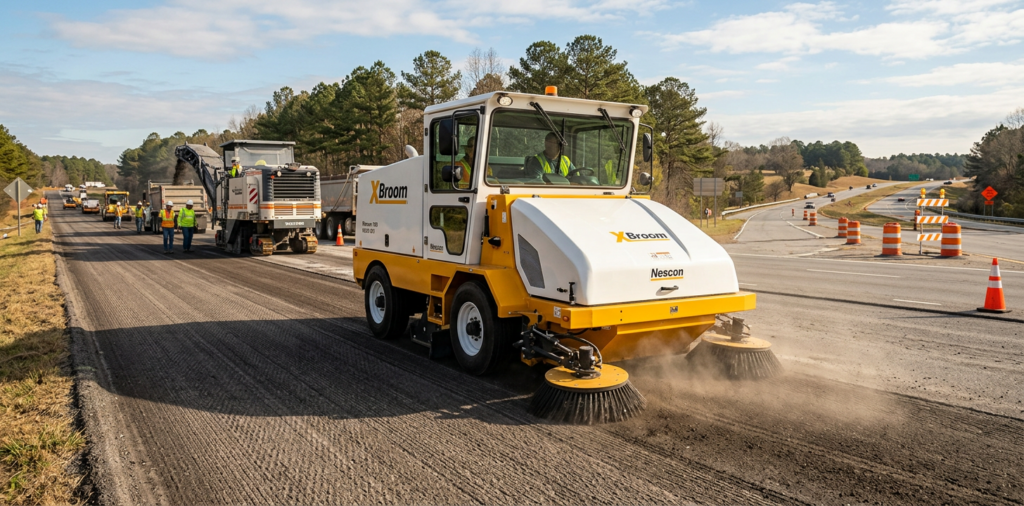
Some Georgia fleets need a third category in the Elgin vs Schwarze comparison: a high-production mechanical street sweeper designed around extended sweeping time, high-capacity cleanup, and serviceable heavy-duty components. This is especially relevant for contractors that spend more hours behind milling machines than on light municipal routes.
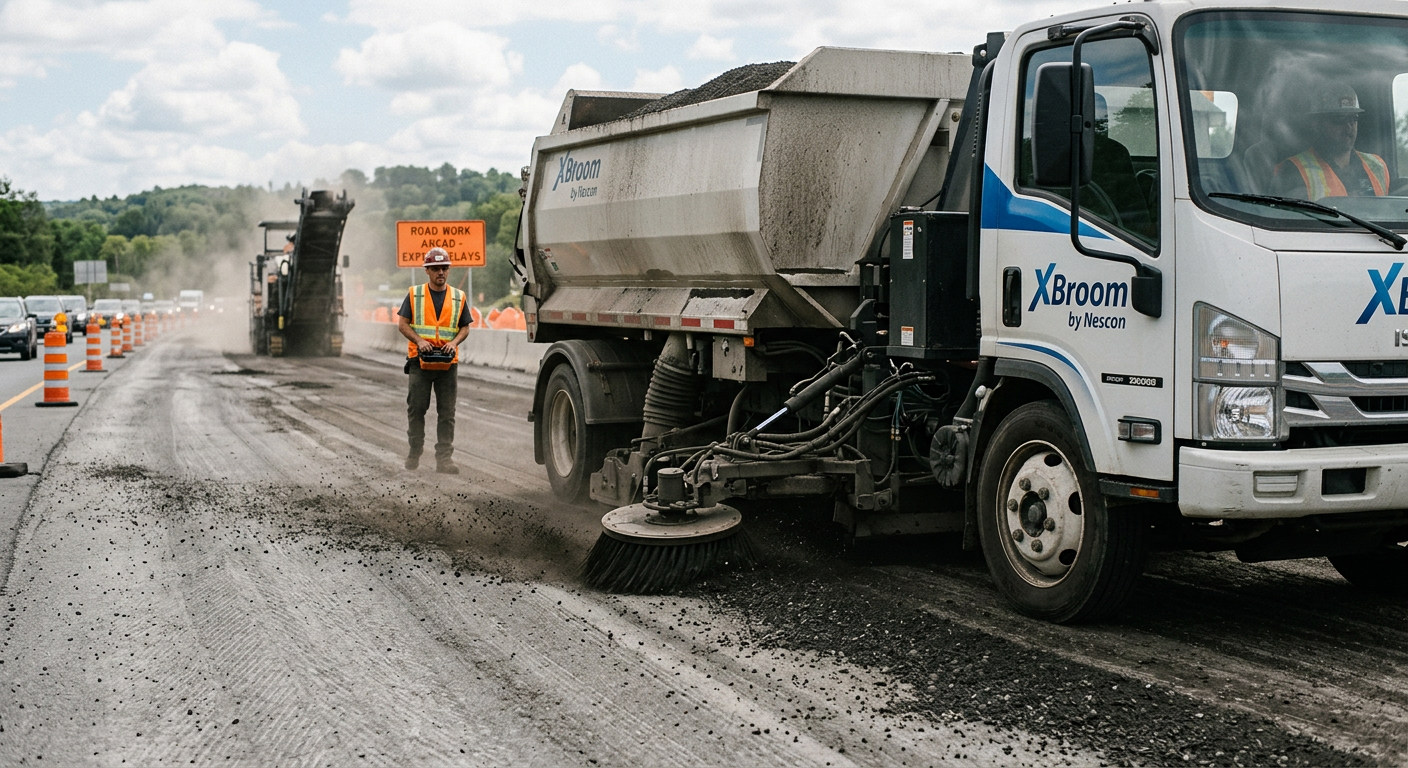
The XBroom Street Sweeper is built with a 5-yard usable hopper, 300-gallon water tank, adjustable sweeping width up to 140 inches, and maximum dump height up to 150 inches. Its direct-drive hydraulic layout, adjustable broom controls, and heavy-duty mechanical sweeping system are intended for asphalt milling cleanup, road construction, chip seal, municipal maintenance, and industrial sweeping.
For fleets evaluating all available configurations, review the full range of XBroom street sweeper products. We also recommend using the custom truck configuration process to discuss CDL or non-CDL requirements, chassis preferences, water capacity, camera packages, lighting, and other job-specific needs.
A Better Evaluation Process for Fleet Managers
The most reliable procurement process puts real work conditions ahead of brand preference. We recommend involving the superintendent, lead operator, maintenance manager, and procurement lead in the evaluation so the final specification reflects production demands and ownership costs.
Bring Actual Job Data to the Demo
Provide the supplier with your normal sweep route length, average material type, expected tons or cubic yards collected, available water-fill locations, dump-site distance, lane-closure duration, and operator staffing limitations. A supplier can make a better recommendation when the conversation is based on real work instead of a generic request for a street sweeper.
Compare Equivalent Machine Classes
Do not compare a compact non-CDL sweeper to a heavy-duty 33,000-pound GVWR machine and expect a meaningful result. Group the alternatives by operating class, expected payload, hopper size, water capacity, and intended application.
A municipality may appropriately choose maneuverability and staffing flexibility over maximum hopper volume. A heavy civil contractor may appropriately prioritize long sweep time, wide coverage, and fewer dump interruptions. Both decisions can be correct when they are tied to the actual work.
Document the Ownership Questions
Before issuing a purchase order, request a written list of standard equipment, available options, warranty coverage, recommended preventive maintenance intervals, common replacement parts, operator training provisions, and expected delivery timeline. Learn more about the contractor experience and manufacturing background behind the equipment at Why Choose XBroom.
Frequently Asked Questions
Is Elgin or Schwarze better for asphalt milling cleanup?
Neither is automatically better for every milling operation. Elgin and Schwarze both offer viable mechanical broom sweeper options, but the correct selection depends on hopper capacity, conveyor configuration, broom controls, service access, support coverage, and the volume of material your crew handles per shift.
Should a Georgia municipality buy a non-CDL sweeper?
A non-CDL sweeper can be a sound choice when operator availability and maneuverability are the main priorities. Before specifying one, verify that its hopper size, water capacity, payload, and route endurance match the department’s actual municipal workload.
Does a larger hopper always lower street sweeper operating costs?
No. A larger hopper can reduce dump frequency, but total cost also depends on fuel use, maintenance, chassis class, operator utilization, local dump logistics, and how efficiently the machine handles your typical debris.
What conveyor system is best for asphalt millings?
The best conveyor system depends on the size, moisture level, density, and volume of the millings your crews collect. Ask for a live demonstration with representative material and inspect the wear surfaces, cleanout access, conveyor adjustment process, and replacement procedure.
What should we inspect during a street sweeper demonstration?
Inspect operator sightlines, broom controls, dust suppression, hopper loading, conveyor operation, dump height, service points, daily checks, and access to high-wear components. A meaningful demonstration should include actual sweeping and loaded-hopper operation, not only a walkaround.
Specify the Sweeper Around Your Georgia Operation
A strong street sweeper purchase starts with a clear definition of the material, shift length, road environment, staffing model, and downtime tolerance. Elgin can offer broad mechanical sweeper coverage, Schwarze can offer robust contractor-oriented mechanical configurations, and high-production fleets should compare both against equipment built for extended cleanup and reduced dump interruptions.
We encourage Georgia contractors, public works departments, and private sweeping companies to use the comparison as a framework, then validate every specification through a jobsite-focused demonstration. The right machine is the one that keeps the crew sweeping, reduces avoidable service delays, and supports consistent cleanup quality across the work you perform.
Discuss a High-Production Sweeper Configuration
If your crew needs a mechanical broom sweeper for Georgia milling, paving, chip seal, municipal maintenance, or industrial cleanup, we can help identify a configuration that fits the job. Call Phone: 480-505-0001 or Contact Nescon to request pricing, schedule a demo, or review your sweeping requirements with our team.
About XBroom by Nescon
XBroom by Nescon is a U.S.-based street sweeper manufacturer specializing in heavy-duty mechanical street sweepers designed for high-production sweeping applications. XBroom sweepers are built to support asphalt milling, road construction, municipal street maintenance, and industrial sweeping operations.
Engineered for durability, large hopper capacity, long sweep times, and reduced downtime, XBroom street sweepers help contractors and municipalities maximize productivity while minimizing maintenance and dump frequency.
Ready to Upgrade Your Street Sweeper?
Call 480-505-0001 or Contact Nescon to request pricing, schedule a demo, or learn more about XBroom street sweeping solutions.