
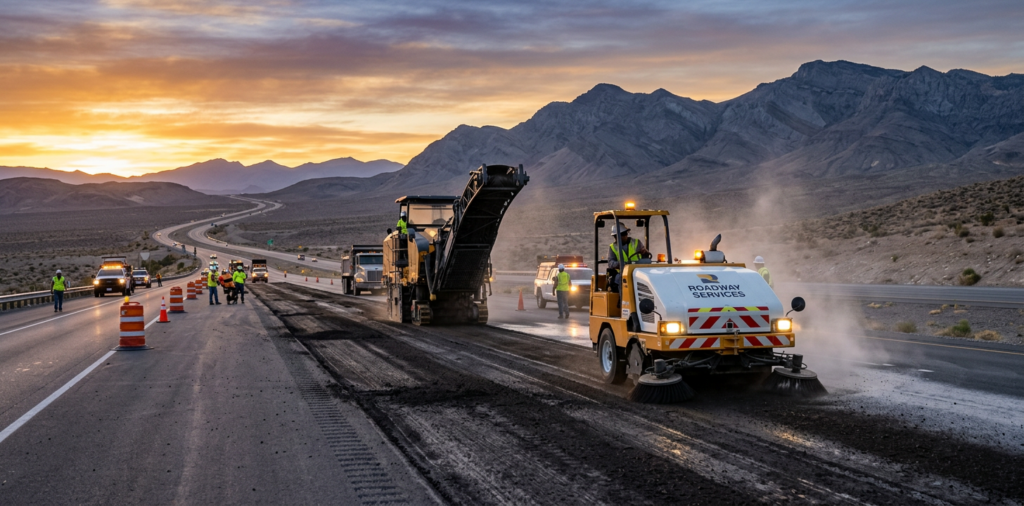
A replacement sweeper should solve the production constraints that show up after the milling machine starts moving, not simply resemble the unit it replaces. For Nevada paving contractors, public works fleets, and private sweeping companies, that means looking closely at debris volume, dump-cycle time, broom wear, dust-control needs, and service access.
When buyers look for a Viking C20 alternative, the productive path is to evaluate the machine around its hardest recurring assignment. If the truck must follow a milling operation, clear loose aggregate after chip seal, and cover municipal routes in the same month, it needs more than a light-duty cleanup configuration.
Start With the Material and the Work Cycle
The best alternative is the sweeper that consistently handles the debris on your pavement and remains in the sweep cycle longer. Nevada roadwork can combine coarse reclaimed asphalt pavement, windblown sand, base material, aggregate, and urban curb-line debris in a single operating week.
The Nevada Division of Environmental Protection notes that an average street sweeper covers approximately 25 curb-miles per day, although actual results depend on debris load, pavement condition, route layout, traffic, dump access, and operator practices. That figure is useful because it reinforces a procurement reality: a sweeper spends every minute either collecting material or losing time to travel, unloading, adjustment, and maintenance. Nevada Division of Environmental Protection road-maintenance guidance
| Evaluation Area | High-Production Milling Work | Municipal Route Work | What to Confirm |
|---|---|---|---|
| Debris profile | Millings and aggregate | Grit and curb debris | Primary material size |
| Collection system | Mechanical broom and elevator | Mechanical or air system | Pickup match |
| Hopper need | Long sweep intervals | Route-dependent | Usable capacity |
| Wear exposure | High abrasion | Moderate variation | Serviceable wear parts |
| Dust control | Important near crews | Important near traffic | Water-system capability |
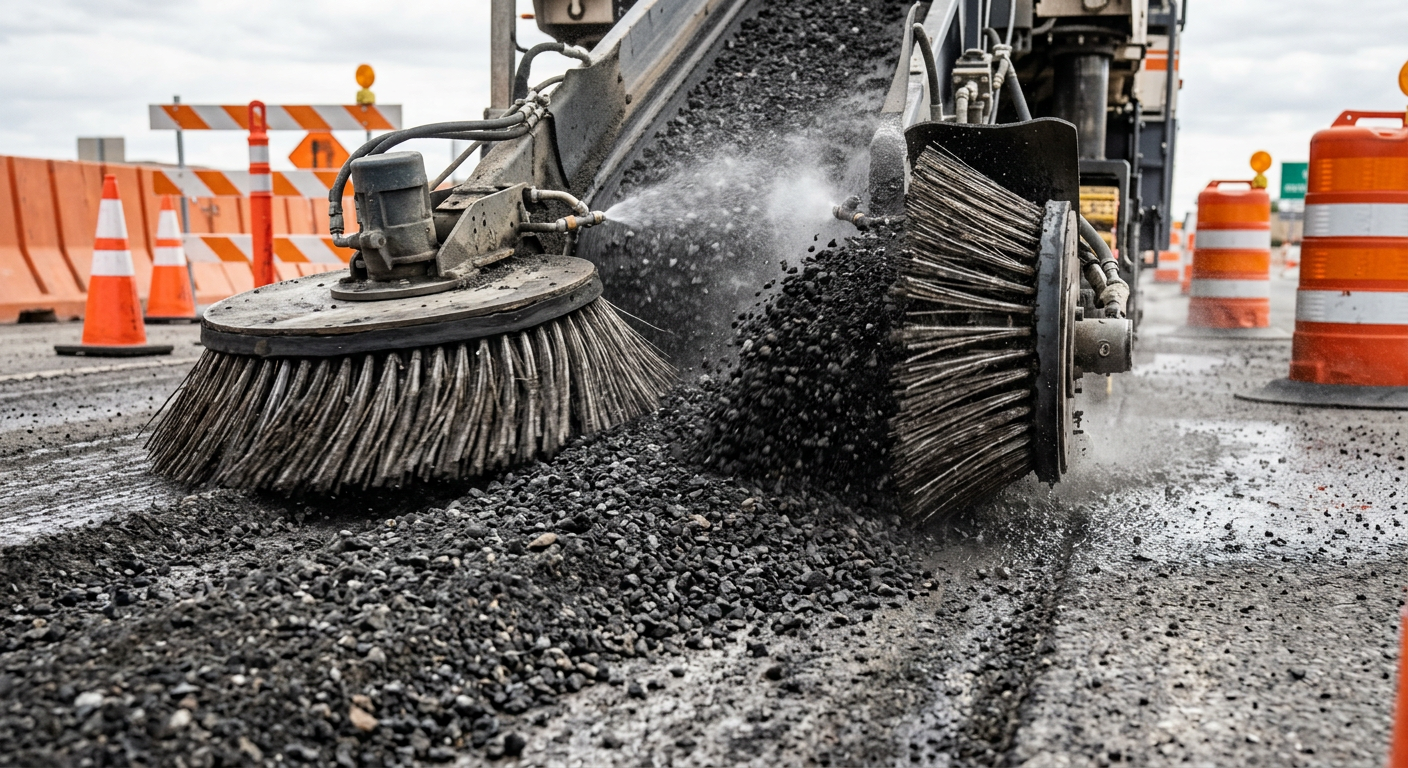
A mechanical broom sweeper uses direct broom contact to bring material into the pickup path, then transfers it into the hopper with an elevator or conveyor. That makes the configuration especially relevant when crews are cleaning substantial quantities of abrasive material rather than only light sediment or fine dust.
Why Mechanical Broom Sweepers Fit Nevada Milling Cleanup
Mechanical broom sweepers are often a stronger fit for milling cleanup because they are designed to physically collect coarse, dense roadway material. A regenerative-air or vacuum sweeper can be valuable for fine-particle pickup and routine surface cleaning, but it should not automatically be treated as the right replacement for a high-volume milling assignment.
Asphalt Milling Requires Consistent Material Transfer
A cold-planing operation produces a changing mix of fines, broken asphalt, and aggregate. The sweeper has to stay close enough to the operation to prepare the surface for the next phase while avoiding frequent interruptions for a full hopper, a broom adjustment, or a material-flow issue.
For this application, we recommend asking manufacturers to demonstrate pickup on material similar to your actual milling debris. A parking-lot demonstration on light debris does not reveal how a machine will perform behind a production milling crew on a long Nevada shift.
Chip Seal and Shoulder Cleanup Create Similar Wear Demands
Chip seal projects, shoulder rehabilitation, utility restoration, and road widening can all leave loose aggregate that is tough on brooms, skid shoes, elevators, and hopper contact points. The right alternative should have a durable debris path, accessible wear components, and controls that let operators maintain effective broom contact without excessive down pressure.
Municipal Work Still Matters
Nevada cities and counties may need one truck to handle curb lines, intersections, facility yards, post-event cleanup, and construction-related routes. A fleet can use a heavy-duty mechanical sweeper for these assignments, but the purchase decision should begin with the most demanding work, not the lightest route.
What to Compare in a Viking C20 Alternative
A serious comparison should focus on productive hours, operating cost, and field serviceability. Brochure claims matter less than how quickly the unit can collect material, stay operational, and return to work after routine maintenance.
Usable Hopper Capacity and Dump Frequency
Hopper capacity directly affects how long the truck can remain on the roadway before an unloading trip. The relevant question is not only total advertised volume. Ask how much material the hopper can practically carry, how fast the dump cycle operates, and how far the truck must travel to the approved disposal point.
The heavy-duty XBroom mechanical sweeper configuration lists a 6-yard total hopper with 5 yards of usable capacity. For a Nevada contractor following a milling train, usable capacity and a predictable unload cycle can help reduce the production loss created by repeated dump trips.
Main Broom, Gutter Brooms, and Wear Management
The broom system determines how well the machine lifts material from the pavement. Confirm broom diameter, working width, adjustment method, down-pressure control, drive design, and availability of replacement components before choosing a replacement unit.
Operators should be able to inspect broom pattern and pavement contact at the beginning of each shift, then make practical adjustments as conditions change. Too little contact leaves material behind. Too much contact accelerates wear and increases drag.
Elevator Design and Material Flow
The elevator is where coarse debris becomes a reliability issue. Evaluate the conveyor or drag-slatted transfer system, chain and bearing protection, reverse capability, jam indication, service access, and the procedure for clearing a blockage safely.
A machine that handles millings well must move material steadily from the broom to the hopper. This is not hauling equipment or a dump truck function. It is a road-sweeping performance requirement that keeps the paving sequence moving.
Water Capacity and Dust Suppression
Nevada’s dry conditions can make dust control a daily operating concern. Ask how much water the system carries, where water is applied, how nozzles are protected, and how easily filters can be cleaned.
Water should support sweeping performance without becoming another source of downtime. Inspect the fill arrangement, pump access, hose routing, and the operator controls used to match spray volume to debris and weather conditions.
Service Access and Manufacturer Support
A lower acquisition price can lose its advantage quickly if routine service requires excessive labor or an avoidable machine outage. Ask to see filters, hydraulic components, grease points, broom-change areas, electrical diagnostics, and daily inspection locations during the demonstration.
We build our sweepers around demanding cleanup work, and buyers can compare available mechanical street sweeper product options before narrowing a specification. The practical test is straightforward: can your team inspect, adjust, and maintain the truck without turning routine work into an extended service event?
Build the Nevada Specification Around the Shift
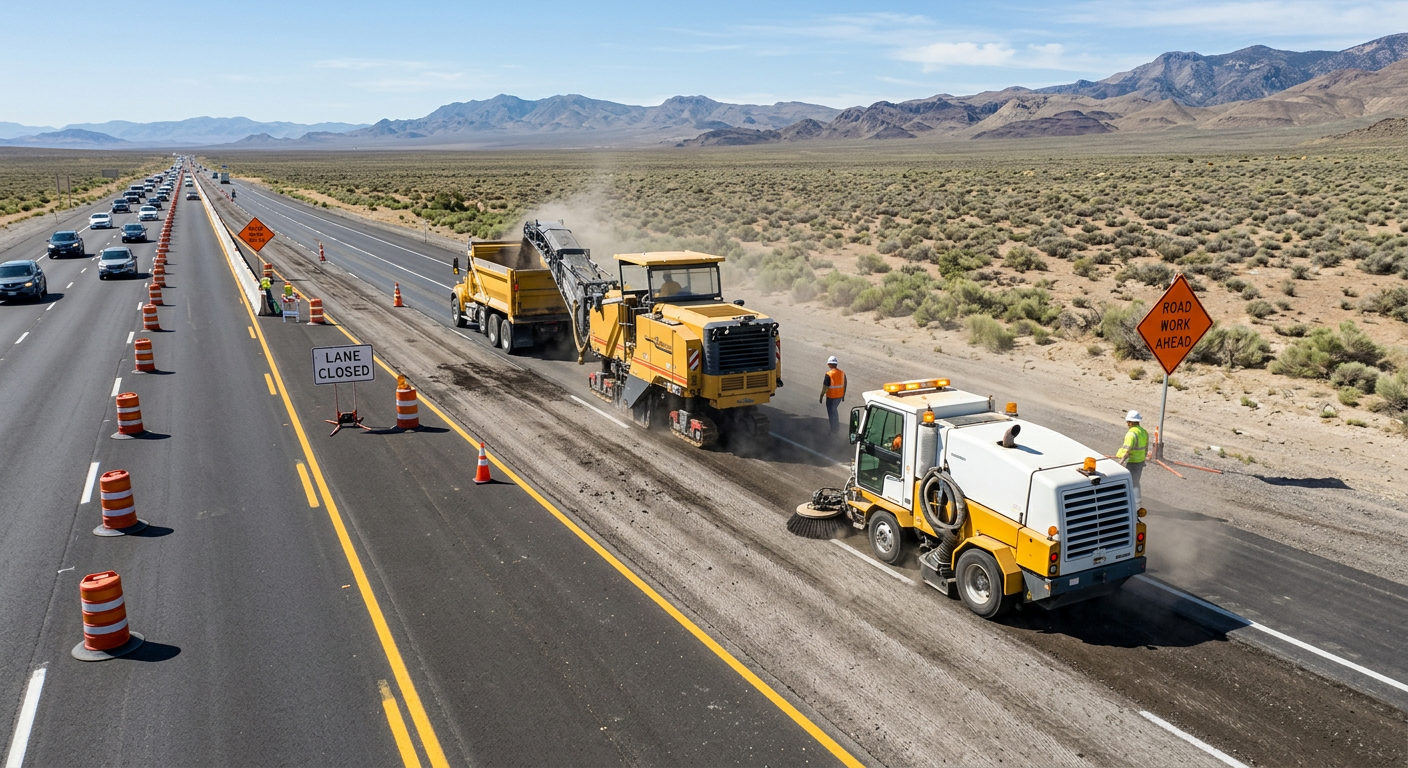
A high-production sweeper is specified around real operating conditions, including travel distance to the dump area, lane-closure duration, milling rate, debris density, and operator handoffs. Fleets that document these details make better replacement decisions than fleets that compare only a short list of model features.
Questions to Answer Before Requesting Quotes
- What material does the sweeper collect most often, and what is the heaviest recurring debris?
- How many productive sweeping hours must it deliver during a normal shift?
- How far is the typical trip from the work zone to the dump location?
- Will the truck support milling, chip seal, municipal maintenance, airport service roads, or industrial pavement?
- What lighting, camera, arrow-board, and traffic-control equipment does the operation require?
- Which wear items should be stocked locally to avoid an extended outage?
Use the street sweeper truck configuration process to outline chassis needs, expected debris, route duration, hopper requirements, and operator priorities before requesting a final quote. This gives procurement teams a clearer basis for comparing machines that may appear similar on paper.
Questions Nevada Buyers Ask
Can a mechanical broom sweeper pick up asphalt millings?
Yes. Mechanical broom sweepers are commonly used for asphalt milling cleanup because direct broom action and an elevator or conveyor are well suited to coarse, abrasive pavement material. Actual production depends on milling depth, debris volume, lane width, travel speed, and dump logistics.
Is a Viking C20 alternative automatically a mechanical broom sweeper?
No. “Alternative” only describes the buying comparison, not the collection technology. Confirm whether the replacement uses mechanical broom, regenerative-air, vacuum, or another collection method, then match that method to the debris your crew handles most often.
Can one street sweeper support milling work and municipal routes?
Yes, when it is specified for the more demanding assignment. A truck selected only for light route sweeping may not have the capacity, wear protection, or material-transfer durability required for routine milling cleanup.
How much hopper capacity does a Nevada milling crew need?
The answer depends on material density, the milling rate, and the distance to the disposal point. Track how often your present truck leaves the work zone to unload, then use that data to establish the required productive sweep interval.
What should we require in a field demonstration?
Require a working demonstration on pavement and debris that resemble the job. Have the operator show pickup quality, broom adjustment, hopper operation, water controls, material transfer, routine inspections, and access to key service points.
Are street sweepers used as general debris haulers?
No. A street sweeper is designed to collect debris while sweeping paved surfaces and to unload its hopper as part of that workflow. It is not a replacement for a dump truck or general hauling vehicle.
Choose the Alternative That Protects Production Time
The right replacement is the machine that matches your actual pavement conditions and keeps the cleanup operation from slowing the rest of the crew. For Nevada milling, chip seal, construction, and municipal maintenance, prioritize durable mechanical collection, useful hopper capacity, effective dust suppression, and service access that supports daily uptime.
Before committing, review the manufacturer’s approach to durability and contractor-focused engineering through Why Choose XBroom. A well-run field demonstration and a specification built around the full work cycle will reveal far more than a familiar model name.
Discuss Your Nevada Sweeper Requirements
We can help you evaluate a high-production mechanical broom sweeper around your material, shift length, dump-cycle reality, and maintenance expectations. Review the XBroom Street Sweeper, then contact the Nescon team for pricing, a demo, or additional information.
For direct manufacturer support, call Phone: 480-505-0001. We will help you assess the configuration that can reduce downtime and keep Nevada roadwork moving.
About XBroom by Nescon
XBroom by Nescon is a U.S.-based street sweeper manufacturer specializing in heavy-duty mechanical street sweepers designed for high-production sweeping applications. XBroom sweepers are built to support asphalt milling, road construction, municipal street maintenance, and industrial sweeping operations.
Engineered for durability, large hopper capacity, long sweep times, and reduced downtime, XBroom street sweepers help contractors and municipalities maximize productivity while minimizing maintenance and dump frequency.
Ready to Upgrade Your Street Sweeper?
Call 480-505-0001 or Contact Nescon to request pricing, schedule a demo, or learn more about XBroom street sweeping solutions.