
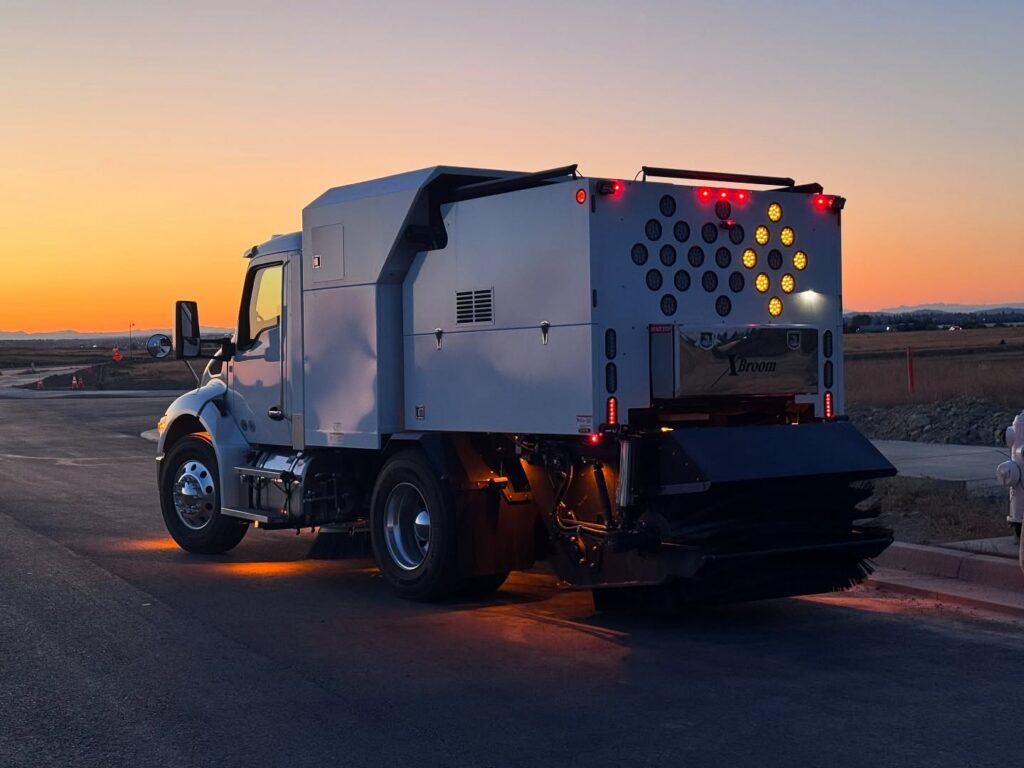
A clean pavement surface keeps North Carolina roadwork moving. After milling, shoulder work, chip seal, or heavy hauling, crews need a dependable way to collect millings, aggregate, dirt, and tracked material before it slows the next operation.
Mechanical broom sweeping for road construction uses rotating brooms and a material-transfer system to lift debris from pavement and load it into an onboard hopper. We use this approach where coarse, abrasive material and long production cycles make conventional finish-cleaning methods a poor fit.
For North Carolina contractors, public works teams, and private sweeping companies, the value is operational. A properly matched mechanical broom sweeper helps keep milling crews, paving crews, traffic-control personnel, and inspectors working from a cleaner, more predictable roadway.
How Mechanical Broom Sweeping Works on North Carolina Jobs
Mechanical broom sweeping physically moves loose roadway material into a hopper, making it well suited to substantial debris loads. Rather than relying primarily on air flow, the machine uses broom contact and mechanical transfer to collect material from the pavement.
| Component | Primary Job | Roadwork Benefit |
|---|---|---|
| Gutter brooms | Pull edge debris inward | Cleans joints, curbs, and shoulders |
| Main broom | Lifts material from pavement | Handles coarse millings and aggregate |
| Conveyor or elevator | Transfers debris upward | Maintains continuous collection |
| Hopper | Holds collected material | Extends productive sweep time |
| Water spray | Controls airborne dust | Supports visibility and cleaner operations |
The operator sets broom pressure, travel speed, water flow, and sweeping width to match the surface and material. Too little broom contact leaves debris behind. Excessive pressure can accelerate broom wear, increase drag, and make the machine less efficient over a full shift.
North Carolina's roadway sweeping work-code description identifies sweeping as removal of foreign material from pavement, shoulders, ramps, curb and gutter, gore areas, and transitions. It also lists a minimum four-cubic-yard sweeper capacity, water for dust control, dual steering, and dual brooms for the applicable work category. North Carolina Department of Transportation provides that guidance for contractors evaluating the scope and equipment expectations associated with roadway sweeping work.

Where Mechanical Broom Sweepers Fit Best
Mechanical broom sweepers perform best when the debris stream is coarse, heavy, abrasive, or unevenly distributed. In North Carolina road construction, that usually means the sweeper is supporting production work rather than serving only as a final appearance cleanup tool.
Asphalt Milling Cleanup
Milling produces loose asphalt particles that must be collected so paving crews can work from a clean surface. A mechanical broom sweeper can follow the milling operation, collect material near the cut, and reduce the buildup that creates delays at the paving handoff.
The operating goal is not simply to sweep faster. It is to keep the sweeper close enough to the milling operation that material does not accumulate, while preserving safe separation, radio communication, and space for traffic control. Learn more about equipment designed for this demanding role through the XBroom mechanical street sweeper platform.
Chip Seal and Loose Aggregate Collection
Chip seal work requires controlled handling of loose aggregate before and after treatment. Mechanical broom equipment is a strong fit for gathering heavier stone and excess material, especially where crews need a durable collection system for repeated passes.
Broom setup matters on these assignments. Aggressive pressure can disturb material that should remain in place, while a light setting may leave loose aggregate on the roadway. The operator should verify the broom pattern in a controlled test area before moving into full production.
Construction Track-Out and Shoulder Cleanup
Haul routes, site exits, widening projects, and shoulder reconstruction can move dirt and stone onto paved surfaces. A high-production sweeper helps crews collect that material instead of pushing it farther down the road or toward drainage features.
The Minnesota Stormwater Manual reports that mechanical broom sweepers are effective for large-grained sediment, packed soil, uneven pavement, exposed manholes, and curb edges. It also notes that mechanical broom sediment-removal efficiency can range from 5% to 57%, depending on equipment condition, adjustments, debris type, and jobsite conditions. That range reinforces a practical point for North Carolina operations: broom condition and operator setup directly affect the result.
Build the Sweep Cycle Around Production, Not Cleanup
The most productive roadwork sweeping plan treats the sweeper as part of the operating sequence, not as an afterthought. We recommend planning the entire sweep cycle before the first milling pass or haul truck enters the work zone.
Start by documenting five items for every recurring assignment:
- Active sweep area and expected debris type
- Distance from the work zone to the approved dump location
- Expected hopper loading rate
- Water refill location and estimated refill interruption
- Safe staging areas for inspection, dumping, and shift changes
A sweeper with substantial hopper capacity can help reduce dump-related interruptions, but capacity alone does not solve the workflow problem. If a machine has a long travel distance to disposal, no safe staging point, or a water refill plan that interrupts the paving sequence, the crew still loses production time.
Daily pre-shift checks should include broom wear, broom pattern, skid shoes, conveyor or elevator function, hydraulic hoses, warning lights, water spray, hopper controls, and tires. Small inspection items are easier to address before the lane closure begins than during a paving window.
For fleets that need equipment matched to their chassis, debris profile, operating hours, and jobsite constraints, Build a Truck with XBroom provides a starting point for specifying a mechanical broom sweeper around the actual work cycle.
Mechanical Broom vs. Air and Vacuum Sweepers
No sweeper design is best for every North Carolina assignment. The right choice depends on the material being collected, required finish quality, dust-control needs, pavement condition, and the amount of time crews need to stay productive between dumps.
| Sweeper Type | Best Fit | Key Strength | Main Limitation |
|---|---|---|---|
| Mechanical broom | Millings, stone, aggregate | High-volume coarse debris collection | Less effective on fine dust alone |
| Regenerative air | Routine municipal routes | Fine-particle collection | May be less suitable for heavy millings |
| Vacuum sweeper | Detailed cleanup and fines | Strong pickup of fine material | Can be less efficient with bulky debris |
A mechanical broom sweeper is often the best primary tool behind milling, on chip seal work, and at heavy civil sites where the material is bulky and abrasive. Regenerative-air or vacuum equipment can be valuable for finish sweeping, fine sediment, or dust-sensitive areas after the heavy material has been removed.
That distinction helps procurement teams avoid specifying a machine around the lightest assignment on the schedule. Review XBroom street sweeper products with the hardest recurring application in mind, including mill-and-fill projects, shoulder rehabilitation, industrial yards, and municipal route maintenance.
North Carolina Operating Practices That Protect Uptime
Consistent broom adjustment, dust management, and dump planning protect both production and equipment availability. A sweeper that is poorly adjusted may leave material behind, consume brooms too quickly, or create unnecessary dust in the work zone.
Set Broom Pressure for Pickup Quality
The correct broom pattern gives enough contact to lift material without grinding the broom into the pavement. Operators should inspect the pattern daily and adjust for the pavement surface, moisture, debris depth, and expected travel speed.
Use Water as a Controlled Dust Tool
Water spray supports visibility and reduces airborne fines during dry cleanup. It should be applied carefully, because excessive water can create slurry, add unnecessary weight, and complicate material handling near drainage structures.
Plan Disposal Before Hopper Capacity Becomes a Problem
Waiting until the hopper is overloaded creates unnecessary travel and potential material loss. A better plan schedules disposal around the paving sequence, traffic-control layout, and haul distance so the machine is available when the production crew needs it.
XBroom by Nescon manufactures mechanical sweepers for these high-production conditions. To understand the manufacturer's approach to durability, service access, and roadwork applications, visit Why Choose XBroom.
Questions North Carolina Roadwork Teams Ask
Can a mechanical broom sweeper pick up asphalt millings?
Yes. Mechanical broom sweepers are commonly used for asphalt milling cleanup because the broom-and-conveyor collection process is designed for coarse, abrasive roadway material. Actual performance depends on broom setup, milling depth, material moisture, hopper capacity, and the distance to the dump location.
Is a mechanical broom sweeper suitable for municipal street maintenance?
Yes, particularly when municipal crews handle aggregate, dirt, debris, shoulder cleanup, construction support, or seasonal heavy-material cleanup. For routes dominated by fine dust and light debris, a municipality may also evaluate regenerative-air or vacuum equipment as a complementary fleet option.
How often should operators inspect the brooms?
Operators should inspect broom condition and the pavement contact pattern before each shift and again when pickup quality changes. Abrasive millings, irregular pavement, and long roadwork shifts can accelerate wear, so waiting for the next scheduled service interval may create avoidable downtime.
Can one sweeper handle both milling and chip seal work?
A properly specified mechanical broom sweeper can support both applications, but crews must adjust broom pressure, travel speed, and operating practices for the material. Milling cleanup emphasizes sustained collection of dense material, while chip seal sweeping requires care to avoid disturbing aggregate that should remain embedded.
What should we compare before buying a road construction sweeper?
Compare usable hopper capacity, main-broom design, gutter-broom coverage, water capacity, hydraulic protection, service access, chassis fit, operator controls, parts support, and expected time between disposal cycles. The lowest initial price may not produce the lowest operating cost when downtime and wear-part access are considered.
Discuss Your North Carolina Sweeping Requirements
If your team needs a mechanical broom sweeper for milling cleanup, road construction, chip seal, municipal maintenance, airport service roads, or industrial pavement, we can help match the equipment to your operating conditions. Contact Nescon for pricing or a demo request, or call Phone: 480-505-0001 to discuss capacity, chassis options, broom configuration, and support needs.
Keep Cleanup From Controlling the Schedule
Mechanical broom sweeping gives North Carolina roadwork crews a direct way to remove the coarse, abrasive material that can hold up milling, paving, and maintenance operations. The best results come from matching the sweeper to the material stream, setting it correctly, and managing the full cycle from active sweeping to disposal and pre-shift inspection.
When the sweeping operation is planned as production equipment, crews gain cleaner pavement, longer productive runs, fewer avoidable interruptions, and a more reliable handoff to the next phase of work.
About XBroom by Nescon
XBroom by Nescon is a U.S.-based street sweeper manufacturer specializing in heavy-duty mechanical street sweepers designed for high-production sweeping applications. XBroom sweepers are built to support asphalt milling, road construction, municipal street maintenance, and industrial sweeping operations.
Engineered for durability, large hopper capacity, long sweep times, and reduced downtime, XBroom street sweepers help contractors and municipalities maximize productivity while minimizing maintenance and dump frequency.
Ready to Upgrade Your Street Sweeper?
Call 480-505-0001 or Contact Nescon to request pricing, schedule a demo, or learn more about XBroom street sweeping solutions.