
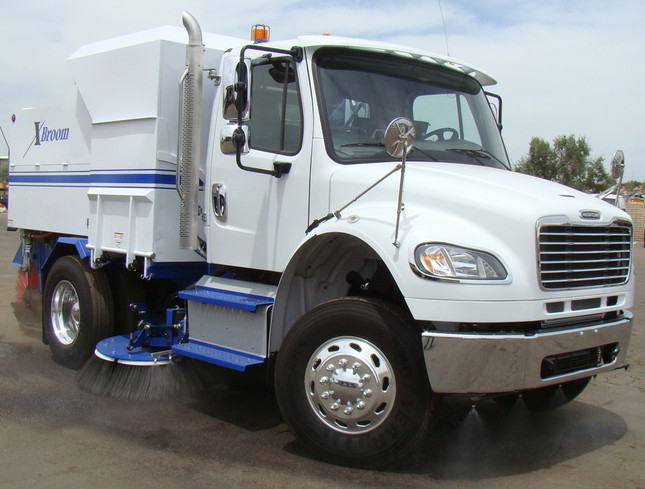
Colorado sweeping fleets do not need a brand-name contest. They need a mechanical broom sweeper that matches their debris load, dump cycle, operator availability, service plan, and the pace of the paving or municipal work in front of them.
An Elgin vs Schwarze street sweeper comparison is most useful when it compares equivalent machine classes, not when it treats every model from either manufacturer as identical. Elgin and Schwarze both offer established mechanical broom sweepers for contractors and municipalities, but compact non-CDL units, highway-capable machines, and heavy milling sweepers can have very different operating priorities.
Colorado contractors work across high-elevation corridors, Front Range municipal routes, mountain communities, industrial sites, and active paving projects. The Colorado Department of Transportation manages 9,072 centerline miles and 23,086 lane miles statewide, which underscores the scale of road maintenance and construction work that requires dependable cleanup equipment. Colorado Department of Transportation
Compare Like-for-Like Mechanical Sweepers First
The fairest comparison starts by placing similar hopper capacities and operating classes side by side. A compact non-CDL sweeper can be the right fit for municipal curb routes, while a larger machine makes more sense when a milling crew needs longer sweep intervals and fewer interruptions.
| Operating Need | Elgin Example | Schwarze Example | What to Evaluate |
|---|---|---|---|
| Compact non-CDL work | Broom Badger | M4 Cascade or M5 Torrent SE | Turning radius, GVWR, hopper size |
| Heavy municipal and contractor sweeping | Broom Bear or Road Wizard | M6 Avalanche | Conveyor design, water capacity, service access |
| Asphalt milling cleanup | Road Wizard or Broom Bear | M5 Torrent SE or M6 Avalanche | Debris handling, broom pressure, dump cycles |
| Colorado mountain and municipal routes | Model-specific chassis configuration | Model-specific chassis configuration | Traction, payload, local support, operator fit |
Elgin’s Broom Badger is a compact Class 5 mechanical sweeper with a 4-cubic-yard hopper, a 220-gallon water tank, and a maximum 10-foot sweep path. It is positioned for maneuverability and non-CDL operation. Elgin Sweeper
Schwarze’s M5 Torrent SE is also aimed at non-CDL operations, with a listed 5-cubic-yard hopper, 250-gallon water tank, 134-inch sweeping width, and variable-speed functions independent of engine RPM. Schwarze Industries
Those specifications do not automatically make one machine better. They establish the questions a Colorado fleet should ask before requesting a quote or demo.
Elgin Strengths for Colorado Fleet Applications
Elgin offers a broad mechanical sweeper lineup, which can benefit agencies and contractors that need to standardize several classes of machines. Its product range includes compact, conventional-chassis, and higher-capacity configurations.
Where Elgin Can Be a Strong Fit
Elgin can be a solid choice when a fleet values model variety, established dealer coverage, or a specific configuration already proven in its operation. The Broom Badger, for example, emphasizes compact dimensions and a non-CDL Class 5 chassis, which can suit neighborhood routes, downtown cleanup, and work where a tighter wheelbase matters.
For larger debris loads, Elgin’s Road Wizard lists a 5.4-cubic-yard hopper and 360-gallon water tank. Those specifications may suit crews that need more water for dust suppression and a larger debris capacity than a compact unit provides. The right question is whether that added capacity aligns with the crew’s available operators, dump access, and daily route length.
Elgin also offers both squeegee and conveyor approaches across its lineup. A fleet should evaluate how its typical mix of millings, aggregate, windblown material, and municipal debris affects wear parts, cleanout time, and conveyor maintenance.
Schwarze Strengths for Colorado Fleet Applications
Schwarze offers mechanical broom sweepers that emphasize heavy-duty collection, configurable conveyors, and operator-control features. Its M5 and M6 models are relevant examples for buyers comparing productive contractor machines with municipal-capable equipment.
Where Schwarze Can Be a Strong Fit
The Schwarze M5 Torrent SE lists a 5-cubic-yard hopper, 250-gallon water system, 134-inch sweep width, and a high-dump scissor lift. That package can appeal to contractors needing a non-CDL machine with additional debris capacity for road construction cleanup and milling support.
The M6 Avalanche is positioned as a 5-yard heavy-duty mechanical sweeper. Schwarze highlights an easy-change conveyor system that allows operators to use either squeegee or belt-type conveyor options on the same machine. That flexibility may be important for fleets whose work changes between granular millings, bulky debris, and general road cleanup. Schwarze M6 Avalanche
For Colorado operators, the key is to ask how easily the chosen conveyor, broom setup, and hydraulic components can be inspected and serviced between shifts. A good feature only creates value when the crew can keep it operating consistently.
The Decision Factors That Matter More Than the Badge
The best mechanical sweeper for a Colorado fleet is the one that lowers interruptions during the work that generates revenue. We recommend evaluating equipment by the operating bottlenecks crews actually experience, rather than relying on a brochure comparison alone.
Hopper Capacity and Dump Frequency
Hopper capacity directly affects how often a machine leaves the active sweeping area to unload. That matters on long milling pulls, remote mountain projects, and jobs where the dump location is far from the work zone.
Compare usable material capacity, not just gross hopper volume. Also ask how the hopper performs with damp millings, coarse aggregate, and mixed debris. A productive machine should support long sweep intervals without creating difficult unloading, material bridging, or repeated cleanup around the dump area.
Water Capacity and Dust-Control Workflow
Colorado’s dry conditions can make dust control a practical operating issue, especially during milling cleanup, gravel removal, and industrial sweeping. Water tank capacity matters, but nozzle placement, pump performance, refill access, and operator control matter too.
Ask each manufacturer or dealer to demonstrate the water system during a realistic sweep. Crews should verify coverage at the main broom, gutter brooms, and other dust-producing points, then measure how refill stops affect the full shift.
Conveyor System and Debris Type
Mechanical broom sweepers use a main broom and conveyor or elevator system to move material from the pavement into the hopper. That makes them especially useful for heavier road debris, aggregate, and asphalt millings.
Squeegee systems, belt conveyors, and drag-slat arrangements can all work well, but each fleet should assess its own material stream. A contractor focused on deep milling cleanup may prioritize abrasion resistance and recovery from overloaded conditions. A city route may prioritize simple daily inspection, predictable wear, and easy access to replacement parts.
Operator Availability and CDL Requirements
Non-CDL configurations can expand the available operator pool, but they should not be selected solely for that reason. Payload, hopper volume, water capacity, chassis durability, and job duration still need to support the intended work.
For example, a compact sweeper can be an efficient choice for curbside and municipal route work. A high-production paving contractor may find that a larger-capacity configuration reduces enough dump-related downtime to justify a CDL-capable truck and operator.
A Better Buying Process for First-Time Fleet Evaluations
Early-stage buyers often make the mistake of comparing only purchase price and hopper size. We recommend building a short operating profile before scheduling demonstrations, then requiring every machine to run through that same profile.
Bring these details to the conversation:
- Typical material swept, such as millings, chip seal aggregate, gravel, sand, or mixed road debris
- Average sweep hours per shift and maximum distance to the dump site
- Required water use and refill availability
- CDL and non-CDL operator availability
- Chassis preference, payload limits, and mountain-route conditions
- Current maintenance pain points, including broom changes, conveyor access, hydraulic leaks, or sensor faults
- Parts response expectations and the closest qualified service option
A productive demo should include sweeping representative material, operating the water system, raising and dumping the hopper, checking service access, and reviewing the daily inspection routine. Ask the manufacturer to explain what is covered by warranty, what parts are commonly stocked, and how field support is handled when equipment is down.
Where XBroom Fits in a Heavy-Duty Comparison
Elgin and Schwarze both have legitimate strengths, but some Colorado paving and heavy civil crews need a third category of comparison: a purpose-built, high-production mechanical sweeper focused on extended cleanup runs and reduced dump frequency.
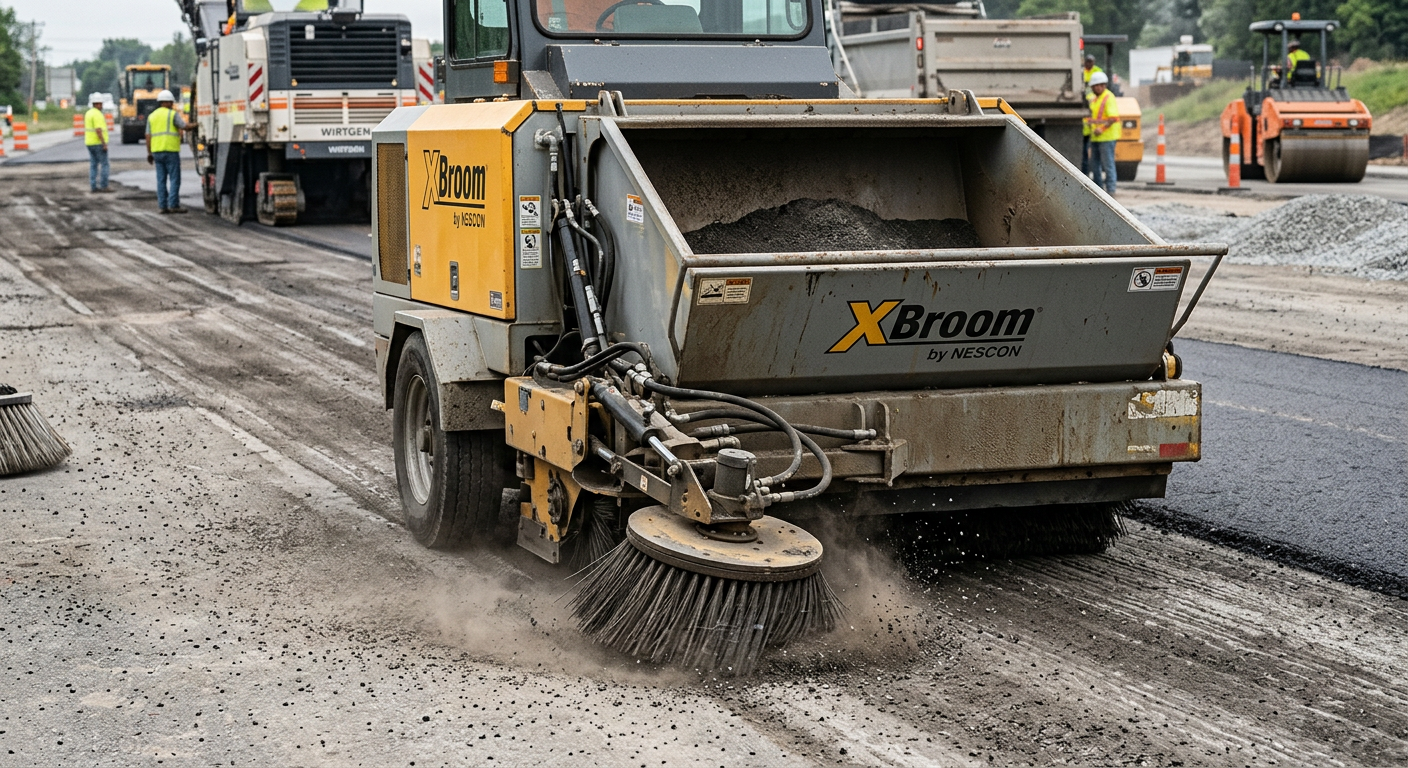
The XBroom Street Sweeper is built around a 5-yard usable hopper, a 300-gallon water tank, up to 140 inches of adjustable sweeping width, and a 150-inch maximum dump height. Its direct-drive hydraulic components and heavy-duty mechanical sweeping layout are designed for asphalt milling cleanup, road construction, chip seal work, and demanding contractor applications.
For buyers comparing operating uptime, review the full XBroom street sweeper products lineup alongside the actual job conditions. We also recommend using the custom truck configuration process to discuss chassis, operating class, and options before deciding that a standard production configuration is the only path forward.
Frequently Asked Questions
Is Elgin or Schwarze better for asphalt milling cleanup?
Neither brand is automatically better for every milling operation. The best fit depends on hopper capacity, conveyor design, broom pressure control, water system performance, maintenance access, and the support available to the specific Colorado fleet.
Should a Colorado municipality buy a non-CDL sweeper?
A non-CDL sweeper can be a good choice when staffing flexibility and maneuverability are primary needs. Municipal buyers should still confirm that payload, water capacity, and hopper volume will support their normal route length without excessive dump or refill stops.
Are mechanical broom sweepers effective on heavy aggregate?
Yes, mechanical broom sweepers are commonly used for millings, granular debris, loose aggregate, and construction cleanup. The fleet should match the broom, conveyor, and hopper design to the size, density, and moisture level of its typical material.
What should we ask about street sweeper maintenance?
Ask for the daily inspection checklist, recommended service intervals, common wear items, typical broom and conveyor replacement procedures, and parts availability. Also ask whether technicians can access critical hydraulic, electrical, and conveyor components without excessive disassembly.
Does a larger hopper always mean lower operating cost?
Not always. A larger hopper can reduce dump frequency, but the total operating cost also depends on chassis class, maintenance, fuel use, water needs, operator utilization, and the machine’s ability to keep sweeping under real jobsite conditions.
Choose the Sweeper That Keeps the Crew Moving
An Elgin vs Schwarze street sweeper comparison should lead to a field-tested equipment decision, not a spreadsheet-only purchase. Colorado fleets should compare equivalent models, verify usable capacity, inspect service access, and run a realistic demonstration with the debris and workflow their crews face every day.
For heavy milling, road-construction, and high-production cleanup work, downtime often costs more than a small difference in initial price. We recommend choosing the machine, support plan, and configuration that keeps operators sweeping longer and returning to the paver or route with fewer interruptions.
Discuss a Colorado Sweeper Configuration
If your crew needs longer sweep times, a larger usable hopper, and a mechanical broom sweeper designed for demanding roadwork, explore why contractors choose XBroom by Nescon. We can help evaluate configuration requirements for your application and compare the operating tradeoffs that affect productivity.
Call Phone: 480-505-0001 or Contact Nescon for a Colorado equipment discussion to request pricing, schedule a demo, or discuss a custom build.
About XBroom by Nescon
XBroom by Nescon is a U.S.-based street sweeper manufacturer specializing in heavy-duty mechanical street sweepers designed for high-production sweeping applications. XBroom sweepers are built to support asphalt milling, road construction, municipal street maintenance, and industrial sweeping operations.
Engineered for durability, large hopper capacity, long sweep times, and reduced downtime, XBroom street sweepers help contractors and municipalities maximize productivity while minimizing maintenance and dump frequency.
Ready to Upgrade Your Street Sweeper?
Call 480-505-0001 or Contact Nescon to request pricing, schedule a demo, or learn more about XBroom street sweeping solutions.